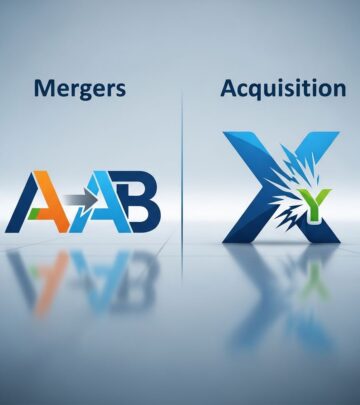
Mergers and Acquisitions: Definition, Types, and Strategy
Complete guide to M&A transactions: types, strategies, valuation methods, and deal structures explained.

Understanding Mergers and Acquisitions (M&A)
Mergers and acquisitions (M&A) represent one of the most significant strategies for corporate growth and expansion in today’s business landscape. These transactions involve the combination of two companies in various forms, enabling organizations to achieve strategic objectives, unlock value, and create competitive advantages in their respective markets. While the terms merger and acquisition are often used interchangeably in business discussions, they carry distinct legal meanings and implications that are crucial for understanding the dynamics of corporate combinations.
An M&A transaction fundamentally refers to a process where two companies join together through a legal and financial arrangement. The decision to pursue M&A activities reflects a company’s desire to expand its market presence, diversify its operations, or achieve specific financial objectives. The structure and execution of these transactions vary considerably based on the companies involved, their industries, regulatory environments, and the strategic goals they aim to accomplish.
Key Distinctions: Mergers versus Acquisitions
Understanding the difference between a merger and an acquisition is essential for stakeholders involved in corporate transactions. Although these terms are frequently used together, they represent fundamentally different business structures with distinct legal consequences.
Mergers typically occur when two companies of relatively similar size combine their operations to form a new single entity. In a merger transaction, both companies cease to exist independently, and their assets, liabilities, and operations are consolidated into a newly created organization. This structure emphasizes partnership and equal footing between the combining entities.
Acquisitions, by contrast, involve a larger company purchasing and absorbing a smaller company. In this arrangement, the acquiring company purchases the target company’s shares or assets, and the target company becomes part of the acquirer’s corporate structure. The target company loses its independent status and becomes subordinate to the acquiring organization, though it may continue operating under its original brand name or be fully integrated into the acquirer’s operations.
Types of Mergers and Acquisitions
M&A transactions can be classified into several categories based on the relationship between the combining companies and their strategic objectives:
Horizontal Mergers
Horizontal mergers occur between two companies operating in the same or similar industries. These companies may be direct competitors or operate in adjacent market segments. The primary advantage of horizontal mergers is that the resulting entity achieves greater market consolidation, increased market share, and enhanced pricing power. By combining operations, the merged company can better influence market conditions and establish stronger competitive positioning.
Vertical Mergers
Vertical mergers involve transactions between a company and its suppliers or customers along the supply chain. Through a vertical merger, a company can move up or down the supply chain hierarchy, consolidating its position within the industry. This integration strategy enables companies to control more aspects of their production and distribution processes, reduce supply chain vulnerabilities, and enhance operational efficiency.
Conglomerate Mergers
Conglomerate mergers represent combinations between companies operating in unrelated industries. These transactions are typically pursued for diversification purposes, allowing companies to expand into new markets and business segments. By acquiring companies in different sectors, an organization can reduce its exposure to industry-specific risks and create a more balanced revenue stream.
Merger and Acquisition Structures
The legal structure of an M&A transaction determines how the deal is executed and what happens to the combined entities following the transaction:
Statutory Mergers
In a statutory merger, the acquirer, typically the larger company, absorbs the target company’s assets and liabilities directly. Following the completion of the transaction, the target company ceases to exist as a separate legal entity, and all its operations, assets, and liabilities become part of the acquiring company. This structure provides simplicity and clarity regarding asset and liability transfer.
Subsidiary Mergers
Subsidiary mergers allow the target company to maintain its existence as a subsidiary of the acquiring company. Unlike statutory mergers, the target retains its separate legal status and continues operating its business independently, though under the ownership and control of the parent company. This structure is often preferred when the target company’s brand name or market position provides strategic value.
Consolidations
In a consolidation, both the acquiring and target companies cease to exist following the transaction. Instead, a completely new entity is formed to house the combined operations of both organizations. This approach represents a true merger of equals, where neither company maintains its original legal status, and a fresh corporate structure is created.
Friendly versus Hostile Deals
M&A transactions are also classified based on the level of agreement and cooperation between the combining companies:
Friendly acquisitions occur with the approval and cooperation of the target company’s board of directors. In these deals, both parties work collaboratively to negotiate terms, share information, and facilitate a smooth transition.
Hostile acquisitions take place when the acquiring company pursues the target company against the wishes of its board and management. These situations often involve aggressive takeover attempts and may face significant resistance from the target company’s stakeholders.
Strategic Motivations for M&A Transactions
Companies pursue mergers and acquisitions for various strategic and financial reasons:
Creating Synergies
The most common rationale for pursuing M&A activities is the creation of synergies, where the combined entity becomes worth more than the sum of its individual parts. Synergies typically manifest in two primary forms: cost synergies and revenue synergies. Cost synergies arise from economies of scale, operational efficiency improvements, and elimination of redundancies. Revenue synergies result from cross-selling opportunities, increased market share, enhanced pricing power, and access to new customer segments. Cost synergies are generally easier to quantify and calculate compared to revenue synergies, making them a more predictable source of value creation.
Accelerating Growth
Inorganic growth through M&A provides a faster route to achieving higher revenues compared to organic growth strategies. By acquiring or merging with a company possessing advanced capabilities, technologies, or market positions, an organization can avoid the time and risk associated with developing these competencies internally. This acceleration is particularly valuable in competitive markets where speed to market is critical.
Expanding Market Power
Horizontal and vertical mergers significantly enhance a company’s market power. In horizontal combinations, the resulting entity gains control over a larger market share and increased influence over pricing mechanisms. Vertical mergers strengthen a company’s control over its supply chain, reducing external vulnerabilities and enabling better management of input costs and supply reliability.
Diversification and Risk Management
Companies operating in cyclical industries often pursue acquisitions to diversify their revenue streams and reduce exposure to industry-specific downturns. By acquiring businesses in non-cyclical sectors, a company can stabilize cash flows and mitigate significant financial losses during industry slowdowns.
Tax Optimization
M&A transactions can provide tax benefits when one company with substantial taxable income acquires another company with significant tax loss carryforwards. The acquirer can utilize these tax losses to reduce overall tax liability. However, it is important to note that tax benefits alone are rarely the sole driver of M&A decisions, as regulators scrutinize deals pursued primarily for tax avoidance purposes.
M&A Transaction Structures
The financial structure of an M&A transaction determines how the deal is executed and financed:
Stock Purchases
In a stock purchase, the acquirer pays the target company’s shareholders cash and/or shares in exchange for the target company’s equity. The compensation is paid directly to the shareholders rather than to the company itself. Stock purchases offer certain advantages, including potential tax benefits for shareholders and simplicity in transaction execution, though they may expose the acquirer to unknown or hidden liabilities of the target company.
Asset Purchases
In an asset purchase, the acquirer purchases the target company’s specific assets directly from the company and pays the target organization. This structure allows the acquirer to select which assets and liabilities to assume, providing greater control over the transaction’s financial implications. Asset purchases protect the acquirer from inheriting unwanted liabilities but may require significant transaction costs and present complications regarding asset transfer and regulatory approvals.
Payment Methods in M&A Transactions
Companies use various payment methods to finance acquisitions:
Stock Offerings
In a stock offering, the acquirer issues new shares to be paid to the target company’s shareholders. The number of shares each shareholder receives is determined by a predetermined exchange ratio established during negotiations. This method allows the acquirer to preserve cash while utilizing its stock as currency. However, stock offerings can dilute existing shareholders’ ownership percentages.
Cash Offers
Cash offers involve the acquirer paying cash directly in return for the target company’s shares or assets. This method provides certainty to target shareholders regarding the value they will receive and avoids stock dilution. However, it requires the acquirer to have substantial cash reserves or access to financing.
Mixed Offerings
Many M&A transactions employ a combination of stock and cash payments, referred to as a mixed offering. This hybrid approach allows companies to balance the benefits and drawbacks of each payment method, optimizing the capital structure of the transaction.
Valuation in M&A Transactions
Valuation represents a critical component of any M&A transaction, as it determines the final purchase price and ensures fair value exchange between parties. Both the acquirer and target company conduct independent valuations to support their negotiating positions. The acquirer typically seeks to purchase the target at the lowest possible price, while the target company pursues the highest valuation. Through negotiation and presentation of valuation analyses, both parties work toward a mutually acceptable price that reflects the target company’s true economic value and growth potential.
Professional valuation methodologies provide structured approaches to determining fair market value, enabling buyers and sellers to reach justified transaction prices based on financial fundamentals rather than speculation or emotional considerations.
Frequently Asked Questions
What is the primary difference between a merger and an acquisition?
The key difference lies in company size and structure. A merger typically involves two similarly-sized companies combining to form a new entity, while an acquisition involves a larger company purchasing and absorbing a smaller company. In a merger, both companies generally cease to exist as separate entities, whereas in an acquisition, the acquiring company maintains its identity.
Why do companies pursue hostile acquisitions despite management resistance?
Acquirers may pursue hostile acquisitions when they believe the target company’s current management undervalues or underutilizes its assets. The acquirer may offer a price attractive enough to shareholders that they support the deal despite management opposition, seeking to unlock value through improved operational strategies or synergies.
How do synergies create value in M&A deals?
Synergies create value through cost reductions achieved via economies of scale and operational efficiencies, as well as revenue enhancements from cross-selling opportunities and market share expansion. When these combined benefits exceed integration costs, the merged entity becomes worth more than the sum of its individual parts.
What advantages does an asset purchase offer over a stock purchase?
An asset purchase allows the acquirer to select specific assets to purchase while leaving unwanted liabilities with the target company. This provides greater control over what is acquired and protects the buyer from inheriting unknown or problematic liabilities, though it may involve higher transaction costs.
Why might a company choose a mixed offering instead of pure cash or stock payment?
A mixed offering balances the advantages of both payment methods. It allows the acquirer to preserve cash while avoiding excessive stock dilution, while also providing target shareholders with a combination of immediate cash payment and future upside through stock ownership in the merged entity.
References
- Mergers & Acquisitions (M&A) — Corporate Finance Institute. 2024. https://corporatefinanceinstitute.com/resources/valuation/mergers-acquisitions-ma/
Similar Articles








Read full bio of Sneha Tete