Mergers vs Acquisitions: Key Differences Explained
Understand the critical distinctions between mergers and acquisitions in corporate transactions.
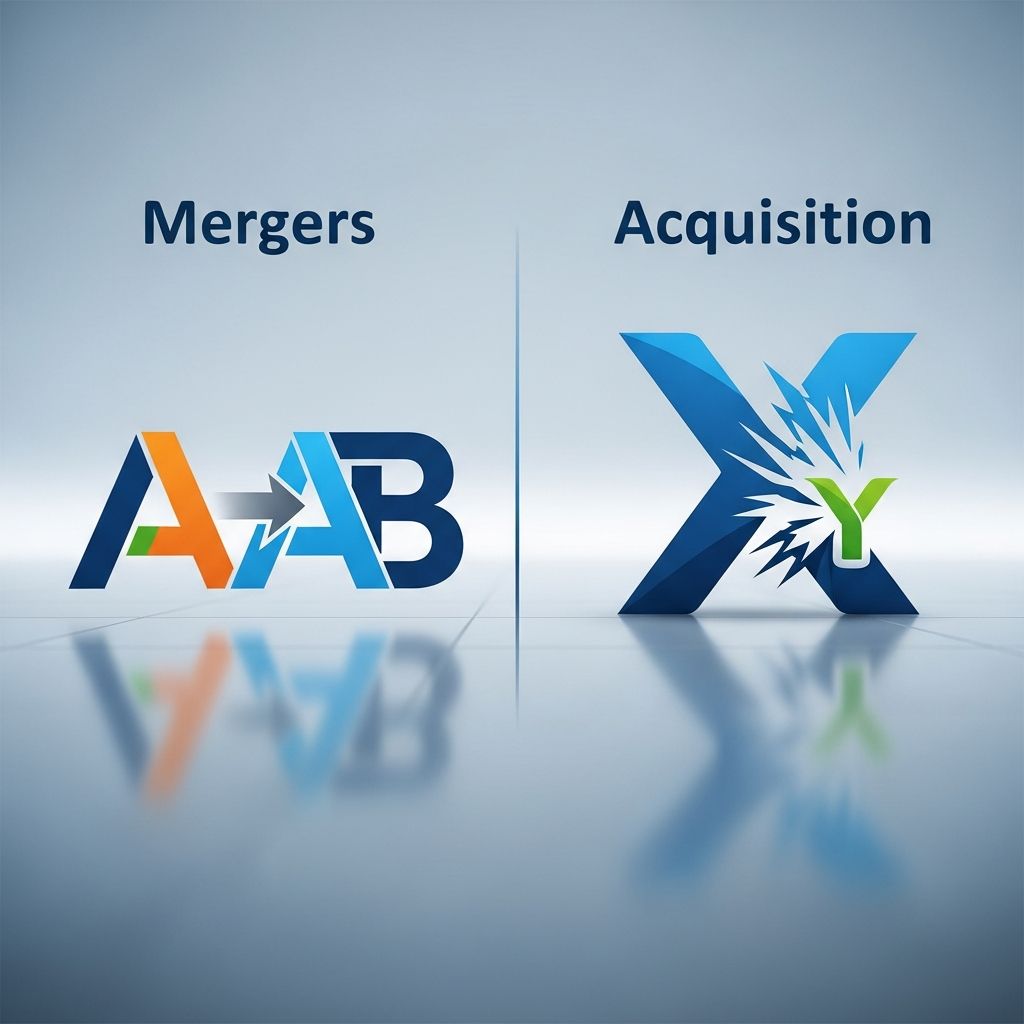
Understanding Mergers and Acquisitions: What’s the Difference?
In the corporate world, the terms “merger” and “acquisition” are often used interchangeably, yet they represent distinct business transactions with different legal, financial, and operational implications. Understanding these differences is essential for business professionals, investors, and stakeholders involved in corporate restructuring. While both mergers and acquisitions result in the combination of two or more companies, the processes, structures, and outcomes differ significantly. This comprehensive guide explores the fundamental distinctions between these two critical business strategies.
Defining Mergers and Acquisitions
A merger occurs when two or more companies combine to form a single new entity, typically operating under a new or existing corporate structure. In a merger, both companies agree to join forces, and the transaction is generally a mutual and voluntary arrangement between the participating organizations. The companies dissolve their separate identities and emerge as one unified business.
An acquisition, by contrast, involves one company purchasing and taking control of another company. In acquisitions, one entity actively acquires another, and the transaction is typically involuntary from the perspective of the target company. The acquiring company generally purchases the target company’s assets or equity, and the target company may cease to exist as an independent entity or become a subsidiary of the acquirer.
Key Terminology in M&A Transactions
Understanding the language used in merger and acquisition transactions is crucial for grasping how these deals operate.
Target Company vs. Acquiring Company
In any merger or acquisition transaction, two primary parties are involved. The target company (also called the acquiree) is the company being acquired or merged. The acquiring company (also called the acquirer) is the entity that is purchasing or merging with the target company. The acquiring company typically initiates the transaction and determines its structure and terms.
Structural Differences Between Mergers and Acquisitions
Voluntary vs. Involuntary Nature
One of the most significant differences between mergers and acquisitions lies in their voluntary nature. Mergers are typically voluntary transactions where both companies mutually agree to combine operations. Both parties generally benefit from the arrangement and have negotiated favorable terms. Acquisitions, however, are often involuntary for the target company, which may be purchased against management’s wishes or through a hostile takeover scenario. Larger companies frequently acquire smaller ones, though reverse takeovers can occur when a smaller company acquires a larger one and retains its name for the post-acquisition entity.
Asset Purchases vs. Equity Purchases
Companies can structure mergers and acquisitions in two primary ways, each with distinct tax and regulatory implications:
Asset Purchase: In an asset purchase, the acquiring company purchases specific assets and liabilities of the target company rather than acquiring the entire business. This structure provides the acquirer with flexibility to select which assets to acquire and which liabilities to assume. Asset purchases are often used when the acquirer wants to acquire a particular division or unit of a company.
Equity Purchase: In an equity purchase, the acquirer purchases equity interests (stock) in the target company from selling shareholders. By acquiring the equity, the acquirer obtains all the assets and liabilities of the target entity, providing complete ownership and control of the business.
Types of Mergers and Acquisitions
Horizontal Mergers
Horizontal mergers occur when two companies operating in the same industry and at the same level of the supply chain combine. These transactions often aim to achieve economies of scale, reduce competition, and increase market share. For example, two retail companies merging to create a larger retail operation would constitute a horizontal merger.
Vertical Mergers and Acquisitions
A vertical merger or acquisition, also known as vertical integration, occurs when businesses within the same supply chain combine. This approach can result in significant cost savings and increased operational efficiency.
Vertical integration takes two primary forms:
Backward Integration: A company acquires its supplier, moving upstream in the supply chain. This allows the company to control raw materials and reduce dependency on external suppliers.
Forward Integration: A company acquires its customer or distributor, moving downstream in the supply chain. This enables the company to have direct access to end consumers and greater control over distribution channels.
Conglomerate Mergers and Acquisitions
A conglomerate merger or acquisition involves the combination of unrelated businesses operating in different industries. These transactions offer several strategic advantages:
- Diversifying business operations to reduce the risk of loss from a single market or industry
- Creating new investment opportunities and revenue streams
- Gaining access to a new pool of customers and market segments
- Increasing efficiencies through the exchange of best practices and expertise across different business units
Triangular Mergers
A triangular merger is a common structural approach where the target company merges with a subsidiary wholly owned by the acquirer. The acquirer typically creates this subsidiary specifically to facilitate the acquisition of the target. In a triangular merger, the target becomes a wholly-owned subsidiary of the acquirer after the transaction. The key advantage of this structure is that the acquirer avoids assuming the target’s liabilities since the merger occurs between the target and the subsidiary rather than directly with the parent company.
The Merger and Acquisition Process
Due Diligence
Before pursuing any merger or acquisition, the acquiring company conducts thorough due diligence. This process involves investigating the target company’s financial records, operations, legal matters, assets, liabilities, customer contracts, and potential risks. Due diligence ensures that the acquiring company fully understands what it is purchasing and can identify any potential issues or concerns.
Negotiations and Closing
Once due diligence is complete, the prospective purchaser reviews the findings with its advisors to assess their impact on the transaction. If the purchaser remains interested, the parties negotiate the transaction details, including the final price or a mechanism to determine it, as well as the terms of warranties, indemnities, and limitations. The parties then formalize these terms in either a Share Purchase Agreement (SPA) or an Asset Purchase Agreement (APA), depending on whether shares or business assets are being acquired.
Impact on Shareholders and Stock Valuation
Stock Price Effects
Following a merger or acquisition, the combined company’s stock price generally exceeds the combined value of the individual companies, provided there are no adverse economic conditions. This premium reflects the anticipated synergies and benefits of the combined operation.
Shareholder Considerations
Shareholders of both companies may experience diluted voting power due to the increase in the number of shares issued during the merger or acquisition process. However, shareholders generally benefit from the long-term performance and dividends of the combined entity. The combined company often achieves greater profitability, market position, and operational efficiency than either company could achieve independently.
Tax Implications and IRS Classifications
Type A Reorganizations
Type A reorganizations typically involve asset acquisitions where the acquiring company must acquire substantially all assets and liabilities of the target company. Specific IRS requirements apply to these reorganizations to qualify for favorable tax treatment.
Type C Reorganizations
Type C reorganizations are also asset acquisitions, but the acquiring company does not have to acquire all of the target company’s assets and liabilities. IRS safe harbor rules require that the acquiring company purchase at least 70% of the gross assets and 90% of the net assets of the target, although smaller amounts may qualify depending on the facts and circumstances. The acquiring company must offer at least 80% of the payment in the form of its voting stock, or 100% if the target company has substantial liabilities that are assumed by the acquiring company.
Business Requirements for Tax-Qualified Reorganizations
For mergers and acquisitions to qualify for favorable tax treatment, they must meet specific IRS requirements:
Continuity of Business Operations: The acquiring corporation must continue the target’s business or use a significant portion of its assets for business purposes. Regulations suggest that operating one of the target’s three historical lines of business or using one-third of its assets meets this requirement.
Business Purpose: The merger or acquisition must serve a business purpose beyond benefiting shareholders. This requirement is typically straightforward to meet, as most M&A transactions have legitimate business objectives such as achieving synergies, expanding market presence, or acquiring specific capabilities.
Subsequent Transfers of Assets: Generally, assets cannot be transferred outside the corporate group post-merger, although exceptions exist if such transfers do not disrupt the continuity of interest requirement.
Why the Terms Are Often Used Interchangeably
Despite their distinct legal and operational differences, the terms “merger” and “acquisition” are frequently used interchangeably in modern corporate practice. This occurs because both transactions lead to the consolidation of assets and liabilities under a single entity, making the distinction between the two less clear in practical application. Additionally, modern corporate restructurings are commonly referred to as merger and acquisition (or M&A) transactions, treating them as part of a broader category of corporate combination strategies.
Strategic Considerations for M&A Success
Successful mergers and acquisitions require careful planning, thorough analysis, and strategic alignment between the acquiring and target companies. Key considerations include:
- Identifying clear strategic objectives and expected synergies
- Conducting comprehensive financial and operational due diligence
- Assessing cultural compatibility between organizations
- Developing integration plans for systems, processes, and personnel
- Understanding tax and regulatory implications specific to the transaction
- Managing stakeholder communication and expectations
Frequently Asked Questions
Q: What is the main difference between a merger and an acquisition?
A: The primary difference lies in the nature of the transaction. A merger is a voluntary combination where two companies join to form a new entity, while an acquisition is when one company purchases another company, often involuntarily from the target’s perspective.
Q: Can a small company acquire a larger company?
A: Yes, when a smaller company acquires a larger one and retains its name for the post-acquisition entity, this is termed a reverse takeover. While less common, reverse takeovers do occur in certain strategic situations.
Q: What are the tax benefits of structuring a transaction as a merger versus an acquisition?
A: The tax benefits depend on the specific structure and classification of the transaction. Asset purchases and equity purchases have different tax implications, and IRS classifications such as Type A and Type C reorganizations offer different tax advantages. Consulting with tax professionals is essential to optimize tax outcomes.
Q: How do shareholders benefit from mergers and acquisitions?
A: Shareholders typically benefit through long-term performance improvements, increased profitability, and dividends from the combined entity. Additionally, the combined company’s stock price generally exceeds the sum of the individual companies’ values when synergies are realized.
Q: What is a triangular merger and why is it used?
A: A triangular merger is a structure where the target company merges with a subsidiary owned by the acquirer. This approach is used primarily to shield the acquiring company from assuming the target’s liabilities, as the merger occurs between the target and subsidiary rather than directly with the parent company.
Q: What role does due diligence play in M&A transactions?
A: Due diligence is a critical process where the acquiring company investigates the target company’s financial records, operations, legal matters, and potential risks. This thorough examination ensures the acquirer understands what it is purchasing and can identify issues that might affect the transaction’s value or structure.
References
- A Guide to Mergers and Acquisitions — International Bureau of Fiscal Documentation (IBFD). 2024. https://us.ibfd.org/knowledge-hub/tax-insights/guide-mergers-and-acquisitions
Similar Articles








Read full bio of medha deb