Merger: Definition, Types, Examples & How They Work
Complete guide to mergers: understand types, processes, benefits, and real-world examples in business.

What is a Merger?
A merger is a corporate transaction in which two companies combine to form a single entity. In a merger, one company acquires another, and the target company ceases to exist as an independent organization. The acquiring company assumes all of the target company’s assets, liabilities, and operations. Mergers represent one of the most significant forms of corporate restructuring and are commonly used as a growth strategy by businesses seeking to expand their market presence, increase operational efficiency, or achieve economies of scale.
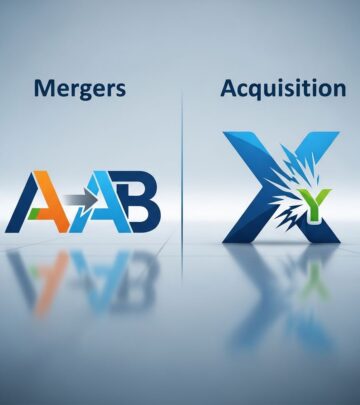
The term “merger” is often used interchangeably with “acquisition,” though technically there are subtle differences. In a true merger, two companies of relatively similar size combine to create a new entity. In an acquisition, a larger company purchases a smaller one, which typically results in the larger company absorbing the smaller firm’s operations. However, in common business parlance, both transactions are frequently referred to as mergers and acquisitions (M&A).
How Mergers Work
The process of completing a merger involves several critical steps and considerations. Understanding this process is essential for stakeholders, investors, and anyone involved in corporate transactions.
- Identification and Negotiation: The first step involves identifying a potential merger partner and initiating negotiations. Companies assess strategic fit, financial viability, and potential synergies. Investment banks and financial advisors often facilitate these discussions.
- Due Diligence: Both companies conduct thorough investigations into each other’s finances, operations, legal status, and market position. This phase is crucial for identifying potential risks or hidden liabilities.
- Agreement and Valuation: Once both parties are satisfied, they agree on the terms and valuation. This determines the exchange ratio or purchase price. The boards of directors from both companies must approve the merger.
- Regulatory Approval: Depending on the size and nature of the merger, regulatory agencies may need to review and approve the transaction. Antitrust authorities ensure the merger does not create unfair market competition.
- Shareholder Approval: Shareholders from both companies typically must vote to approve the merger. This is a critical safeguard to protect shareholder interests.
- Closing and Integration: Once all approvals are obtained, the merger officially closes. The companies then integrate their operations, systems, and cultures.
Types of Mergers
Mergers are classified into several categories based on the nature of the companies involved and their strategic rationale:
Horizontal Mergers
A horizontal merger occurs when two companies operating in the same industry and at the same level of the supply chain combine. These mergers are designed to reduce competition and increase market share. For example, when two retail companies merge, they can eliminate duplicate stores, reduce operating costs, and gain greater bargaining power with suppliers. Horizontal mergers often result in significant cost savings through the consolidation of operations and elimination of redundancies.
Vertical Mergers
Vertical mergers involve companies at different stages of the supply chain. One company may be a supplier, and the other may be a manufacturer or retailer. Vertical mergers enable companies to control more of their supply chain, reduce costs, and improve efficiency. For instance, an automobile manufacturer might merge with a parts supplier to secure a reliable source of components and gain better control over production costs.
Conglomerate Mergers
Conglomerate mergers unite companies in unrelated industries. These mergers are typically pursued when a company seeks to diversify its portfolio, reduce business risk, or acquire new customer bases. A technology company merging with a food production company would be an example of a conglomerate merger. This type of merger offers diversification benefits but can be challenging to integrate culturally and operationally.
Market Extension Mergers
In a market extension merger, two companies selling the same products in different markets combine to expand their geographic reach. This strategy allows companies to enter new markets more quickly and efficiently than developing independently.
Product Extension Mergers
Companies in the same market but offering different products merge to broaden their product line. This type of merger enables cross-selling opportunities and provides customers with more comprehensive solutions.
Benefits of Mergers
Mergers can provide numerous advantages to the companies involved and, when successful, create significant value for shareholders:
- Economies of Scale: Combined operations can reduce per-unit costs through increased production efficiency and purchasing power. Companies can eliminate duplicate facilities and consolidate support functions.
- Increased Market Share: Mergers can significantly expand a company’s market presence and competitive position. This increased scale often translates to greater bargaining power with customers and suppliers.
- Revenue Synergies: Combined companies can cross-sell products to each other’s customer bases, enter new markets more effectively, and develop new product offerings.
- Cost Synergies: Eliminating redundant departments, consolidating operations, and implementing best practices from both companies can result in substantial cost savings.
- Access to New Technology and Talent: Mergers provide immediate access to new technologies, intellectual property, patents, and skilled workforce members that might take years to develop independently.
- Enhanced Competitive Position: Combined companies are often better positioned to compete against larger rivals and respond to market changes.
- Strategic Growth: Mergers enable rapid expansion and help companies achieve strategic objectives that would be difficult or time-consuming to accomplish organically.
Risks and Challenges of Mergers
Despite potential benefits, mergers carry significant risks that can undermine their success:
- Cultural Conflicts: Integrating two different corporate cultures can be extremely challenging. Differences in management style, values, and organizational structure can lead to employee dissatisfaction and turnover.
- Integration Difficulties: Combining different systems, processes, and operations is complex and time-consuming. Technical incompatibilities can delay integration and increase costs.
- Overpaying for the Target: Acquisition price expectations can be inflated, leading to overpayment and difficulty achieving projected returns on investment.
- Regulatory Obstacles: Antitrust concerns or other regulatory issues may prevent the merger from completing or require significant concessions.
- Key Personnel Loss: Valuable employees may leave the combined company due to uncertainty, reduced opportunities, or cultural misalignment.
- Unexpected Liabilities: Hidden legal, financial, or operational issues discovered after the merger closes can significantly impact profitability.
- Failure to Achieve Synergies: Projected cost and revenue synergies may not materialize as expected, diminishing the merger’s value.
Famous Merger Examples
Facebook and Instagram
Facebook’s acquisition of Instagram in 2012 for approximately $1 billion is considered one of the most successful technology mergers. Despite Instagram being a small company at the time, Facebook recognized its potential and strategic value. The merger allowed Facebook to tap into the growing mobile photo-sharing market and youth demographic. Today, Instagram is one of the most valuable properties in Facebook’s portfolio, with billions of users worldwide.
Exxon and Mobil
The 1999 merger of Exxon and Mobil created ExxonMobil, one of the world’s largest energy companies. This horizontal merger was motivated by efficiency gains, reduced competition, and improved operational synergies. The combined company achieved significant cost savings and operational improvements.
AOL and Time Warner
The 2000 merger of AOL and Time Warner is often cited as one of the most unsuccessful mergers in business history. Despite the enormous combined market value, the merger faced significant integration challenges, cultural conflicts, and failed to achieve projected synergies. The deal ultimately destroyed shareholder value and resulted in massive write-downs.
Amazon and Whole Foods
Amazon’s 2017 acquisition of Whole Foods Market for $13.7 billion demonstrated Amazon’s expansion beyond e-commerce into physical retail and groceries. This vertical merger allowed Amazon to integrate grocery delivery with its Prime membership and gain valuable customer data and distribution channels.
Merger vs. Acquisition
While often used interchangeably, mergers and acquisitions have technical distinctions. In a merger, two companies combine to form a new entity, and both companies’ shareholders receive equity in the new organization. In an acquisition, one company purchases another, and the acquiring company’s shareholders maintain control. The target company’s shareholders receive cash or stock, but the target company typically ceases to exist as an independent entity. Understanding this distinction is important for legal, tax, and financial reporting purposes.
Regulations Governing Mergers
Mergers are subject to regulatory oversight to prevent anti-competitive practices and protect consumer interests. In the United States, the Federal Trade Commission (FTC) and Department of Justice (DOJ) review large mergers for antitrust concerns. Similarly, the European Commission reviews mergers involving significant market share in the EU. Regulatory authorities assess whether the merger would substantially reduce competition or create monopolistic conditions. Companies may be required to divest certain business units or accept operational restrictions to obtain regulatory approval.
Frequently Asked Questions
Q: What is the main difference between a merger and an acquisition?
A: In a merger, two companies combine to form a new entity with both shareholders receiving equity. In an acquisition, one company purchases another, and the acquiring company typically maintains control while the target ceases to be independent.
Q: How long does a typical merger take to complete?
A: The timeline for a merger varies significantly depending on complexity and regulatory requirements. Smaller mergers might take 3-6 months, while larger, more complex transactions can take 1-2 years or longer to complete.
Q: What are merger synergies?
A: Merger synergies are the economic benefits created by combining two companies. These include cost synergies (reducing duplicate expenses) and revenue synergies (cross-selling, market expansion, and new product development).
Q: Can a merger be blocked by regulators?
A: Yes, regulatory authorities can block a merger if they determine it would substantially reduce competition or create anti-competitive conditions. They may also approve the merger conditionally, requiring divestitures or other concessions.
Q: Why do mergers often fail?
A: Mergers fail due to various reasons including cultural incompatibilities, integration challenges, failure to achieve projected synergies, overpayment, key personnel departures, and unexpected hidden liabilities discovered after closing.
Q: How do shareholders benefit from a merger?
A: Shareholders can benefit through increased stock value, access to new markets and products, improved operational efficiency reducing costs, and potential dividend increases resulting from enhanced profitability.
References
- Mergers and Acquisitions: Corporate Strategy and Economic Analysis — U.S. Federal Trade Commission (FTC). Last updated 2024. https://www.ftc.gov/business-guidance/antitrust-enforcement/mergers-acquisitions
- Merger Review Process and Procedures — U.S. Department of Justice Antitrust Division. 2024. https://www.justice.gov/atr/merger-review-process-procedures
- Facebook Completes Acquisition of Instagram — Meta Investor Relations. 2012. https://investor.fb.com/investor-news
- Exxon Mobil Corporation: History and Formation — ExxonMobil Corporate Communications. 2024. https://corporate.exxonmobil.com/company/about-us
- Amazon to Acquire Whole Foods Market — Amazon Press Center. 2017. https://press.aboutamazon.com/news-releases/news-releases-details/2017/06/Amazon-to-Acquire-Whole-Foods-Market/
- Mergers and Acquisitions: Legal and Financial Considerations — American Bar Association Section of Business Law. 2023. https://www.americanbar.org/groups/business_law/
Similar Articles








Read full bio of Sneha Tete