Mercantilism: Definition, History, and Economic Impact
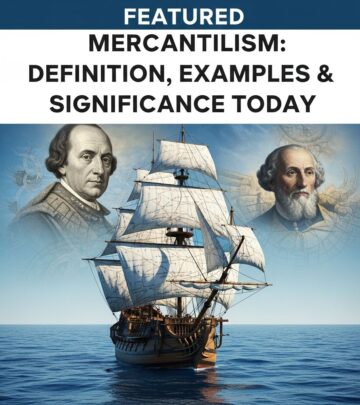
Understanding mercantilism: The dominant economic policy from the 16th to 18th centuries.

What Is Mercantilism?
Mercantilism represents a comprehensive economic system and nationalist economic policy designed to maximize a nation’s exports while minimizing its imports. This approach fundamentally aims to reduce current account deficits or achieve a current account surplus through accumulated monetary reserves, particularly by maintaining a positive balance of trade in finished goods. The system emerged as the dominant economic framework in modernized parts of Europe and select African regions during the 16th to 19th centuries, fundamentally shaping international trade dynamics and colonial expansion.
At its core, mercantilism operates on the principle that economic activity is a zero-sum game—any gain by one nation necessitates a corresponding loss for its trading partners. This perspective profoundly influenced how governments structured their economic policies and international relations during this era. Mercantilism promoted extensive government regulation of national economies with the explicit purpose of augmenting state power at the expense of rival nations, making it the economic counterpart of political absolutism that characterized the period.
Core Principles of Mercantilism
Precious Metals and Bullionism
The foundational concept underlying mercantilist doctrine centers on bullionism—the theory that a nation’s wealth is fundamentally measured by the quantity of precious metals, particularly gold and silver, that it possesses. Rather than simply hoarding these metals, mercantilist thinkers emphasized that money must circulate throughout the economy to stimulate trade and economic activity. This nuanced understanding distinguished mercantilist thought from pure wealth accumulation, as theorists recognized that economic dynamism required currency movement rather than stagnation.
However, Adam Smith later challenged this central pillar of mercantilist thought, arguing that confusing wealth with money represented a “popular folly” and that bullion deserved no special treatment beyond any other commodity. Smith’s critique marked a turning point in economic philosophy, highlighting how mercantilists fundamentally misunderstood monetary dynamics and wealth creation mechanisms.
Trade Balance and Export Promotion
Mercantilists maintained that favorable trade balances—defined as an excess of exports over imports—were essential for national prosperity. Governments actively encouraged exports through subsidies to domestic industries while simultaneously discouraging imports through high tariffs and trade barriers. This asymmetrical trade structure formed the backbone of mercantilist policy, particularly regarding manufactured goods, which faced nearly universal tariff protection across mercantilist economies.
The philosophical underpinning suggested that one country’s commercial gains automatically translated into another nation’s losses. This competitive mindset motivated aggressive trade policies and frequently contributed to military conflicts, most notably exemplified by the Anglo-Dutch Wars, which arose from commercial rivalry rooted in mercantilist competition.
Mercantilist Policies and Mechanisms
Colonial Control and Monopolies
Mercantilist theory extended colonial relationships into structured economic hierarchies. Colonies were mandated to serve exclusively as markets for manufactured goods exported from the mother country while simultaneously functioning as suppliers of raw materials. Manufacturing was explicitly forbidden in colonies, ensuring they remained dependent on the imperial power for finished products. This monopolistic arrangement meant all commerce between colony and mother country became the exclusive province of the mother country’s merchants and government, creating artificial barriers that enriched select privileged groups.
These policies manifested through monopolistic trading companies such as the East India Company and the French East India Company, which wielded extraordinary power in colonial trade networks. Restrictions on where finished goods could be purchased frequently resulted in burdensome high prices for colonial consumers, generating substantial profits for monopoly holders and significant revenue for governments through tariffs and monopoly payments.
Population Growth and Labor Supply
Mercantilist doctrine emphasized that a strong nation required a large population, which would provide labor supply, consumer markets, and military personnel. Governments actively pursued policies to maximize population growth, recognizing that human resources translated directly into economic and military power. Conversely, human wants were deliberately minimized, especially for imported luxury goods, as such consumption drained precious foreign exchange reserves essential to mercantilist accumulation strategies.
Sumptuary laws regulating food and drug consumption were implemented to ensure wants remained constrained. Thrift, saving, and parsimony were elevated to moral virtues, as accumulation of capital through restraint represented the pathway to national wealth and power.
Historical Development and Key Figures
The term “mercantilism” itself was not employed by its practitioners; rather, Scottish economist Adam Smith introduced the phrase “mercantile system” in his groundbreaking 1776 work, The Wealth of Nations. Seventeenth-century mercantilism developed through the writings of influential theorists including Thomas Mun in England, Jean-Baptiste Colbert in France, and Antonio Serra in Italy, though these publicists never formally labeled their economic doctrines as “mercantilism.”
The historical context for mercantilism’s emergence stemmed from several interconnected developments: the consolidation of regional feudal power centers into large competitive nation-states, the establishment of European colonies outside the continent, the growth of commerce and industry relative to agriculture, and the increased use of metallic monetary systems particularly gold and silver. These factors created conditions wherein governments perceived economic competition between nations as inherently adversarial, necessitating protective policies to ensure national prosperity and power.
Effects and Consequences of Mercantilism
Economic Impacts
Mercantilism’s implementation generated profound economic consequences across affected nations. The creation of monopolistic trading companies concentrated wealth and power in the hands of privileged merchants and government-favored groups. Trade restrictions designed to protect domestic industries frequently resulted in artificially elevated prices for consumers, reducing purchasing power and living standards for broader populations.
The system’s emphasis on favorable trade balances and bullion accumulation created an inherently unstable international economic environment. David Hume famously demonstrated the theoretical impossibility of mercantilism’s central objective—maintaining perpetual positive trade balances. Hume argued that as bullion accumulated in one country, its supply would increase while its value relative to other goods would decline, eventually making exports uneconomical and reversing trade balances. Mercantilists fundamentally misunderstood this mechanism, persistently believing that increased money supply automatically meant universal enrichment.
Political and Military Consequences
Commercial rivalry between mercantilist nations frequently escalated into military confrontation, with the Anglo-Dutch Wars serving as the most prominent example. For nations perpetually on the verge of war, the prospect of draining rival nations of valuable gold and silver appeared nearly as desirable as direct trade benefits, intensifying international tensions and conflicts.
Colonial friction represented another significant political consequence. Colonists attempting to circumvent mercantilist trade restrictions engaged in widespread smuggling to access more favorable trading arrangements. These constraints created lasting friction between Britain and its American colonies, representing among the foundational grievances that ultimately contributed to the American Revolution.
Criticisms and Theoretical Flaws
Later economic theorists, particularly advocates of laissez-faire economics, mounted comprehensive critiques of mercantilist assumptions. They argued that no meaningful distinction existed between domestic and foreign trade—both benefited traders and the public equally. Laissez-faire economists maintained that the amount of money or treasure states required would automatically adjust according to economic needs, that money could exist in surplus like any commodity, and crucially, that nations could not grow wealthy exclusively at others’ expense.
Adam Smith’s revolutionary insight challenged the zero-sum conception underpinning mercantilism, arguing instead that trade functioned as a mutually beneficial two-way street from which all participants derived advantages. This conceptual reframing represented a fundamental paradigm shift in economic thought, eventually displacing mercantilist policy from its dominant position.
Modern Scholarly Interpretations
Contemporary economic historians present competing interpretations of mercantilism’s legacy. One school suggests mercantilist policies positively impacted Britain, transforming the nation into the world’s dominant trading power and global hegemon, citing initiatives like the conversion of “wastelands” to agricultural use as reflecting mercantilists’ conviction that all land and resources should be utilized to their highest and best purposes.
A second scholarly approach, supported by economists including Robert B. Ekelund, portrays mercantilism not as economic error but rather as the optimal system for those who developed it. This interpretation emphasizes rent-seeking behaviors by merchants and governments, noting that mercantilist regulations protected monopoly positions while providing revenue to both private merchants and the state. Interestingly, this school suggests England’s prosperity during the mercantilist era partially resulted from mercantilism’s inconsistent enforcement.
Mercantilism and Capitalism
Despite its eventual rejection by mainstream economic thought, mercantilism inadvertently created favorable conditions for early capitalism’s emergence and development. The emphasis on profit accumulation, though pursued through monopolistic and protectionist means, established cultural frameworks valorizing capital creation and commercial enterprise. The focus on organizing production for export markets and maximizing profitability established foundational principles that would become central to capitalist economic organization, though capitalism would later operate through different mechanisms emphasizing competition rather than monopoly.
Legacy and Modern Applications
While mercantilism as a formally articulated system faded during the nineteenth century, elements of mercantilist thinking persist in contemporary economic policy. Some commentators argue that mercantilism continues in modified forms through economic interventionism in industrializing countries. Modern trade wars, tariff disputes, and efforts to maintain trade surpluses echo mercantilist concerns with favorable trade balances and national economic advantage, suggesting that mercantilist instincts persist despite the intellectual triumph of free-trade economics.
Understanding mercantilism provides essential historical perspective on international trade dynamics, explaining how nationalist economic policies shaped colonial expansion, military conflicts, and the global distribution of wealth and power during three centuries of transformative historical change.
Frequently Asked Questions (FAQs)
Q: Why did mercantilism emphasize bullion accumulation?
A: Mercantilist thinkers believed that a nation’s wealth was directly measured by precious metal reserves. They thought accumulating gold and silver through favorable trade balances strengthened national power and enabled greater economic activity and military capability.
Q: How did mercantilism contribute to colonialism?
A: Mercantilist policy structured colonies as subordinate economic entities designed to serve the mother country. Colonies supplied raw materials and served as captive markets for manufactured goods, while manufacturing was prohibited in colonies, creating profitable monopoly arrangements for metropolitan merchants and governments.
Q: What were the main criticisms of mercantilism?
A: Critics argued mercantilism misunderstood wealth creation, operated on a flawed zero-sum assumption, and failed to recognize that trade could benefit all participants. Adam Smith and laissez-faire economists demonstrated that mercantilism’s core premises about bullion, trade, and money were fundamentally incorrect.
Q: Does mercantilism still influence modern economic policy?
A: While mercantilism as a formal system is obsolete, mercantilist impulses persist through trade protectionism, tariffs, and efforts to maintain trade surpluses. Modern economic nationalism occasionally reflects mercantilist concerns about national competitive advantage.
Q: How did mercantilism differ from later capitalist economics?
A: Mercantilism relied on government regulation, monopolies, and protection from competition, whereas capitalism emphasizes free markets and competition. However, mercantilism inadvertently created conditions that facilitated capitalism’s development by establishing profit-seeking as a cultural and economic norm.
References
- Mercantilism — Wikipedia. 2024. https://en.wikipedia.org/wiki/Mercantilism
- Mercantilism | Definition & Examples — Britannica Money. 2024. https://www.britannica.com/money/mercantilism
- Mercantilism — Econlib (Library of Economics and Liberty). 2024. https://www.econlib.org/library/Enc/Mercantilism.html
Similar Articles








Read full bio of medha deb