Median Home Price By State: 2025 Housing Cost Guide
Explore median home prices across all U.S. states and understand regional housing market trends.

Understanding Median Home Prices Across America
The median home price serves as a critical benchmark for understanding the real estate landscape across the United States. As of 2025, the national housing market continues to reflect significant regional variations, with median home prices ranging considerably based on location, local economic conditions, and market dynamics. The median home price represents the middle point in home sales data—meaning half of the homes sold in a given area cost more, and half cost less. This metric is essential for buyers, sellers, investors, and policymakers seeking to understand housing affordability and market trends.
According to recent data, the median price of an existing home sold in October 2025 was $415,200 nationally. However, this national average masks tremendous variation across states. Understanding these regional differences is crucial for anyone making housing decisions or analyzing real estate investment opportunities.
Regional Housing Price Variations
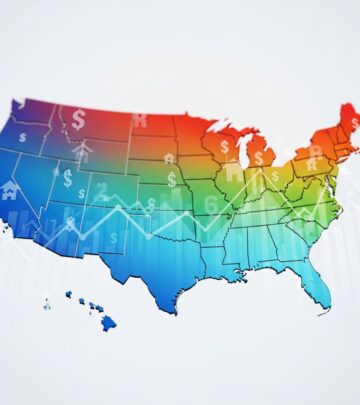
The United States housing market exhibits stark regional contrasts in pricing. California leads the nation with a median home price of $866,100, reflecting the state’s robust economy, limited housing supply, and high demand from tech workers and established residents. Alaska follows with a median price of $400,500, while Arizona stands at $470,200, demonstrating the premium placed on Sun Belt properties during recent years of migration.
On the more affordable end of the spectrum, Arkansas offers median home prices of $255,300, while Alabama comes in at $282,400. These lower-priced markets often appeal to first-time homebuyers, retirees on fixed incomes, and investors seeking rental property opportunities. The significant spread between the most and least expensive states—over $610,000—illustrates how dramatically location influences housing costs.
High-Cost Housing Markets
Premium housing markets concentrated in coastal regions and major metropolitan areas continue to command the highest prices. Beyond California’s exceptional median, states like Massachusetts, New York, and Connecticut maintain elevated pricing due to strong local economies, limited land availability, and historical demand pressures. These markets have historically appreciated faster than the national average, though 2025 has brought moderation to previous years’ explosive growth rates.
Affordable Housing Markets
Affordable markets primarily concentrate in the South and Midwest, where lower costs of living, available land, and less competitive bidding environments support lower median prices. States like Mississippi, Oklahoma, and Kansas offer opportunities for budget-conscious buyers, though these markets may face different economic dynamics and job market considerations than their high-cost counterparts.
2025 National Housing Market Overview
The 2025 housing market presents a complex landscape shaped by mortgage rate movements, affordability challenges, and shifting buyer preferences. The median home price nationwide in May 2025 was $422,800, up 1.3 percent year-over-year—marking a record high for May and the 23rd consecutive month of year-over-year price increases. This sustained appreciation, though slower than 2022-2024 rates, demonstrates continued upward pressure despite affordability concerns.
As of April 2025, the median home price stood at a near-record $437,942 according to Redfin data, up 44 percent from 2020. This dramatic five-year appreciation reflects pandemic-era migration patterns, limited housing inventory, and competitive bidding environments that defined the early 2020s real estate market.
Mortgage Rates Impact on Home Values
Mortgage rates significantly influence home pricing dynamics. The 30-year fixed mortgage rate stood at 6.32% as of late November 2025, having dipped amid economic volatility and a weaker job market. Many industry experts forecasted mortgage interest rates to hold steady in the mid-6% range throughout 2025, with home appreciation ranging between 1% and 4%. These elevated borrowing costs, double what they were five years ago, fundamentally reshape buyer purchasing power and market dynamics.
Affordability Challenges in 2025
Despite modest home price appreciation in 2025, affordability remains deeply challenged. Americans now need a six-figure annual household income—specifically $116,986—to comfortably afford a home today. This requirement represents a troubling divergence from income growth. Over the last quarter-century, housing prices have increased 197 percent while median household income has only increased by 40 percent, creating a sustainability crisis in housing affordability.
The monthly payment on a median-priced home purchased with a 20% down payment and current mortgage rates amounts to approximately 24% of typical family income, near the upper limits of recommended debt ratios. For many Americans, particularly younger buyers and those without substantial existing equity, homeownership remains aspirational rather than achievable.
Hidden Costs of Homeownership
Beyond mortgage payments, homeowners face substantial ongoing expenses. The average annual cost of owning and maintaining a single-family home in the U.S. exceeds $21,000 per year when accounting for property taxes, homeowners insurance, utilities, internet, cable, and maintenance. These “hidden costs” represent 2 percent of the median home price annually—a substantial figure that many prospective buyers underestimate when evaluating affordability.
State-by-State Median Home Price Snapshot
Understanding specific state markets helps buyers and investors identify opportunities and assess regional trends. Here are representative examples from different regions:
| State | Median Home Price | Market Position |
|---|---|---|
| California | $866,100 | Highest in nation |
| Arizona | $470,200 | High-cost market |
| Alaska | $400,500 | High-cost market |
| Alabama | $282,400 | Affordable market |
| Arkansas | $255,300 | Most affordable |
Housing Market Trends and Price Growth Patterns
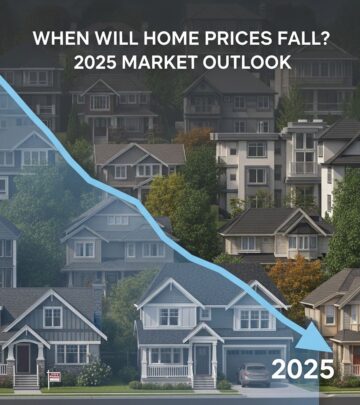
Home price appreciation has moderated significantly from pandemic-era peaks. The most recent data shows national price growth dipped to 1.4 percent from July 2024 to July 2025, reflecting a normalization from the 10-15% annual appreciation rates seen during 2021-2023. This deceleration, while still positive, suggests the market is finding more sustainable equilibrium levels.
The Housing Heat Index for 2025 reveals that overheated pandemic housing markets are cooling rapidly, particularly across the Sun Belt. Markets that experienced explosive appreciation during pandemic years—including Phoenix, Las Vegas, and Tampa—now show more moderate growth rates as inventory improves and demand normalizes. Conversely, some traditionally stable markets have shown greater resilience, indicating a geographic shift in housing demand patterns.
Future Outlook for Home Prices
Forecasts for remainder of 2025 and beyond suggest continued moderation in price appreciation. Industry experts predict home appreciation should range between 1% and 4% throughout 2025, significantly slower than historical averages and recent experience. This deceleration, while challenging for sellers, may provide relief to buyers by allowing wage growth to catch up with housing costs and improving affordability metrics.
Several factors will determine future price trajectories: mortgage rate movements, employment conditions, inventory levels, and macroeconomic health. A meaningful decline in mortgage rates would likely stimulate buyer demand and potentially accelerate appreciation, while economic weakness could suppress both rates and prices further.
Regional Market Dynamics and Competition
Competition among buyers varies dramatically by region. High-cost coastal markets typically feature multiple-offer situations, rapid sales cycles, and minimal negotiating room for buyers. Conversely, more affordable inland markets often allow buyers extended time to decide, opportunities to negotiate, and less pressure from competing offers. Understanding these dynamics helps buyers set appropriate expectations and strategies for their target markets.
Population migration patterns continue influencing regional pricing. States experiencing net migration from higher-cost areas tend to see appreciation as demand increases relative to supply. Meanwhile, states with stagnant or declining populations face less pricing pressure despite potentially attractive affordability advantages.
Strategies for Navigating the 2025 Housing Market
Savvy buyers and homeowners should consider several approaches when evaluating the current market. Getting financial “ducks in a row” early—establishing strong credit, accumulating down payment savings, and reviewing mortgage options—positions buyers to act quickly when rates and prices reach favorable equilibrium points. Those contemplating refinancing should monitor rates closely, as lower borrowing costs could unlock significant savings on existing mortgages.
For sellers, understanding local market conditions becomes increasingly important as appreciation moderates. Properties in cooling markets may require more aggressive pricing or enhanced marketing compared to previous years. For investors, opportunities may exist in markets with solid fundamentals but modest current valuations, positioning for appreciation as economy stabilizes.
Frequently Asked Questions About Median Home Prices
Q: What is the national median home price in 2025?
A: The median price of existing homes sold in October 2025 was $415,200 nationally, though prices vary significantly by region and specific metro area.
Q: Which state has the highest median home price?
A: California has the highest median home price at $866,100, reflecting strong economic demand, limited supply, and historically high appreciation rates.
Q: What states offer the most affordable median home prices?
A: Arkansas ($255,300) and Alabama ($282,400) offer among the most affordable median home prices in the nation, appealing to budget-conscious buyers and investors.
Q: How much income do I need to afford a median-priced home?
A: Americans need approximately $116,986 in annual household income to comfortably afford a median-priced home in 2025, based on current mortgage rates and lending standards.
Q: How have home prices changed in 2025?
A: Home price appreciation has moderated significantly, with national growth dipping to 1.4% from July 2024 to July 2025, compared to 10-15% annual rates during 2021-2023 pandemic boom.
Q: What percentage of mortgage payment should not exceed my income?
A: Financial experts recommend that mortgage payments not exceed 28-30% of gross monthly income. Currently, a typical mortgage payment represents approximately 24% of median family income based on current rates and prices.
Q: What factors most influence median home prices?
A: Median home prices are influenced by mortgage rates, local employment, population trends, available inventory, local economic conditions, school quality, and proximity to major metropolitan areas.
Q: Why do housing prices vary so dramatically between states?
A: Housing prices reflect regional economic strength, job availability, population density, land scarcity, local construction costs, school systems, climate preferences, and historical appreciation patterns that vary significantly by geography.
References
- What’s Ahead for Housing in 2025? — Unlock. 2024. https://www.unlock.com/blog/the-mortgage-market/whats-ahead-for-housing-in-2025/
- Housing Market Trends For Third Quarter 2025 — Bankrate. 2025. https://www.bankrate.com/real-estate/housing-trends/
- Existing-Home Prices Rise Again, But Just Barely — Bankrate. 2025. https://www.bankrate.com/real-estate/existing-home-sales/
- Hidden Homeownership Costs Hit $21,000 A Year In 2025 — Bankrate. 2025. https://www.bankrate.com/home-equity/hidden-costs-of-homeownership-study/
- Mortgage Rates Fall Amid Economic Volatility — Bankrate. 2025-11-25. https://www.bankrate.com/mortgages/analysis/mortgage-rates-november-25-2025/
- Housing Heat Index 2025 — Bankrate. 2025. https://www.bankrate.com/real-estate/housing-heat-index/
- Inflation and the Housing Market: Decoding the Latest Numbers — Bankrate. 2025. https://www.bankrate.com/real-estate/inflation-housing-market/
Similar Articles








Read full bio of Sneha Tete