Mean: Understanding the Average in Statistics
Master the mean: Learn how this fundamental statistical measure works in finance and data analysis.

The mean, commonly referred to as the average, is one of the most fundamental concepts in statistics and data analysis. Whether you’re analyzing investment returns, evaluating company performance, or understanding economic trends, the mean provides a central value that represents a dataset. This article explores the definition of mean, its calculation methods, practical applications in finance, and how it compares to other measures of central tendency.
What Is the Mean?
The mean is the arithmetic average of a set of numbers, calculated by adding all values in a dataset and dividing by the total count of values. It serves as a measure of central tendency, providing a single number that represents the typical value within a distribution. The mean is widely used across various fields, including finance, economics, psychology, and scientific research, making it an essential tool for data interpretation and decision-making.
In financial contexts, the mean is used to calculate average stock prices, average returns on investments, average expenses, and countless other metrics that help investors and analysts understand market behavior and company performance. The simplicity of calculating the mean makes it an accessible starting point for anyone beginning to work with statistical data.
How to Calculate the Mean
Calculating the mean is straightforward and follows a simple mathematical formula. Understanding the calculation process is fundamental to applying mean analysis in various contexts.
The Basic Formula
The formula for calculating the mean is:
Mean = (Sum of all values) / (Number of values)
Alternatively expressed mathematically as:
Mean = Σx / n
Where Σx represents the sum of all values and n represents the count of values in the dataset.
Step-by-Step Calculation Example
Consider a simple example with the following monthly stock returns: 5%, 3%, 8%, 6%, and 4%.
- Step 1: Add all values: 5 + 3 + 8 + 6 + 4 = 26
- Step 2: Count the number of values: 5
- Step 3: Divide the sum by the count: 26 / 5 = 5.2%
In this example, the mean monthly return is 5.2%, which represents the average performance across the five-month period.
Types of Means Used in Finance
While the arithmetic mean is the most common type of average, there are several variations used in financial analysis and statistical work.
Arithmetic Mean
The arithmetic mean is the most straightforward and frequently used type of mean. It treats all values equally and is ideal for normally distributed data. For most everyday applications in finance, including calculating average portfolio returns or average company expenses, the arithmetic mean is the appropriate choice.
Weighted Mean
The weighted mean assigns different levels of importance to different values in a dataset. This is particularly useful in portfolio analysis, where different assets may have different percentages allocated. For example, if a portfolio contains 60% stocks and 40% bonds, the weighted mean return would reflect these proportions rather than treating both asset classes equally.
The weighted mean formula is:
Weighted Mean = Σ(value × weight) / Σweight
Geometric Mean
The geometric mean is calculated by multiplying all values together and taking the nth root, where n is the number of values. This type of mean is particularly useful for calculating compound growth rates, such as average investment returns over multiple years. The geometric mean is always less than or equal to the arithmetic mean and is preferred when dealing with percentage changes or growth rates.
Mean vs. Median vs. Mode: Understanding the Differences
While the mean is a popular measure of central tendency, it’s important to understand how it differs from other statistical measures, particularly the median and mode.
| Measure | Definition | Best Used For | Affected by Outliers |
|---|---|---|---|
| Mean | Sum of all values divided by count | Normal distributions, general analysis | Yes, highly sensitive |
| Median | Middle value when data is ordered | Skewed data, real estate prices | No, resistant to outliers |
| Mode | Most frequently occurring value | Categorical data, popularity analysis | No impact from outliers |
When to Use Each Measure
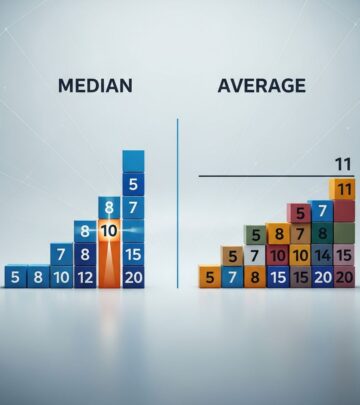
The choice between mean, median, and mode depends on your data characteristics and analysis objectives. The mean is ideal for normally distributed data without extreme outliers. The median is preferable when analyzing skewed distributions, such as income levels or housing prices where extreme values can distort the average. The mode is most useful for categorical data or identifying the most common occurrence in a dataset.
Real-World Applications of the Mean in Finance
The mean plays a critical role in various financial analyses and investment decisions.
Calculating Average Returns
Investment professionals frequently calculate mean returns to evaluate asset performance. This helps investors understand historical performance and make informed decisions about future investments. By calculating the average annual return over a multi-year period, investors can assess whether an investment meets their return objectives.
Risk Assessment
The mean is used in conjunction with standard deviation to assess investment risk. Understanding the average return alongside how much returns deviate from that average provides insight into investment volatility and risk profile.
Valuation Metrics
Financial analysts use mean calculations for various valuation metrics, including average price-to-earnings ratios, average dividend yields, and average revenue multiples. These means help identify whether a company is trading at a premium or discount relative to historical averages.
Economic Indicators
Government agencies and economists rely on mean calculations for critical economic indicators such as average wages, average home prices, and average consumer spending, which guide monetary and fiscal policy decisions.
Advantages and Limitations of Using the Mean
Advantages
- Simplicity: The mean is easy to calculate and understand, making it accessible to analysts at all levels
- Mathematically Useful: The mean is used in advanced statistical techniques and is easier to work with mathematically than other measures
- Universal Application: The mean can be applied to virtually any numeric dataset
- Comprehensive: All values in the dataset influence the mean, providing a complete picture of the data
Limitations
- Sensitivity to Outliers: Extreme values can significantly skew the mean, making it unrepresentative of the typical value
- Not Ideal for Skewed Data: In distributions with a tail of extreme values, the mean may not represent the most common experience
- Can Mask Variability: The mean alone does not indicate the spread or variability of data
- May Be Misleading: Without context or additional measures, the mean can provide an incomplete picture of dataset characteristics
The Importance of Context When Interpreting Mean Values
While the mean provides valuable information, it must be interpreted within proper context. A single mean value, without understanding the underlying data distribution, standard deviation, or other statistical measures, can lead to misguided conclusions. For example, an average household income might not reflect the actual earning situation of most households if wealth is concentrated among a small percentage of the population. Similarly, an average investment return might not represent typical investor experience if returns vary dramatically year to year.
Financial professionals and investors should always consider the mean alongside other statistical measures, including median, mode, standard deviation, and quartile analysis, to develop a comprehensive understanding of financial data and make well-informed decisions.
Frequently Asked Questions (FAQs)
Q: What is the difference between mean and average?
A: The terms “mean” and “average” are often used interchangeably in everyday language. Technically, the mean is a specific type of average calculated by summing all values and dividing by their count. However, “average” can also refer to other measures like median or mode, though mean is the most common interpretation.
Q: Why is the mean important in investment analysis?
A: The mean helps investors understand historical performance, assess expected returns, compare investment options, and evaluate whether an investment aligns with their objectives. It provides a single, comparable metric across different investments and time periods.
Q: How do outliers affect the mean?
A: Outliers can significantly distort the mean because every value influences the average equally. A single extremely high or low value can pull the mean away from what represents the typical value in the dataset, making the median a better measure in such cases.
Q: When should I use the geometric mean instead of arithmetic mean?
A: The geometric mean is preferred when analyzing compound growth rates, percentage changes, or returns over multiple periods. It accounts for the compounding effect and is more accurate than the arithmetic mean for investment returns and growth rate calculations.
Q: How is the mean used in stock price analysis?
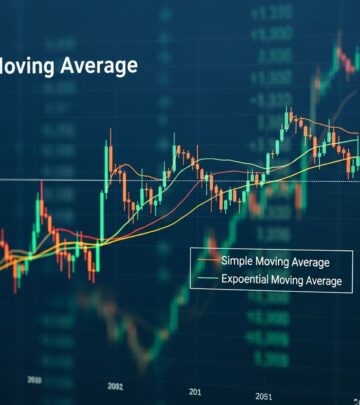
A: Analysts calculate mean stock prices over specific periods to identify price trends, support and resistance levels, and whether a stock is trading above or below its historical average. The 50-day and 200-day moving averages are popular mean-based technical indicators.
Q: Can the mean be negative?
A: Yes, the mean can be negative if the dataset contains negative values that, when summed and divided by the count, result in a negative average. This occurs frequently in financial analysis, such as when calculating average losses or negative returns.
References
- Statistics and Probability — Khan Academy. Accessed 2024. https://www.khanacademy.org/math/statistics-probability
- Introduction to the Practice of Statistics — David S. Moore, George P. McCabe, and Bruce A. Craig. W.H. Freeman, 2021. DOI: ISBN 978-1-319-24027-7
- Financial Analysis and Valuation — U.S. Securities and Exchange Commission. Accessed 2024. https://www.sec.gov/investor
- Mean, Median, Mode, and Standard Deviation — National Institute of Standards and Technology (NIST). Updated 2024. https://www.nist.gov
- Statistical Methods for Financial Markets — Ruppert, David and Matteson, David S. Springer, 2015.
Similar Articles








Read full bio of Sneha Tete