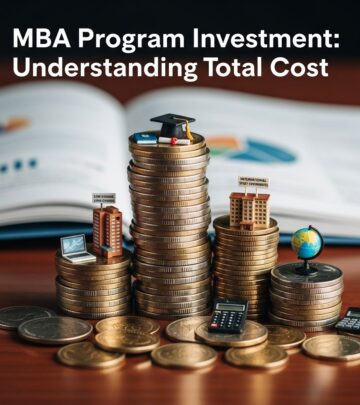
MBA: Master of Business Administration Degree
Understand MBA degrees, career benefits, and how they advance business professionals.

A Master of Business Administration, commonly known as an MBA, is one of the most sought-after graduate degrees in the world. It represents advanced education in business management and prepares professionals for leadership roles across various industries. The MBA has become a cornerstone credential for those seeking to advance their careers, transition to new fields, or launch entrepreneurial ventures.
What Is an MBA?
An MBA is a graduate-level degree that provides comprehensive training in business fundamentals and advanced management concepts. Unlike undergraduate business programs, an MBA program focuses on practical application of business theories and real-world problem-solving. The curriculum typically spans two years for full-time programs, though part-time and online options can extend this timeline.
The degree combines rigorous academic training with experiential learning, including case studies, simulations, internships, and consulting projects. MBA programs emphasize developing critical thinking skills, leadership abilities, and strategic decision-making capabilities that prepare graduates for executive-level positions.
Core Components of an MBA Program
MBA curricula generally include both foundational and specialized courses designed to create well-rounded business leaders:
Foundation Courses
- Financial Accounting: Understanding financial statements, reporting standards, and accounting principles
- Managerial Accounting: Cost analysis, budgeting, and internal financial management
- Corporate Finance: Investment decisions, capital structure, and valuation methods
- Microeconomics and Macroeconomics: Economic principles affecting business operations and markets
- Organizational Behavior: Human resource management and team dynamics
- Marketing Management: Consumer behavior, market strategy, and brand development
- Operations Management: Supply chain, process optimization, and quality control
- Business Strategy: Competitive analysis and strategic planning
Specialized Electives
Most MBA programs allow students to select elective courses aligned with their career interests. Common specializations include:
- Finance and Investment Management
- Marketing and Brand Strategy
- Entrepreneurship and Innovation
- International Business
- Healthcare Management
- Technology Management
- Real Estate and Property Development
- Sustainability and Corporate Social Responsibility
Types of MBA Programs
Full-Time MBA
Full-time MBA programs typically require two years of intensive study on campus. Students attend classes daily and may participate in internships, study abroad experiences, and networking events. This format is ideal for recent graduates or those seeking a complete career transition.
Part-Time MBA
Part-time MBA programs allow working professionals to pursue the degree while maintaining employment. Classes are often scheduled in evenings and weekends, and the program duration typically extends to three or four years. This option appeals to mid-career professionals seeking advancement without leaving their jobs.
Executive MBA (EMBA)
Executive MBA programs target senior-level professionals with extensive work experience, typically requiring at least 10 years of management experience. EMBAs are designed to fit around executive schedules, often featuring intensive weekend modules or abbreviated formats. These programs emphasize strategic decision-making and cost between $100,000 and $250,000.
Online MBA
Online MBA programs offer flexibility for professionals worldwide. Students complete coursework remotely through digital platforms, though some programs require periodic in-person sessions. Online MBAs are increasingly popular and often more affordable than traditional programs.
Specialized MBA Programs
Some institutions offer targeted MBA programs focused on specific industries or sectors, such as MBA in Finance, MBA in Healthcare Administration, or MBA in Information Technology. These programs provide deeper expertise in particular business domains.
MBA Admission Requirements
Admission to MBA programs typically requires meeting several criteria:
- Bachelor’s Degree: From an accredited university in any field
- GMAT or GRE: Standardized test scores demonstrating quantitative and verbal abilities
- Work Experience: Most programs prefer 2-5 years of professional experience
- GPA: Typically a minimum 3.0 undergraduate GPA
- Application Essays: Demonstrating career goals and motivation
- Letters of Recommendation: From former managers or professors
- Interview: With admissions officers to assess fit and potential
- English Proficiency: For international students, TOEFL or IELTS scores
Career Benefits and Outcomes
Salary Enhancement
MBA graduates typically experience significant salary increases. According to recent data, MBA holders earn substantially more than their bachelor’s-degree counterparts over their careers. The Graduate Management Admission Council (GMAC) reports that MBA graduates earn median salaries exceeding $120,000 within five years of graduation, with some sectors offering considerably higher compensation.
Career Advancement
An MBA credential opens doors to senior management positions including:
- Chief Executive Officer (CEO)
- Chief Financial Officer (CFO)
- Vice President of Operations
- Director of Strategy and Planning
- Regional Manager
- Business Unit Leader
Career Transition
The MBA facilitates career changes by providing credentials and networks in new industries. Professionals can transition from technical roles to management, from non-profit to corporate sectors, or into entirely new industries.
Entrepreneurial Opportunities
MBA graduates frequently launch their own ventures. The business education, network connections, and access to funding resources through alumni networks provide valuable support for entrepreneurs.
Cost and Return on Investment
Tuition Expenses
MBA program costs vary considerably based on institution type and format:
| Program Type | Average Cost Range | Duration |
|---|---|---|
| Public University Full-Time | $30,000 – $60,000 | 2 years |
| Private University Full-Time | $80,000 – $150,000 | 2 years |
| Top-Tier Business School | $120,000 – $250,000 | 2 years |
| Part-Time MBA | $40,000 – $120,000 | 3-4 years |
| Online MBA | $25,000 – $80,000 | 2-3 years |
| Executive MBA | $100,000 – $250,000 | 1-2 years |
Return on Investment (ROI)
The MBA ROI depends on several factors including program prestige, graduate employment, salary trajectory, and field of study. While total costs can be substantial, research indicates that MBA graduates recover their investment within 5-10 years through higher earnings. Some studies show lifetime earnings premiums exceeding $800,000 for MBA holders compared to bachelor’s degree holders.
Financing Options
- Employer Sponsorship: Many companies fund MBA education for high-potential employees
- Federal Student Loans: Graduate PLUS loans and Stafford loans available to qualified applicants
- Scholarships and Grants: Merit-based and need-based financial aid from universities
- Personal Savings: Direct payment from accumulated funds
- Payment Plans: Institutional financing allowing monthly payments
MBA Accreditation and Rankings
Accreditation ensures that MBA programs meet rigorous educational standards. The Association to Advance Collegiate Schools of Business (AACSB) is the leading accrediting body for business schools globally. Other recognized accrediting organizations include the European Quality Improvement System (EQUIS) and the Association of MBAs (AMBA).
Program rankings from organizations like Financial Times, The Economist, US News & World Report, and QS provide insights into program quality, faculty expertise, graduate outcomes, and international reputation. While rankings should not be the sole decision factor, they offer useful comparative data for prospective students.
Networking and Alumni Benefits
One of the most valuable aspects of MBA programs is the network formed during studies. MBA cohorts typically include professionals from diverse industries and backgrounds, creating lifelong business connections. Alumni networks provide ongoing professional support, mentorship, job opportunities, and business collaboration possibilities. Top-tier business schools boast alumni networks spanning thousands of professionals in senior positions globally.
Is an MBA Right for You?
Consider an MBA if you:
- Seek senior management or executive positions
- Want to transition to a new industry or function
- Plan to launch an entrepreneurial venture
- Need advanced business credentials for career advancement
- Aim to significantly increase earning potential
- Want to access exclusive professional networks
- Are 3-5 years into your career with clear professional goals
Alternative Options if MBA is not suitable:
- Professional certifications (CFA, PMP, CPA)
- Executive education programs
- Industry-specific master’s degrees
- Professional development and online courses
- Mentorship and on-the-job advancement
Frequently Asked Questions (FAQs)
Q: How long does an MBA program take?
A: Full-time MBA programs typically take 2 years, while part-time programs range from 3-4 years. Online and executive programs vary in duration, often ranging from 1.5 to 3 years depending on the specific program structure.
Q: Do I need work experience before applying for an MBA?
A: While not always mandatory, most MBA programs prefer 2-5 years of professional experience. However, some programs accept recent graduates, particularly those with strong academic records and demonstrated leadership potential.
Q: What is the average MBA graduate salary?
A: MBA graduate salaries vary by school prestige, field, and location. Median starting salaries for MBA graduates from top-tier schools range from $100,000 to $150,000, with experienced MBA holders earning significantly more in senior positions.
Q: Is an online MBA as valuable as a traditional MBA?
A: A reputable online MBA from an accredited institution carries equivalent value to traditional programs. However, employer perception varies, so choosing a well-recognized program is crucial. Top universities now offer accredited online MBA programs equally valued by employers.
Q: Can I work while pursuing an MBA?
A: Yes, many MBA programs are designed for working professionals. Part-time, evening, weekend, and online formats accommodate full-time employment. However, full-time MBA programs require significant time commitment and are typically completed without concurrent full-time work.
Q: What is the GMAT and is it required?
A: The Graduate Management Admission Test (GMAT) assesses quantitative, verbal, and analytical writing skills. Most MBA programs require GMAT or GRE scores as part of the application process, though some schools now offer test-optional admissions policies.
Q: How much does an MBA cost on average?
A: Costs range from $25,000 for online programs to $250,000+ for top-tier business schools. Public universities typically charge $30,000-$60,000, while private institutions average $80,000-$150,000 for full-time programs.
Q: What industries hire MBA graduates most?
A: Consulting, finance, technology, healthcare, and manufacturing are primary employers of MBA graduates. However, MBA holders work across all industries in management and leadership roles.
References
- Graduate Management Admission Council (GMAC) — 2024 Corporate Recruiters Survey — GMAC. 2024. https://www.gmac.com/
- Association to Advance Collegiate Schools of Business (AACSB) Accreditation Standards — AACSB International. 2024. https://www.aacsb.edu/
- U.S. Bureau of Labor Statistics — Management Occupations Career Outlook — U.S. Department of Labor. 2024. https://www.bls.gov/ooh/management/top-executives.htm
- Financial Times Global MBA Rankings Methodology — Financial Times. 2024. https://www.ft.com/
- Council of Graduate Schools — Graduate Enrollment and Degrees: 2024 Report — Council of Graduate Schools. 2024. https://cgsnet.org/
Similar Articles








Read full bio of medha deb