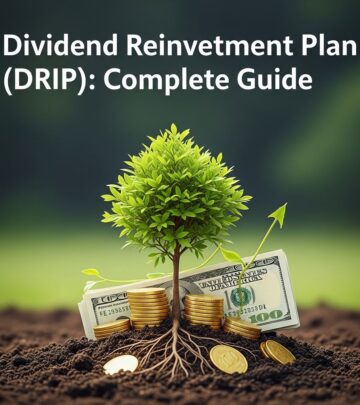
Maximizing Long-Term Wealth Through Dividend Reinvestment
Transform your investment returns by automatically reinvesting dividends for exponential portfolio growth.

Understanding the Foundation of Dividend Reinvestment
When you own shares in dividend-paying companies or funds, you receive periodic cash payments representing your share of company profits or fund distributions. Traditionally, investors could receive these payments directly into their accounts. However, a powerful alternative strategy exists that harnesses the mathematical principle of compounding to dramatically accelerate wealth accumulation over time.
Dividend reinvestment is the practice of using those cash distributions to automatically purchase additional shares of the same investment rather than withdrawing the funds. This seemingly simple decision can profoundly impact your portfolio’s trajectory over decades, transforming modest regular payments into substantial wealth through the exponential power of compounding returns.
The Mechanics Behind Compounding Growth
The fundamental advantage of reinvesting dividends lies in a principle that has been called “the eighth wonder of the world” by financial experts: compounding. When you reinvest dividends, you create a self-reinforcing cycle where your earnings generate additional earnings.
Consider a practical illustration: Imagine you hold 1,000 shares of a company valued at $20 per share with an annual dividend of $1 per share. Your initial dividend payment totals $1,000. Rather than pocketing this amount, you use it to purchase 50 additional shares at the current market price. The following year, your dividend calculation now applies to 1,050 shares instead of 1,000, generating slightly more income. This newly larger payment again purchases additional shares, further increasing your ownership stake. Over successive years and decades, this snowball effect accelerates exponentially, creating dramatically superior returns compared to simply withdrawing dividends as cash.
The power of this mechanism intensifies over longer time horizons. While the impact might seem modest during the first few years, the compounding effect becomes increasingly pronounced across decades. Investors who begin this strategy in their twenties or thirties can witness truly transformative results by retirement age.
Dividend Reinvestment Plans: Streamlining the Process
To make dividend reinvestment practical and accessible, most major financial institutions offer formal dividend reinvestment plans, commonly referred to as DRIPs. These structured programs automate the entire reinvestment process, eliminating the need for manual intervention or ongoing decision-making.
How DRIPs Function in Practice
When a dividend is declared and paid, a DRIP automatically uses the entire distribution amount to purchase additional shares on your behalf. What makes DRIPs particularly attractive is that these purchases typically occur without transaction fees or commissions—costs that would otherwise erode your returns. Additionally, modern DRIPs allow fractional share purchases, ensuring that even modest dividend payments contribute meaningfully to your growing position.
For example, if your dividend payment equals $47.50 but the stock currently trades at $52 per share, a traditional broker might require you to wait until the dividend accumulated to at least $52, or charge you fees to purchase a partial share. With DRIP functionality, that $47.50 immediately purchases approximately 0.91 shares, maximizing the capital deployed toward future growth.
Key Advantages of Formal DRIP Programs
- Zero-Commission Transactions: Unlike standard brokerage trades, DRIP purchases incur no fees, preserving your full dividend amount for reinvestment.
- Fractional Share Capability: Every dollar of dividends gets deployed toward additional ownership, with no cash left uninvested.
- Discounted Purchase Opportunities: Some companies offer shares through their DRIPs at discounts to current market prices, further enhancing returns for participants.
- Hands-Off Automation: Once enrolled, the process requires no ongoing attention or decision-making, allowing you to remain invested through market fluctuations.
- Tax Documentation Simplification: Many plans provide consolidated records that facilitate tax filing for accounts subject to capital gains taxation.
Setting Up Your Dividend Reinvestment Strategy
Implementing dividend reinvestment can be accomplished through two primary channels, each suited to different investor preferences and situations.
Direct Company Dividend Reinvestment Programs
Many established corporations administer their own DRIP programs, allowing shareholders to enroll directly without needing a brokerage account. This approach works well for investors focused on a specific company and seeking to build a concentrated position over time. You can typically find information about a company’s DRIP program on its investor relations website or by contacting the company’s shareholder services department directly.
Brokerage-Based Reinvestment Features
Most modern investment brokers and financial institutions offer dividend reinvestment as a standard account feature. When purchasing investments through your brokerage account, you can typically designate whether dividends should be automatically reinvested or deposited as cash. This method provides greater flexibility, particularly if you hold multiple dividend-paying securities and prefer managing everything through a single platform.
The setup process is straightforward. During the initial purchase transaction or through your account settings, you select the “reinvest” option rather than directing dividends to your cash settlement fund. Once activated, the automation continues indefinitely unless you choose to modify your preferences.
Strategic Considerations for Different Investor Profiles
While dividend reinvestment offers powerful benefits for many investors, its appropriateness depends on your specific financial circumstances and investment philosophy.
When Reinvestment Aligns With Your Objectives
Dividend reinvestment proves particularly valuable for investors pursuing long-term wealth accumulation through growth-oriented portfolios. If your primary goal involves building maximum wealth over several decades without requiring regular income from investments, reinvestment creates the ideal mathematical framework for achieving that objective.
This strategy also suits investors who prefer a hands-off, passive approach to portfolio management. By automating dividend deployment, you eliminate emotional decisions about whether to invest additional funds—a common mistake that leads investors to hold excess cash during bull markets or to miss buying opportunities.
Additionally, reinvestment works well for investors with limited capital who benefit from dollar-cost averaging effects. By purchasing shares consistently over time at various price points, you naturally reduce the impact of market timing risk. Some quarters you’ll buy shares at lower prices; in others, at higher prices. Over extended periods, this averaging effect smooths out market volatility’s impact on your average cost basis.
Scenarios Favoring Alternative Approaches
Certain investor situations call for taking dividends as cash rather than reinvesting. In volatile or declining markets, reinvesting can lock you into progressively higher purchase prices for weakening assets. If you hold an underperforming security and expect further deterioration, continuing to reinvest dividends risks compounding losses rather than gains.
Similarly, if you’ve identified emerging investment opportunities that better align with your evolving financial strategy, holding dividends as cash provides the liquidity needed to pursue those opportunities. Taking distributions as cash creates flexibility to diversify into new sectors, geographic regions, or asset classes that merit the capital allocation.
Investors in or approaching retirement may also prefer receiving dividends as cash to fund living expenses, rather than reinvesting for continued growth they won’t require.
Maximizing Returns Through Strategic Selection
The effectiveness of dividend reinvestment depends substantially on selecting investments with strong fundamentals and reliable dividend growth trajectories.
Identifying Suitable Reinvestment Candidates
Focus your reinvestment strategy on companies or funds demonstrating consistent dividend payment histories and solid financial health. Mature companies in stable industries—including consumer staples, utilities, healthcare, and established financial institutions—typically provide reliable dividend growth. These sectors tend to generate steady cash flows that support regular distributions.
Avoid reinvesting dividends from speculative stocks with erratic payout records or companies showing deteriorating financial metrics. If a company’s dividend appears vulnerable to elimination or reduction, reinvestment could lock you into declining capital.
Diversification Through Dividend ETFs
Rather than concentrating all reinvested dividends into a single stock, many investors benefit from directing reinvestment toward diversified dividend-focused exchange-traded funds (ETFs). This approach provides exposure to numerous dividend-paying companies across different sectors, reducing company-specific risk while maintaining the compounding benefits of reinvestment.
ETFs focused on dividend growth or high-yield strategies often incorporate automatic reinvestment features, allowing you to capture diversification benefits without sacrificing automation.
Aligning Reinvestment With Your Complete Financial Strategy
Dividend reinvestment shouldn’t exist in isolation from your broader financial planning. Several strategic considerations should guide your reinvestment decisions.
Time Horizon and Compounding Potential
The benefits of dividend reinvestment amplify dramatically with longer investment time horizons. While modest gains accumulate within the first five years, true transformational returns typically emerge across 20-30 year periods or longer. If your investment objective involves accumulating wealth over decades before retirement, reinvestment becomes nearly essential for maximizing outcomes. Conversely, if you need the funds within a few years, the compounding benefits remain limited.
Risk Profile Alignment
Your overall risk tolerance should inform which securities you select for reinvestment. Conservative investors typically benefit from reinvesting dividends from high-quality, stable dividend payers with lower volatility. More aggressive investors might reinvest dividends from growth-oriented dividend stocks, accepting greater price fluctuations for higher long-term appreciation potential.
Dollar-Cost Averaging Integration
Dividend reinvestment naturally complements dollar-cost averaging strategies, where you invest fixed amounts at regular intervals regardless of market conditions. By reinvesting dividends automatically, you’re effectively implementing ongoing dollar-cost averaging without conscious effort. This systematic approach helps insulate your returns from the consequences of poor market timing.
Practical Tools for Long-Term Planning
To assess the potential impact of dividend reinvestment on your specific situation, numerous calculation tools exist that project portfolio growth under various scenarios. By inputting variables including your initial investment amount, expected dividend yield, anticipated growth rates, and time horizon, these calculators estimate the potential wealth accumulation from reinvestment strategies.
Using such tools helps establish realistic expectations and reinforces the behavioral discipline necessary for maintaining a reinvestment strategy through market volatility.
Frequently Asked Questions About Dividend Reinvestment
Are there tax implications to dividend reinvestment?
Yes, reinvested dividends remain taxable in the year they’re distributed, even though you didn’t receive cash. In taxable accounts, you’ll owe taxes on dividend income regardless of whether you reinvest or withdraw the funds. Consider tax-advantaged accounts like retirement plans when possible to defer or eliminate these tax consequences.
Can I switch between reinvestment and cash dividends?
Most brokers allow you to modify your dividend preferences at any time. You can reinvest dividends from some holdings while taking cash from others, or change your entire portfolio’s approach based on evolving circumstances.
How does reinvestment work with mutual funds and ETFs?
Mutual funds and ETFs function identically to stocks regarding reinvestment. Distributions, whether labeled as dividends or capital gains, can be automatically reinvested into additional fund shares through DRIP features offered by most brokers and fund companies.
Does reinvestment impact trading flexibility?
No. You retain full ability to sell shares acquired through reinvestment at any time, just as with originally purchased shares. Reinvestment doesn’t restrict your account access or trading capabilities.
Building Lasting Wealth Through Consistent Discipline
Dividend reinvestment exemplifies how disciplined, consistent approaches to investing yield superior outcomes compared to reactive, emotional decision-making. By automating dividend deployment, you remove behavioral obstacles that prevent many investors from achieving their financial potential.
The combination of automatic reinvestment, fractional share purchases, zero commissions, and compounding returns creates a powerful wealth-building mechanism accessible to investors of all account sizes. Whether managing significant portfolios or beginning with modest initial investments, dividend reinvestment provides a proven path toward building meaningful long-term wealth.
The key to success involves selecting high-quality dividend-paying investments, maintaining a long-term perspective, and allowing compounding to work across extended time periods. For most long-term investors, activating dividend reinvestment represents one of the highest-impact, lowest-effort decisions they can make toward achieving their financial objectives.
References
- Why reinvesting dividends is essential for compounding growth — Saxo Bank. 2024. https://www.home.saxo/learn/guides/financial-literacy/why-reinvesting-dividends-is-essential-for-compounding-growth
- How a Dividend Reinvestment Plan Works — The Charles Schwab Corporation. 2024. https://www.schwab.com/learn/story/how-dividend-reinvestment-plan-works
- Reinvest dividends to stretch your investment dollars — Vanguard. 2024. https://investor.vanguard.com/investor-resources-education/online-trading/reinvest-dividends
- Dividend Reinvestment: Should You Reinvest or Take the Cash? — HeyGoTrade. 2024. https://heygotrade.com/en/blog/dividend-reinvestment-definition-benefits-and-when-to-do-it
- Dividend Reinvestment Plans: What They Are and How They Work — NerdWallet Inc. 2024. https://www.nerdwallet.com/investing/learn/stock-dividend-reinvestment-plans
Similar Articles








Read full bio of Sneha Tete