Vehicle Fuel Economy: Comprehensive Guide To Better Mileage
Learn how to improve your car's fuel economy and reduce expenses.
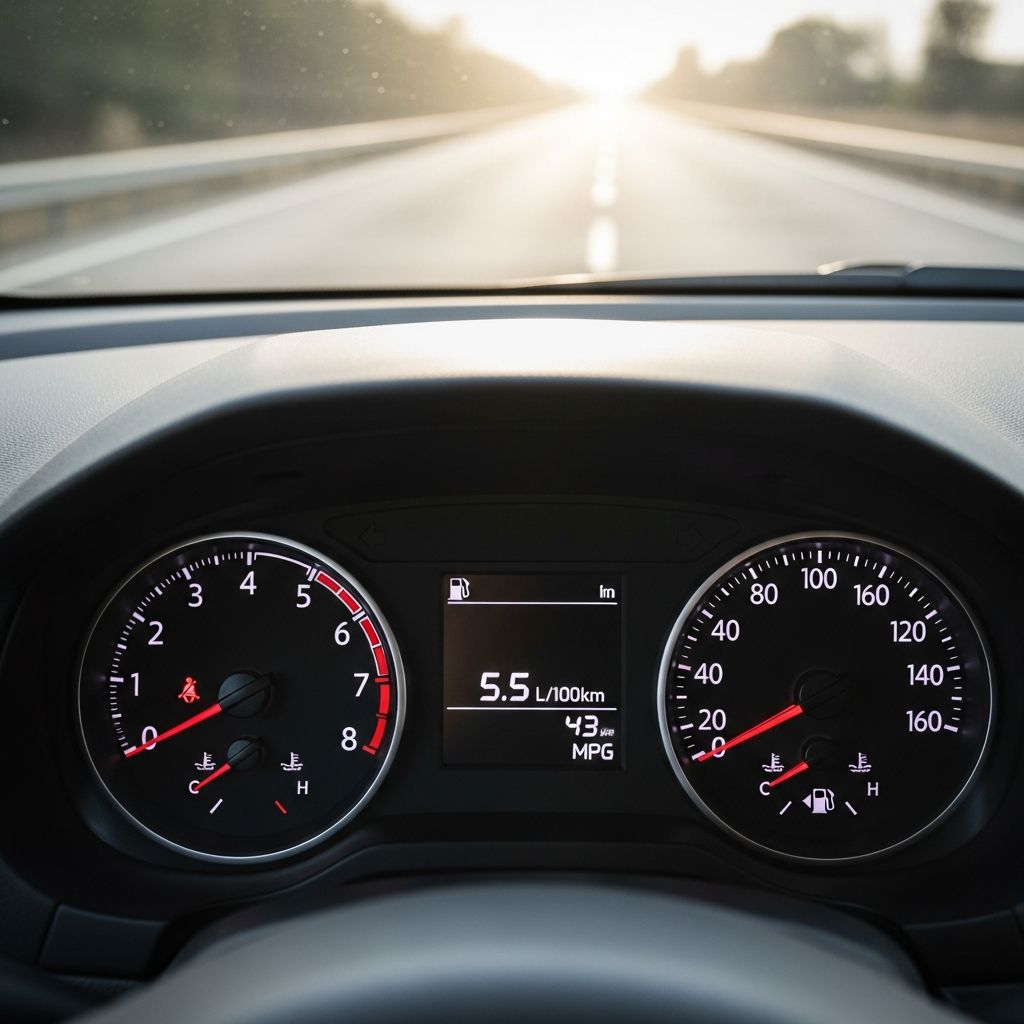
The cost of fuel represents a significant portion of vehicle ownership expenses for most drivers. Understanding how to maximize your car’s fuel economy can lead to substantial savings over time while also reducing your environmental impact. Fuel economy, often expressed as miles per gallon (MPG) in the United States or liters per 100 kilometers (L/100km) in other regions, measures how efficiently a vehicle converts fuel into forward motion. Whether you’re shopping for a new car or looking to improve your current vehicle’s performance, learning the fundamentals of fuel efficiency is essential.
Understanding Fuel Economy Measurements
Fuel economy refers to the distance a vehicle can travel on a given amount of fuel. In the United States, this metric is commonly expressed as miles per gallon (MPG), which indicates how many miles your car can drive on a single gallon of gasoline. Other regions use liters per 100 kilometers (L/100km) or kilometers per liter (km/L) as their standard measurement.
The Environmental Protection Agency (EPA) provides standardized ratings that help consumers compare vehicles fairly. These ratings include:
- City MPG – Performance during stop-and-go driving conditions typical of urban environments
- Highway MPG – Performance during sustained cruising on open roads at consistent speeds
- Combined MPG – A weighted average that reflects both city and highway driving patterns
Understanding these distinctions helps you make informed decisions about which vehicles best suit your driving patterns. A vehicle with excellent highway ratings may not perform as well in city traffic, and vice versa.
The Role of Engine Technology in Fuel Consumption
Modern engine design plays a crucial role in determining how efficiently a vehicle uses fuel. Engine size and type directly impact fuel economy, with smaller, well-engineered engines typically delivering superior efficiency compared to larger, more powerful alternatives.
Contemporary vehicles employ several advanced technologies to enhance engine efficiency:
- Turbocharging – Compresses incoming air to improve combustion efficiency
- Direct fuel injection – Delivers precise amounts of fuel directly into the combustion chamber
- Cylinder deactivation – Disables unused cylinders during light-load conditions to conserve fuel
- Variable valve timing – Optimizes the opening and closing of engine valves for improved performance
These innovations allow engines to generate adequate power while consuming considerably less fuel. Many fuel-efficient vehicles utilize three- or four-cylinder engines, often paired with electric motors in hybrid configurations. Diesel engines deserve special mention, as they generally achieve superior fuel efficiency compared to their gasoline counterparts. Diesel engines use compression ignition instead of spark plugs, resulting in more efficient fuel combustion. Modern turbocharged diesel engines can achieve 25% greater efficiency than comparable gasoline engines and deliver impressive torque while consuming less fuel at each rpm.
Transmission Systems and Efficiency
The transmission system significantly influences how power from the engine reaches the wheels and ultimately affects fuel consumption. Continuously Variable Transmissions (CVTs) have become increasingly common in efficient vehicles because they seamlessly adjust to maintain optimal engine speed without the discrete gear shifts of conventional automatics.
Modern automatic transmissions with multiple gears offer efficiency advantages over older designs by allowing the engine to operate at lower revolutions per minute (RPM) during highway driving. While manual transmissions can be efficient in skilled hands, contemporary multi-speed automatics and CVTs typically deliver superior real-world fuel economy.
Vehicle Design and Aerodynamics
How a vehicle moves through air significantly impacts its fuel consumption. Aerodynamic design reduces wind resistance, allowing cars to require less engine power to maintain speed. Modern vehicles employ sleek exterior shapes that minimize drag coefficients, resulting in improved efficiency at highway speeds.
Vehicle weight also plays a critical role in fuel economy. Heavier vehicles require more energy to accelerate and maintain speed, directly reducing miles per gallon. Manufacturers achieve weight reduction through advanced materials like aluminum and high-strength steel while maintaining safety standards. Low-rolling-resistance tires complement these aerodynamic improvements by reducing the friction between the tire and road surface.
Fuel Type Considerations
Different fuel types offer varying efficiency characteristics. Regular gasoline vehicles generally offer lower operating costs and simpler maintenance compared to vehicles requiring premium fuel. However, the fuel type question extends beyond simple gasoline options:
| Fuel Type | Efficiency Profile | Best Use Case |
|---|---|---|
| Regular Gasoline | Moderate efficiency with lower operating costs | Daily commuting and mixed driving |
| Diesel | Superior efficiency, especially for highway and heavy loads | Long-distance driving and higher mileage applications |
| Hybrid | Excellent efficiency in city driving through regenerative braking | Urban environments with frequent stops |
| Plug-in Hybrid | Electric efficiency for short trips, gasoline backup for longer journeys | Commuters with consistent short routes |
| Electric | Highest efficiency when measured in MPGe; depends on grid energy sources | Short to medium commutes with charging infrastructure |
Hybrid vehicles combine gasoline engines with electric motors, capturing energy during braking and reusing it during acceleration. This technology proves particularly effective in city driving with frequent stops. For electric vehicles, efficiency is measured in miles per gallon equivalent (MPGe), calculated based on the energy content equivalent of a gallon of gasoline—33.7 kilowatt-hours.
Driving Habits and Their Impact on Fuel Economy
Even the most efficiently engineered vehicle can deliver poor fuel economy when driven carelessly. Aggressive acceleration and excessive speeding significantly reduce MPG. Aerodynamic drag increases exponentially with speed, meaning highway fuel economy drops considerably at speeds above 50 mph.
Adopting fuel-efficient driving techniques can substantially improve your vehicle’s performance:
- Accelerate gradually – Take approximately 5 seconds to reach 20 kilometers per hour from a complete stop
- Maintain steady speeds – Avoid rapid acceleration and deceleration
- Reduce idle time – Turn off the engine if stopped for more than a few seconds
- Remove excess weight – Clear unnecessary items from your vehicle
- Check tire pressure regularly – Underinflated tires increase rolling resistance
- Plan efficient routes – Combine multiple errands into single trips
- Use cruise control on highways – Maintains consistent speed and reduces unnecessary acceleration
Vehicle Maintenance and Fuel Efficiency
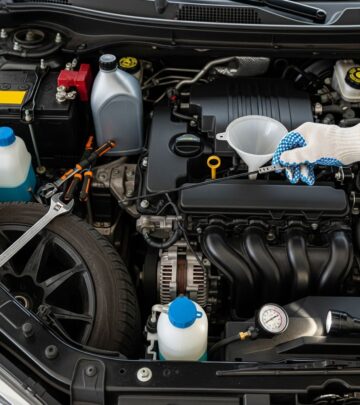
Regular maintenance directly impacts how efficiently your vehicle operates. Neglected engines work harder and consume more fuel, while properly maintained vehicles consistently deliver optimal performance. Key maintenance tasks affecting fuel economy include:
- Engine tune-ups – Keep fuel and air filters clean
- Oil changes – Use the manufacturer-recommended grade of oil
- Wheel alignment – Misaligned wheels increase rolling resistance
- Tire maintenance – Monitor pressure and tread depth regularly
- Spark plug replacement – Worn plugs reduce combustion efficiency
Real-World Efficiency Standards
What constitutes good fuel efficiency? As a general benchmark, vehicles achieving less than 6 liters per 100 kilometers (or more than 16.5 kilometers per liter) are considered fuel-efficient. However, context matters significantly. A large SUV that achieves 20 MPG represents excellent efficiency for its class, while a compact sedan delivering the same figure would be considered poor.
The financial impact of fuel efficiency differences can be substantial. Over time, even a 1-liter-per-100km difference in consumption results in significantly higher fuel expenses and increased environmental impact.
Choosing a Fuel-Efficient Vehicle
When shopping for a vehicle, look beyond simple MPG ratings. Evaluate the complete package of efficiency features, including engine type, transmission design, vehicle weight, and aerodynamic profile. Consider your typical driving patterns—city commuting benefits from hybrid technology, while highway drivers prioritize sustained fuel economy.
Test drive multiple options in conditions reflecting your normal driving. Pay attention to how the vehicle accelerates and handles various speeds. Check whether the manufacturer’s EPA ratings align with real-world owner reviews, as actual mileage varies based on driving habits and conditions.
The Economics of Fuel Efficiency
Investing in a more fuel-efficient vehicle often pays dividends over time. While efficient vehicles may carry higher upfront costs, fuel savings accumulate significantly across a vehicle’s lifespan. A driver covering 12,000 miles annually could save hundreds of dollars yearly by choosing a vehicle that achieves 35 MPG instead of 25 MPG.
Beyond personal financial benefits, improved fuel economy reduces environmental impact by decreasing carbon dioxide emissions and reducing dependence on fossil fuel resources. This dual advantage—saving money while reducing environmental impact—makes fuel efficiency a worthwhile consideration for conscientious vehicle owners.
Future Directions in Vehicle Efficiency
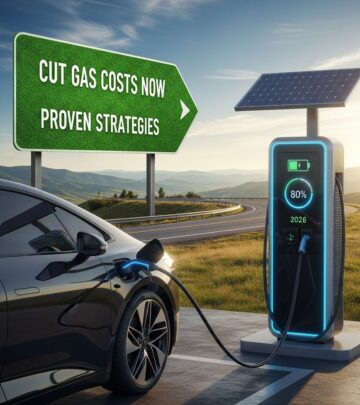
The automotive industry continues advancing efficiency through emerging technologies. Electric vehicles represent the frontier of fuel economy, offering unprecedented efficiency when charged with renewable energy. Even conventional vehicles benefit from continuous engineering improvements as manufacturers work to meet increasingly stringent emissions standards.
Hybrid and plug-in hybrid technologies bridge the gap between conventional vehicles and full electrification, offering practical efficiency improvements for drivers not yet ready to transition to fully electric options.
References
- What Makes a Car Fuel Efficient? — GreenCars. Accessed February 2026. https://www.greencars.com/greencars-101/fuel-efficient-vehicle-overview
- Fuel efficiency explained — CarsGuide. Accessed February 2026. https://www.carsguide.com.au/car-advice/fuel-efficiency-explained-29488
- Fuel economy in automobiles — Wikipedia. Accessed February 2026. https://en.wikipedia.org/wiki/Fuel_economy_in_automobiles
- Understanding Fuel Efficiency: What Does it Mean and Why it Matters — Jeff Dambrosi Chrysler Jeep Dodge. Accessed February 2026. https://www.jeffdambrosiochryslerjeepdodge.com/blogs/3502/uncategorized/introduction-the-importance-of-fuel-efficiency-in-pre-owned-cars/
- Miles Per Gallon (MPG): Everything You Need to Know — Edmunds. Accessed February 2026. https://www.edmunds.com/fuel-economy/miles-per-gallon.html
Similar Articles








Read full bio of medha deb