Maximizing Savings: Why Large Emergency Funds Need Better Strategies
Learn why keeping excessive cash in standard savings accounts limits your financial growth
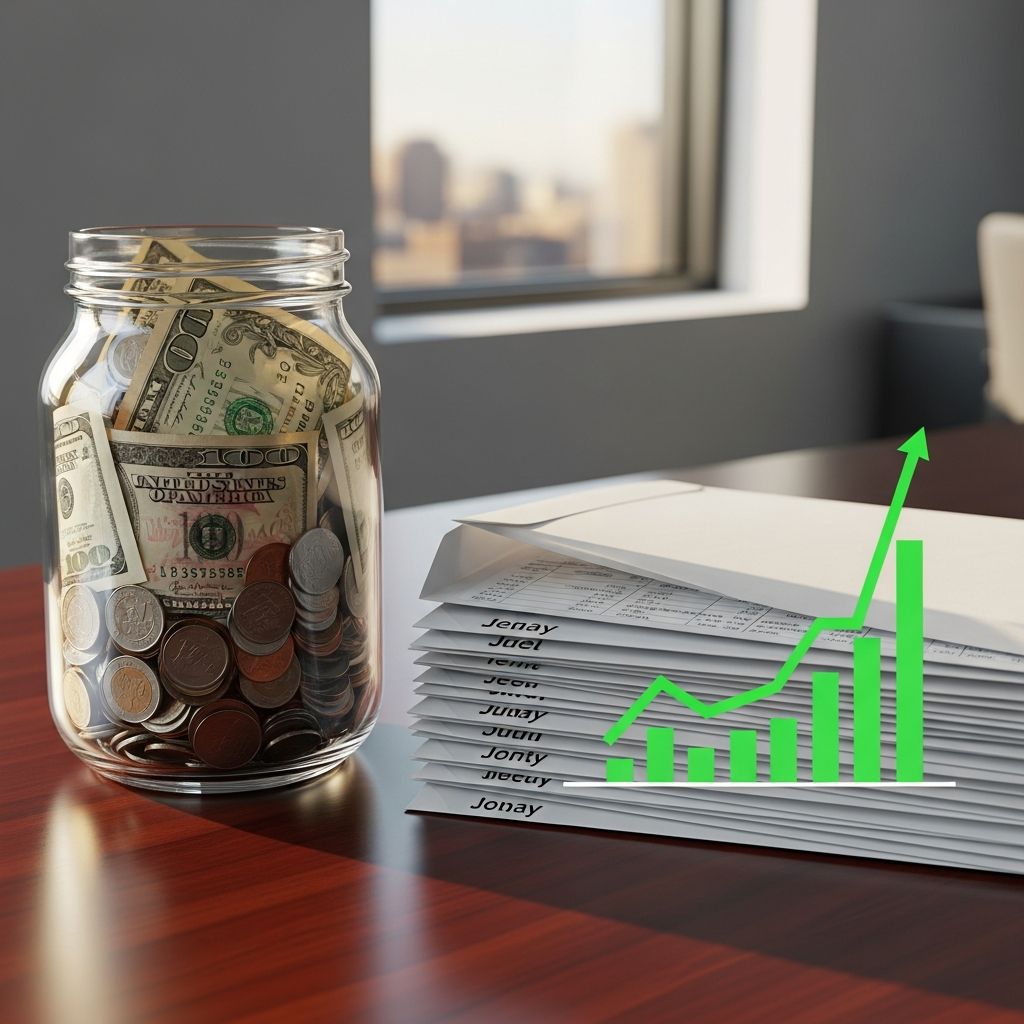
Many individuals accumulate substantial savings accounts without considering whether their approach is optimal. If you find yourself maintaining balances significantly above what experts recommend for emergency reserves, you may be inadvertently limiting your financial potential. The traditional approach of keeping all savings in a standard account with minimal interest returns can cost you thousands of dollars over time through lost earning opportunities.
Understanding the Emergency Fund Foundation
Financial advisors universally recommend maintaining an emergency fund, but the recommended amount is far more modest than many people realize. Most financial experts suggest keeping three to six months of essential living expenses readily accessible in a liquid savings account. For the average household, this typically translates to approximately $15,000 to $25,000, depending on individual circumstances including job stability, income variability, and family obligations.
The purpose of an emergency fund is straightforward: provide immediate access to cash when unexpected expenses arise, such as job loss, medical emergencies, or urgent home or vehicle repairs. This fund serves as a financial buffer, protecting you from accumulating high-interest debt when life’s inevitable surprises occur. However, many people maintain balances well beyond this prudent threshold, essentially allowing their money to work against them rather than for them.
The Cost of Complacency in Low-Yield Accounts
The consequences of parking excessive funds in traditional savings accounts become apparent when you examine the mathematics of opportunity cost. Consider the difference between accounts offering minimal interest—often 0.01% to 0.50% APY—and competitive options available today. A balance of $50,000 earning 0.10% annually generates only $50 in interest. Conversely, that same $50,000 in a high-yield account earning 3.65% produces $1,825 annually.
Over a five-year period, the difference between these two scenarios amounts to approximately $8,750 in foregone earnings. This isn’t simply about earning a few extra dollars; it represents a substantial erosion of your financial growth potential. For individuals with even larger balances, the impact becomes exponentially more significant.
Categorizing Your Savings: A Strategic Framework
Rather than maintaining one monolithic savings account, successful personal finance management requires segmentation based on purpose and timeline. Understanding how to allocate your resources according to specific goals enables you to optimize returns while maintaining appropriate liquidity.
Tier One: Immediate Emergency Reserves
Your core emergency fund should represent three to six months of essential expenses. This money must remain immediately accessible without penalties, earning modest but reliable returns. High-yield savings accounts specifically designed for this purpose provide the ideal solution, offering competitive rates while maintaining FDIC protection and instant withdrawal capability. Current options in this category provide yields ranging from 3.60% to 4.35% APY with no minimum balance requirements.
Tier Two: Intermediate Savings Goals
Funds earmarked for medium-term objectives—such as a vehicle replacement, home improvement, or vacation planned within the next one to three years—belong in a separate account. While still requiring reasonable accessibility, these funds can potentially earn higher returns through slightly less liquid instruments, though high-yield savings accounts remain appropriate for most individuals.
Tier Three: Long-Term Wealth Building
Money not needed for several years should never languish in savings accounts, regardless of the interest rate offered. Long-term funds deserve consideration for investment vehicles including diversified index funds, bonds, target-date retirement accounts, or other instruments aligned with your risk tolerance and timeline. The historical average return of the stock market significantly exceeds any savings account rate, making this distinction crucial for wealth accumulation.
Exploring High-Yield Alternatives for Your Excess Savings
If you’ve determined that you’re maintaining balances above your genuine emergency fund needs, several superior alternatives deserve consideration. Modern banking competition has created numerous products designed to serve different financial situations.
High-Yield Savings Accounts: Balancing Accessibility and Returns
Contemporary financial institutions offer high-yield savings accounts that dramatically outperform traditional banking options. Leading providers currently offer APY rates ranging from 3.60% to 4.35%, with many featuring zero minimum balance requirements and no monthly fees. These accounts maintain full FDIC insurance protection, meaning your deposits receive government backing up to $250,000 per institution.
The mechanics are straightforward: you deposit funds, earn daily interest compounded and credited monthly, and maintain unlimited withdrawal capability. Many providers offer mobile applications for convenient management, and some include connected checking accounts for comprehensive banking needs.
Comparing Current Market Leaders
| Provider | Current APY | Minimum Deposit | Monthly Fees | Notable Features |
|---|---|---|---|---|
| Newtek Bank | 4.35% | None | None | Named best savings account 2026; FDIC insured |
| Axos Bank | 4.21% | None | None | Seven times national average rate |
| Peak Bank | 4.02% | $100 | None | Mobile app access; competitive rates |
| Marcus by Goldman Sachs | 3.65% | None | None | Established institution stability |
| Synchrony Bank | 3.65% | None | None | FDIC member; reliable service |
These rates represent a significant improvement over the national average of approximately 0.60% APY for traditional savings accounts. The choice among providers depends on your preferences regarding institution size, interface design, and any specific features you value.
Calculating Your Optimal Emergency Fund Size
Determining your appropriate emergency fund requires honest assessment of your specific circumstances. Rather than applying a one-size-fits-all formula, consider these factors:
- Employment stability: Individuals in secure positions with high barriers to termination may function effectively with three months of expenses, while those in volatile industries should maintain six months or more.
- Income variability: Employees with consistent paychecks need less cushioning than self-employed individuals or commission-based workers whose income fluctuates significantly.
- Dependent obligations: Those supporting children, elderly parents, or individuals with special needs require larger reserves than those without such responsibilities.
- Health and housing costs: Individuals with chronic health conditions or aging properties should maintain above-average reserves for potential medical or maintenance emergencies.
- Debt obligations: Those carrying substantial debt loads benefit from larger cushions to avoid forced borrowing when emergencies occur.
Action Steps for Reorganizing Your Financial Foundation
If your assessment reveals that you’re maintaining excessive savings balances, a systematic approach helps optimize your financial strategy without creating anxiety about preparedness.
Phase One: Calculate Your True Needs
Document your monthly essential expenses—housing, utilities, insurance, minimum debt payments, food, and transportation. Multiply this figure by your appropriate multiplier (typically 3-6). This calculation defines your ideal emergency fund target.
Phase Two: Evaluate Current Account Performance
Review your current savings account statements to confirm the APY you’re earning. Compare this rate to current market leaders using financial comparison websites. Calculate the annual difference between your current rate and competitive alternatives.
Phase Three: Establish Strategic Accounts
Open a high-yield savings account with a provider matching your preferences regarding minimum deposits, user interface, and institution type. Transfer your emergency fund target amount to this account. This step alone typically increases annual interest earnings substantially while maintaining accessibility.
Phase Four: Deploy Excess Funds Strategically
For any balance exceeding your emergency fund target, evaluate your timeline for these funds. Money needed within 1-3 years might remain in a high-yield savings account but in a separate account from your emergency reserve. Funds not needed for 5+ years belong in investment accounts rather than savings instruments.
Addressing Common Concerns About This Strategy
“Isn’t leaving money in savings safer than investing?”
This question reflects a common misconception about risk. True risk includes the erosion of purchasing power through inflation. Savings earning 0.10% while inflation averages 2-3% represents a real loss of value annually. High-yield savings accounts balance safety (FDIC protection) with reasonable returns that at least approach inflation rates. Meanwhile, funds not needed for 5-10 years typically have adequate time horizons to tolerate market volatility and capture historical equity returns averaging 9-10% annually before inflation.
“What if interest rates drop?”
Interest rate fluctuations are inevitable, and rates may decline from current elevated levels. However, several considerations mitigate this concern. First, maintaining your emergency fund in any savings account beats keeping cash or losing value in lower-yield products. Second, for excess funds that could eventually be invested, temporary rate declines don’t eliminate the long-term return advantage of equity markets. Third, competitive pressure among financial institutions typically prevents dramatic simultaneous rate cuts across the entire industry.
“How do I choose between different high-yield accounts?”
Evaluate providers based on your priorities. If you value maximum rate returns and minimal complexity, focus on pure-play online banks offering the highest rates. If you prefer institutional stability and brand recognition, established providers like Marcus or Synchrony offer slightly lower rates in exchange for perceived security. If you want integrated banking services, consider providers offering connected checking accounts. Most importantly, verify FDIC insurance coverage and confirm there are genuinely no hidden fees in the terms.
The Broader Picture: Integrating This Strategy Into Comprehensive Planning
Reorganizing your savings represents just one component of sound financial management. This strategy works most effectively when combined with other prudent practices including budgeting, debt management, and long-term investment planning. By eliminating the drag of low-yield savings accounts on your excess balances, you free up mental energy and actual dollars to address other financial priorities.
The mathematics are compelling: a household with $50,000 in excess savings can generate an additional $1,800+ annually simply by moving these funds to competitive high-yield products. Over a decade, that differential amounts to $18,000-$20,000 in additional earnings before accounting for compounding effects. This money could accelerate debt payoff, fund long-term investments, or provide additional financial security.
Conclusion: Transforming Savings Into Strategic Assets
Maintaining excessive balances in low-yield savings accounts represents a common financial inefficiency with surprisingly large consequences. By clearly defining your genuine emergency fund needs, allocating your savings strategically across appropriate account types, and deploying excess funds to higher-yielding alternatives, you transform static money into a dynamic asset working effectively toward your financial goals. The modern banking landscape provides numerous attractive options for accomplishing this optimization, making the transition straightforward for anyone willing to evaluate their current approach honestly and take deliberate action.
References
- Best High-Yield Savings Accounts 2026: Top 10 Rates, Perks — GreenFi. 2026. https://www.greenfi.com/resources/best-high-yield-savings-accounts-2026
- Best High-Yield Savings Accounts for March 2026 — NerdWallet. 2026. https://www.nerdwallet.com/banking/best/high-yield-online-savings-accounts
- Best High-Yield Savings Accounts Of March 2026 – Up to 4.21% — Bankrate. 2026. https://www.bankrate.com/banking/savings/best-high-yield-interests-savings-accounts/
Similar Articles








Read full bio of medha deb