Maximizing Savings Account Interest in 2026
Discover how modern savers can dramatically increase earnings on deposits through strategic account selection and rate optimization strategies.

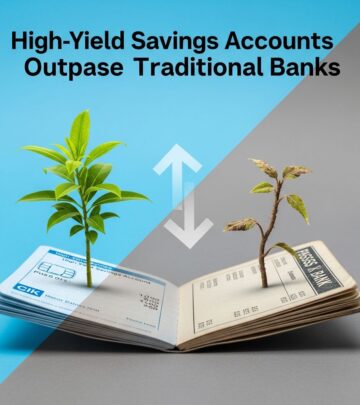
The average American’s savings account earns virtually nothing. Traditional banks offer interest rates that barely keep pace with inflation, leaving millions of savers watching their purchasing power slowly erode. However, a dramatic opportunity exists for those willing to explore alternative banking options. By making informed decisions about where to deposit their money, everyday Americans can substantially increase the interest their savings generate—potentially earning multiples of what conventional banking institutions provide.
The disparity between standard banking rates and what’s available in today’s market creates an unprecedented opportunity for wealth building through savings alone. Understanding this gap and taking action represents one of the most straightforward paths to improving personal finances without requiring investment expertise or market risk.
Understanding the Current Interest Rate Environment
The landscape of savings account interest rates has transformed dramatically in recent years. Where traditional brick-and-mortar banks once dominated the savings account market with competitive rates, the financial sector has evolved to include numerous online and specialized banking institutions offering substantially higher yields.
The federal funds rate environment directly influences what banks can offer depositors. When the Federal Reserve maintains elevated interest rates to combat inflation, banks have more capacity to offer competitive yields on savings products. This creates a window of opportunity for consumers to capitalize on rates that exceed historical norms.
Currently, the disparity between conventional banking and specialized savings accounts represents a significant gap. Traditional banks continue offering rates that lag far behind market leaders, creating a situation where deposit location becomes a critical financial decision.
The Mathematics Behind Interest Earnings
Understanding how interest compounds helps illustrate why account selection matters. When comparing two savings accounts—one earning 0.39% APY and another earning 4.21% APY—the difference compounds dramatically over time.
Consider a $10,000 deposit held for one year:
- At 0.39% APY: The account generates approximately $39 in annual interest
- At 4.21% APY: The account generates approximately $421 in annual interest
- The difference: $382 additional earnings simply from choosing a better account
For larger deposits, the mathematical advantage becomes even more pronounced. A $50,000 savings account earns $195 annually at 0.39% but generates $2,105 at 4.21%—a difference of $1,910 per year. Over a five-year period, this single decision creates roughly $9,550 in additional earnings.
These calculations demonstrate why account selection represents one of the highest-return financial decisions available. The effort required to open a higher-yielding account takes minimal time compared to the financial benefit generated.
Comparing High-Yield Savings Account Options
The market currently offers several competitive high-yield savings accounts, each with distinct features and rate structures.
| Institution | APY Rate | Minimum Deposit | Monthly Fees |
|---|---|---|---|
| Varo Money | Up to 5.00% | Varies | None |
| Axos Bank | Up to 4.21% | $0 | None |
| Newtek Bank | 4.35% | $0 | None |
| Vio Bank | 4.03% | $100 | None |
| SoFi Bank | Up to 4.00% | $0 | None |
Each option presents different advantages depending on individual circumstances. Some prioritize maximum APY rates, while others emphasize accessibility and ease of account management.
Strategies for Rate Optimization
Simply opening a high-yield savings account represents the first step, but maximizing returns requires additional strategic considerations.
Consolidating Deposits for Maximum Efficiency
Many savers maintain accounts across multiple institutions, sometimes without realizing the cumulative impact on interest earnings. Consolidating deposits into a single high-yield account concentrates earning potential. Some institutions offer tiered rate structures where larger balances qualify for premium rates, making account consolidation financially advantageous.
Understanding Account Requirements for Rate Qualification
Certain high-yield accounts require specific actions to achieve advertised rates. Some institutions offer boost features where customers meeting conditions—such as receiving direct deposits or maintaining checking account relationships—unlock additional yield percentages. While these requirements demand minor effort, they can significantly increase effective returns.
Monitoring Rate Changes
High-yield savings rates fluctuate based on Federal Reserve policy and competitive market dynamics. Successful savers periodically review their account yields and consider switching to institutions offering superior rates when their current provider reduces offerings. The minimal switching process—typically taking 15-30 minutes—justifies rate optimization efforts.
Layering Multiple Accounts Strategically
FDIC insurance protects deposits up to $250,000 per depositor per institution. Savers with deposits exceeding this threshold can maintain accounts across multiple banks while maximizing both yield and insurance protection. This approach requires more account management but serves those with substantial savings.
Breaking Down Rate Structure Components
Understanding how banks structure rates helps identify optimal accounts. Most high-yield savings accounts feature straightforward APY structures where rates apply uniformly to account balances. However, some institutions employ tiered systems where rates vary based on deposit amounts.
Additionally, promotional rates sometimes apply temporarily to new account holders. While these limited-time offers provide initial advantages, sustainable long-term returns depend on standard rates rather than promotional benefits. Evaluating accounts based on standard rates ensures realistic return expectations.
The Role of Online Banking in Rate Advantages
Most premium high-yield savings accounts operate through online platforms rather than maintaining physical branch networks. This operational model reduces overhead expenses, allowing institutions to pass savings benefits to depositors through superior rates. Online accounts typically offer full digital functionality, eliminating the need for in-person banking while providing comparable features to traditional accounts.
Security concerns sometimes deter people from online banking, but reputable online institutions employ encryption and security measures equivalent to traditional banks. FDIC insurance protection applies identically regardless of whether an institution operates physical locations.
Creating a Comprehensive Savings Strategy
Maximizing savings account interest extends beyond selecting a single high-yield account. A comprehensive approach considers multiple financial objectives:
- Emergency fund allocation: Maintaining 3-6 months of living expenses in accessible high-yield savings provides financial security while generating meaningful interest
- Short-term goal funding: Savings intended for near-term purchases—within 1-3 years—benefit from high-yield accounts that preserve principal while earning returns
- Down payment accumulation: Those saving for home purchases can accelerate goals through interest earnings in high-yield accounts
- Educational expense preparation: Families building college funds can leverage higher rates to supplement targeted savings amounts
Common Obstacles and How to Overcome Them
Several factors prevent average Americans from accessing superior savings rates:
Inertia and Institutional Loyalty
Many people maintain accounts with banks they’ve used for decades, despite those institutions offering minimal interest. Overcoming this requires recognizing that switching involves minimal effort and substantial financial benefit. The time investment—typically under one hour—generates returns exceeding hourly wage rates for most professions.
Misunderstanding Online Banking Safety
Concerns about online account security sometimes deter people from accessing better rates. Reputable online banks maintain security standards equivalent to or exceeding traditional institutions. Federal deposit insurance provides identical protection across banking platforms.
Complexity Concerns
Modern high-yield account opening processes have been streamlined substantially. Most accounts open within 15 minutes using online applications, requiring only basic personal information and funding source verification. Account maintenance involves no complexity beyond standard banking operations.
Calculating Your Potential Interest Gains
To understand personal benefit, calculate potential earnings based on your specific deposit amount and intended timeframe:
- Identify your current savings account balance
- Determine your current APY rate
- Compare against top-yielding options available in your situation
- Calculate annual interest difference
- Project five-year cumulative benefit
For someone with $25,000 in savings currently earning 0.39% APY, switching to a 4.21% account generates an additional $800 annually. Over five years, this single financial decision creates $4,000 in additional earnings—representing pure financial gain from reallocating existing funds.
Frequently Asked Questions
How quickly do high-yield savings accounts compound interest?
Most high-yield savings accounts compound interest daily or monthly, with interest credited to accounts based on institution-specific schedules. More frequent compounding accelerates earnings accumulation, though the difference remains modest across most high-yield options.
What happens if rates decline after I open an account?
If your institution lowers rates, you retain the option to switch to competitors offering superior yields. No penalties or restrictions prevent account transfers to alternative banks.
Are there tax implications for high-yield savings interest?
Interest earned on savings accounts constitutes taxable income reported on federal tax returns. High-yield accounts generating more substantial interest may modestly increase annual tax obligations, though the net benefit typically far exceeds additional tax liability.
Can I access funds in high-yield accounts whenever needed?
Most high-yield savings accounts function as readily accessible savings vehicles with no withdrawal restrictions. Funds remain available for emergencies or planned needs, distinguishing savings accounts from certificates of deposit requiring funds remain deposited for specified periods.
The Path Forward: Taking Action Today
The opportunity to substantially increase savings account earnings exists today. The steps required—researching options, opening an account, transferring funds—involve minimal effort compared to the financial benefit generated. For someone with $10,000 in savings, the decision to switch accounts potentially creates $400+ annually in additional earnings.
The primary obstacle preventing many Americans from capturing this benefit involves simply inaction. Recognizing that better options exist represents the first step. Taking action by researching institutions, understanding rate structures, and opening higher-yielding accounts transforms recognition into tangible financial improvement.
In an economic environment where inflation pressures household finances, maximizing earnings on existing savings provides an accessible strategy for strengthening financial positions. The mathematics prove compelling: modest effort generates meaningful returns that compound over time, supporting long-term financial security and goal achievement.
References
- Best High-Yield Savings Accounts Of March 2026 — Bankrate. March 2026. https://www.bankrate.com/banking/savings/best-high-yield-interests-savings-accounts/
- Best High-Yield Savings Accounts for March 2026 — NerdWallet. March 30, 2026. https://www.nerdwallet.com/banking/best/high-yield-online-savings-accounts
- The top high-yield savings rates: Up to 5.00% on Feb. 26, 2026 — Fortune. February 26, 2026. https://fortune.com/article/best-savings-account-rates-2-26-2026/
Similar Articles








Read full bio of Sneha Tete