Roth IRA Conversion: 4 Tax Strategies For 2026
Unlock tax-free retirement growth: Master Roth IRA conversions with strategies for 2026 tax laws, bracket filling, and legacy planning.
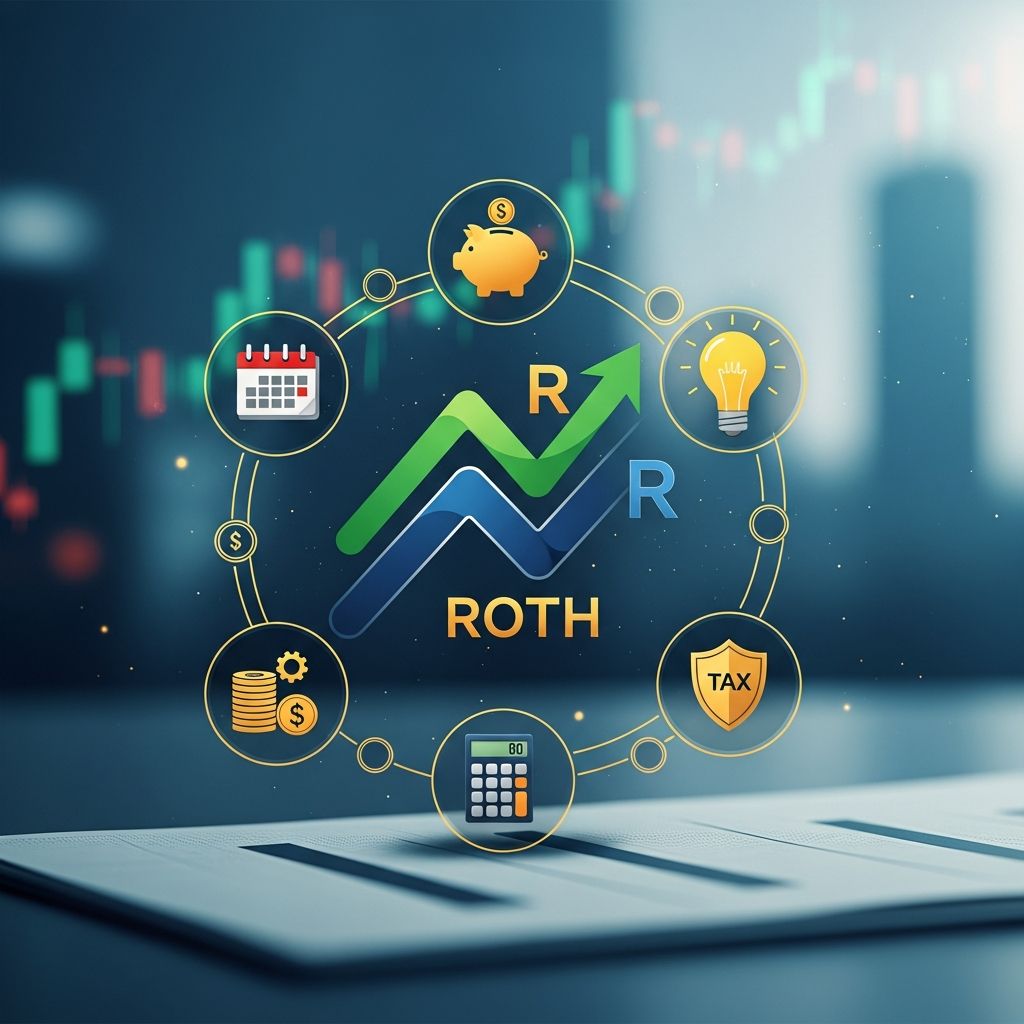
Roth IRA conversions allow you to move funds from a traditional IRA to a Roth IRA, paying taxes upfront for tax-free growth and withdrawals later. This strategy is particularly powerful in 2026 due to extended lower tax rates and temporary deductions that create optimal conversion windows.
What Is a Roth IRA Conversion?
A
Roth IRA conversion
involves transferring pre-tax funds from a traditional IRA, 401(k), or similar account into a Roth IRA. You pay income taxes on the converted amount in the year of conversion, but qualified withdrawals—including earnings—are tax-free thereafter. Unlike direct Roth contributions, conversions have no income limits, making them accessible for high earners.Key benefits include no required minimum distributions (RMDs) during your lifetime, allowing longer tax-free compounding, and tax-free inheritances for heirs (subject to the 10-year rule). Conversions diversify your tax exposure, hedging against future rate hikes or policy changes.
Why Convert to a Roth IRA in 2026?
2026 offers unique opportunities due to H.R. 1’s permanent extension of 2017 Tax Cuts and Jobs Act brackets, eliminating the post-2025 “tax cliff,” alongside temporary enhancements from 2025-2028: expanded standard deductions, age-based bonuses, and higher SALT caps. These create “tax-free” conversion space for many.
- Lower effective rates: Enhanced deductions let more conversion income fall into lower brackets.
- No RMD pressure: Convert before RMDs start at age 73 to avoid forced taxable distributions.
- Future-proofing: Lock in current rates amid uncertain policy; Roths provide tax-rate insurance.
High-net-worth individuals benefit most, as Roths support estate planning with tax-free heir distributions. Early 2026 action maximizes flexibility before income surges narrow the window.
Roth Conversion Tax Strategies
Minimize the tax hit with disciplined tactics. The goal: Convert without jumping brackets or phasing out benefits.
1. Fill Your Current Tax Bracket
Calculate room in your bracket before the next rate applies. For 2026 single filers earning $150,000 (24% bracket), convert up to the $197,300 threshold—about $47,300—staying at 24%.
| 2026 Federal Tax Brackets (Single) | Rate | Max Income |
|---|---|---|
| 24% | $100,526 – $197,300 | $197,300 |
| 32% | $197,301 – $250,525 | $250,525 |
Use projections: Add expected income (wages, Social Security, dividends, RMDs), then fill to bracket top.
2. Multi-Year Bracket-Filling Conversions
Spread conversions over years to average lower rates and avoid phaseouts. Instead of a $100,000 lump sum pushing into 32%, convert $47,300/year for two years.
- Pros: Smoother tax payments, better cash flow.
- Cons: Ties up funds longer; monitor annual changes.
3. Leverage 2026 Deduction Bonuses
New rules shine: Standard deduction rises, plus $2,000+ for age 65+ (no phaseout), and temporary $6,000 bonus (2025-2028). A couple like Ted & Betty could convert $100,000+ at zero marginal tax using these.
Case Study: Married filing jointly, $120,000 income. With enhanced standard deduction ($30,000+), age bonuses ($6,400), and $6,000 extra, they convert $80,000 staying in 22% bracket effectively tax-free on the margin.
4. Backdoor and Mega Backdoor Roths
For high earners above direct Roth limits: Contribute after-tax to traditional IRA ($7,500 limit in 2026; $8,600 if 50+), then convert (track via Form 8606 to avoid pro rata tax).
Mega backdoor: In eligible 401(k)s, after-tax contributions auto-convert to Roth.
Timing Your Roth Conversion
Act early in 2026: Project full-year income for accurate bracket room. Adjust for market dips (convert depressed assets) or cash reserves to pay taxes without dipping into IRA.
- Best windows: Low-income years, pre-RMD, or deduction sweet spots.
- Avoid: Years with bonuses, capital gains, or phaseouts.
Coordinate with withdrawals: Use taxable accounts or tax-loss harvesting to offset conversion taxes.
Roth Conversions and Required Minimum Distributions (RMDs)
RMDs force taxable withdrawals from traditional IRAs at 73, inflating brackets and Medicare premiums. Roth conversions reduce future RMDs, providing control.
Strategy: Convert pre-RMD or reinvest excess RMDs into Roth via conversion (pay tax once). Roths have no lifetime RMDs.
Impact on Social Security, Medicare, and Other Benefits
Conversions count as income, potentially:
- Increasing Social Security taxation (up to 85%).
- Raising Medicare Part B/D premiums (IRMAA surcharges, based on two-year lookback).
- Phasing out deductions/credits.
Mitigate: Gradual conversions; time before IRMAA lookback years.
Roth IRA Conversions for Estate Planning
Roths supercharge legacies: Tax-free growth, no lifetime RMDs, tax-free heir withdrawals (10-year rule). Diversify pre/post-tax assets for heir flexibility amid uncertain laws.
Common Roth Conversion Mistakes to Avoid
- Over-converting: Jumping brackets or triggering IRMAA.
- Ignoring pro rata: Pre-tax IRAs taint backdoor conversions.
- Forgetting 5-year rule: Earnings taxable if withdrawn early.
- No cash for taxes: Withhold from IRA incurs extra tax/penalty.
Tools and Calculators for Roth Conversions
Use IRS brackets, Form 8606 trackers, and tools from Fidelity/Schwab/Vanguard for projections. Consult CPAs for multi-year models factoring state taxes.
Frequently Asked Questions (FAQs)
What is the Roth conversion 5-year rule?
Converted principal withdrawable anytime tax-free; earnings need 5 years and age 59½. Each conversion starts its own clock.
Can I undo a Roth conversion?
Recharacterizations ended in 2018; conversions are irrevocable.
Are Roth conversions taxable for estates?
No, qualified Roth distributions are tax-free to heirs.
What’s new for Roth conversions in 2026?
Extended low brackets + temporary deductions create low-tax windows.
Should I convert if rates might drop?
Weigh current low rates vs. future uncertainty; diversify is key.
Next Steps for Your Roth Conversion Plan
1. Project 2026 income.
2. Model bracket fill with deductions.
3. Consult advisor for personalized math.
4. Execute early, monitor, adjust.
Roth conversions demand precision but reward with tax-free security. With 2026’s incentives, now’s prime time to act.
References
- Strategic Roth IRA Conversions | High Net Worth Tax Strategies — Keiter CPA. 2025. https://keitercpa.com/blog/roth-ira-conversions-strategic-decision-uncertain-tax-future/
- 3 Strategies for Reducing Roth Conversion Taxes — Charles Schwab. 2025. https://www.schwab.com/learn/story/3-strategies-reducing-roth-ira-conversion-taxes
- 7 Smart Money Moves for 2026 Retirement Planning — Fidelity. 2025-12-01. https://www.fidelity.com/learning-center/personal-finance/retirement/2026-money-moves
- Backdoor Roth IRA: What it is and how to set it up — Vanguard. 2025. https://investor.vanguard.com/investor-resources-education/article/how-to-set-up-backdoor-ira
- Roth Conversions in 2026 Explained: Pay ZERO Tax? — YouTube (Financial Advisor Channel). 2025. https://www.youtube.com/watch?v=wRmcY1DA378
- Roth Conversion Planning in 2026 — Liberty Group LLC. 2025. https://libertygroupllc.com/blog/roth-conversions-2026-what-to-review-early-in-the-year/
Similar Articles








Read full bio of Sneha Tete