Maximize HSA Contributions for Optimal Savings
Unlock the full potential of Health Savings Accounts with strategies to hit contribution limits and grow your tax-free health fund.
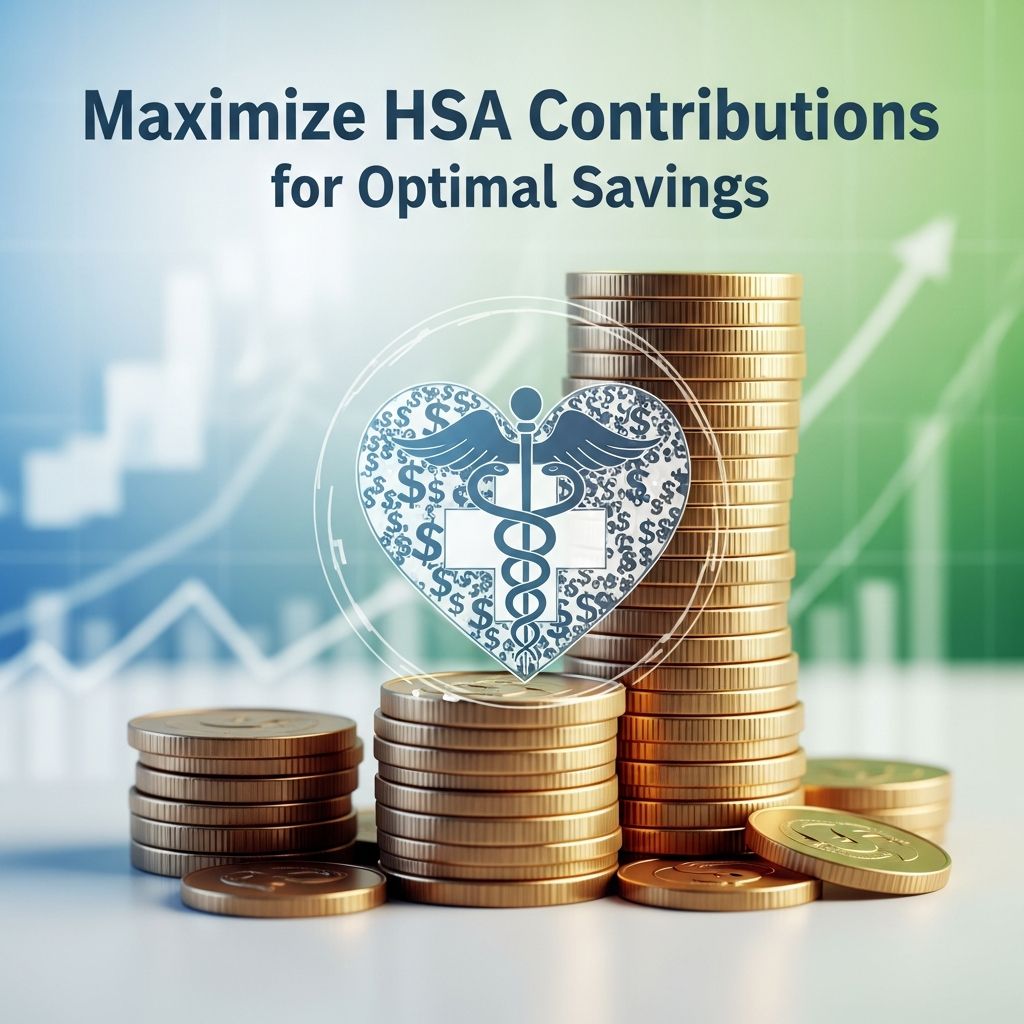
Health Savings Accounts (HSAs) offer a powerful way to save for medical expenses with triple tax advantages: contributions reduce taxable income, growth is tax-deferred, and qualified withdrawals are tax-free. Fully funding your HSA each year can significantly boost your long-term financial health, especially as healthcare costs rise. This guide explores current contribution limits, eligibility criteria, strategic funding approaches, and common pitfalls to avoid, empowering you to make the most of this underutilized benefit.
Understanding HSA Fundamentals and Who Qualifies
To participate in an HSA, you must be enrolled in a High-Deductible Health Plan (HDHP). These plans feature higher deductibles but lower premiums, paired with HSAs to cover out-of-pocket costs. For 2025, an HDHP requires a minimum deductible of $1,650 for self-only coverage or $3,300 for family coverage, with out-of-pocket maximums not exceeding $8,300 and $16,600 respectively. In 2026, these thresholds adjust to $1,700 self-only and $3,400 family deductibles, with maximums at $8,500 and $17,000.
Eligibility also demands no disqualifying coverage like general-purpose health FSAs or Medicare enrollment, which halts contributions upon Part A, B, or D signup. Spouses can each maintain separate HSAs if both qualify under HDHPs.
- Confirm your plan meets IRS HDHP standards via your insurer or summary of benefits.
- Avoid non-HDHP add-ons that could jeopardize eligibility.
- Individuals turning 55 before year-end can add catch-up funds even if enrolled mid-year.
Current and Upcoming Contribution Limits
The IRS annually adjusts HSA limits for inflation. In 2025, self-only coverage allows up to $4,300, while family plans permit $8,550. These rise modestly in 2026 to $4,400 and $8,750 respectively. These caps include all contributions from you, your employer, or others—no double-dipping beyond the limit.
| Year | Self-Only Limit | Family Limit | Catch-Up (55+) |
|---|---|---|---|
| 2025 | $4,300 | $8,550 | $1,000 |
| 2026 | $4,400 | $8,750 | $1,000 |
Employers often seed HSAs, reducing your personal outlay. If your workplace adds $1,000 to a $4,300 limit, your contribution drops to $3,300.
Leveraging Catch-Up Contributions for Near-Retirees
Those 55 or older by year-end gain a $1,000 catch-up boost atop standard limits, yielding $5,300 self-only or $9,550 family in 2025, and $5,400/$9,750 in 2026. Spouses 55+ can each claim this in separate HSAs, potentially doubling household catch-ups. Medicare enrollment blocks further contributions, so time catch-ups pre-signup.
Pro tip: Front-load catch-ups early to maximize tax-deferred compounding, treating your HSA like a supplemental retirement account for future medical needs.
Navigating Partial-Year Enrollment: Proration and Last-Month Rule
Mid-year HDHP switchers face prorated limits based on eligible months (first of the month counts). For 2025 self-only, 6 months yields $2,150 ($4,300 / 12 * 6).
The last-month rule offers relief: HDHP coverage by December 1 allows full-year contribution, but requires staying eligible through year-end next year or repaying excess plus 6% excise tax. Example: December 2025 enrollment permits $4,300 total, but dropping coverage by June 2026 triggers payback.
- Calculate proration: (Eligible months / 12) × annual limit.
- Use last-month rule cautiously if job or plan changes loom.
- Track via Form 8889 during tax season.
Strategic Timing: Lump Sum vs. Payroll Deductions
Two primary funding paths exist: direct lump-sum deposits or payroll deductions. Payroll offers convenience with pre-tax dollars, lowering immediate tax liability. A $4,400 annual pledge halves to $2,200 twice yearly seamlessly.
Lump sums shine for investors: deposit maximum early (even prior-year funds by April 15) for full-year market growth. In high-yield accounts or index funds, this amplifies returns tax-free.
| Method | Pros | Cons |
|---|---|---|
| Payroll Deduction | Automatic, pre-tax savings | Slower compounding if back-loaded |
| Lump Sum | Max early growth, flexibility | Cash flow strain upfront |
Hybrid approach: payroll for steady input, year-end lump for max-out.
Overcoming Common Barriers to Full Contributions
Cash constraints top the list, but view HSA as forced savings—redirect premium savings from HDHPs. Budget tweaks like dining out cuts can free $300+ monthly toward goals.
Low awareness plagues many; only half max out despite benefits. Automate increases annually with limit hikes. Family changes? Adjust from self to family mid-year without proration if eligible throughout.
Self-employed? Deduct 100% on Form 1040, no payroll needed.
Investment Options to Supercharge Your HSA Balance
Beyond cash, many custodians offer low-fee investing post-$1,000-$2,000 cash threshold. Allocate to stocks, bonds, or targets mirroring 401(k)s. Historical S&P returns outpace savings rates, turning $4,400 yearly into substantial nests over decades.
- Cash for near-term needs (3-6 months expenses).
- Conservative bonds for mid-term.
- Equities for long-term growth.
Rebalance yearly; qualified post-65 withdrawals (even non-medical) avoid penalties, only taxing as income.
Tax Reporting and Avoiding Excess Contribution Penalties
Track via 1099-SA (distributions) and 5498-SA (contributions). Form 8889 reconciles with your return, prorates if needed, and calculates taxable excess.
Overcontribute? Withdraw by April 15 (with earnings) penalty-free. Post-deadline, carry forward or distribute with 6% annual tax until corrected. Coordinate employer matches meticulously.
Long-Term Planning: HSAs in Retirement and Beyond
HSAs bridge working years to Medicare/retirement. Pre-65, stick to qualified uses; after, non-medical withdrawals incur income tax sans 20% penalty. Heirs inherit tax-free for their care.
Project needs: Average retiree healthcare hits $315,000; max HSAs build buffers. Pair with Roth IRAs for diversified tax strategies.
Frequently Asked Questions
Can I contribute to an HSA if my spouse has family HDHP coverage?
Yes, if you have qualifying coverage (self or family HDHP), contribute to your own HSA up to your limit.
What if I’m 55+ and enroll in Medicare mid-year?
Catch-up allowed pre-Medicare; contributions cease upon enrollment.
Are employer contributions counted against my limit?
Yes, total (you + employer) cannot exceed annual cap.
Can I roll over FSA funds to HSA?
Limited-purpose FSAs yes, under $3,400 in 2026; general no.
How do I verify my HDHP eligibility?
Check insurer notice or IRS Rev. Proc. 2025-19.
References
- IRS guidelines, contribution limits and eligible expenses – HSA Bank — HSA Bank. 2025. https://www.hsabank.com/HSABank/Learning-Center/IRS-contribution-limits-and-guidelines
- HSA Contribution Limits – Optum Bank — Optum Bank. 2025. https://www.optumbank.com/health-savings-accounts/resources/contribution-limits.html
- HSA contribution limits 2025 and 2026 – Fidelity Investments — Fidelity Investments. 2025. https://www.fidelity.com/learning-center/smart-money/hsa-contribution-limits
- IRS raises Health Savings Account (HSA) limits for 2026 | Voya.com — Voya. 2025. https://www.voya.com/voya-insights/irs-raises-health-savings-account-hsa-limits-2026
- Rev. Proc. 2025-19 – IRS — Internal Revenue Service. 2025-07-24. https://www.irs.gov/pub/irs-drop/rp-25-19.pdf
Similar Articles








Read full bio of medha deb