Mastering Your FICO Score
Unlock the secrets of your FICO score to secure better loans, lower rates, and financial freedom in today's credit-driven world.
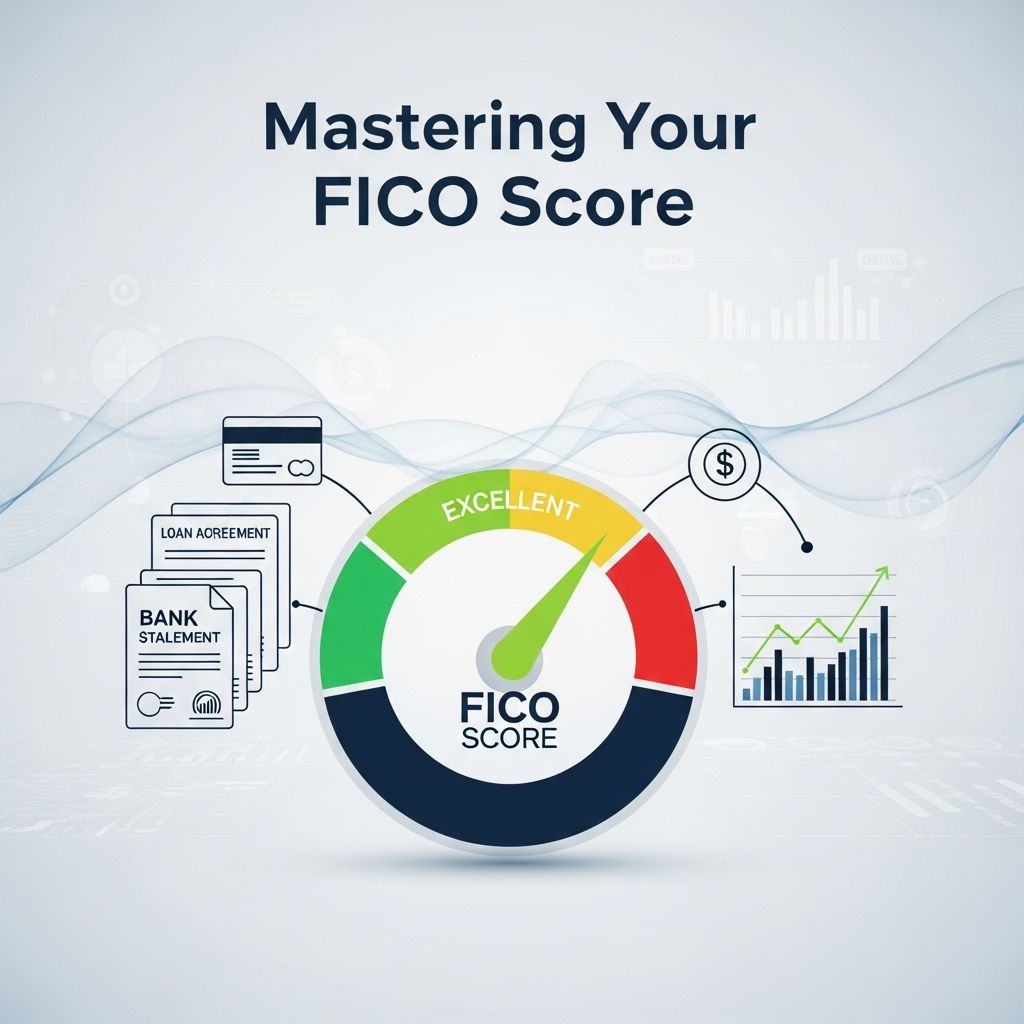
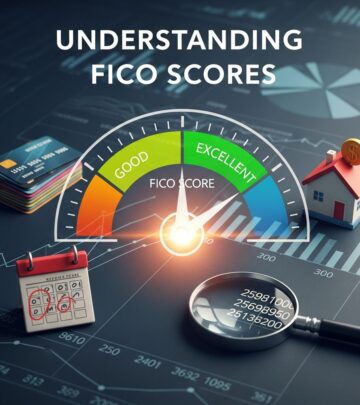
Your FICO score is a pivotal three-digit number that shapes your financial landscape, influencing everything from mortgage approvals to credit card offers. Ranging from 300 to 850, it quantifies your creditworthiness based solely on credit report data, helping lenders predict repayment reliability.
Understanding the FICO Score Fundamentals
The FICO score, developed by Fair Isaac Corporation, stands as the gold standard for credit scoring in the U.S., used by 90% of top lenders. Unlike broader financial profiles, it exclusively analyzes credit bureau data without considering income or employment history. This focus ensures a consistent, objective measure of credit risk.
Scores reflect patterns from millions of credit reports, with higher values signaling lower risk. For instance, a score above 800 often unlocks the best interest rates, while scores below 580 may lead to denials or high-cost loans.
FICO Score Ranges and Their Implications
FICO scores categorize credit health into distinct tiers, each carrying different lender perceptions:
- Exceptional (800-850): Elite status; qualifies for premium terms and lowest rates.
- Very Good (740-799): Strong profile; excellent access to favorable financing.
- Good (670-739): Solid standing; most lenders approve with competitive offers.
- Fair (580-669): Average risk; approvals possible but with higher rates.
- Poor (300-579): High risk; limited options and elevated costs.
The average U.S. FICO score hovers around 715, with about one-third of consumers in the 600-750 range. Lenders set their own thresholds; one might favor scores over 730 for prime rates, another 760.
| Score Range | Category | Lender Perception |
|---|---|---|
| 800-850 | Exceptional | Lowest risk, best rates |
| 740-799 | Very Good | Highly favorable |
| 670-739 | Good | Competitive terms |
| 580-669 | Fair | Approval with conditions |
| 300-579 | Poor | High risk, limited access |
Core Components Driving Your FICO Score
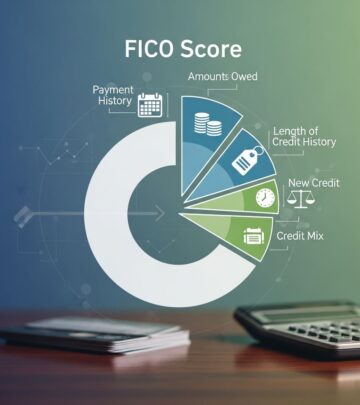
FICO scores derive from five weighted categories in your credit report, with weights varying slightly by individual profile.
Payment History: The Dominant Factor (35%)
Topping the list at 35%, payment history tracks on-time payments across all accounts. Lenders prioritize this as it directly gauges reliability. Negative marks like late payments (over 30 days), collections, or bankruptcy linger for 7-10 years but lessen in impact over time. Consistent timeliness builds trust and elevates scores.
Amounts Owed: Managing Utilization (30%)
Accounting for 30%, this evaluates debt levels relative to credit limits, known as credit utilization. Ideal usage stays under 30%; high ratios signal overextension. Key metrics include balances on revolving accounts, total debt, and installment loan remnants. Paying down balances can yield quick improvements.
Length of Credit History: Building Tenure (15%)
At 15%, this assesses account age: oldest account, newest, average, and recent activity. Longer histories suggest experience and stability, though newcomers can score well with strong habits. Avoid closing old accounts to preserve this factor.
New Credit: Balancing Inquiries (10%)
New credit (10%) monitors recent accounts and hard inquiries. Multiple inquiries in a short period may indicate risk, but rate shopping for loans counts as one. Space out applications to minimize drag.
Credit Mix: Diversity Matters (10%)
The smallest slice (10%) rewards a blend of credit types like cards, mortgages, and auto loans. It shows versatility in handling varied debts, though not essential if other areas excel.
These factors interplay uniquely; a flawless payment history might outweigh shorter history.
How FICO Scores Are Computed and Updated
FICO employs algorithms across multiple scorecards tailored to consumer segments, such as those with delinquencies. Scores recalculate whenever your credit report changes—new accounts, payments, or inquiries—typically monthly from bureaus like Equifax, Experian, and TransUnion. Versions vary: base (300-850) for general use, industry-specific (250-900) for autos or cards.
Practical Strategies to Elevate Your FICO Score
Improving your score demands targeted actions aligned with its components.
- Automate Payments: Set autopay to dodge lates, preserving your 35% payment factor.
- Reduce Utilization: Pay balances to under 30%, request limit increases without spending more.
- Maintain Aged Accounts: Keep old cards open and active lightly to bolster history length.
- Limit New Applications: Avoid unnecessary hard pulls; use prequalifications.
- Diversify Responsibly: Add installment loans if needed, managing them well.
Results appear in 1-3 months, with disputes resolving errors faster. Tools like myFICO track progress.
Common Myths and Realities of FICO Scores
Misconceptions abound. FICO ignores income, job stability, or race—purely credit data. Checking your own score is soft inquiry, score-neutral. Closed accounts in good standing still aid history. Rent or utility payments rarely factor unless reported via services.
Accessing and Monitoring Your FICO Score
Obtain your score via myFICO.com for versions 2-10, or free weekly VantageScore from bureaus. Banks often provide FICO via apps. AnnualCreditReport.com offers free reports thrice yearly.
The Broader Impact of Your FICO Score
Beyond loans, FICO affects rentals, jobs, insurance premiums, and utilities. A strong score saves thousands in interest; e.g., 740+ vs. 670 mortgage could differ by 0.5% APR. In 2026’s dynamic economy, vigilant credit management remains key.
Frequently Asked Questions (FAQs)
What is a good FICO score?
Generally 670-739, though 740+ unlocks top tiers.
How long do negatives affect my score?
Up to 7-10 years, fading with time and positive behavior.
Does checking my score hurt it?
No, self-checks are soft inquiries.
Can I have multiple FICO scores?
Yes, one per bureau and version.
How often do scores update?
With report changes, often monthly.
Word count: 1678 (excluding HTML tags and metadata).
References
- How are FICO Scores Calculated? — myFICO. 2023. https://www.myfico.com/credit-education/whats-in-your-credit-score
- What is a FICO Score and How Can You Improve Yours? — Sallie Mae. 2023. https://www.salliemae.com/blog/what-is-a-fico-score/
- FICO Score Meaning: How It Works and Why It Matters — NerdWallet. 2023. https://www.nerdwallet.com/finance/learn/fico-score
- FAQs About FICO Scores in the US — FICO. 2023. https://www.ficoscore.com/faqs-about-fico-scores-us
- FICO Credit Score — FICO. 2023. https://www.fico.com/en/products/fico-score
- Understanding Your FICO Score — Horizon Farm Credit / myFICO. 2023. https://www.horizonfc.com/sites/default/files/documents/Credit%20Bureau%20Reporting/myFICO_UYFS_Booklet.pdf
- Understanding FICO Scores — myFICO. 2023. https://www.myfico.com/credit-education-static/doc/education/Understanding_FICO_Scores_5181BK.pdf
Similar Articles








Read full bio of Sneha Tete