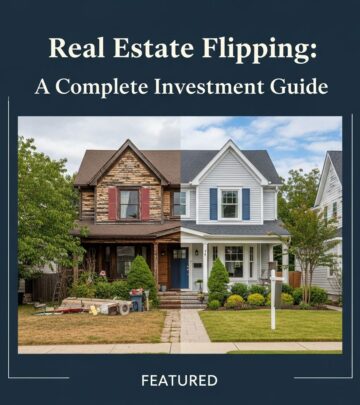
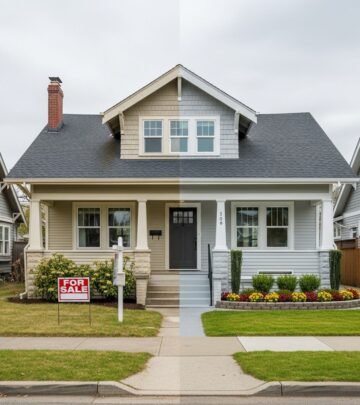
BRRRR Strategy: 5-Step Guide To Build Real Estate Wealth
Unlock infinite real estate growth: Buy low, transform, lease, cash out, and scale endlessly with this proven tactic.
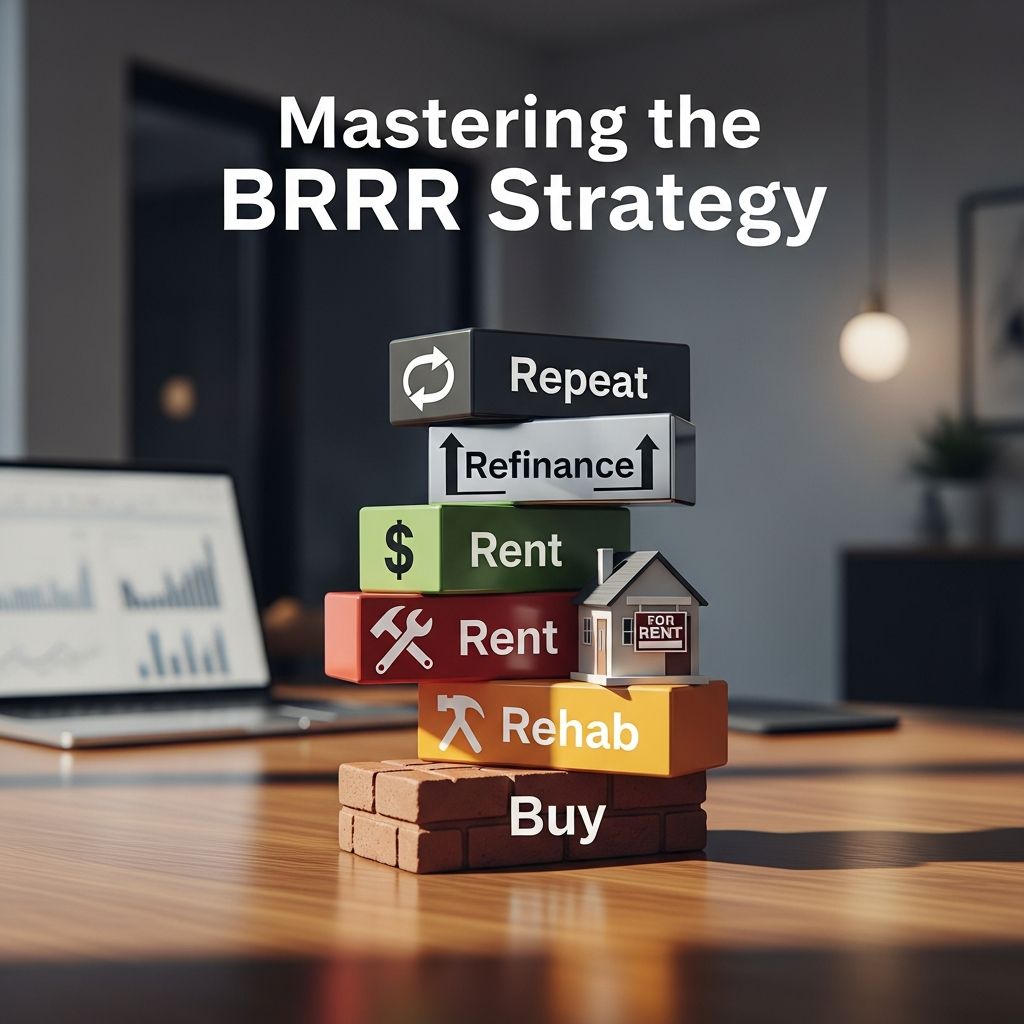
The BRRRR strategy represents a powerful cycle in real estate investing designed to maximize returns with limited upfront capital. This approach enables investors to acquire undervalued assets, enhance their worth, generate rental revenue, extract equity via refinancing, and replicate the process for portfolio expansion. By focusing on distressed properties in promising markets, participants can achieve sustainable income streams and accelerated growth.
Understanding the Core Principles of BRRRR
At its heart, BRRRR—standing for Buy, Rehab, Rent, Refinance, Repeat—transforms underperforming properties into high-yield rentals. Unlike traditional flipping, where properties are sold post-renovation, this method retains ownership for ongoing cash flow while recycling invested funds. Investors target areas with rising demand, such as growing urban centers or college towns, where property appreciation and rental rates support value addition.
This cyclical model leverages equity buildup from improvements and market forces, allowing initial investments to fund multiple deals. Success hinges on meticulous analysis, cost control, and timing, making it suitable for those with renovation savvy or reliable teams.
Step 1: Strategic Property Acquisition
Identifying the right property sets the foundation. Seek distressed assets—those with deferred maintenance, foreclosures, or motivated sellers—priced below market value. Use the 70% rule: purchase price plus rehab costs should not exceed 70% of the after-repair value (ARV). ARV is calculated by comparing renovated comps in the area, factoring size, condition, and location.
Prime targets include older multifamily units or single-family homes in high-demand zones. For instance, a $180,000 purchase with $20,000 in repairs yielding a $300,000 ARV offers strong upside if bought for under $210,000. Tools like local MLS listings, auctions, and off-market deals via networking aid discovery.
- Analyze local trends: Population growth, job markets, and infrastructure developments signal potential.
- Verify comps: Recent sales of similar upgraded properties confirm ARV.
- Budget conservatively: Include holding costs, unexpected repairs, and financing fees.
Step 2: Comprehensive Rehabilitation Efforts
Once acquired, renovations elevate the property to attract premium tenants and justify higher rents. Focus on high-impact updates: kitchens, bathrooms, flooring, and curb appeal. Cosmetic fixes often suffice for rentals, but structural issues must be addressed to pass inspections and secure financing.
For a typical single-family home, allocate 10-20% of purchase price to rehab. In multifamily scenarios, like a 20-unit building bought at $4 million (versus $6-8 million market), targeted upgrades can boost value significantly. Aim for completion within 3-6 months to minimize carrying costs.
| Rehab Area | Typical Cost (% of Purchase) | Expected Value Add |
|---|---|---|
| Kitchen/Bath | 30-40% | 20-30% rent increase |
| Roof/HVAC | 20-25% | Essential for appraisal |
| Cosmetics (Paint, Floors) | 15-20% | Quick ROI on appeal |
| Landscaping/Exterior | 10-15% | Boosts tenant retention |
Partner with licensed contractors and obtain permits to avoid delays. Post-rehab inspections ensure compliance.
Step 3: Optimizing Rental Income Generation
With upgrades complete, market the property to secure reliable tenants at elevated rates. Screen applicants rigorously: credit, income (3x rent), and references minimize vacancies and defaults. In competitive markets, professional property management can yield 95%+ occupancy.
Rental income should cover mortgage, taxes, insurance, and maintenance while providing positive cash flow. For the $300,000 ARV example, rents of $2,000/month post-rehab versus $1,200 pre-upgrade create surplus funds. Use platforms like Zillow or local networks for listings.
- Set competitive pricing: 1% rule—monthly rent at 1% of ARV.
- Long-term leases: Stabilize income for refinance qualification.
- Insurance and reserves: Prepare for vacancies (5-10% annually).
Step 4: Leveraging Refinance for Capital Recovery
Six months post-rent stabilization (lender requirement), appraise the enhanced property. Cash-out refinance replaces the original loan, pulling equity tax-free. If ARV is $300,000, a 75% loan-to-value mortgage yields $225,000, recovering the $60,000 down plus rehab, leaving a low-interest long-term loan.
FHA 203k or conventional investment loans suit this phase. New terms often feature lower rates due to improved debt service coverage from rents. This ‘velocity of capital’ frees funds for the next deal without selling.
Step 5: Scaling Through Repetition
With capital recycled, repeat: hunt new opportunities, applying lessons learned. One property funds two, exponentially growing the portfolio. Over time, this builds passive income from dozens of units, hedging against market dips via diversification.
Real-world case: A $4 million 20-unit acquisition, rehabbed for efficiency, pre-leased fully, and refinanced to repay investors swiftly.
Key Advantages of Adopting BRRRR
This method excels in wealth accumulation and income generation:
- Capital Efficiency: Recoup investments repeatedly, minimizing out-of-pocket funds.
- Passive Revenue: Rentals provide steady cash flow post-setup.
- Forced Appreciation: Rehabs create immediate value beyond market growth.
- Portfolio Leverage: Scale faster than buy-and-hold alone.
Navigating Potential Challenges and Risks
BRRRR demands discipline; pitfalls include over-renovation, market shifts, or tenant issues. Mitigate with buffers (10-20% contingency), local expertise, and conservative ARVs. Economic downturns may delay refinances, so maintain liquidity.
| Risk | Mitigation Strategy |
|---|---|
| Cost Overruns | Detailed bids, phased work |
| Appraisal Shortfalls | Comps validation pre-purchase |
| Vacancy Periods | Strong marketing, reserves |
| Interest Rate Spikes | Lock rates early |
Financial Projections and Examples
Consider a $200,000 total investment (purchase + rehab) on a $300,000 ARV property. Post-refi, recover $200,000+ via 80% LTV loan ($240,000), netting profit on remaining equity. Annual cash flow: $12,000 after expenses at $2,000 rent.
For larger scales, multifamily BRRRR in student-heavy areas yields higher multiples, with one cycle funding multiple repeats.
Essential Tools and Resources for Success
- Analysis software for ARV and cash flow modeling.
- Investor networks for off-market leads.
- Lenders specializing in investment refis.
- Legal/tax advisors for entity setup and 1031 considerations.
Frequently Asked Questions (FAQs)
What minimum capital is needed for BRRRR?
Typically 20-25% down plus rehab funds; start with $50,000-$100,000 for single-family deals.
How long does one cycle take?
6-12 months: 1-3 for buy/rehab, 3 for rent stabilization, 2-3 for refi.
Is BRRRR suitable for beginners?
Yes, with education and partners; focus on simple rehabs first.
Can BRRRR work in any market?
Best in appreciating, high-rent areas; avoid stagnant zones.
What if the refinance appraisal is low?
Appeal with comps or wait for further appreciation/rents.
Advanced Tips for BRRRR Mastery
Optimize by stacking with HELOCs pre-refi or partnering for scale. Track metrics like cash-on-cash return (aim 12%+) and internal rate of return. Stay compliant with local regs, especially rent control.
In 2026, with stabilizing rates, BRRRR remains viable for patient investors.
References
- What is the BRRRR Method in Real Estate Investing & How Does it Benefit Our Investors? — Valiance Capital. 2023. https://valiancecap.com/investor-resources/what-is-the-brrrr-method-in-real-estate-investing-how-does-it-benefit-our-investors/
- Understanding the BRRRR method of real estate investment — Rocket Mortgage. 2023. https://www.rocketmortgage.com/learn/brrrr
- BRRRR Method: What It Is & How Does It Work — Chase Bank. 2023. https://www.chase.com/personal/mortgage/education/buying-a-home/brrrr-method
- How to invest in real estate with the BRRRR method in 2026? — Steadily. 2026. https://www.steadily.com/blog/brrrr-method
Similar Articles








Read full bio of Sneha Tete