50/30/20 Budget Rule: Step-By-Step Guide For 2025
Unlock financial control with the simple 50/30/20 budgeting strategy that balances essentials, enjoyment, and future security.

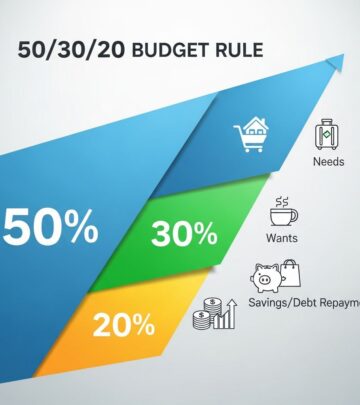
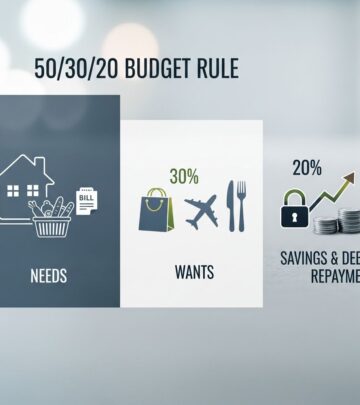
The 50/30/20 budget rule offers a straightforward framework for managing personal finances by dividing after-tax income into three core categories: 50% for essential needs, 30% for discretionary wants, and 20% for savings and debt reduction. This approach, popularized for its simplicity, helps individuals gain control over spending habits while building financial stability.
Understanding the Core Principles of the 50/30/20 Framework
At its heart, the 50/30/20 rule categorizes every dollar of your net income—money left after taxes—into buckets that reflect life’s necessities, pleasures, and future aspirations. Unlike rigid line-item budgets, this percentage-based system provides flexibility, making it accessible for beginners and adaptable for various income levels.
Key principles include prioritizing survival expenses first, allowing room for enjoyment to prevent burnout, and committing to long-term wealth-building. Financial experts note that this balance fosters sustainable habits, reducing the overwhelm of tracking every penny.
Breaking Down the Three Key Categories
Each category serves a distinct purpose in maintaining financial equilibrium. Here’s a detailed look:
- Needs (50%): These are non-negotiable expenses required for basic living standards, such as housing and utilities. Exceeding this threshold signals potential lifestyle inflation or high-cost living adjustments.
- Wants (30%): This portion funds lifestyle enhancements that improve quality of life without necessity, promoting mindful spending on leisure.
- Savings and Debt (20%): Directed toward financial security, this includes building emergency funds, retirement contributions, and extra debt payments beyond minimums.
Detailed Guide: Allocating 50% to Essential Needs
Essential needs encompass costs vital for health, shelter, and mobility. For a monthly after-tax income of $4,000, this equates to $2,000. Common items include:
- Housing: Rent, mortgage, or property taxes.
- Utilities: Electricity, water, internet, and heating.
- Groceries and basic transportation fuel.
- Minimum debt payments and health insurance premiums.
- Childcare or eldercare if mandatory.
Track these via bank statements to ensure they stay under 50%. In high-cost areas, housing alone might push limits, necessitating tweaks like roommates or relocation.
Optimizing the 30% for Wants and Lifestyle Choices
Wants cover discretionary spending that adds joy, capped at 30% or $1,200 on a $4,000 income. Examples:
- Dining out, entertainment subscriptions, and hobbies.
- Non-essential clothing, gym memberships, or travel.
- Gifts, coffee runs, or gadget upgrades.
This category prevents deprivation, key to adherence. Audit subscriptions and impulse buys to maximize value without spillover into needs.
Building Wealth with the 20% Savings Allocation
The 20%—$800 on $4,000 income—fuels progress toward goals like emergency funds covering 3-6 months of expenses, retirement via 401(k)s or IRAs, or home down payments. Prioritize high-interest debt reduction here for compound benefits.
Automate transfers to high-yield savings accounts immediately post-paycheck to enforce discipline.
Step-by-Step Implementation Process
Launch your 50/30/20 budget with these actionable steps:
- Calculate Net Income: Sum after-tax earnings from all sources, excluding pre-tax deductions like 401(k).
- Review Past Spending: Use apps or spreadsheets for 1-3 months’ data to categorize expenses accurately.
- Set Targets: Multiply income by percentages: 0.5 for needs, 0.3 for wants, 0.2 for savings.
- Track and Adjust: Weekly reviews via tools like Mint or Excel; reallocate as needed monthly.
- Automate: Direct deposit splits for seamless execution.
Practical Examples Across Income Levels
To illustrate, consider these scenarios:
| Monthly Net Income | Needs (50%) | Wants (30%) | Savings (20%) |
|---|---|---|---|
| $3,000 | $1,500 | $900 | $600 |
| $5,000 | $2,500 | $1,500 | $1,000 |
| $8,000 | $4,000 | $2,400 | $1,600 |
A single earner at $3,000 might allocate needs to $1,200 rent, $200 utilities, $100 groceries. Wants: $400 dining/entertainment. Savings: $300 emergency, $300 debt.
Advantages of Adopting the 50/30/20 Approach
- Simplicity: No complex spreadsheets; percentages scale with income.
- Balance: Permits enjoyment alongside saving, boosting compliance.
- Flexibility: Adapts to life changes like raises or family growth.
- Goal-Oriented: Ensures consistent progress on debt and wealth.
Potential Drawbacks and Realistic Challenges
Not ideal for everyone: High-cost urban dwellers may exceed 50% needs due to rent (e.g., 40%+ in cities). Low earners might struggle with 20% savings amid inflation. Critics argue it overlooks irregular expenses or family-specific costs.
Additionally, categorizing blurs—gym as need or want? Subjective lines require honest assessment.
Customization Strategies for Unique Situations
Tailor the rule:
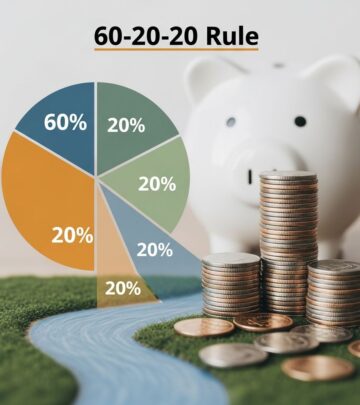
- High Needs: Shift to 60/20/20, cutting wants first.
- Debt-Heavy: Boost savings to 30-40% for aggressive payoff.
- Families: Include childcare in needs; sub-allocate wants for kids’ activities.
- High Earners: Accelerate savings to 30%, expanding wants modestly.
Test variations quarterly for fit.
Tools and Apps to Support Your Budget Journey
Leverage technology:
- YNAB (You Need A Budget) for zero-based tracking.
- Mint or PocketGuard for auto-categorization.
- Excel templates for custom 50/30/20 dashboards.
- Bank apps with spending insights.
Long-Term Impact on Financial Health
Consistent use compounds: 20% savings on $50,000 annual income yields $10,000 yearly toward goals. Over five years at 5% interest, that’s substantial growth. It cultivates discipline, reduces stress, and prepares for emergencies.
Frequently Asked Questions (FAQs)
What income figure do I use for 50/30/20?
After-tax (net) income, excluding voluntary deductions like retirement contributions.
Can I include retirement in needs?
No; employer matches go to savings. Minimum debt payments are needs; extras are savings.
What if my needs exceed 50%?
Reduce wants, increase income, or cut costs (e.g., refinance loans). Adjust ratios temporarily.
Is 50/30/20 suitable for irregular income?
Yes; average over 3 months or base on lowest expected earnings.
How does it compare to zero-based budgeting?
50/30/20 is higher-level; zero-based assigns every dollar specifically.
Next Steps to Launch Your Budget Today
Grab a paycheck stub, list expenses, and draft allocations. Review in 30 days—small wins build momentum toward financial freedom.
References
- What is the 50/30/20 Budget Rule? And How to Use It — Huntington Bank. 2023. https://www.huntington.com/learn/budgeting/50-30-20-rule
- How to Use the 50/30/20 Budget Rule — Hancock Whitney. 2023. https://www.hancockwhitney.com/insights/how-50-30-20-budget
- Budgeting basics: The 50-30-20 rule — UNFCU. 2023. https://www.unfcu.org/financial-wellness/50-30-20-rule/
- Debunking the 50-20-30 Budgeting Rule — John Hancock. 2023. https://www.johnhancock.com/ideas-insights/debunking-50-30-20-budgeting-rule.html
- 50/30/20 Budget Rule: Is It Right for You? — Ally Bank. 2023. https://www.ally.com/stories/budget/the-50-30-20-plan-budgeting-you-can-actually-stick-with/
- What is the 50/30/20 budget rule? — Citizens Bank. 2023. https://www.citizensbank.com/learning/50-30-20-budget.aspx
- The 50/30/20 Rule Explained: A Simple Budgeting Strategy — Johnson Financial Group. 2023. https://www.johnsonfinancialgroup.com/resources/blogs/young-professionals/the-50-30-20-rule-explained-a-simple-budgeting-strategy-for-financial-success/
Similar Articles








Read full bio of medha deb