50/15/5 Budget Rule: 4-Part Guide To Smarter Spending
Unlock financial stability with the 50/15/5 rule: balance essentials, retirement, and short-term goals effortlessly.
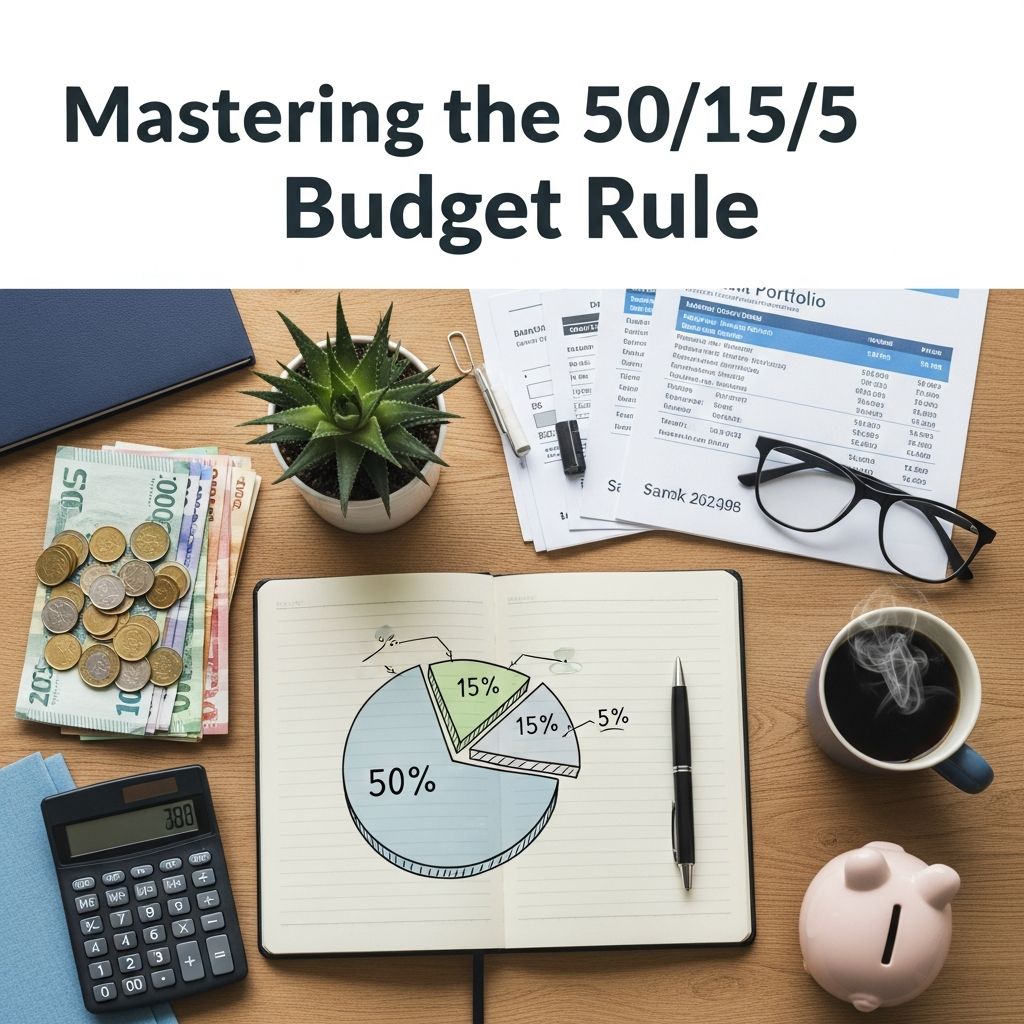
The 50/15/5 budget rule offers a straightforward framework for managing income effectively. It directs 50% toward necessary living costs, 15% into retirement accounts, 5% for immediate savings needs, leaving 30% for other priorities like debt reduction or leisure.
Breaking Down the Core Components
This approach simplifies financial planning by categorizing expenses clearly. Understanding each segment helps individuals align spending with future goals.
50% Allocation for Essential Needs
Essential needs encompass housing, utilities, groceries, transportation, and minimum debt payments. The guideline caps these at half of after-tax income to prevent lifestyle inflation. For a household earning $5,000 monthly after taxes, this equates to $2,500 maximum for must-haves. Exceeding this signals a need for cost adjustments, such as refinancing loans or choosing economical transport options.
15% Commitment to Retirement
Retirement savings target 15% of gross income, including employer matches. This prioritizes long-term security through vehicles like 401(k)s or IRAs. Fidelity recommends this rate for compounding growth over decades. Automating contributions ensures consistency, leveraging tax advantages for faster accumulation.
5% for Short-Term Security
Short-term savings build buffers for unexpected costs, aiming for 3-6 months of essentials eventually. Initially, direct 5% of take-home pay here, separate from retirement funds. This covers repairs or medical bills without derailing progress. High-yield accounts maximize returns on these funds.
Flexible Use of the Remaining 30%
The unallocated 30% provides breathing room. Options include extra debt payments, additional investments, entertainment, or bolstering savings categories. This flexibility adapts to life stages, like family expansions or career shifts. Track usage to avoid creeping into essentials.
Real-World Application Through Examples
Consider a $6,000 monthly after-tax income:
- Essentials (50%): $3,000 – Rent ($1,500), groceries ($500), utilities ($300), transport ($400), minimum debts ($300).
- Retirement (15% gross equivalent): $900 (adjusted for pre-tax).
- Short-term (5%): $300 – Emergency or repairs.
- Flexible (30%): $1,800 – Dining ($400), hobbies ($500), debt payoff ($500), extra savings ($400).
Adjust for actual gross-to-net differences. Tools like spreadsheets track adherence monthly.
| Income Level (After-Tax Monthly) | Essentials (50%) | Retirement (15% Gross Approx.) | Short-Term (5%) | Flexible (30%) |
|---|---|---|---|---|
| $4,000 | $2,000 | $600 | $200 | $1,200 |
| $6,000 | $3,000 | $900 | $300 | $1,800 |
| $8,000 | $4,000 | $1,200 | $400 | $2,400 |
This table illustrates scalability across incomes, promoting proportional discipline.
Advantages of Adopting This Framework
The rule excels in prioritization and simplicity.
- Forces Essential Discipline: Limits needs to 50%, curbing unnecessary outlays.
- Dual Savings Focus: Separates long- and short-term goals, unlike lumped categories.
- Built-in Flexibility: 30% handles variables without rigid constraints.
- Retirement Emphasis: Aligns with expert benchmarks for secure futures.
Potential Drawbacks and Solutions
Not ideal for everyone. High-cost areas may push essentials over 50%. Solutions include relocation considerations or income boosts. It omits explicit debt strategies, so integrate high-interest payoffs into flexible funds. Non-monthly bills require forecasting.
- High housing costs: Seek roommates or downsize.
- Debt-heavy: Accelerate payoffs post-emergency fund.
- Low income: Scale percentages gradually.
Implementation Steps for Success
Start with income calculation: net vs. gross for accuracy.
- Calculate Allocations: Use paycheck stubs for precision.
- Automate Transfers: Retirement first, then short-term savings.
- Track Essentials: Apps categorize spending weekly.
- Review Monthly: Adjust flexible portion as needed.
- Scale Up: Redirect surplus to retirement after goals met.
Comparisons with Alternative Budget Models
The 50/15/5 stands out for savings specificity versus broader rules.
| Rule | Needs | Wants/Discretionary | Savings/Debt | Unique Feature |
|---|---|---|---|---|
| 50/15/5 | 50% | 30% Flexible | 20% (15% Retire + 5% Short) | Retirement priority |
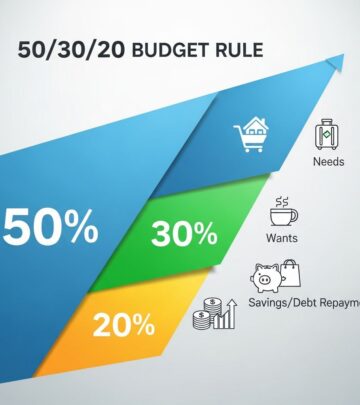
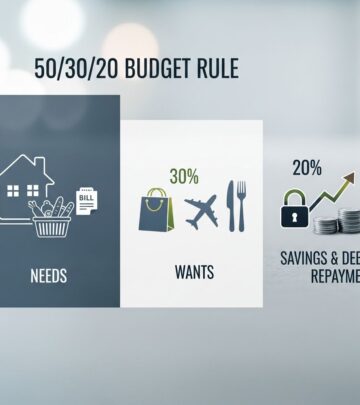
| 50/30/20 | 50% | 30% | 20% | General savings |
| 40/30/20/10 | 30% Expenses | N/A | 20% Goals + 10% Insurance | Debt focus |
Choose based on priorities: retirement-heavy favors 50/15/5.
Boosting Retirement Through This Rule
The 15% target includes matches, promoting max employer benefits. Compound interest amplifies early starts. For example, $900 monthly at 7% return grows substantially over 30 years. Increase via raises or bonuses.
Building and Maintaining Short-Term Reserves
Aim for $1,000 starter fund, then 3-6 months essentials. Separate accounts prevent raids. Use for true surprises only, preserving integrity.
Frequently Asked Questions
What if my essentials exceed 50%?
Trim non-essentials, negotiate bills, or boost income. It’s a signal for change, not failure.
Is 15% gross or net for retirement?
Gross, including employer matches, per Fidelity guidelines.
Can I adjust percentages?
Yes, use as starting point; personalize over time.
How does it handle debt?
Incorporate into flexible 30% after basics covered.
Best accounts for short-term savings?
High-yield savings or money market for liquidity and yield.
Long-Term Impact on Financial Health
Consistent application fosters habits leading to wealth accumulation. It balances present enjoyment with future readiness, reducing stress. Many report improved credit via disciplined spending, aiding loans.
Adapt for inflation or life changes annually. Pair with financial education for optimization.
References
- Is the 50/15/5 Budget Right For You? 3 Key Pros & Cons — Thrivent. 2023. https://www.thrivent.com/insights/budgeting-saving/is-the-50-15-5-budget-right-for-you-3-key-pros-and-cons
- 50/15/5: Savings and Spending Guide — Olde Raleigh Financial Group. 2024. https://www.olderaleighfinancial.com/orfg-resources/the-50-15-5-rule-a-guide-to-spending-and-saving
- What Is the 50/15/5 Rule for Saving? — Experian. 2024. https://www.experian.com/blogs/ask-experian/what-is-50-15-5-rule-for-saving/
- 3 Budgeting Rules to Help You Save Money — John Hancock. 2023. https://www.johnhancock.com/ideas-insights/budgeting-rules-to-help-save-money.html
- Explaining the 50/15/5 Savings and Budgeting Rule — Avadian CU Blog. 2023. https://blog.avadiancu.com/explaining-the-50/15/5-savings-and-budgeting-rule
- 50/15/5: A Saving and Spending Rule of Thumb — Fidelity Viewpoints via USSFCU. 2019-2024. https://www.ussfcu.org/media-center/senate-cents-a-financial-wellness-blog/blog-detail.html?title=50-15-5-a-saving-and-spending-rule-of-thumb
- Fidelity’s Easy Budgeting Guideline — Fidelity. 2024. https://www.fidelity.com/learning-center/personal-finance/spending-and-saving
Similar Articles








Read full bio of Sneha Tete