Mastering Stock Order Types: A Comprehensive Guide
Unlock the power of market, limit, stop, and advanced orders to trade smarter and manage risks effectively in today's markets.

Navigating the stock market requires more than just picking the right investments; it demands understanding how to execute trades effectively. Stock order types serve as the instructions you give to your broker, dictating when, at what price, and under what conditions to buy or sell securities. Choosing the appropriate order can mean the difference between a profitable trade and an unexpected loss, especially in fast-moving markets.
This comprehensive guide breaks down the fundamental and advanced order types, their practical applications, and strategic considerations. Whether you’re a novice investor or an experienced trader, mastering these tools empowers you to align trades with your financial goals and risk tolerance.
Core Principles of Trading Orders
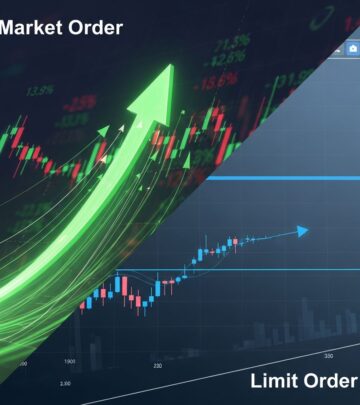
At their essence, orders are directives to brokers for executing transactions in stocks, ETFs, or other securities. They balance two key factors: execution certainty and price control. Market orders prioritize speed, while limit orders emphasize price. Conditional orders like stops add layers of protection and opportunity.
- Execution vs. Price Trade-off: Faster execution often sacrifices price precision, and vice versa.
- Market Conditions Matter: Liquid stocks favor market orders; volatile or illiquid ones suit limits and stops.
- Broker Variations: Platforms may default to market orders, so always specify your preference.
Market Orders: Speed Over Precision
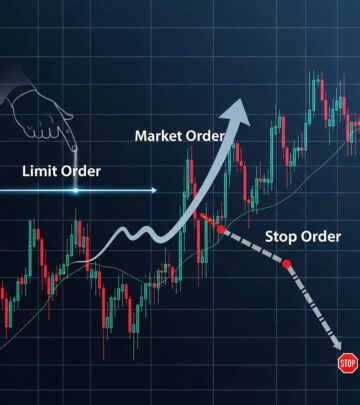
The simplest and most frequently used order, a market order instructs your broker to buy or sell immediately at the best available current price. It guarantees execution in normal conditions but offers no price protection.
For buyers, it fills at the lowest available ask price (seller’s offer). For sellers, it matches the highest bid (buyer’s offer). This type shines in highly liquid markets where bid-ask spreads are tight, ensuring minimal slippage—the gap between expected and actual price.
| Scenario | Best Use | Risks |
|---|---|---|
| High-volume blue-chip stocks | Quick entry/exit | Low slippage risk |
| Volatile sessions | Avoid if possible | Price gaps possible |
| After-hours trading | Use cautiously | Wide spreads |
Example: ABC stock trades at $50 bid/$50.05 ask. A market buy executes near $50.05; a sell near $50. Ideal for urgent positions in stable environments.
Limit Orders: Price Discipline in Action
Limit orders flip the priority: they execute only at your specified price or better, providing control but no execution guarantee. Buy limits set a maximum price; sell limits set a minimum.
These are perfect for value investors waiting for dips or swings traders targeting resistance levels. In rising markets, sell limits lock in gains above current prices; in falls, buy limits snag bargains below.
- Buy Limit: Executes at limit price or lower.
- Sell Limit: Executes at limit price or higher.
- Partial Fills: Orders may fill incrementally if volume matches partially.
Strategic Tip: Place limits slightly beyond key support/resistance for better fill odds without chasing prices.
Stop Orders: Safeguarding Your Portfolio
Stop orders activate only when a security hits a trigger price, then convert to market or limit orders. Primarily for risk management, they limit losses or capture breakouts.
Sell Stop (Stop-Loss)
A sell stop below current price triggers a market sell on downside breaks, capping losses. Essential for trailing stops that adjust upward with gains.
Buy Stop
Placed above current price, it triggers buys on upside momentum, ideal for breakout strategies.
Advanced Variations: Stop-Limit Orders
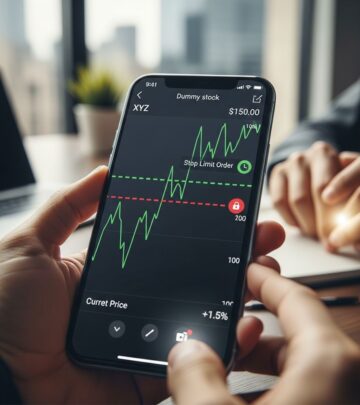
Stop-limit orders combine stops with limits: upon trigger, they become limit orders, not market. This adds price control but risks non-execution if prices gap past the limit.
| Type | Trigger Action | Pro | Con |
|---|---|---|---|
| Stop-Loss | Becomes Market Order | High execution chance | Slippage risk |
| Stop-Limit | Becomes Limit Order | Price protection | May not fill |
Example: Stock at $50; sell stop-limit with $49 stop/$48.50 limit. Triggers at $49, then sells only at $48.50 or better.
Time-in-Force Options: Controlling Duration
Orders don’t have to expire at session end. Time-in-force (TIF) modifiers dictate longevity.
- Day Order: Expires at market close (default).
- Good ‘Til Canceled (GTC): Persists days/weeks until filled, canceled, or broker limit (often 60-90 days).
- Immediate or Cancel (IOC): Fills what it can instantly, cancels rest.
- Fill or Kill (FOK): All or nothing immediately.
- All or None (AON): Rejects partial fills.
GTC suits patient limit orders; IOC/FOK fit high-speed algorithmic trading.
Comparing Order Types: A Trader’s Toolkit
Selecting the right order hinges on goals, market state, and asset liquidity. Here’s a decision framework:
| Goal | Recommended Order | Why? |
|---|---|---|
| Immediate execution | Market | Speed guaranteed |
| Price target | Limit | Precision control |
| Loss protection | Stop/Stop-Limit | Automates exits |
| Breakout entry | Buy Stop | Captures momentum |
Risk Management Strategies with Orders
Layer orders for robust protection. Bracket orders pair entry limits with attached stops; trailing stops dynamically adjust. In volatile times, wider stops prevent whipsaws—false triggers.
- Use stops on all positions to enforce discipline.
- Combine with position sizing: never risk >1-2% per trade.
- Test in paper trading before live deployment.
Navigating Broker Platforms and Fees
Not all brokers handle orders identically. Check for extended-hours support, fractional shares, and TIF limits. Most offer mobile apps with visual order tickets for previews.
Fees rarely apply to basic orders now, but complex conditionals might incur costs. Review SEC/FINRA disclosures for transparency.
Frequently Asked Questions (FAQs)
What happens if my limit order isn’t filled?
It remains active per TIF until matched or canceled. Monitor and adjust in changing markets.
Are market orders safe in volatile markets?
Often not—prices can gap. Opt for limits or wait for stability.
Can I use stops on ETFs or options?
Yes, but liquidity varies; stops work best on high-volume underlyings.
What’s the difference between stop and stop-limit?
Stop becomes market (execution focus); stop-limit becomes limit (price focus).
Do all brokers support GTC orders?
Most do, but durations differ—confirm policies.
Building Confidence in Order Execution
Practice distinguishes pros. Simulators from brokers like Schwab or Vanguard let you test without risk. Track outcomes: execution rates, slippage, and win rates refine your edge.
Stay informed via FINRA and Investor.gov for regulatory updates. In 2026’s AI-driven markets, adaptive orders will only grow vital.
References
- Types of Orders — Investor.gov (SEC). Accessed 2026. https://www.investor.gov/introduction-investing/investing-basics/how-stock-markets-work/types-orders
- Order Types — FINRA.org. Accessed 2026. https://www.finra.org/investors/investing/investment-products/stocks/order-types
- Order Types: Limit, Market & Stop Orders Explained — tastylive. Accessed 2026. https://www.tastylive.com/concepts-strategies/order-types
- 3 Order Types: Market, Limit, and Stop Orders — Charles Schwab. Accessed 2026. https://www.schwab.com/learn/story/3-order-types-market-limit-and-stop-orders
- Stock & ETF Orders: Limit, Market, Stop, & Stop-Limit — Vanguard. Accessed 2026. https://investor.vanguard.com/investor-resources-education/online-trading/stock-order-types
Similar Articles








Read full bio of medha deb