Mastering Stock Order Types for Smart Trading
Unlock the power of market, limit, stop, and advanced orders to control your trades, manage risks, and optimize returns in any market condition.

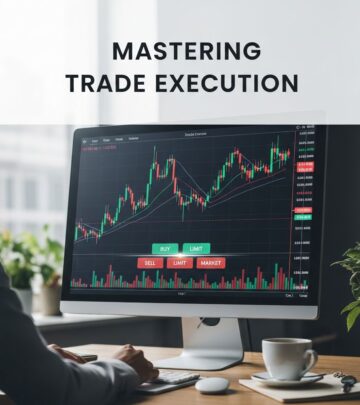
Navigating the stock market requires more than just picking the right securities; it demands precise control over how your trades execute. Stock order types serve as the tools that dictate when, at what price, and under what conditions your buy or sell instructions are carried out. From simple market orders that prioritize speed to complex stop-limit combinations that safeguard profits, understanding these mechanisms empowers investors to align trades with their strategies and risk tolerance.
Why Order Types Matter in Modern Trading
In today’s fast-paced markets, where prices fluctuate rapidly due to news, earnings reports, or global events, the default market order might not always serve your goals. Order types allow customization: guaranteeing execution at the best available price, setting firm price boundaries, or automating responses to price movements. According to official guidelines, market orders ensure completion but offer no price assurance, while limit orders flip this dynamic by prioritizing price over immediacy. This balance is crucial during volatile periods when bid-ask spreads widen, potentially leading to unfavorable fills.
Brokerages often default to market orders for their reliability in liquid markets, but savvy traders specify alternatives to mitigate slippage—the gap between expected and actual execution prices. Whether trading individual stocks or exchange-traded funds (ETFs), selecting the appropriate order type can mean the difference between capturing gains and incurring losses.
Fundamental Order Types: Building Blocks of Execution
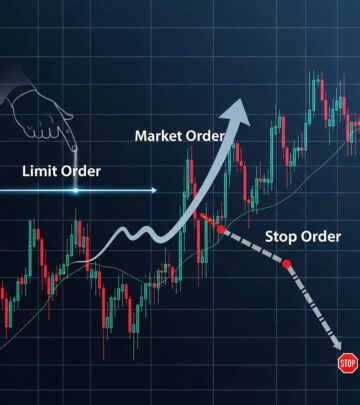
At the core of stock trading lie three primary order categories: market, limit, and stop orders. Each addresses distinct needs, from urgency to protection.
Market Orders: Speed Over Precision
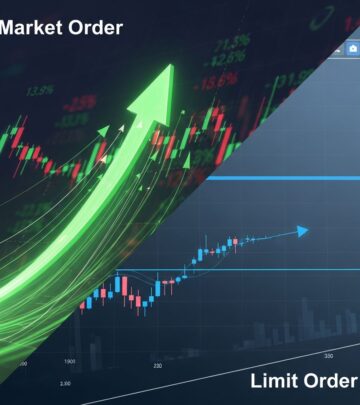
A market order instructs your broker to buy or sell a security immediately at the prevailing market price. For buyers, this means the lowest available ask price; for sellers, the highest bid. Execution is virtually guaranteed during regular hours (9:30 a.m. to 4:00 p.m. ET) for highly liquid assets like blue-chip stocks or popular ETFs.
- Best for: High-volume stocks in stable conditions, where minor price variations are acceptable.
- Avoid in: Illiquid or premarket/after-hours sessions, where wide spreads can inflate costs.
Example: If XYZ stock quotes a bid of $50.00 and ask of $50.05, a market buy executes near $50.05, while a sell fills near $50.00.
Limit Orders: Price Control at a Cost
Limit orders specify a maximum purchase price (buy limit) or minimum sale price (sell limit), executing only at that level or better. This provides certainty on price but no execution guarantee—if the market never reaches your limit, the order expires unfulfilled.
- Buy limit: Executes at limit price or lower (e.g., $40 or below for a $40 limit).
- Sell limit: Executes at limit price or higher.
Ideal for value investors waiting for dips or momentum traders locking in tops. In a chart scenario, placing a buy limit below current price anticipates a pullback.
Stop Orders: Triggering Action on Price Breaks
Stop orders activate once a stock hits a designated ‘stop price,’ converting to a market order for execution. Sell stops protect against downside (e.g., stop at $45 on a $50 stock to limit losses), while buy stops chase breakouts above resistance.
Once triggered, slippage is possible in fast markets, as it becomes a market order.
Advanced Variations: Precision and Automation
Beyond basics, hybrid orders combine features for sophisticated control.
Stop-Limit Orders: The Hybrid Safeguard
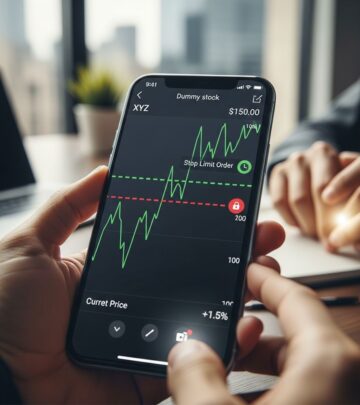
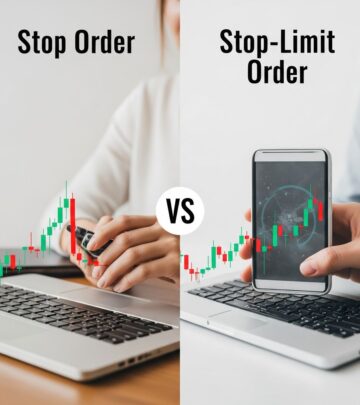
A stop-limit order triggers a limit order at the stop price, specifying both activation and execution boundaries. For a sell stop-limit with stop at $45 and limit at $44, it sells only between $45 and $44 once triggered—avoiding deep slippage but risking non-execution.
| Order Type | Trigger | Execution | Use Case |
|---|---|---|---|
| Stop | Stop price hit | Market order | Quick protection |
| Stop-Limit | Stop price hit | Limit order | Price-controlled exit |
Time-in-Force Directives: Dictating Duration
Orders don’t have to expire at session end. Key modifiers include:
- Day Order: Valid until market close same day.
- Good ‘Til Canceled (GTC): Persists days or weeks, with broker limits (e.g., 60-90 days).
- Immediate or Cancel (IOC): Fills partial quantity instantly, cancels remainder.
- Fill or Kill (FOK): Executes fully immediately or cancels.
- All or None (AON): Requires complete fill, no partials, but not immediate.
Session-Specific Orders: Timing the Market
Market-on-Open (MOO) and Market-on-Close (MOC) target session extremes. MOO executes at 9:30 a.m. open (enter by ~9:28 a.m.), MOC at 4:00 p.m. close. Useful for index trackers or rebalancing.
Complex Strategies: Bracket and Conditional Orders
Experienced traders layer orders for automation.
Bracket Orders: Profit-Loss Brackets
Bracket orders sandwich a position with attached limit and stop orders. Enter a buy, and it auto-sets a sell limit above (take profit) and sell stop below (cut losses). Triggers one, cancels the other—ideal for swing trades.
Conditional Orders: OCO, OTO, and Beyond
Advanced broker platforms support:
- One-Cancels-the-Other (OCO): Two orders; one executes, cancels sibling (e.g., limit sell profit + stop sell loss).
- One-Triggers-the-Other (OTO): Primary order triggers secondary (e.g., buy triggers bracket).
- One-Triggers-OCO (OTOCO): Buy triggers an OCO pair.
- Contingent: Executes if another security/order meets criteria.
These reduce monitoring, enforcing discipline.
Risk Management and Best Practices
Volatile markets amplify order pitfalls. Use market orders sparingly in low-volume names; opt for limits. Monitor premarket/after-hours for gaps. Diversify with ETFs via limits for cost averaging.
- Highly liquid assets: Market orders shine.
- Volatile/illiquid: Limits and stops rule.
- Long-term holds: Day or GTC limits.
Always review broker specifics—some restrict GTC duration or after-hours.
Comparing Order Types: A Trader’s Quick Reference
| Type | Price Guarantee | Execution Guarantee | Risk Level | Ideal Scenario |
|---|---|---|---|---|
| Market | No | Yes | High (slippage) | Liquid, urgent |
| Limit | Yes | No | Low | Price targets |
| Stop | No (post-trigger) | High | Medium | Breakouts/stops |
| Stop-Limit | Yes | Medium | Low-Medium | Controlled exits |
Frequently Asked Questions (FAQs)
What is the difference between a stop order and a stop-limit order?
Stop becomes market post-trigger (risk slippage); stop-limit becomes limit (price control, execution risk).
Can I use market orders after hours?
Yes, but with wider spreads and volatility—prefer limits.
How long does a GTC order last?
Broker-dependent, often 60 days max.
Are bracket orders available everywhere?
Common on advanced platforms, not basic ones.
Do ETFs trade like stocks?
Yes, same order types apply.
Conclusion: Empower Your Trading Arsenal
Mastering order types transforms reactive trading into strategic execution. Start with basics, graduate to conditionals, and always align with your risk profile. Practice on paper trades to internalize nuances.
References
- Types of Orders — Investor.gov. 2023. https://www.investor.gov/introduction-investing/investing-basics/how-stock-markets-work/types-orders
- Order Types — FINRA.org. 2024-01-15. https://www.finra.org/investors/investing/investment-products/stocks/order-types
- Understanding the Different Stock Order Types — SoFi. 2025-06-12. https://www.sofi.com/learn/content/stock-order-types/
- 3 Order Types: Market, Limit, and Stop Orders — Charles Schwab. 2024. https://www.schwab.com/learn/story/3-order-types-market-limit-and-stop-orders
- Stock & ETF Orders: Limit, Market, Stop, & Stop-Limit — Vanguard Investor. 2025. https://investor.vanguard.com/investor-resources-education/online-trading/stock-order-types
- Trading FAQs: Order Types — Fidelity Investments. 2024-11-20. https://www.fidelity.com/trading/faqs-order-types
Similar Articles








Read full bio of medha deb