Options Trading Basics: 5 Steps To Start Trading Options
Unlock the potential of options trading with this comprehensive beginner's guide to strategies, risks, and practical steps for success.

Options trading offers investors a versatile way to speculate on price movements without directly owning the underlying asset. These contracts provide the right, but not the obligation, to buy or sell at a predetermined price by a set date, enabling strategies for bullish, bearish, or neutral market views.
Understanding the Core of Options Contracts
At its heart, an options contract is a derivative tied to an underlying asset like a stock. Each contract typically controls 100 shares and includes key terms: the underlying asset, strike price, expiration date, and premium paid by the buyer. Buyers gain flexibility, while sellers assume obligations if exercised.
The premium reflects intrinsic value—how much the option is ‘in the money’—and time value, which decays as expiration nears. This dual valuation makes options unique compared to direct stock trading, where positions lack expiration and leverage comes solely from margin.
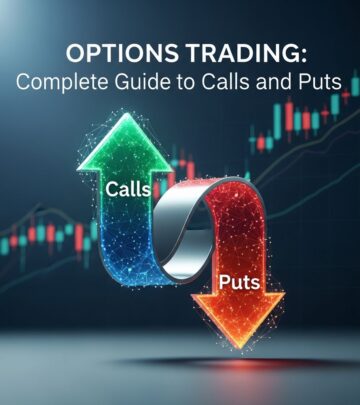
Call Options: Betting on Price Increases
Call options grant the buyer the right to purchase the underlying asset at the strike price before expiration. Ideal for bullish outlooks, buying a call limits risk to the premium while offering unlimited upside potential.
For example, if a stock trades at $150 and you buy a $160 call expiring in two months for a $5 premium, your breakeven is $165. If the stock rises to $180, exercising yields $15 profit per share minus premium. Selling the option itself can capture gains earlier.
- Long call benefits: High reward if stock surges; risk capped at premium.
- Short call risks: Seller profits from premium if out-of-the-money (OTM) at expiration but faces unlimited loss if exercised.
Put Options: Profiting from Declines
Put options allow the buyer to sell the underlying at the strike price, suiting bearish predictions. Maximum loss is the premium; profit potential is substantial if the asset drops sharply.
Consider a $100 stock with a $95 put bought for $3. Breakeven is $92. If it falls to $80, profit hits $12 per share after premium. Put sellers collect premiums betting on stability or rises but must buy shares at strike if assigned.
| Option Type | Buyer Right | Seller Obligation | Profit Scenario |
|---|---|---|---|
| Call | Buy at strike | Sell at strike | Stock rises |
| Put | Sell at strike | Buy at strike | Stock falls |
Key Factors Influencing Option Prices
Option premiums fluctuate based on underlying price, strike proximity, time to expiration, volatility, and interest rates. In-the-money (ITM) options have intrinsic value; at-the-money (ATM) rely on time value; OTM need significant moves to profit.
Volatility boosts premiums, as bigger swings increase exercise odds. Time decay (theta) erodes value daily, accelerating near expiration. Traders select strikes reflecting predicted prices: ATM for balanced risk/reward, OTM for cheaper leverage.
Step-by-Step Guide to Starting Options Trading
- Build foundational knowledge: Grasp calls, puts, Greeks (delta for direction, theta for decay), and strategies before risking capital.
- Open a brokerage account: Choose platforms with options approval levels; beginners start at level 1-2 for covered calls or protective puts.
- Develop a plan: Define risk tolerance, position size (1-5% of portfolio per trade), and exit rules.
- Spot opportunities: Use charts, earnings reports, or volatility spikes to identify trades.
- Execute and monitor: Buy/sell via platform; adjust for news or Greeks shifts.
Essential Beginner Strategies
Start simple before complex plays. Covered calls generate income on owned stock by selling calls against it. Protective puts hedge long positions like insurance.
Long calls/puts suit directional bets. Credit spreads (short OTM with long further OTM protection) cap risk while collecting net premium.
Neutral Strategies for Sideways Markets
Profit from range-bound stocks via short strangles: sell OTM call and put, pocketing premium if price stays between strikes. Iron condors refine this with bought wings for defined risk.
Straddles buy ATM call and put for volatility plays—profit from big moves either way. Strangles use OTM strikes for cheaper entry.
- Short strangle: Collect premium; max profit if expires OTM both sides.
- Straddle: Gains if |move| exceeds combined premiums.
Risks and Risk Management Essentials
Options amplify gains but losses too—100% premium wipeout common. Sellers face assignment, margin calls. Leverage magnifies volatility exposure.
Mitigate with:
- Position sizing: Never risk >2% account per trade.
- Stop-losses on options or underlyings.
- Diversification across assets/strategies.
- Paper trading first.
Understand assignment: Early if ITM dividends loom; random post-4 PM. Roll positions to avoid.
Advanced Concepts for Growth
Greeks quantify sensitivities: Delta mimics stock moves; gamma accelerates delta; vega loves volatility; rho minor for short-term.
Implied volatility (IV) skews premiums—high IV favors sellers. Probability calculations via OTM distance aid >50% win-rate trades.
Multi-leg orders like butterflies profit from pin-point accuracy; calendars exploit time/vol differences.
Frequently Asked Questions
What is the main difference between buying and selling options?
Buyers have rights with limited risk; sellers have obligations with potentially unlimited risk but premium income upfront.
Can options trading be done in retirement accounts?
Yes, limited strategies like covered calls in IRAs; check broker rules.
How do taxes work on options trades?
Short-term gains taxed as ordinary income; 60/40 long-term/short-term split for index options. Consult a tax pro.
Are options suitable for all investors?
No—high risk; best for those understanding leverage, with risk capital.
What brokers offer good options tools?
Platforms with low commissions, analyzers, probability cones.
Building Long-Term Proficiency
Practice via simulators, track trades in journals, study market regimes. Options suit income (wheel strategy), hedging, or speculation. Scale slowly, prioritizing consistency over home runs.
Combine with stocks/ETFs for holistic portfolios. Stay educated on regs like pattern day trader rules (4x maintenance margin under $25k).
References
- Beginner’s guide: Understanding Options Trading — Ally Invest. 2024. https://www.ally.com/stories/invest/trading-options-for-beginners/
- What is Options Trading and How Does it Work? — Wealthsimple. 2024. https://www.wealthsimple.com/en-ca/learn/what-is-a-stock-option
- How to Trade Options: A Beginner’s Guide — tastytrade. 2025. https://tastytrade.com/learn/trading-products/options/how-to-trade-options/
- Options Trading: Step-by-Step Guide for Beginners — NerdWallet. 2025. https://www.nerdwallet.com/investing/learn/how-to-trade-options
- What Is Options Trading? A Beginner’s Guide — SoFi. 2024. https://www.sofi.com/learn/content/options-trading-for-beginners/
- Introduction to Options — Charles Schwab. 2024. https://www.schwab.com/options/what-is-trading-options
Similar Articles








Read full bio of Sneha Tete