Options Trading: A Complete Beginner’s Step-By-Step Roadmap
Unlock the potential of options trading with this comprehensive beginner's roadmap to strategies, risks, and profitable execution.

Options trading offers investors a versatile way to speculate on price movements, generate income, or hedge positions without owning the underlying asset. Unlike stocks, options provide leveraged exposure with defined risk parameters, making them powerful tools for diverse market conditions. This guide breaks down the essentials, from core principles to practical execution, empowering newcomers to navigate this dynamic arena.
Understanding the Fundamentals of Options Contracts
At its core, an options contract grants the holder the right, but not the obligation, to buy or sell an underlying asset at a predetermined price before or on a specific date. Each contract typically represents 100 shares of the underlying stock, ETF, or index. Key components include the premium (the cost of the option), strike price (the set price for execution), and expiration date (when the contract ends).
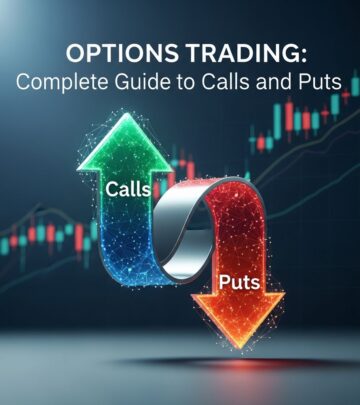
Two primary types dominate: call options, which profit from rising prices, and put options, which benefit from declines. For instance, buying a call allows purchasing shares at the strike if the market surges, while a put enables selling at the strike amid a downturn. Intrinsic value arises when the underlying price favors exercise (e.g., stock above strike for calls), while time value reflects remaining potential until expiration.
- Call buyers anticipate upward moves and seek leveraged gains.
- Put buyers expect drops and aim to profit from volatility.
- Sellers collect premiums but face obligations if exercised.
Options derive value from the underlying’s price, volatility, time decay, interest rates, and dividends—quantified by the Greeks: Delta (directional sensitivity), Theta (time erosion), Vega (volatility impact), Gamma (delta changes), and Rho (interest rate effects).
Preparing Your Trading Foundation: Account Setup and Approval
Before placing trades, secure a brokerage account approved for options. Most platforms require applications detailing experience, finances, and risk tolerance. Beginners often start at Level 1 or 2, limiting to covered calls or basic spreads, progressing with demonstrated knowledge.
Select brokers with intuitive platforms, low commissions, educational tools, and paper trading. Approval involves quizzes on options mechanics, ensuring you’re equipped for risks like total premium loss for buyers or unlimited exposure for naked sellers.
| Broker Feature | Beginner Benefit |
|---|---|
| Paper Trading | Practice without real capital |
| Options Chains | Real-time pricing and Greeks |
| Educational Webinars | Strategy deep dives |
| Mobile Alerts | Monitor positions on-the-go |
Fund modestly—allocate no more than 5-10% of your portfolio initially to cap exposure.
Building a Robust Trading Strategy Framework
Success hinges on a predefined plan outlining goals, risk limits, and market views. Define your style: directional (bullish/bearish), neutral (income/volatility plays), or hedging. Assess time horizons—day trades versus long-term swings—and capital allocation.
Core strategies include:
- Long Call/Put: Bullish/bearish bets with limited risk (premium paid).
- Covered Call: Own stock, sell calls for income; caps upside.
- Protective Put: Insure holdings against drops.
- Straddles/Strangles: Profit from big moves regardless of direction, ideal for earnings.
- Iron Condor: Neutral range-bound play collecting premiums.
Factor in implied volatility (IV): High IV inflates premiums (favor selling); low IV suits buying. Use scanners for high-volume chains with open interest above 500 contracts per strike.
Finding and Evaluating Prime Trading Opportunities
Scan for setups using technicals (support/resistance, moving averages), fundamentals (earnings, news), and options data (volume spikes, IV rank). Tools like scanners highlight unusual activity or income candidates.
Predict strike viability: For calls, target out-of-the-money (OTM) strikes 5-10% above spot with 30-60 days to expiration. Analyze breakeven (strike + premium for calls) and probability of profit via delta (e.g., 0.30 delta ≈ 30% chance ITM).
Example: Stock at $100, buy $105 call for $3 premium (breakeven $108). If shares hit $115 by expiry, profit $700 per contract minus fees.
Executing Trades with Precision and Discipline
From chains, select expiration/strike aligning with your thesis. Enter limit orders to control fills, avoiding market orders in thin liquidity. Platforms enable one-click entries, multi-leg setups, and previews of P/L graphs.
- Confirm Greeks and scenarios.
- Set order type: Limit for precision.
- Review max loss/profit.
- Submit and log details.
Test via simulators first, visualizing max gain/loss and breakevens.
Essential Risk Management and Position Oversight
Risk controls define pros: Size trades at 1-2% portfolio risk, diversify across underlyings, and use stops or defined-risk spreads. Exit plans are non-negotiable—target 50% profit capture or 21-day holds for theta decay.
- Bracket orders: Auto-stop/profit.
- Position sizing: Smaller in volatility spikes.
- Alerts for IV crushes or breaches.
Monitor daily: Adjust deltas via rolls, close early if 50% profit hit, or cut losses at 2x premium. Psychology matters—stick to plans amid FOMO or panic.
Advanced Techniques for Seasoned Proficiency
Evolve with butterflies (low-cost directional), calendars (time spreads), or diagonals (dynamic delta). Backtest via historical data, focusing on win rates above 60% for premium-selling.
Leverage IV percentile: Sell when >50%, buy <20%. Combine with earnings plays using weeklies for precision.
Frequently Asked Questions
What is the minimum capital for options trading?
Typically $2,000-$5,000, but start smaller with cash-secured strategies. Focus on risk per trade, not account size.
Can beginners sell options?
Yes, but only covered or defined-risk initially to limit exposure.
How do I avoid total loss?
Buy options with 45+ days expiry, sell at 50% profit, and use spreads.
What impacts option prices most?
Underlying movement, IV, and time decay—Greeks quantify these.
Is options trading suitable for all?
No; requires education, discipline, and risk tolerance. Paper trade first.
Key Takeaways for Lasting Success
Options amplify opportunities but demand respect for leverage. Master basics, plan rigorously, manage risks proactively, and evolve iteratively. Consistent small wins compound over time.
References
- How to Trade Options: A Beginner’s Guide — tastytrade. 2023. https://tastytrade.com/learn/trading-products/options/how-to-trade-options/
- How to Trade Options for Beginners: Step-by-Step Guide — E*TRADE. 2024-10-01. https://us.etrade.com/knowledge/advanced-trading/how-to-trade-options
- Options Trading: Step-by-Step Guide for Beginners — NerdWallet. 2024-05-15. https://www.nerdwallet.com/investing/learn/how-to-trade-options
- Beginner’s Guide: Understanding Options Trading — Ally Invest. 2023-11-20. https://www.ally.com/stories/invest/trading-options-for-beginners/
- Options Trading for Beginners: Total Guide — YouTube (Clear Value Investing). 2023. https://www.youtube.com/watch?v=NW1ziUDjB7w
Similar Articles








Read full bio of Sneha Tete