Financial Literacy: 5 Pillars For Financial Empowerment
Unlock the power of financial knowledge to build wealth, avoid debt traps, and secure your future with proven strategies.

Financial literacy equips individuals with the knowledge and skills to navigate complex money matters effectively. It encompasses understanding how to manage income, expenses, debts, savings, and investments to achieve stability and growth.
Understanding the Foundations of Financial Literacy
At its core, financial literacy involves the ability to comprehend and apply financial concepts in everyday life. This means evaluating options for banking, credit, and investments while planning for future needs and handling unexpected events. Unlike basic money awareness, it demands critical thinking to align decisions with personal goals and values.
People often start with simple tasks like tracking daily spending but progress to sophisticated strategies such as retirement planning. This progression builds confidence in handling real-world scenarios, from buying a home to preparing for emergencies.
The Core Pillars Supporting Financial Success
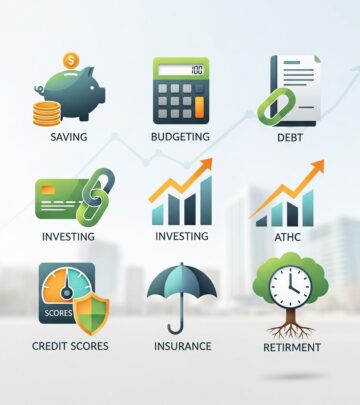
Financial literacy rests on several interconnected pillars that guide decision-making. These elements ensure balanced management of resources across earning, spending, saving, borrowing, and protecting wealth.
- Earning Income: Recognizing diverse income sources, such as wages, side gigs, or passive revenue, forms the starting point. Maximizing earnings through career advancement or skill-building enhances financial capacity.
- Spending and Budgeting: Creating a spending plan prevents overspending and directs funds toward priorities. Budgets reveal patterns in expenses, allowing adjustments for efficiency.
- Saving and Investing: Regularly setting aside money and growing it through investments leverages compound interest for substantial long-term gains.
- Borrowing and Debt Control: Using credit wisely distinguishes beneficial debt, like mortgages, from harmful types, such as high-interest loans.
- Asset Protection: Safeguarding finances against risks via insurance and fraud prevention maintains stability.
Building a Solid Budget: The Cornerstone of Control
A budget acts as a financial roadmap, dictating income allocation to needs, wants, and goals. Without it, impulsive purchases can erode savings and lead to debt cycles.
To develop an effective budget, first calculate net monthly income from all sources. Then, categorize expenses into fixed (rent, utilities) and variable (entertainment, groceries). Tools like spreadsheets or apps simplify tracking, highlighting areas for reduction.
| Category | Example Expenses | Monthly Allocation Tips |
|---|---|---|
| Essentials | Housing, Food, Transport | 50% of income; prioritize non-negotiables |
| Discretionary | Dining Out, Hobbies | 30%; cut here first if overspending |
| Savings/Debt | Emergency Fund, Loans | 20%; automate transfers |
This 50/30/20 framework, adapted from common practices, promotes discipline while allowing flexibility. Regular reviews ensure the budget evolves with life changes.
Navigating Debt: Smart Borrowing vs. Costly Traps
Debt serves purposes like funding education or homes but becomes burdensome when mismanaged. Key is grasping interest rates, terms, and repayment impacts on credit health.
Distinguish ‘good’ debt with appreciating assets from ‘bad’ debt for depreciating items. Strategies include debt snowball (smallest balances first for momentum) or avalanche (highest interest first for savings). Maintaining utilization below 30% preserves credit scores.
- Pay more than minimums to reduce principal faster.
- Consolidate high-rate debts into lower-rate options.
- Avoid new debt during repayment phases.
Saving and Investing: Growing Wealth Over Time
Savings provide liquidity for short-term needs, while investing builds wealth through market growth. Compound interest accelerates this: $200 monthly at 7% annual return yields over $250,000 in 40 years.
Start with high-yield savings for emergencies (3-6 months’ expenses). Then diversify investments: stocks for growth, bonds for stability, funds for accessibility. Risk tolerance dictates allocation—conservative for near-retirees, aggressive for youth.
Retirement accounts like 401(k)s or IRAs offer tax advantages, amplifying returns. Early contributions maximize time’s power.
Protecting Your Financial Health
Risks like job loss, illness, or scams threaten stability. Insurance (health, auto, life) transfers these risks, while identity monitoring prevents theft.
- Review policies annually for coverage gaps.
- Use strong passwords and two-factor authentication.
- Build credit monitoring habits to catch issues early.
Setting and Achieving Financial Goals
Clear goals drive progress: short-term (vacation fund), mid-term (car down payment), long-term (retirement). SMART criteria—Specific, Measurable, Achievable, Relevant, Time-bound—enhance success.
Track via apps, celebrating milestones to sustain motivation. Adjust as circumstances shift, like income changes.
The Critical Role of Financial Education
Education bridges knowledge gaps, fostering self-sufficiency. Programs in schools and communities teach practical skills, reducing debt ignorance and boosting savings rates.
Critical thinking evaluates options, aligning choices with aspirations. Lifelong learning adapts to economic shifts, ensuring resilience.
Overcoming Common Financial Hurdles
Inflation erodes purchasing power, necessitating raises or investments. Lifestyle creep—spending more with income growth—undermines savings; counter with automatic allocations.
Behavioral biases, like instant gratification, lead to poor choices. Awareness and accountability partners help.
Financial Literacy for Life Stages
- Young Adults: Focus on budgeting, credit building, emergency funds.
- Mid-Career: Debt payoff, college savings, home buying.
- Pre-Retirement: Maximizing investments, insurance review.
- Seniors: Income streams, estate planning.
Frequently Asked Questions
What is the first step in improving financial literacy?
Track income and expenses for one month to understand spending patterns.
How does compound interest work?
It earns returns on both principal and accumulated interest, exponentially growing savings over time.
Why track credit scores?
Scores influence loan approvals and rates; regular checks enable proactive management.
Is debt always bad?
No, strategic debt for assets like homes can build wealth if managed well.
How much should I save monthly?
Aim for 20% of income, prioritizing emergencies first.
Actionable Steps to Boost Your Financial Literacy Today
- Assess current finances with a net worth statement.
- Draft a zero-based budget.
- Open high-yield savings and automate transfers.
- Review credit reports annually.
- Enroll in a free online financial course.
Consistent application transforms knowledge into habits, yielding financial freedom.
References
- Introduction – Defining Financial Literacy — Wisconsin Department of Public Instruction. 2018. https://dpi.wi.gov/sites/default/files/imce/cte/pdf/pflintro.pdf
- Financial Literacy 101: Your Guide to a Secure Financial Future — Johnson & Wales University Online. 2023. https://online.jwu.edu/blog/financial-literacy-101/
- Financial Literacy: The Guide to Managing Your Money — Annuity.org. 2024. https://www.annuity.org/financial-literacy/
- 7 Key Components of Financial Literacy — myFICO. 2023. https://www.myfico.com/credit-education/blog/7-financial-literacy-components
- Financial Literacy — LINCS (U.S. Department of Education). 2019. https://lincs.ed.gov/sites/default/files/TSTMFinancLiterBrief-rev-508.pdf
- Financial Literacy Education: What It Is & Why It’s Important — Bank in Herzegovina. 2023. http://www.bihbank.com/financial-literacy-education-what-it-is-why-its-important/
Similar Articles








Read full bio of Sneha Tete