Mastering Credit Utilization Rate
Unlock the power of low credit utilization to boost your score and secure better financial opportunities.
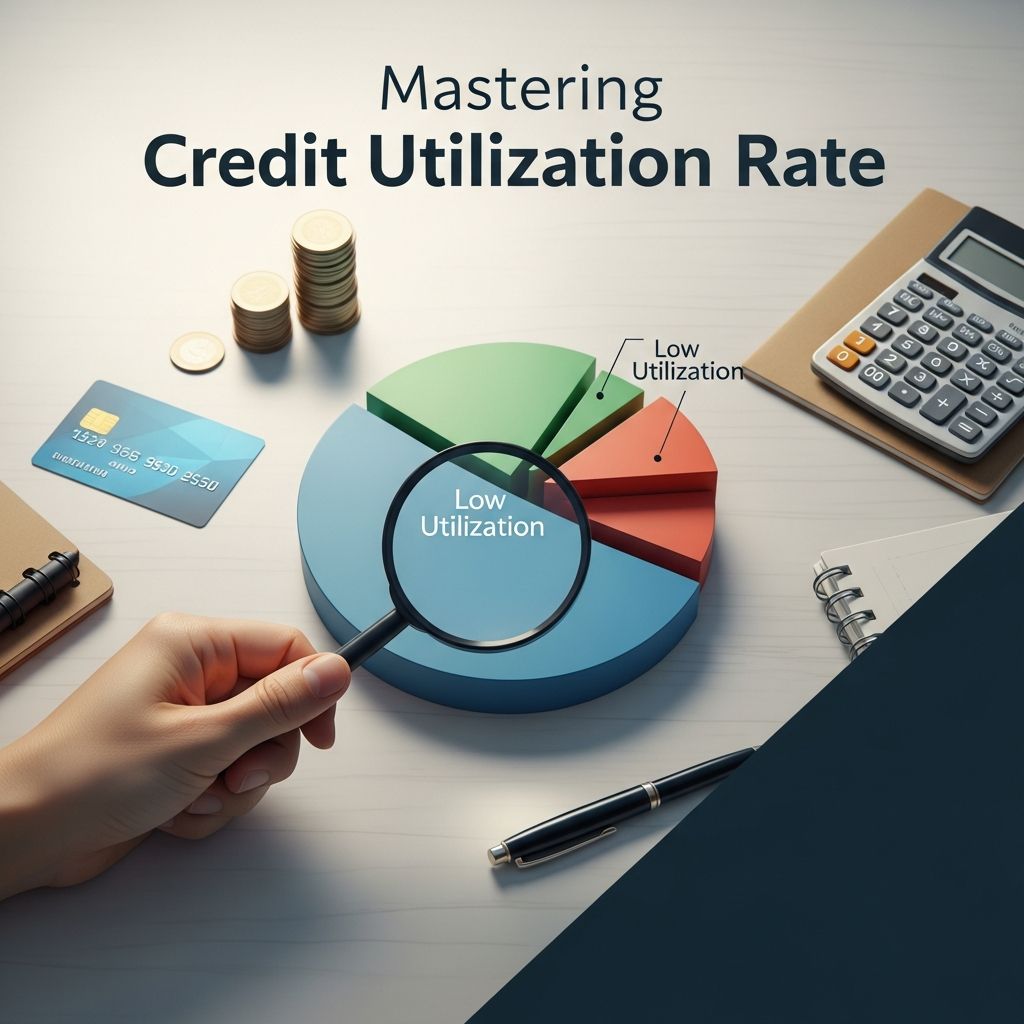
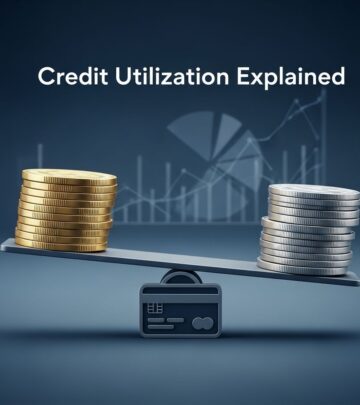
Credit utilization rate measures the portion of your available revolving credit that you are currently using, serving as a key indicator of financial responsibility to lenders and credit scoring models. This metric significantly influences your overall credit score, often accounting for about 30% of the calculation in major models like FICO.
Defining Credit Utilization in Simple Terms
At its core, credit utilization is a ratio expressed as a percentage, derived by dividing your total balances on revolving accounts—such as credit cards—by your total available credit limits. For instance, if your combined credit limits across all cards total $10,000 and your balances amount to $2,000, your utilization stands at 20% ($2,000 ÷ $10,000 × 100).
Revolving credit differs from installment loans like mortgages or auto loans because it allows repeated borrowing up to a limit without a fixed repayment schedule beyond minimum payments. Credit bureaus like Experian report these balances monthly, capturing a snapshot that feeds into your credit reports and scores.
Lenders scrutinize this ratio to gauge your reliance on credit. A low figure signals discipline and low risk, while high usage suggests potential overextension, prompting caution from issuers.
Why Credit Utilization Drives Your Credit Score
Within the FICO scoring system, ‘amounts owed’—heavily weighted by utilization—comprises 30% of your score, second only to payment history at 35%. VantageScore similarly prioritizes it as highly influential.
High utilization can signal distress to algorithms, even if payments are on time, as it implies nearing credit exhaustion. Conversely, maintaining low levels demonstrates ample buffer, enhancing your profile for approvals on loans, cards, or mortgages.
| FICO Score Range | Average Utilization Ratio |
|---|---|
| Poor (300-579) | 80.7% |
| Fair (580-669) | 61.4% |
| Good (670-739) | 38.6% |
| Very Good (740-799) | 15.2% |
| Exceptional (800-850) | 7.1% |
This table, based on Experian data from Q3 2024, illustrates how lower utilization correlates directly with higher scores. Nationally, the average hovers around 29%, but top scorers keep it in single digits.
Per-Card vs. Overall Utilization: Key Distinctions
Credit scoring models evaluate both aggregate (overall) utilization across all accounts and individual per-account ratios. Maxing out even one card can drag down your score, regardless of total usage.
- Overall Ratio: Sum of all balances divided by sum of all limits—most impactful for scores.
- Per-Card Ratio: Balance on a single card divided by its limit—high on any card hurts.
For example, with two cards ($5,000 and $10,000 limits) carrying $1,000 and $4,000 balances respectively, overall utilization is 33% ($5,000 ÷ $15,000), but the first card’s 20% is fine while the second’s 40% is elevated. Aim for under 30% on each.
Ideal Targets for Optimal Credit Health
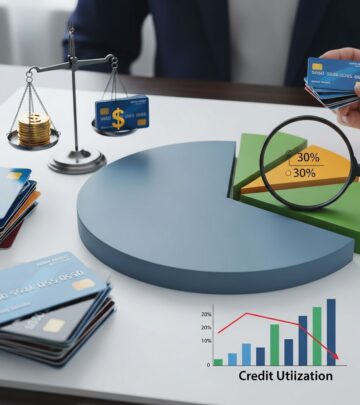
Financial experts universally advise keeping overall utilization below 30%, with 10% or less ideal for excellent scores. Those in the exceptional FICO range (800+) average just 7.1%.
Why single digits? Algorithms reward restraint, associating it with lower default risk. Dropping from 50% to 10% can yield rapid score gains, often within a month as bureaus update reports.
Practical Strategies to Reduce Utilization
Lowering your ratio doesn’t require eliminating debt entirely; targeted actions yield quick results. Here’s a prioritized list:
- Pay Down Balances Aggressively: Focus on highest-utilization cards first. Multiple payments per month keep reported balances low.
- Request Credit Limit Increases: Higher limits dilute usage percentage if balances stay constant. Approval depends on history; denials may trigger hard inquiries.
- Balance Transfers to New Cards: 0% intro APR offers consolidate debt, freeing space on old cards. Watch fees and terms.
- Ask for Higher Limits Without New Accounts: Loyal issuers often grant increases via phone or app.
- Time Large Purchases: Avoid end-of-cycle spending when balances report to bureaus.
Monitor via free weekly reports from AnnualCreditReport.com or credit monitoring services to track progress.
Common Pitfalls That Spike Your Ratio
Even disciplined users falter with habits like carrying balances to build credit (unnecessary post-2008 CARD Act), closing old cards (shrinks available credit), or applying for multiple cards (temporary limits start low).
Closing accounts also shortens credit history (15% of score), compounding damage. Instead, keep them open with minimal activity.
Long-Term Habits for Sustained Low Utilization
Build resilience by automating payments above minimums, using cards for budgeted recurring expenses, and pairing with cash flow planning. Diversify credit mix but prioritize revolving management.
Those with thin files benefit most from low utilization, as it quickly establishes patterns of responsibility.
FAQs on Credit Utilization
How often do credit card balances update for scoring?
Bureaus receive statements monthly, typically 30 days after cycle close. Pay before reporting to minimize impact.
Does utilization affect mortgage or auto loan approvals?
Yes, as part of holistic underwriting; high ratios raise red flags even for installment debt.
Can I improve score without paying off all debt?
Absolutely—focus on ratio via limits or payments, not zero balances.
Is 0% utilization best?
Not necessarily; some activity shows responsible use, but very low (1-9%) is optimal.
What if I’m over limit?
Fees apply, and it tanks scores severely. Prioritize payoff immediately.
Tools and Resources for Monitoring
Leverage apps from issuers, free scores from banks, or paid monitors like Credit Karma for real-time ratios. Set alerts for 25% thresholds.
Understanding utilization empowers proactive credit building, opening doors to premium rewards cards, lower rates, and rental approvals.
References
- What Is a Credit Utilization Rate? — Experian. 2024. https://www.experian.com/blogs/ask-experian/credit-education/score-basics/credit-utilization-rate/
- Understanding Credit Utilization — American 1 Credit Union. 2024-05-02. https://www.american1cu.org/financial-resources/understanding-credit-utilization
- Why Your Credit Utilization Ratio Matters — Horizon Credit Union. N/A. https://advice.hzcu.org/credit-and-debt/credit/article/why-your-credit-utilization-ratio-matters
- What is Credit Utilization & Why It Matters — Take Charge America. N/A. https://www.takechargeamerica.org/what-is-credit-utilization/
- Everything You Need To Know About Credit Utilization Ratio — Bankrate. N/A. https://www.bankrate.com/credit-cards/advice/credit-utilization-ratio/
- Why Your Credit Utilization Ratio Matters — First Mutual Holding. N/A. https://www.firstmutualholding.com/resources/why-your-credit-utilization-ratio-matters/
- What Is Ideal Credit Utilization Ratio? — Chase. N/A. https://www.chase.com/personal/credit-cards/education/credit-score/what-is-credit-utilization-ratio-and-how-does-it-work
Similar Articles








Read full bio of Sneha Tete