Mastering Credit Card Applications Online
A comprehensive guide to successfully navigating the digital credit card application process
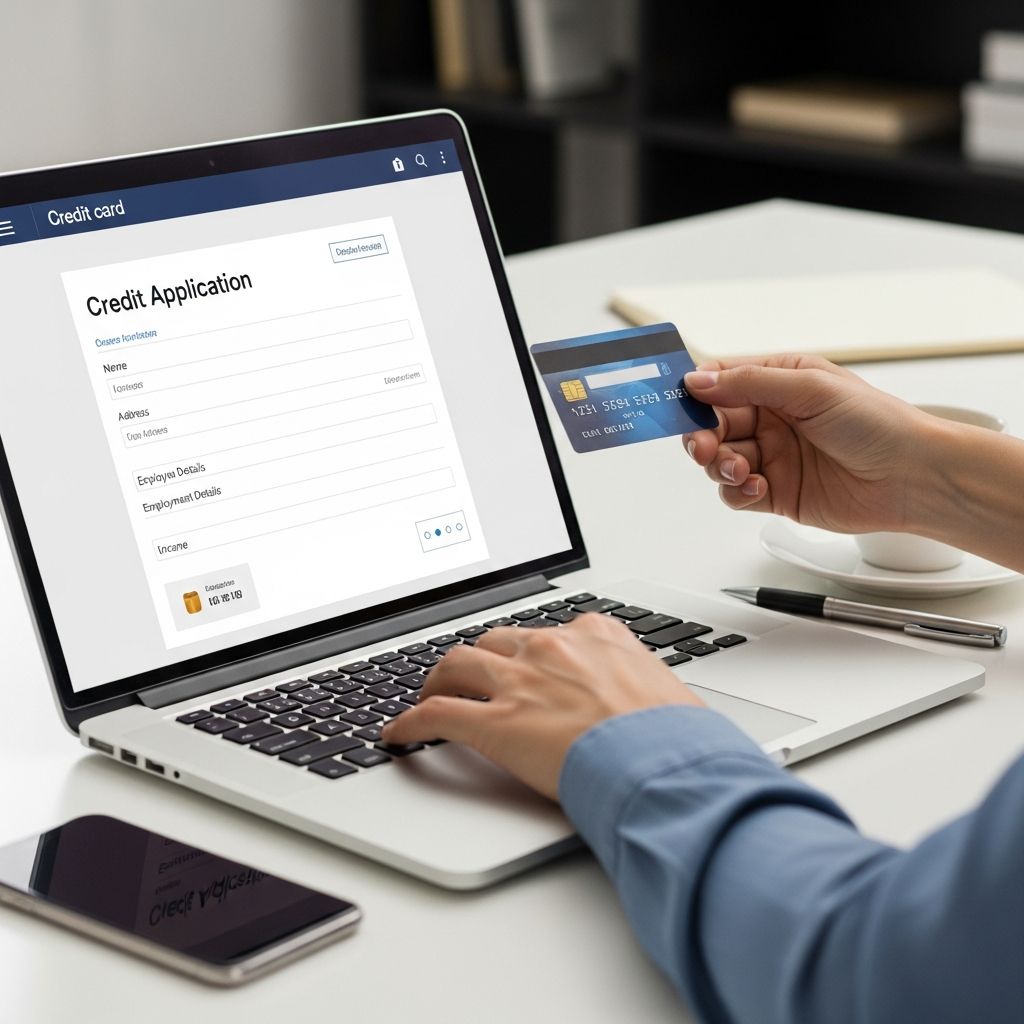
Applying for a credit card has become increasingly streamlined in the digital age. What once required visiting a bank branch or mailing in lengthy paperwork can now be completed within minutes from your home. However, understanding the nuances of the online application process remains essential for optimizing your chances of approval and protecting your personal information during submission.
Establishing Your Foundation: Credit Readiness Assessment
Before initiating any credit card application, taking time to evaluate your financial standing demonstrates responsibility and increases approval likelihood. Your credit score serves as a primary indicator that card issuers review when assessing your application. This three-digit number, typically ranging from 300 to 850, reflects your historical payment behavior, outstanding debts, credit history length, and account diversity.
Understanding where your credit score falls within the spectrum helps guide your card selection strategy. Cards designed for excellent credit typically require scores above 750, while fair credit cards accommodate borrowers in the 630-689 range. Applicants with limited or damaged credit histories may benefit from starter cards specifically engineered for credit building rather than applying for premium rewards cards where rejection is likely.
Beyond your score, card issuers examine your credit reports for accuracy and red flags. Obtaining your free annual credit reports from the three major bureaus—Equifax, Experian, and TransUnion—allows you to identify and dispute errors before application submission.
Gathering Essential Documentation: What You’ll Actually Need
The uncertainty surrounding documentation requirements causes many applicants unnecessary stress. Understanding precisely what information card issuers require eliminates the back-and-forth clarifications and accelerates the approval timeline.
Core Information Required by All Issuers
- Full legal name: The exact name appearing on your government-issued identification documents, such as your driver’s license, passport, or birth certificate. Nicknames or informal variations will cause processing delays.
- Date of birth: Necessary for identity verification and age eligibility confirmation. The Credit CARD Act of 2009 mandates that applicants under 21 provide either a co-signer or proof of independent income.
- Social Security Number or ITIN: The Social Security Administration issues SSNs to U.S. citizens and permanent residents, while the Internal Revenue Service provides ITINs to non-citizens with U.S. tax obligations. Most applications require only one.
- Current residential address: A physical street address where you receive mail. Post office boxes do not fulfill this requirement, as card issuers need a deliverable address for card shipment and communication.
- Gross annual income: Your total earnings before tax deductions. This figure allows issuers to assess your repayment capacity and determine appropriate credit limits. Include wages, self-employment earnings, investment income, alimony, and other revenue sources.
- Employment status and details: Whether you work as an employee, run your own business, or are currently unemployed. Some issuers request your employer’s phone number for verification, while self-employed applicants may provide tax documentation instead.
- Contact telephone number: A way for the card issuer to reach you regarding your application, approval confirmation, or additional information requests.
Additional Information Issuers May Request
Depending on the card issuer and your circumstances, supplementary details may be necessary for application processing:
- Duration of residency at your current address
- Housing status (renting versus homeownership)
- Monthly or annual housing expenses
- Spouse or partner income (if you legally have access to this information)
- Existing credit card balances and account numbers (for balance transfer requests)
- Business tax identification number for business credit cards
Honest, accurate completion of all fields strengthens your application. Misrepresenting income or omitting financial details can result in application denial or, worse, credit fraud accusations.
Selecting Your Optimal Card: Strategic Matching
Not all credit cards suit every financial situation. The card matching process involves aligning your spending patterns, credit profile, and financial objectives with available options. A rewards card emphasizing restaurant and travel benefits serves little purpose for someone who rarely dines out or flies. Similarly, premium cards with high annual fees require consistent usage and substantial rewards redemption to justify costs.
Applicants with existing relationships at banks or credit unions enjoy a strategic advantage. Institutions where you maintain checking or savings accounts possess knowledge of your financial behavior and stability, potentially leading to faster approvals and more favorable terms.
Reading detailed card terms, benefits structures, and limitations prevents post-approval disappointment. Understanding annual percentage rates (APR), grace periods, foreign transaction fees, and rewards earning rates informs whether a specific card matches your needs.
Application Method Selection: Weighing Your Options
The method you choose to submit your application influences processing speed, approval confirmation timing, and overall convenience. Four primary application pathways remain available to applicants.
Online Application Through the Card Issuer’s Website
This method represents the fastest and most straightforward approach for most applicants. Online applications submitted directly through a bank’s website or application portal often receive approval decisions within seconds, sometimes offering instant digital card access while the physical card travels through the mail. The digital interface guides you through required fields, reduces transcription errors, and creates immediate confirmation records for your documentation.
Telephone Application With Customer Service Representatives
Though less common than online applications, telephone-based submissions remain viable for applicants preferring personal interaction. Representatives guide you through each question, clarify information requests, and answer immediate questions about card features. Approval decisions typically arrive faster than mail-based applications but slower than online submissions.
Mail-Based Paper Applications
Physical application forms continue arriving in mailboxes, representing the slowest processing method. Completing and mailing the form requires printing, handwriting, envelope preparation, postage, and awaiting postal delivery. Issuer processing timelines for mailed applications often extend to several weeks, with additional delays if the issuer requests clarification or supplementary documentation.
In-Person Applications at Physical Branches
Bank and credit union branches still accept walk-in credit card applications. This method allows face-to-face document verification and immediate question resolution. However, branch availability varies by issuer and location, and processing times fall between online and mail-based timelines.
Security Protocols: Protecting Your Information During Online Applications
Submitting sensitive financial and personal information online requires vigilance against fraud and interception. Implementing robust security practices protects your data throughout the application submission.
Device and software readiness: Ensure your web browser and operating system contain the latest security patches before accessing your bank’s application portal. Outdated software leaves vulnerabilities that sophisticated cyberattacks exploit. Enable automatic updates on all devices used for financial transactions.
Network security selection: Complete applications exclusively on secure, private networks or mobile data connections. Public Wi-Fi networks at coffee shops, airports, and libraries remain accessible to potential interceptors who can capture transmitted information. Home networks protected by strong passwords and encryption provide substantially safer environments.
Email verification practices: Card issuers occasionally contact applicants via email with links to application portals or follow-up information requests. Suspicious emails claiming to originate from your bank warrant caution. Rather than clicking embedded links, navigate directly to the bank’s website by typing the URL into your browser or using your existing online banking login credentials. This approach bypasses fraudulent phishing links designed to harvest your information.
Confirmation documentation: Upon successful online submission, your application should generate an immediate confirmation page displaying your application reference number, submission timestamp, and next steps. Preserving screenshots or written documentation of this confirmation protects you if processing questions arise.
Age and Income Requirements: Understanding Eligibility Constraints
Federal legislation and individual card issuer policies establish baseline eligibility requirements unrelated to credit history or financial standing. The Credit CARD Act of 2009 fundamentally altered credit card accessibility for younger consumers by imposing substantial restrictions.
Applicants under 21 cannot obtain credit cards through standard approval processes. Instead, they must provide either a creditworthy co-signer—typically a parent or guardian—who assumes responsibility for the account, or documentation proving independent income sufficient to meet the issuer’s minimum requirements. This regulation protects young consumers from excessive debt while allowing income-earning minors to establish credit histories.
Card issuers establish minimum income thresholds reflecting their risk tolerance and card tier. Premium rewards cards typically demand higher income requirements than basic starter cards. Self-employed individuals may satisfy income requirements using tax returns or profit-and-loss statements rather than traditional employment documentation.
Understanding Approval Decisions and Their Implications
Card issuers evaluate complete applications against established criteria, reaching one of three possible decisions: immediate approval, pending review, or denial.
Approved applications proceed immediately to card production, with physical cards typically arriving within 7-10 business days. Many issuers provide digital card numbers immediately, allowing online purchases before the physical card reaches your mailbox. The approval letter specifies your credit limit, effective date, and initial APR.
Applications requiring additional review remain in pending status while the issuer requests clarification or verification. Response requirements might involve providing recent pay stubs, tax returns, or employment verification. Responding promptly to these requests accelerates the review process.
Denied applications receive written explanations detailing rejection reasons. Issuers cite factors such as insufficient income, poor credit history, excessive existing debt, or limited credit file depth. Understanding denial reasons informs whether reapplication after addressing deficiencies makes strategic sense or whether pursuing alternative card options proves more productive.
Hard inquiries resulting from credit card applications remain visible on your credit report for approximately 12 months but impact your score for only 3-6 months. Spacing out multiple applications prevents excessive inquiry accumulation, which signals financial distress to subsequent lenders.
Post-Approval Actions: Maximizing Your New Card
Card approval represents a beginning rather than an endpoint. Strategic post-approval decisions establish the foundation for healthy credit management and maximum benefit realization. Immediately verify all approval details match your expectations. Activate your card as instructed—some cards require phone or online activation before merchants will accept charges.
Set up automatic minimum payments or full-balance autopay through your bank account to eliminate missed payment risks. Many cardholders establish such schedules for their payment due dates automatically, removing administrative burden and protecting credit scores. Regularly monitor your account for unauthorized transactions and set alerts triggering notifications when activity occurs.
Understanding your card’s unique benefits—introductory APR offers, rewards multipliers, travel protections, and special promotions—allows you to maximize value. Cards designed for specific spending categories reward bonus rates on restaurant, gas, or travel purchases; matching your usage to these categories substantially amplifies earning potential.
Common Application Pitfalls to Avoid
Awareness of frequent mistakes prevents preventable denial or approval delays. Multiple applications within short timeframes overwhelm lenders with hard inquiries, suggesting financial desperation and increasing decline risk. Spacing applications at least 3-6 months apart maintains healthier credit profiles.
Providing inaccurate income figures represents a significant stumbling block. Overestimating income may temporarily increase approval odds, but verification processes uncover discrepancies, resulting in denial or lower-than-expected credit limits. Honesty expedites processing and ensures appropriate account terms.
Neglecting to review credit reports before applications results in defending inflated balances, accounts in collection, or erroneous negative information. Proactively disputing errors strengthens your application profile substantially.
Applying for multiple cards simultaneously exhausts your immediate borrowing capacity in issuers’ eyes. Strategic, spaced applications demonstrate controlled financial management.
Final Considerations and Application Timeline Expectations
The entire credit card application journey—from research and preparation through approval and card arrival— typically spans 1-3 weeks when information is organized and submitted online. Online submissions receive responses in seconds to minutes, while mail-based applications stretch timelines to several weeks.
Gathering documentation in advance, selecting appropriate cards, understanding your creditworthiness, and implementing security best practices collectively optimize your approval probability and protect your information throughout the process. The modest time investment in preparation pays substantial dividends through faster processing, higher approval rates, and immediate access to the card’s benefits upon arrival.
References
- How To Apply For A Credit Card And Get Approved — Bankrate. Accessed 2026-02-06. https://www.bankrate.com/credit-cards/advice/how-to-apply-for-a-credit-card/
- Everything You Should Know When Applying for a Credit Card Online — Chase Bank. Accessed 2026-02-06. https://www.chase.com/personal/credit-cards/education/basics/everything-to-know-when-applying-for-credit-card-online
- How to Get a Credit Card — American Express. Accessed 2026-02-06. https://www.americanexpress.com/en-us/credit-cards/credit-intel/how-to-apply-for-credit-card/
- 10 Tips for Getting Your Credit Card Application Approved — NerdWallet. Accessed 2026-02-06. https://www.nerdwallet.com/credit-cards/learn/10-tips-credit-card-application-approved
- How to get a credit card: 7 key steps — Citizens Bank. Accessed 2026-02-06. https://www.citizensbank.com/learning/how-to-get-credit-card.aspx
Similar Articles








Read full bio of Sneha Tete