Mastering Checking Account Reconciliation
Unlock the secrets to precise financial tracking and avoid costly errors with our comprehensive guide to reconciling your checking account monthly.

Reconciling your checking account is a fundamental practice that ensures your personal records align perfectly with your bank’s figures. This process not only prevents overdraft fees but also empowers you to monitor spending patterns and safeguard against unauthorized transactions. By making reconciliation a routine, individuals can foster disciplined financial habits that contribute to overall stability.
Why Regular Reconciliation Matters for Your Finances
Maintaining an accurate picture of your checking account balance is crucial in today’s fast-paced digital banking world. Transactions occur rapidly through apps, cards, and transfers, making it easy to lose track. Regular reconciliation acts as a safety net, reducing the likelihood of bounced payments or unexpected fees that can erode your savings.
Financial institutions emphasize that unchecked accounts often lead to overlooked errors, such as bank posting mistakes or forgotten automatic debits. Customers have limited windows—typically 60 days—to report discrepancies, underscoring the need for monthly reviews. Beyond error detection, this habit reveals spending trends, helping you adjust budgets proactively.
- Avoids overdraft penalties: Know your true available funds to prevent insufficient balance charges.
- Detects fraud early: Spot unfamiliar transactions before they escalate.
- Builds financial awareness: Track where your money flows for informed decision-making.
- Simplifies tax prep: Accurate records ease reporting on deductible expenses.
Gathering Essential Tools and Documents
Before diving into the reconciliation process, assemble the right materials to streamline your efforts. Start with your check register, ledger app, or spreadsheet where you log all activities. Pair this with your latest bank statement, accessible via online banking portals or paper mail.
Digital tools enhance efficiency: many banks offer mobile apps with transaction alerts and categorization features. Budgeting software like those integrated with banking platforms can automate much of the recording, but manual verification remains key. If using paper, ensure your ledger includes columns for date, description, debit, credit, and running balance.
| Item | Purpose | Digital Alternative |
|---|---|---|
| Check Register/Ledger | Record transactions | Budgeting app or spreadsheet |
| Bank Statement | Official record | Online banking download |
| Calculator | Math verification | App-built calculator |
| Highlighter | Mark matches | Digital annotation tools |
Step-by-Step Guide to Reconciling Your Account
Follow this structured approach monthly, ideally within days of receiving your statement, to keep discrepancies minimal.
Step 1: Update Your Personal Records
Begin by entering any missing items from the statement into your register. This includes interest credits, service fees, or ATM withdrawals not yet logged. Add all credits first, then subtract debits to recalculate your adjusted balance. Precise entry down to the cent prevents compounding errors.
Step 2: Mark Matching Transactions
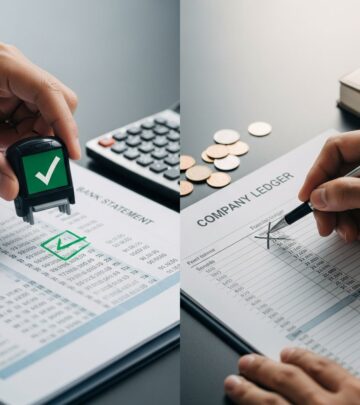
Scan the statement line-by-line against your register. Place a checkmark next to items that correspond in date, amount, and description. This visual cue quickly highlights gaps, such as uncleared deposits or pending checks.
Step 3: Account for Outstanding Items
Outstanding credits are deposits in your records but absent from the statement—add their total to the statement’s ending balance. Outstanding debits, like uncashed checks or recent card swipes, subtract from this figure. Common examples include mailed payments or weekend ATM pulls that post later.
Reconciliation Formula:
Statement Ending Balance + Outstanding Deposits – Outstanding Withdrawals = Adjusted Bank Balance
This should equal your register’s current balance. If not, proceed to troubleshooting.
Step 4: Verify and Adjust
Double-check arithmetic using a calculator. Record any bank-added interest or fees promptly. For digital natives, export statements to CSV for app imports, then manually confirm.
Common Pitfalls and How to Avoid Them
Even diligent users encounter issues. Math errors top the list—always recompute running totals after entries. Forgetting fees like monthly maintenance or overdraft charges skews balances; review statement summaries first.
Digital transactions pose unique challenges: pending authorizations may appear twice once cleared. Mobile deposits can take days to post, mimicking outstanding items. To counter, set bank alerts for low balances and large spends.
- Transposition errors: Swap digits (e.g., $12.34 as $21.43)—divide difference by 9 to check.
- Doubled entries: Cross-reference dates meticulously.
- Timing mismatches: Note processing delays for electronic transfers.
Leveraging Technology for Effortless Tracking
Modern banking transforms reconciliation from chore to automation. Online platforms provide real-time balances, transaction downloads, and reconciliation worksheets. Apps sync across devices, categorizing spends into groceries, utilities, or entertainment for deeper insights.
Explore bank-specific tools: alerts notify of low funds, while goal trackers link to savings transfers. Third-party apps integrate via secure APIs, offering visualizations like pie charts of monthly outflows. Despite tech aids, monthly manual reviews ensure nothing slips through.
What to Do When Balances Don’t Match
Discrepancies demand investigation. Start small: re-add outstanding lists. If persistent, review prior months for carryover errors. Differences under $1 often stem from rounding; larger gaps may indicate fraud.
Contact your bank promptly for statement errors—document communications. For suspected unauthorized activity, freeze the account and file disputes per federal guidelines, which protect against liability. Persistence pays: resolved issues can yield refunds.
Building Long-Term Habits for Financial Success
Elevate reconciliation into a gateway for broader wellness. Post-review, analyze categories to trim waste—perhaps dining out exceeds plans. Maintain a buffer balance, say 10% extra, against surprises.
Integrate with budgeting: allocate funds monthly, tracking variances. Share the practice family-wide for collective accountability. Over time, this discipline supports goals like debt payoff or emergency funds.
Frequently Asked Questions
How often should I reconcile my checking account?
Monthly is ideal, aligning with statement cycles, though weekly spot-checks suit high-activity accounts.
What if I use only a debit card and no checks?
The process remains identical—track all electronic debits and credits in a digital register.
Can apps fully replace manual balancing?
They simplify but not supplant; verify app data against statements quarterly.
Is there a fee for bank errors?
No, banks correct verified mistakes without charge, often with interest.
How do I handle joint accounts?
Designate one ledger updater, with all parties reviewing statements.
References
- Simple Money Management: Balancing Your Checkbook — National Iron Bank. 2023. https://ironbank.com/education-center/simple-money-management-balancing-your-checkbook/
- How to Balance Your Checking Account — M&T Bank. 2024. https://www.mtb.com/personal/checking-accounts/tips-on-managing-your-account/balance-checking-account
- Tips on Balancing Your Checking Account — Pathway Bank. 2023. https://www.pathwaybank.com/tips-on-balancing-your-checking-account
- Eight Simple Steps for Balancing your Checkbook — Marquette Bank. 2024. https://emarquettebank.com/financial-education/articles-insights-for-you/eight-simple-steps-for-balancing-your-checkbook
- How to Balance a Checkbook | Step-by-Step Guide — Money Instructor (YouTube). 2023. https://www.youtube.com/watch?v=gG8955xeAbE
- Balancing a Checking Account — Northwest Bank. 2024. https://financialwellnesscenter.northwest.bank/money-management/banking/article/balancing-a-checking-account
Similar Articles








Read full bio of Sneha Tete