Car Lease Negotiations: 7 Expert Steps To Lower Payments
Unlock savings and secure favorable terms by mastering proven strategies for negotiating your next car lease deal.

Negotiating a car lease requires a blend of preparation, knowledge of financial terms, and strategic tactics at the dealership. By focusing on the vehicle’s price first and understanding lease-specific elements, you can significantly reduce monthly payments and total costs.
Understanding the Fundamentals of Car Leasing
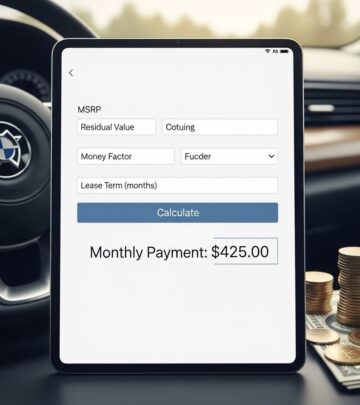
Car leasing differs from buying because you pay for the vehicle’s depreciation over a set period plus interest, rather than owning it outright. Key to success is grasping how payments are calculated: monthly amounts stem from the difference between the starting value (capitalized cost) and ending value (residual value), divided by lease months, plus a finance charge based on the money factor.
This structure means negotiations center on lowering the capitalized cost, securing a competitive money factor, and adjusting mileage or term length to fit your needs. Awareness of these components empowers you to challenge inflated quotes and push for transparency.
Essential Lease Components You Must Know
Before entering negotiations, familiarize yourself with critical terms that directly impact costs:
- Capitalized Cost (Cap Cost): The negotiated price of the vehicle, akin to a purchase price. Lowering it reduces depreciation payments.
- Money Factor: The lease’s interest rate, expressed as a small decimal (e.g., 0.0025 equals 6% APR). It multiplies against the average of cap cost and residual to determine finance charges.
- Residual Value: The car’s projected worth at lease end, set by the lessor. Higher residuals mean lower payments but harder negotiations.
- Mileage Allowance: Annual miles permitted, typically 10,000-15,000. Excess incurs fees around $0.15-$0.30 per mile.
- Lease Term: Duration, often 24-48 months. Shorter terms raise monthly payments but lower total interest.
| Component | Negotiability | Typical Impact | Strategy |
|---|---|---|---|
| Capitalized Cost | High | Directly lowers payments | Negotiate like a purchase |
| Money Factor | Medium | Reduces finance charges | Compare to credit-based rates |
| Residual Value | Low | Higher = lower payments | Verify with industry data |
| Mileage | High | Avoids overage penalties | Match to your habits |
| Term Length | Medium | Balances monthly vs. total cost | Opt for 36 months ideally |
Pre-Negotiation Research for Maximum Leverage
Thorough preparation separates successful negotiators from average ones. Start by using online tools to determine the vehicle’s fair market value, current incentives, and average lease quotes for your model and location.
Check multiple dealership inventories; high stock levels signal flexibility, while shortages demand patience or alternatives. Gather 5-8 out-the-door (OTD) quotes treating the deal as a purchase, excluding lease or trade-in mentions to isolate the true selling price. This data becomes your benchmark.
Also, review your credit score, as Tier 1 (excellent) credit unlocks the best money factors around 0.0010-0.0020. Loyalty or conquest rebates from manufacturers can shave thousands off cap costs—factor these in.
Strategic Timing to Boost Your Position
Market dynamics heavily influence deals. End-of-month, quarter, or year pushes dealers to meet quotas, increasing concessions. Holiday sales or model-year closeouts amplify this, especially for outgoing models with excess inventory.
Monitor economic conditions: rising interest rates favor lessees with strong credit, as dealers compete fiercely. Local factors like regional promotions or competitor pricing further tilt odds in your favor.
Step-by-Step Guide to Dealership Negotiations
Approach the dealership armed with research for a structured process:
- Get OTD Quotes Remotely: Email or call for purchase-style quotes on your target vehicle. Specify no lease discussion yet.
- Present Your Anchor Offer: Start below market value based on quotes, e.g., MSRP minus incentives and your research discount.
- Secure Cap Cost Agreement: Negotiate fees down—avoid add-ons like VIN etching or fabric protection unless essential.
- Pivot to Lease Terms: Request a worksheet detailing money factor, residual, mileage, and fees. Challenge discrepancies against your data.
- Leverage Competition: Mention other quotes subtly to spark bidding wars.
- Walk if Needed: Express willingness to leave; follow-ups often yield improvements.
- Finalize Worksheet: Verify all numbers before signing, including GAP insurance if desired (buy separately for savings).
Advanced Tactics for Tough Negotiations
Beyond basics, employ psychological edges. Use anchoring by stating your target payment first, backed by math. If with a partner, divide roles: one handles price, the other terms.
Handle trade-ins separately—appraise independently to maximize value deduction from cap cost. Waive disposition fees (end-of-lease charges) by committing to another lease there. For buyout potential, confirm residual aligns with future market projections.
Maintain composure; positive rapport outperforms aggression. Dealers decline combative deals but relent to informed persistence.
Common Mistakes to Avoid
- Focusing solely on monthly payments, ignoring total cost or fees.
- Discussing lease before price agreement, allowing payment obfuscation.
- Overlooking add-ons inflating cap cost by hundreds.
- Ignoring mileage needs, leading to steep penalties.
- Not shopping multiple dealers, missing competitive edges.
Post-Negotiation Checklist
Before driving off:
- Review signed lease contract line-by-line.
- Confirm all incentives applied.
- Note excess mileage/wear policies.
- Secure copies of worksheets and quotes.
- Understand early termination costs if plans change.
Frequently Asked Questions
Can I negotiate the residual value?
Rarely, as it’s set by the leasing company based on forecasts. Focus on verifiable data to ensure fairness.
What’s a good money factor?
Aim for 0.0010-0.0025 with excellent credit; convert to APR by multiplying by 2400 (e.g., 0.00166 = 4%). Compare against loan rates.
Should I make a down payment?
Minimize to reduce risk; zero-down is viable if payments fit budget, lowering upfront exposure.
How many quotes do I need?
5-8 from different dealers maximizes competition and reveals the best terms.
Is leasing better than buying?
Depends on usage; ideal for low-mileage drivers wanting new cars frequently without ownership hassles.
References
References
- How to Get a Good Car Lease Deal — Consumer Reports. 2023. https://www.consumerreports.org/money/car-financing/how-to-get-the-best-car-lease-a5526450548/
- How to Negotiate a Car Lease: A Simple Guide to Saving Money — CarEdge. 2024. https://caredge.com/guides/how-to-negotiate-a-car-lease
- Negotiation strategy and tactics — Leasehackr Forum. 2023. https://forum.leasehackr.com/t/negotiation-strategy








Read full bio of medha deb