Mastering 401(k) to IRA Rollovers
Unlock greater control and flexibility in your retirement savings by strategically rolling over your 401(k) into an IRA—explore the benefits, risks, and steps.

Transferring funds from a 401(k) to an Individual Retirement Account (IRA) represents a pivotal decision for many individuals navigating career changes or retirement planning. This process, known as a rollover, allows savers to maintain tax-deferred growth while gaining enhanced flexibility in managing their nest egg. With job transitions becoming more common, understanding the nuances of this move can significantly impact long-term financial health.
Understanding the Fundamentals of Rollovers
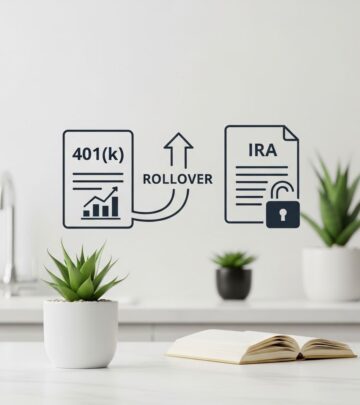
A 401(k) rollover to an IRA involves moving retirement assets from an employer-sponsored plan to a personal IRA. This can occur when leaving a job, retiring, or simply seeking better options. There are two primary methods: direct rollovers, where funds transfer trustee-to-trustee without touching your hands, and indirect rollovers, where you receive a check and must redeposit within 60 days. Direct rollovers are preferred to avoid mandatory 20% tax withholding and potential penalties.
Eligibility applies to most 401(k) balances, though some plans impose minimums or restrictions on in-service distributions. Roth 401(k)s can roll into Roth IRAs seamlessly, preserving after-tax status, while traditional 401(k)s align with traditional IRAs for tax deferral.
Key Advantages of Moving to an IRA
One of the most compelling reasons to initiate a rollover is the expansive array of investment opportunities. Employer 401(k) plans often limit choices to a curated menu of mutual funds, potentially overlooking niche assets like individual stocks, bonds, ETFs, or even alternatives such as real estate investment trusts. IRAs, by contrast, provide access to thousands of options, enabling precise alignment with personal risk tolerance and goals.
- Investment Diversity: Select from low-cost index funds, sector-specific ETFs, or international bonds to build a tailored portfolio.
- Cost Efficiency: Many IRA providers offer commission-free trading and expense ratios under 0.1%, surpassing high-fee 401(k) options in smaller plans.
- Account Consolidation: Merge multiple old 401(k)s into one IRA, simplifying oversight and rebalancing.
Tax strategies further enhance appeal. Post-rollover, individuals can execute partial Roth conversions, paying taxes on converted amounts for tax-free growth thereafter. This is ideal during lower-income years, like early retirement before Social Security. Those over 70½ can perform Qualified Charitable Distributions (QCDs) directly from IRAs to charities, satisfying Required Minimum Distributions (RMDs) tax-free—a feature absent in 401(k)s.
Potential Drawbacks to Consider Carefully
Despite attractions, rollovers aren’t universally superior. Creditor protection stands out as a major concern: 401(k)s enjoy unlimited federal safeguards under ERISA, whereas IRAs receive bankruptcy protection up to about $1.5 million (adjusted periodically) but vary by state law for other claims.
| Feature | 401(k) | IRA |
|---|---|---|
| Creditor Protection | Unlimited (federal ERISA) | Limited (bankruptcy only federally; state varies) |
| Loans Allowed | Yes (up to $50k or 50% balance) | No |
| Age 55 Rule | Penalty-free withdrawals post-separation | 59½ minimum |
| RMDs if Working | Delayed if still employed | Start at 73 regardless |
The ‘Rule of 55’ permits penalty-free 401(k) access after leaving a job at 55 or older, unavailable in IRAs until 59½. Active employees might delay RMDs in current 401(k)s, but IRAs mandate them at age 73 irrespective of employment.
Company stock holdings warrant scrutiny. Net Unrealized Appreciation (NUA) allows favorable tax treatment on appreciated employer shares if distributed in-kind rather than rolled over, potentially saving on capital gains taxes.
Strategic Scenarios for Rollovers
Not all situations favor rollovers equally. For those nearing retirement with conservative needs, IRA bond funds offer superior diversification. High earners benefit from Roth conversion ladders, spreading tax hits over years.
Staying in the 401(k) suits scenarios with institutional low-cost shares, robust creditor protection needs, or ongoing loan reliance. Large plans often subsidize fees, making them competitive.
Executing a Seamless Rollover Process
- Contact Providers: Open an IRA with a low-fee brokerage like Vanguard or Fidelity.
- Request Direct Transfer: Inform old 401(k) administrator of new IRA details for trustee-to-trustee move.
- Monitor Completion: Expect 1-3 weeks; verify deposit matches original balance.
- Invest Funds: Allocate promptly to avoid cash drag on returns.
Avoid indirect rollovers unless necessary, as they risk 60-day deadlines and withholding complications.
Tax Implications Across Rollover Types
Traditional 401(k) to Traditional IRA: Tax-deferred, no immediate taxes.
Traditional to Roth IRA: Conversion taxes apply on pre-tax amounts, enabling future tax-free withdrawals.
Roth 401(k) to Roth IRA: Tax-free, seamless.
Consult IRS Publication 590 for details; professional advice prevents pitfalls like pro-rata rules complicating backdoor Roths post-rollover.
Frequently Asked Questions
Can I roll over my 401(k) while still employed?
Many plans allow in-service rollovers after 59½, but check plan documents.
What happens if I miss the 60-day indirect rollover window?
The distribution becomes taxable, plus 10% penalty if under 59½.
Are there fees for rollovers?
Most providers waive them; compare exit fees from old plans.
Does rolling over affect my ability to contribute to an IRA?
No, but income limits apply to deductible contributions.
Should I roll over if I have company stock?
Evaluate NUA strategy first for tax advantages.
Long-Term Planning Integration
Incorporate rollovers into holistic strategies. Pair with catch-up contributions, HSAs, or taxable brokerage diversification. Regularly review allocations amid market shifts, using IRA tools for automated rebalancing.
For estate planning, IRAs offer beneficiary flexibility with stretch provisions, though SECURE Act changes limit non-spouse stretches to 10 years.
Technology aids management: Robo-advisors provide low-cost IRA portfolio construction based on risk profiles, often outperforming static 401(k) allocations.
Common Mistakes and How to Avoid Them
- Cashing Out: Triggers taxes and penalties; opt for rollover.
- Ignoring Fees: Compare total costs pre- and post-rollover.
- Forgetting QCDs: Leverage for charitable giving post-70½.
- Pro-Rata Trap: Pre-tax rollovers mix with after-tax funds, taxing conversions partially.
Engage a fee-only fiduciary advisor for complex cases, ensuring alignment with objectives.
References
- 401(k) Rollovers: Pros, Cons, and How to Do It — NerdWallet. 2023-10-15. https://www.nerdwallet.com/retirement/learn/401k-rollover-ira-guide
- Four Reasons to Roll Over Your 401(k) into an IRA — Kiplinger. 2023-05-20. https://www.kiplinger.com/article/retirement/t032-c000-s002-pros-and-cons-of-rolling-your-401-k-into-an-ira.html
- Pros and Cons of Rolling Over 401k to IRA — State Farm. 2024-02-10. https://www.statefarm.com/simple-insights/retirement/advantages-and-disadvantages-of-rolling-over-to-an-ira
- Weighing the Pros and Cons of Rolling Over Your 401k to an IRA — Coldstream. 2023-11-05. https://www.coldstream.com/insights/weighing-the-pros-and-cons-of-rolling-over-your-401k-to-an-ira/
- Understanding 401(k) to IRA Rollover Rules — Vanguard. 2024-01-22. https://investor.vanguard.com/investor-resources-education/education/401k-to-ira-rollover-rules
- Rollover IRA | Simplify Your Retirement Savings — Fidelity Investments. 2023-12-18. https://www.fidelity.com/retirement-ira/401k-rollover-ira
- Rollovers of retirement plan and IRA distributions — Internal Revenue Service (IRS.gov). 2025-03-15. https://www.irs.gov/retirement-plans/plan-participant-employee/rollovers-of-retirement-plan-and-ira-distributions
Similar Articles








Read full bio of Sneha Tete