Mastering the 20/10 Rule for Debt Control
Discover how the 20/10 rule simplifies debt management by capping total debt at 20% of annual income and monthly payments at 10%.

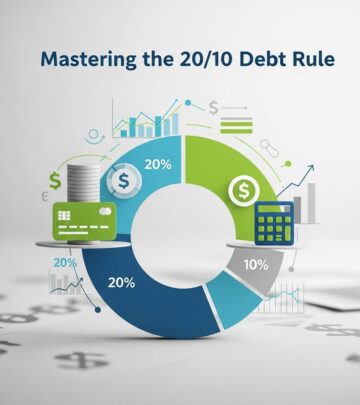
The 20/10 rule offers a straightforward strategy for handling consumer debt responsibly. It recommends limiting total consumer debt to no more than 20% of your annual after-tax income and monthly debt payments to 10% of your monthly take-home pay. This approach helps prevent debt from overwhelming your budget and supports long-term financial wellness.
Understanding the Core Principles of the 20/10 Rule
At its heart, the 20/10 rule focuses exclusively on consumer debt, such as credit card balances, auto loans, student loans, and personal loans. It excludes housing-related obligations like mortgages or rent, allowing individuals to concentrate on discretionary borrowing.
The ’20’ refers to the cap on total outstanding debt relative to yearly net income. For instance, if your annual take-home pay is $60,000, your total consumer debt should stay below $12,000. The ’10’ sets a boundary for monthly repayments against your monthly net earnings, ensuring cash flow remains sufficient for essentials.
This dual limit promotes discipline in borrowing. Lenders often evaluate debt-to-income ratios similarly, so adhering to this rule can enhance your creditworthiness and qualify you for better rates on future loans.
Step-by-Step Guide to Applying the 20/10 Rule
Implementing this rule requires basic math using your after-tax income figures from pay stubs or bank records. Here’s how to break it down:
- Determine monthly take-home pay: This is your net income after taxes and deductions.
- Calculate 10% monthly limit: Multiply monthly net pay by 0.10 for your maximum debt payment amount.
- Compute annual net income: Multiply monthly net by 12.
- Calculate 20% annual limit: Multiply annual net by 0.20 for total allowable debt.
Consider a practical example: With a $4,000 monthly take-home pay.
| Calculation | Formula | Result |
|---|---|---|
| Monthly Debt Payment Limit | $4,000 × 10% | $400 |
| Annual Income | $4,000 × 12 | $48,000 |
| Annual Debt Limit | $48,000 × 20% | $9,600 |
If your current debts exceed these thresholds, prioritize high-interest balances or consolidate to align with the rule.
Benefits of Adopting the 20/10 Framework
Following this guideline yields several advantages for personal finances.
- Improved cash flow: Capping payments at 10% monthly leaves ample room for living expenses, savings, and unexpected costs.
- Better credit health: Lower debt levels reduce your debt-to-income ratio, a key factor in credit scoring models used by agencies like Experian.
- Clear goal setting: The rule provides measurable targets, motivating consistent progress toward debt freedom.
- Reduced stress: Structured limits foster confidence in financial decision-making, minimizing the anxiety of mounting obligations.
Over time, this discipline can free up funds for investments or emergencies, accelerating wealth accumulation.
Potential Drawbacks and Realistic Expectations
While effective, the 20/10 rule isn’t universal. Key limitations include:
- Exclusion of fixed debts: It ignores mortgages, ignoring a major portion of many households’ obligations.
- Challenges for variable incomes: Freelancers or gig workers may find percentages fluctuating, complicating adherence.
- High-cost areas: In expensive regions, essential consumer debt like student loans might push beyond limits unavoidably.
To mitigate, adjust percentages slightly for your circumstances or pair with comprehensive budgeting tools.
Real-World Examples: Putting the Rule into Action
Let’s explore scenarios demonstrating application.
Scenario 1: Young Professional with Credit Card Debt
Alex earns $3,500 monthly after taxes ($42,000 annually). Limits: $350 monthly payments, $8,400 total debt. Alex’s $6,000 credit card balance and $250 car payment fit comfortably, allowing focus on savings.
Scenario 2: Family Managing Student Loans
Maria’s household nets $6,000 monthly ($72,000 yearly). Limits: $600 payments, $14,400 debt. With $10,000 student loans ($400/month) and $2,000 auto ($250/month), they stay under but monitor closely.
These cases show flexibility while highlighting the need for vigilance.
Integrating the 20/10 Rule with Broader Budgeting Strategies
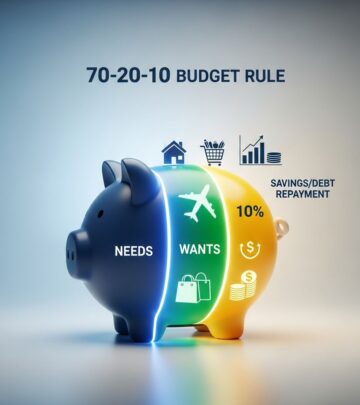
Enhance effectiveness by combining with other rules. The 70/20/10 budget allocates 70% to needs, 20% to savings/debt, and 10% to wants, complementing the debt focus.
| Budget Rule | Allocation Breakdown | Best For |
|---|---|---|
| 20/10 Rule | 20% annual debt, 10% monthly payments | Debt capping |
| 70/20/10 Rule | 70% needs, 20% savings/debt, 10% wants | Overall budgeting |
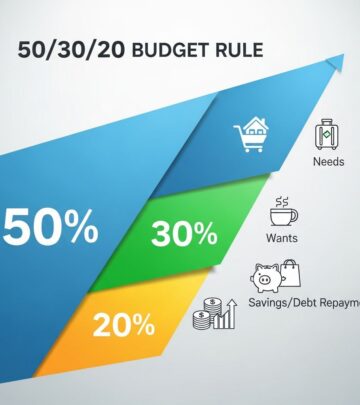
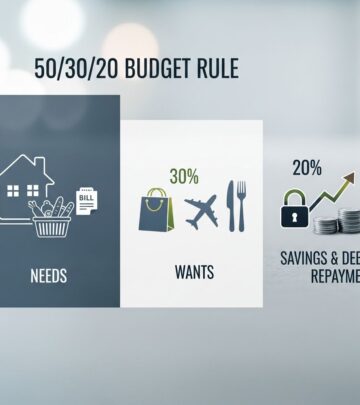
| 50/30/20 Rule | 50% needs, 30% wants, 20% savings/debt | Balanced spending |
Use apps like Mint for tracking across rules, automating alerts for breaches.
Advanced Tips for Staying Within 20/10 Limits
Optimize adherence with these strategies:
- Track regularly: Review debts monthly against pay stubs.
- Prioritize high-interest debt: Pay off credit cards first using avalanche or snowball methods.
- Build emergency fund: Aim for 3-6 months’ expenses to avoid new debt.
- Refinance opportunistically: Lower rates on loans to reduce payments.
- Seek professional advice: Credit counselors from nonprofit agencies for tailored plans.
Consistent application compounds benefits, potentially saving thousands in interest.
Frequently Asked Questions (FAQs)
What counts as consumer debt under the 20/10 rule?
Consumer debt includes credit cards, personal loans, auto loans, student loans, and buy-now-pay-later plans. Mortgages and rent are excluded.
Can I use gross income for calculations?
No, always use after-tax (net) income for accuracy, as it reflects actual disposable funds.
What if my debt exceeds the limits?
Create a payoff plan: Cut expenses, increase income, consolidate, or negotiate rates. Avoid new borrowing until compliant.
Is the 20/10 rule suitable for everyone?
It’s a guideline; adapt for high-cost living or irregular income. Consult a financial advisor for personalization.
How does it impact my credit score?
Lower debt levels improve utilization ratios and debt-to-income, positively affecting scores over time.
Long-Term Financial Freedom Through Disciplined Debt Management
Embracing the 20/10 rule cultivates habits leading to stability. Regularly reassess as income changes, using it as a foundation for holistic planning. With discipline, it transforms debt from a burden to a manageable aspect of prosperity.
References
- What Is the 20/10 Rule: Definition and How to Use — The Muse. 2023. https://www.themuse.com/advice/20-10-rule
- The 20/10 Rule for Debt Management — Masterworks Insights. 2023. https://insights.masterworks.com/finance/the-20-10-rule-for-debt-management/
- What Is the 20/10 Rule of Thumb? — Experian. 2024-02-06. https://www.experian.com/blogs/ask-experian/what-is-the-20-10-rule/
Similar Articles








Read full bio of medha deb