Master Budgeting with Multiple Bank Accounts
Discover how separating your money into dedicated bank accounts can simplify tracking expenses, boost savings, and achieve financial goals effortlessly.
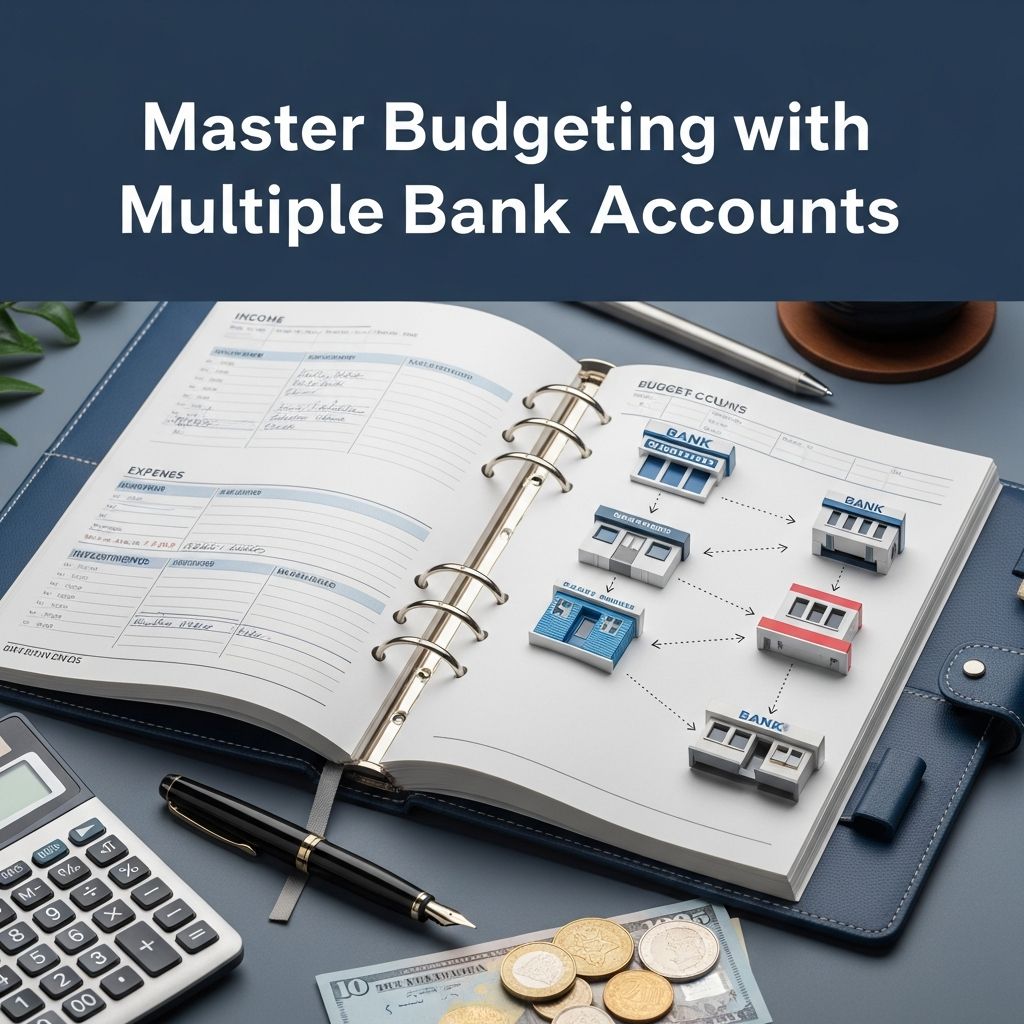
Organizing your finances through dedicated bank accounts transforms chaotic spending into a clear path toward stability and growth. This approach divides income into distinct “buckets” for essentials, leisure, and future objectives, making it easier to monitor progress and curb impulses.
Why Divide Your Money Across Accounts?
Separating funds prevents the common pitfall of dipping into savings for daily purchases or overlooking bills amid discretionary outflows. Dedicated accounts create natural barriers, fostering discipline without constant calculations.
- Clarity on Affordability: A glance at your spending account reveals if dining out fits, without risking bill payments.
- Visible Goal Progress: Watching balances grow in savings accounts for vacations or emergencies motivates continued contributions.
- Flexibility with Systems: Pair this with frameworks like 50/30/20—50% needs, 30% wants, 20% savings—for structured oversight.
- Bonus Opportunities: New accounts often yield sign-up incentives and competitive rates, enhancing returns.
Determining the Right Number of Accounts
Start with 3-5 accounts to avoid complexity; tailor to your lifestyle. Families might add kid-specific savings, while singles focus on core categories.
| Account Type | Purpose | Example Allocations |
|---|---|---|
| Bills | Fixed obligations | Rent, utilities, subscriptions |
| Spending | Discretionary fun | Dining, entertainment, shopping |
| Emergency Savings | Unexpected needs | 3-6 months expenses |
| Goal Savings | Specific targets | Vacation, home down payment |
| Long-Term | Future investments | Retirement, education |
Review past statements to categorize outflows: fixed vs. variable, needs vs. wants. This informs initial setups.
Step-by-Step Setup Guide
- Assess Income and Expenses: Calculate monthly take-home pay and list all outflows. Prioritize essentials first.
- Open Accounts: Choose banks with no-fee checking/savings. Online options simplify transfers.
- Allocate Funds: Direct deposit splits—e.g., 50% bills, 30% spending, 20% savings. Automate via payroll if possible.
- Label Clearly: Use account nicknames like “Bills Only” or “Fun Money” for quick reference.
- Plan for Irregular Costs: Divide annual expenses (e.g., $1,200 holidays) by 12 for monthly sinking funds.
Practical Management Strategies
Managing several accounts demands routine without overload. Automation and tools are key.
- Automate Transfers: Post-payday, move set amounts to each bucket. Adjust for income fluctuations.
- Leverage Apps: Tools like YNAB or Mint aggregate balances/transactions for unified views.
- Monitor Regularly: Weekly checks catch issues early. Set alerts for low balances or high spends.
- Adapt Flexibly: Life changes? Reallocate—e.g., repurpose a reached goal account.
Integrating with Proven Budget Frameworks
Multi-account systems enhance traditional methods.
- 50/30/20 Rule: Needs (bills account), wants (spending), savings (dedicated funds). Ensures balance.
- Envelope System Digitalized: Accounts mimic cash envelopes, preventing overspend.
- Zero-Based Budgeting: Assign every dollar a job across accounts, reconciling to zero monthly.
Overcoming Common Hurdles
Challenges like tracking fatigue or fee traps are surmountable.
- Too Many Accounts: Consolidate if overwhelmed; 4 suffices for most.
- Fees and Minimums: Opt for free online banks or credit unions.
- Temptation to Mix Funds: Strict rules—no transfers from savings except true emergencies.
- Variable Income: Base on lowest earnings; build buffers over time.
Advanced Tips for Optimization
Elevate your system with these enhancements.
- High-Yield Savings: Park goal funds in APY-boosting accounts.
- Credit Card Synergy: Use rewards cards for spending account purchases, paying from bills account.
- Family Coordination: Shared access for households, individual logins for autonomy.
- Annual Reviews: Reassess goals; close unused accounts.
Real-World Examples
Consider Sarah, a freelancer: Bills account ($2,000/mo), Spending ($800), Emergency ($500/mo), Travel ($300). Automation keeps her on track despite irregular pay.
Or Mike’s family: Household bills, personal spending per adult, joint vacation fund, kids’ college starters. Alerts prevent shortfalls.
Frequently Asked Questions
How many accounts are ideal for beginners?
Three: bills, spending, savings. Expand as comfortable.
Does this work for irregular income?
Yes—prioritize essentials, use percentages of actual pay.
Are there risks with multiple accounts?
Minimal if monitored; FDIC insurance covers up to $250,000 per account.
Can I use this with investment accounts?
Absolutely—treat brokerage as a long-term bucket.
What if I overspend in one account?
Adjust next cycle; view as learning, not failure.
Conclusion: Your Path to Financial Clarity
Embracing multiple accounts demystifies money management, turning abstract goals into tangible balances. Start small, automate, and watch discipline compound into wealth.
References
- How to Budget Using Multiple Accounts — Experian. 2023-10-15. https://www.experian.com/blogs/ask-experian/how-to-budget-using-multiple-accounts/
- Using Multiple Accounts to Budget — Wealth Over Now. 2022-05-20. https://wealthovernow.com/using-multiple-accounts-to-budget/
- A Guide to Organized Multi-Account Budgeting — Mechanics Bank. 2024-01-12. https://mechanics.bank/a-guide-to-organized-multi-account-budgeting/
- How to Manage Your Finances with Multiple Accounts — Fulton Bank. 2023-08-07. https://www.fultonbank.com/Education-Center/Saving-and-Budgeting/How-to-manage-your-finances-with-multiple-accounts
- How Many Bank Accounts Should I Have? — PNC Insights. 2024-03-22. https://www.pnc.com/insights/personal-finance/spend/how-many-bank-accounts-should-i-have.html
- Best Practices for Managing Multiple Checking Accounts — Republic Bank. 2023-11-30. https://republicebank.com/best-practices-for-managing-multiple-checking-accounts/
- Popular Budgeting Strategies — University of Pennsylvania SRFS. 2024-06-01. https://srfs.upenn.edu/financial-wellness/browse-topics/budgeting/popular-budgeting-strategies
Similar Articles








Read full bio of medha deb