Mass Production: Definition, Benefits, and Examples
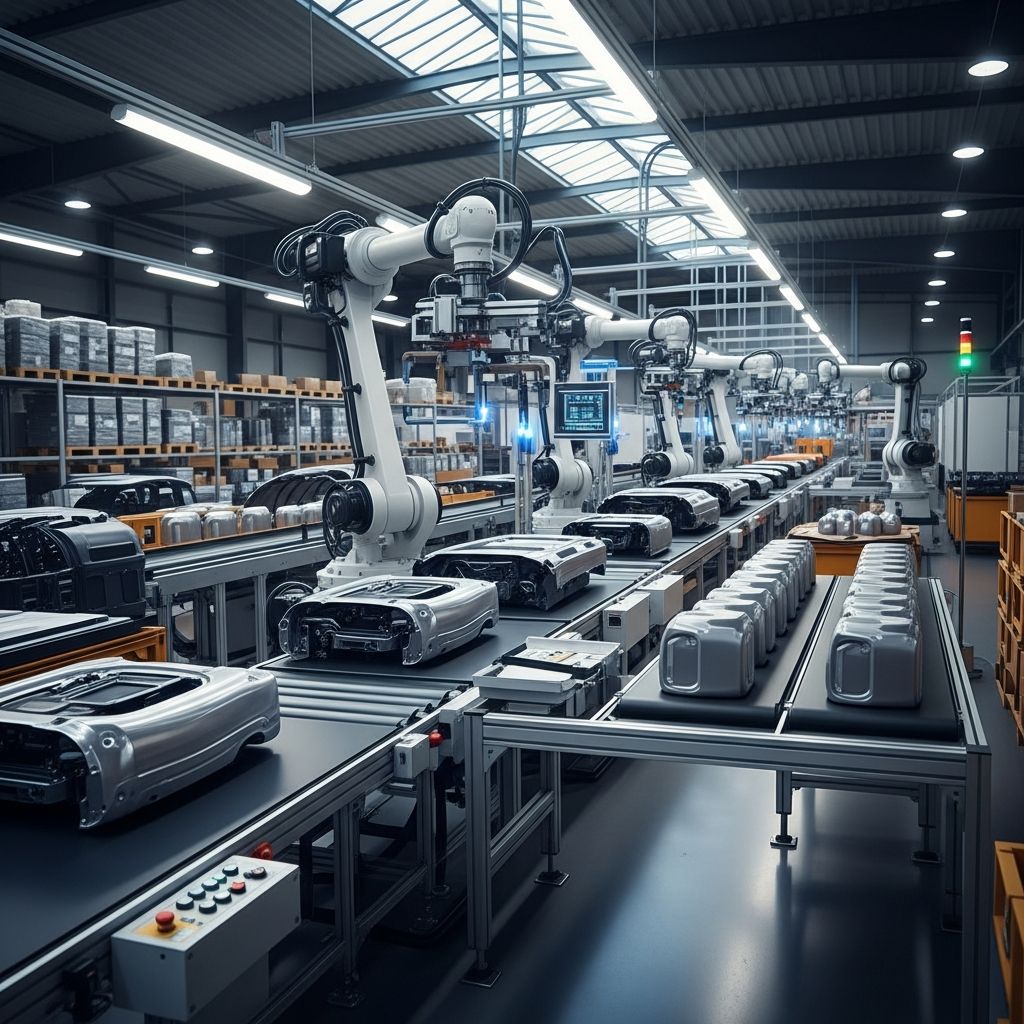
Understanding mass production: manufacturing standardized products efficiently at scale using automation and assembly lines.
What Is Mass Production?
Mass production is the manufacturing of standardized product lines in substantial quantities over an extended period, utilizing automation and assembly line techniques to facilitate rapid production. Also referred to as series production, series manufacture, or continuous production, mass production has become the dominant manufacturing method in modern economies since the Industrial Revolution.
The primary objective of mass production is to manufacture identical or nearly identical products in high volumes while maintaining low unit costs. This approach relies heavily on mechanization, labor specialization, and standardized processes to achieve efficiency gains that would be impossible using traditional craft production methods.
How Mass Production Works
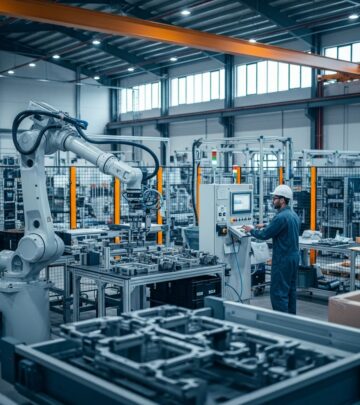
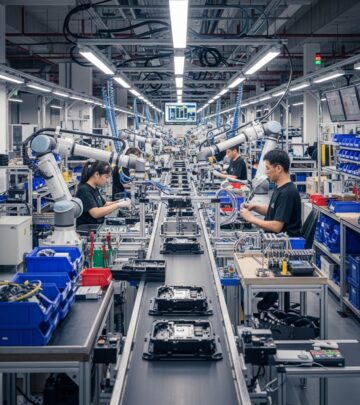
Mass production operates through a coordinated system of assembly lines where the manufacturing process is broken down into discrete, repetitive tasks. Rather than having individual workers complete entire products from start to finish, the assembly line approach assigns each worker a specific operation that they perform repeatedly on successive products as they move along the line.
The efficiency of this system depends on several key principles:
- Labor Division: Breaking production into specialized tasks allows workers to become highly proficient at their specific role
- Standardization: Identical products are manufactured using standardized processes and components
- Mechanization: Automated equipment performs repetitive operations faster and more consistently than manual labor
- Material Flow: Raw materials and partially completed products move systematically through the facility
- Quality Control: Continuous monitoring ensures products meet established standards
Companies employ differentiation, formalization, and specialization strategies to keep manufacturing costs low. Equipment performs identical operations on batches of products, and workers spend minimal time retrieving and preparing materials, as these are positioned strategically along the assembly line.
Key Characteristics of Mass Production
Mass production exhibits several distinctive characteristics that differentiate it from other manufacturing approaches:
- High Volume Output: Designed to produce large quantities of standardized products continuously
- Capital Intensity: Requires substantial upfront investment in machinery, equipment, and infrastructure
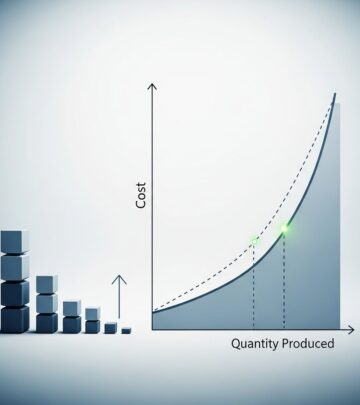
- Low Unit Costs: The spreading of fixed costs across large production volumes reduces per-unit expenses
- Standardization: All products are uniform and interchangeable with one another
- Automation Dependence: Machines perform the majority of actual production work
- Scalability: Systems can increase output by running longer hours or adding production lines
Advantages of Mass Production
Mass production offers numerous compelling benefits that have made it the preferred manufacturing method for many industries:
Reduced Production Costs
By utilizing mechanization and eliminating redundant job roles, mass production significantly lowers labor expenses. The spreading of capital costs across millions of units dramatically reduces the per-unit manufacturing cost, making products affordable for mass markets. This cost advantage creates a competitive edge that smaller manufacturers struggle to match.
Increased Efficiency
Automation enables products to be assembled faster than traditional methods. Workers perform routine procedures with minimal variation, and machinery operates continuously at consistent speeds. The reduced time spent retrieving tools and materials, combined with mechanized assembly, dramatically improves overall productivity compared to craft production methods.
Enhanced Quality Control
Mass production can achieve high precision rates when production is strictly monitored and validated using established parameters. Machinery performs identical operations repeatedly, reducing human error and variation. Quality issues can be identified quickly and corrected systematically across the entire production line.
Faster Distribution and Marketing
Rapid assembly enables companies to produce larger quantities of finished goods quickly, facilitating faster distribution to retail channels. The ability to meet high demand consistently strengthens the company’s market position and brand recognition. Larger production volumes also support more aggressive marketing campaigns and promotional activities.
Economies of Scale
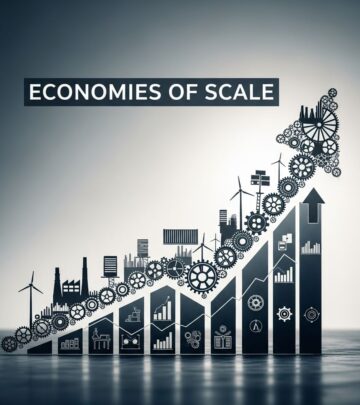
Mass production enables companies to benefit from substantial economies of scale. Fixed costs are distributed across millions of units, allowing prices to decrease while maintaining profitability. Lower prices drive demand, creating a positive feedback loop that reinforces standardized product manufacturing and expands market reach.
Disadvantages of Mass Production
Despite its numerous benefits, mass production presents several significant challenges and limitations:
High Initial Capital Requirements
Establishing mass production facilities demands enormous upfront investments in automated assembly lines, machinery, robots, and infrastructure. Only companies with substantial financial resources can afford to implement mass production systems. This barrier to entry protects established manufacturers from small competitors but makes market entry difficult for startups.
Inflexibility and Adaptation Costs
Mass production systems are designed for producing specific standardized products and cannot easily adapt to product changes or market shifts. If regulatory requirements or consumer preferences necessitate product modifications, companies must invest heavily in retooling and redesigning entire assembly lines. These adaptation costs can be substantial and time-consuming, delaying market response to competitive pressures.
Limited Product Variety
Mass production systems produce standardized products with minimal variation. Consumers seeking customization or unique features are not served well by this approach. The commitment to producing uniform products means companies sacrifice the ability to differentiate through product variation or personalization.
Employee Morale and Turnover Issues
The repetitive nature of assembly line work contributes to low employee morale and high turnover rates. Workers performing the same task repeatedly may experience monotony, reduced job satisfaction, and decreased motivation. This can result in increased absenteeism, reduced productivity, and higher recruiting and training costs to replace departed employees.
Overcapacity and Market Risk
Mass production capacity must be maintained even when demand fluctuates. Fixed costs continue regardless of sales volume, creating financial pressure during market downturns. If products fail to achieve expected sales levels, manufacturers face significant financial losses due to excess inventory and underutilized capacity.
Historical Example: Henry Ford and the Assembly Line
The most transformative example of mass production innovation occurred in 1913 when Henry Ford pioneered the first moving assembly line for the Ford Motor Company’s Model T automobile. Ford’s revolutionary approach fundamentally changed manufacturing forever.
Prior to Ford’s innovation, automobile assembly was labor-intensive and time-consuming. The traditional method required individual workers to assemble complete vehicles from component parts, taking approximately 12 hours to build a single automobile. Ford’s moving assembly line broke this process into discrete steps, with specialized workers positioned along the line performing specific operations on each vehicle as it moved past their workstations.
The results were extraordinary: assembly time for the Model T dropped from 12 hours to just 2.5 hours. This dramatic efficiency improvement reduced production costs dramatically, allowing Ford to lower the Model T’s price significantly. The lower price made automobiles accessible to middle-class consumers for the first time, creating mass demand for vehicles. Ford’s manufacturing innovation proved so effective that automobile manufacturers worldwide adopted and refined his assembly line approach. Contemporary automobile companies continue using Ford’s mass production methodology for rapid manufacturing of vehicles.
Mass Production Versus Mass Customization
While mass production focuses on manufacturing identical standardized products at low cost, mass customization represents an evolution of this concept. Mass customization involves providing end-users with products tailored to their specific needs while maintaining cost efficiency comparable to mass production.
Mass customization leverages flexibility, responsiveness, and configurable production systems to deliver uniquely customized products meeting individual user requirements at relatively low costs. This approach targets markets with fragmented customer segments where preferences vary significantly and change frequently. Companies practicing mass customization develop intimate knowledge of end-users, creating feedback loops that enable continuous product improvement and differentiation.
However, mass production remains the forerunner and foundation for mass customization. Traditional mass production companies employ hierarchical and bureaucratic systems where workers perform narrowly defined, repetitive roles producing standardized, low-cost products. Many firms today practice both approaches simultaneously in different facilities, using dedicated mass production factories for standardized products and flexible manufacturing systems for customized goods serving different market segments.
Mass Production and Consumer Culture
Mass production fundamentally transformed consumer culture by making previously luxury goods available to ordinary people. By dramatically reducing unit costs, mass production permitted the emergence of consumerism as we know it. Goods that were once scarce and expensive became widely available at affordable prices.
However, this accessibility has been associated with overconsumption patterns and environmental concerns. Mass production techniques have enabled the fast-fashion industry, which produces inexpensive clothing using cheap fabrics and poor construction methods to maintain rapid turnaround times. While consumers benefit from lower prices, the quality and durability of mass-produced garments often suffer compared to traditionally manufactured items.
Applications Across Industries
Mass production principles apply across diverse industries beyond automobiles:
- Food and Beverage: Bulk processing of fluids and particulates using automated systems, conveyor belts, and process control technologies
- Pharmaceuticals: Large-scale drug manufacturing on comprehensive assembly lines with stringent quality control
- Electronics: Mass production of consumer electronics with integrated circuit manufacturing and component assembly
- Textiles and Clothing: High-volume garment production using specialized cutting and sewing equipment
- Consumer Goods: Manufacturing of household appliances, tools, and other durable goods
Future of Mass Production
Mass production continues evolving through technological advancement and innovation. Sophisticated precision machining equipment, robotics, artificial intelligence, and digital process control systems are making manufacturing increasingly sophisticated and efficient. The integration of digital technologies enables greater flexibility while maintaining the cost advantages of mass production.
Emerging trends include Industry 4.0 initiatives that combine mass production with customization capabilities, smart manufacturing systems that optimize production in real-time, and sustainable manufacturing practices that reduce waste and environmental impact. These developments suggest mass production will remain central to modern manufacturing while becoming more flexible, sustainable, and responsive to market demands.
Frequently Asked Questions (FAQs)
Q: What is the main advantage of mass production?
A: The primary advantage is dramatically reduced per-unit production costs through economies of scale, automation, and labor efficiency. This allows companies to offer products at lower prices while maintaining profitability.
Q: Why does mass production require so much capital investment?
A: Mass production systems depend on expensive automated equipment, assembly lines, robots, and infrastructure. These capital costs are substantial but spread across millions of units, making them economically justified through reduced per-unit costs.
Q: How does mass production affect product quality?
A: Mass production can achieve high precision and consistent quality when production is strictly monitored. Machinery reduces human error and variation. However, cost pressures sometimes lead manufacturers to use cheaper materials that compromise durability.
Q: What is the difference between mass production and craft production?
A: Craft production involves skilled workers hand-making individual products with customization, while mass production uses automated assembly lines to manufacture identical products rapidly at low cost. Craft products are typically higher quality but significantly more expensive.
Q: Can mass production adapt to consumer preference changes?
A: Mass production systems are inflexible and adapt slowly to preference changes. Significant product modifications require expensive retooling and redesign of assembly lines, making rapid adaptation difficult and costly.
Q: How do companies address employee turnover in mass production?
A: High turnover is addressed through improved working conditions, higher wages, automation that reduces repetitive tasks, and implementing job rotation programs to increase task variety and worker engagement.
References
- Mass Production – Overview, How It Works, Advantages — Corporate Finance Institute. https://corporatefinanceinstitute.com/resources/management/mass-production/
- Mass Production — Wikipedia. https://en.wikipedia.org/wiki/Mass_production
Similar Articles








Read full bio of Sneha Tete