Marketing Strategy: Definition, Components, and Implementation
Master your marketing strategy: Learn the essentials for reaching and converting customers effectively.
What is a Marketing Strategy?
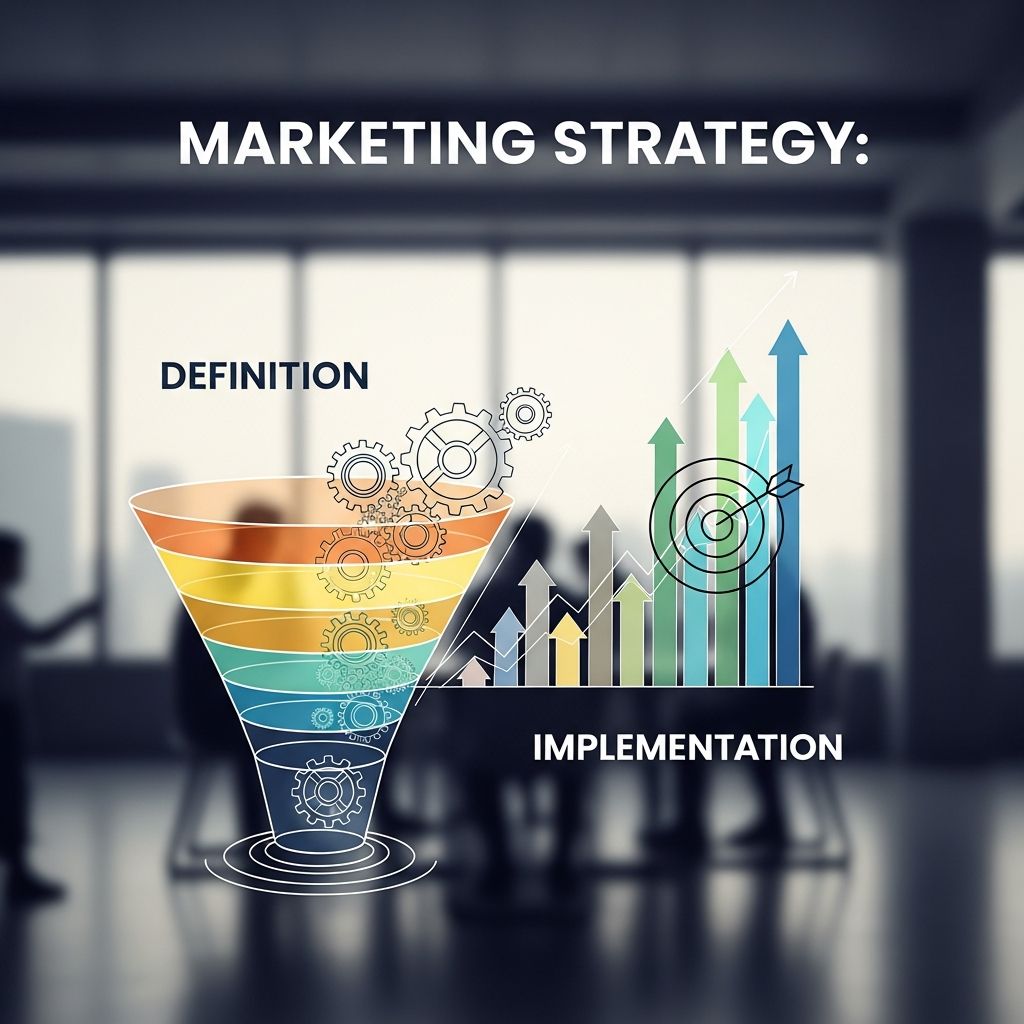
A marketing strategy refers to a business’s overall game plan for reaching prospective consumers and converting them into customers of their products or services. It represents the comprehensive approach that companies use to understand their market, identify opportunities, and execute targeted campaigns to achieve their business objectives. A well-crafted marketing strategy goes beyond simple advertising; it encompasses research, positioning, promotion, and continuous measurement to ensure effectiveness.
At its core, a marketing strategy is about understanding four fundamental elements: who buys your products and services, how you’ll motivate them to take profitable action, who your competitors are and what they’re doing, and how you’ll measure your marketing activities to refine your approach moving forward. These elements form the foundation upon which successful marketing efforts are built.
The Core Components of a Marketing Strategy
An effective marketing strategy consists of several interconnected components that work together to create a cohesive approach to market engagement:
Research and Analysis
The foundation of any marketing strategy begins with thorough research. This includes analyzing target markets, understanding competitor positioning, evaluating pricing triggers, and studying customer buying behaviors. Organizations must gather data on their industry landscape, market trends, and consumer preferences to make informed strategic decisions. This research phase is critical because it provides the insights needed to differentiate products and craft compelling value propositions.
Positioning and Differentiation
Positioning involves differentiating your brand and products from competitors through unique value promises, distinctive packaging, compelling conversion messaging, and strategic brand identity. Your positioning statement should clearly communicate what makes your offering different and why customers should choose you over alternatives. This is where brand identity, visual elements, and key messaging converge to create a distinctive market presence.
Promotion and Communication
Promotion encompasses the actual marketing of products and services through various channels including content marketing, relationship building, and customer experiences. The goal of promotion is to influence profitable customer action by communicating the benefits of your offerings and creating compelling reasons for purchase. This includes advertising, social media marketing, public relations, email campaigns, and direct marketing efforts.
Measurement and Optimization
A robust marketing strategy includes systems for measuring results, proving value, learning from both successes and failures, and iterating on future work to achieve marketing goals. This involves tracking key performance indicators, analyzing campaign effectiveness, and continuously refining tactics based on data-driven insights.
Understanding the 4Ps of Marketing
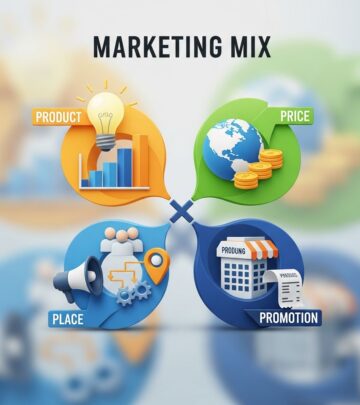
The 4Ps framework—product, price, place, and promotion—represents four key considerations in successfully marketing a product or service. Together, they form what marketing professionals call the marketing mix, and each element plays a distinct role in your overall strategy:
Product
Product refers to any good, service, or piece of information sold for profit. In the context of marketing strategy, the product component involves working with research and development teams to create offerings that meet evolving customer needs and wants. This includes designing product features, benefits, packaging, and overall customer experience. Marketing must research competitive products, understand customer expectations, and recommend ideal features that will resonate with target audiences.
Price
Price represents the monetary value consumers pay for a product. Marketing departments must determine appropriate pricing by analyzing competitive products, understanding customer demand, and considering market conditions. The chosen price should ideally maximize revenue while also leading to increased sales and market share. Pricing decisions require balancing profitability with market competitiveness and customer perception of value.
Place
Place refers to the physical or virtual location where a product is available. This component involves determining product distribution channels and understanding distribution costs and competitive dynamics in regional marketplaces. Place strategy addresses how and where customers will access your products, whether through retail stores, e-commerce platforms, direct sales, or other distribution channels.
Promotion
Promotion encompasses the publicization of a product through various marketing communications such as advertisements, social media marketing, and public relations. Marketing develops all company communications to reach target audiences, including advertising campaigns, websites, web marketing, and resources to support the sales force. Effective promotion creates awareness, generates interest, and persuades customers to take action.
Key Elements of a Comprehensive Marketing Strategy
A complete marketing strategy typically includes six major components that work together to guide organizational efforts:
Business Components
These foundational elements include your mission statement, business summary, brand identity, and SWOT analysis (strengths, weaknesses, opportunities, threats). These establish the overall business context within which your marketing efforts operate.
Marketing Outcomes Components
Marketing strategies must define clear outcomes including goals, objectives, OKRs (objectives and key results), and marketing metrics and KPIs (key performance indicators). These metrics help you measure whether your strategy is achieving its intended results.
Market Focus Components
Understanding your market is essential. This includes market analysis, competitive analysis, identification of your target audience, and development of detailed buyer personas that represent your ideal customers.
Product Focus Components
This section details your specific offerings using the 4Ps framework: product specifications, pricing strategy, place/distribution, promotion tactics, packaging design, and market positioning.
Marketing Methods Components
These are the specific tactics and channels you’ll use to execute your strategy, including content marketing, social media, email, advertising, public relations, and other promotional activities.
Action Plan Components
Finally, your strategy should include clear roles and responsibilities, review schedules, revision processes, tracking mechanisms, reporting procedures, and contingency plans to adapt to market changes.
Characteristics of a Robust Marketing Strategy
An ideal marketing strategy should accomplish several key objectives:
Alignment and Focus
A strong marketing strategy aligns your entire team behind a unified set of objectives, ensuring everyone understands and works toward common goals. This organizational alignment is critical for consistent execution and maximum effectiveness.
Strategic Connection
Your marketing efforts should assist in connecting organizational activities to broader company goals and business objectives. This ensures that marketing investments deliver business value beyond brand awareness.
Competitive Differentiation
The strategy should differentiate your products from the competition through unique value propositions and distinctive market positioning. This helps you stand out in crowded markets and gives customers compelling reasons to choose your offerings.
Testing and Learning
A quality strategy allows you to determine what connects with your audience and provides mechanisms to test different approaches, learning from both successes and failures.
Value Demonstration
The strategy empowers your marketing team to prove its value to the organization through measurable results and clear connection to business outcomes.
Steps to Develop a Marketing Strategy
Step 1: Create a Documented Marketing Plan
A strong marketing strategy requires research and clear communication. Begin by developing a written plan containing crucial information that acts like a roadmap for your marketing team. This documented approach ensures everyone understands the strategy and can execute it consistently.
Step 2: Understand Your Target Audience and Market
Research your customers, market trends, and competition thoroughly. This research empowers marketers to make informed decisions about product differentiation, pricing, distribution, promotion, packaging, and positioning. Accurate research is essential for strategy success and team alignment.
Step 3: Define Your Unique Value Proposition
In this step, marketing strategists translate research into action by defining what makes your offering unique. This involves articulating clear value propositions, developing distinctive brand identity with consistent visuals and voice, and establishing unique positioning and benefits statements that resonate with your target market.
Step 4: Set SMART Marketing Goals and Objectives
After understanding your market opportunity, establish goals that are Specific, Measurable, Achievable, Relevant, and Timely (SMART). These objectives should align with broader business goals and provide clear metrics for evaluating success.
Step 5: Identify Marketing Approaches and Media Channels
The goal of marketing is to generate profitable customer action. Focus on stakeholders and practitioners by documenting marketing funnel stages, selecting tactics with the greatest potential to influence your goals, and defining the channels your organization will leverage to execute the plan. This includes determining which media, platforms, and communication methods will most effectively reach your target audience.
The Strategic Questions Every Marketer Must Answer
At the heart of marketing strategy are three fundamental questions that guide decision-making:
Who Are You Trying to Reach?
Identify your target customers or audiences—the specific people who need to buy your product, make a donation, support your idea, or take actions that support your objectives. This requires developing detailed buyer personas and understanding audience demographics, psychographics, and behaviors.
Where Will You Try to Reach Them?
Network and channel-specific strategies are essential for this component. Consider where your target audience spends their time, what media they consume, and which platforms are most effective for reaching them. This might include social media, search engines, traditional media, email, or direct communication.
How Will You Inspire Them to Take Action?
Your branding, communication channels, and specific tactics come into play here. Develop compelling messaging, create engaging content, build emotional connections, and provide clear reasons and incentives for customers to choose your offerings over alternatives.
Real-World Example: Airbnb’s Marketing Strategy
Airbnb’s marketing strategy effectively demonstrates how to leverage multiple tactics for competitive advantage. This software company, which allows homeowners to rent properties as competitors to traditional hotel stays, employs four key tactics that set them apart:
Building Community with Targeted Outreach
Airbnb focuses on creating a strong community by targeting hosts and guests through personalized communication, local events, and community engagement initiatives. This builds loyalty and encourages word-of-mouth marketing.
Leveraging User-Generated Content
The platform encourages hosts and guests to share their experiences through photos, reviews, and stories. This authentic content builds trust and provides compelling social proof that influences purchasing decisions.
Clear and Unique Value Proposition
Airbnb clearly communicates its differentiation—offering authentic, local travel experiences at competitive prices compared to traditional hotels. This positioning resonates strongly with adventure-seeking travelers.
Creating a Referral Program
Airbnb incentivizes customers to refer friends and family through attractive referral rewards, driving customer acquisition while rewarding loyal users.
Frequently Asked Questions About Marketing Strategy
What is the difference between a marketing strategy and a marketing plan?
A marketing strategy is the overarching vision and approach for how you’ll achieve your marketing goals, while a marketing plan is the detailed document that outlines the specific tactics, timelines, budgets, and responsibilities for executing that strategy. Think of strategy as the “what” and “why,” while the plan is the “how” and “when.”
Why is market research essential to marketing strategy?
Market research provides the data and insights necessary to make informed strategic decisions. It helps you understand your target audience, identify market opportunities, analyze competitor positioning, and validate your assumptions before investing significant resources in marketing execution.
How often should a marketing strategy be reviewed and updated?
Marketing strategies should be reviewed regularly—typically quarterly or semi-annually—to ensure they remain aligned with business goals and responsive to market changes. However, the frequency may increase in rapidly changing industries or during significant business transitions.
How do you measure the success of a marketing strategy?
Success is measured using key performance indicators (KPIs) and marketing metrics that align with your specific goals. These might include customer acquisition cost, return on marketing investment, conversion rates, brand awareness metrics, customer lifetime value, market share growth, or sales revenue attribution to specific campaigns.
Can small businesses implement sophisticated marketing strategies?
Absolutely. Marketing strategy is scalable and can be adapted to any organization size. Small businesses may focus on specific niches, leverage digital marketing channels with lower costs, and emphasize personal relationships and authentic storytelling to compete effectively with larger enterprises.
References
- Marketing Strategy: Templates, Definitions, Importance, & Benefits — CoSchedule. 2025. https://coschedule.com/marketing-strategy
- Marketing Definition 4P by Investopedia — B3B Marketing (Investopedia). July 13, 2015. https://www.youtube.com/watch?v=MoQz3SaWY9s
Similar Articles








Read full bio of medha deb