Marketing Mix: What Is It and How to Use It
Master the 4 Ps and 7 Ps of marketing to create a winning strategy.
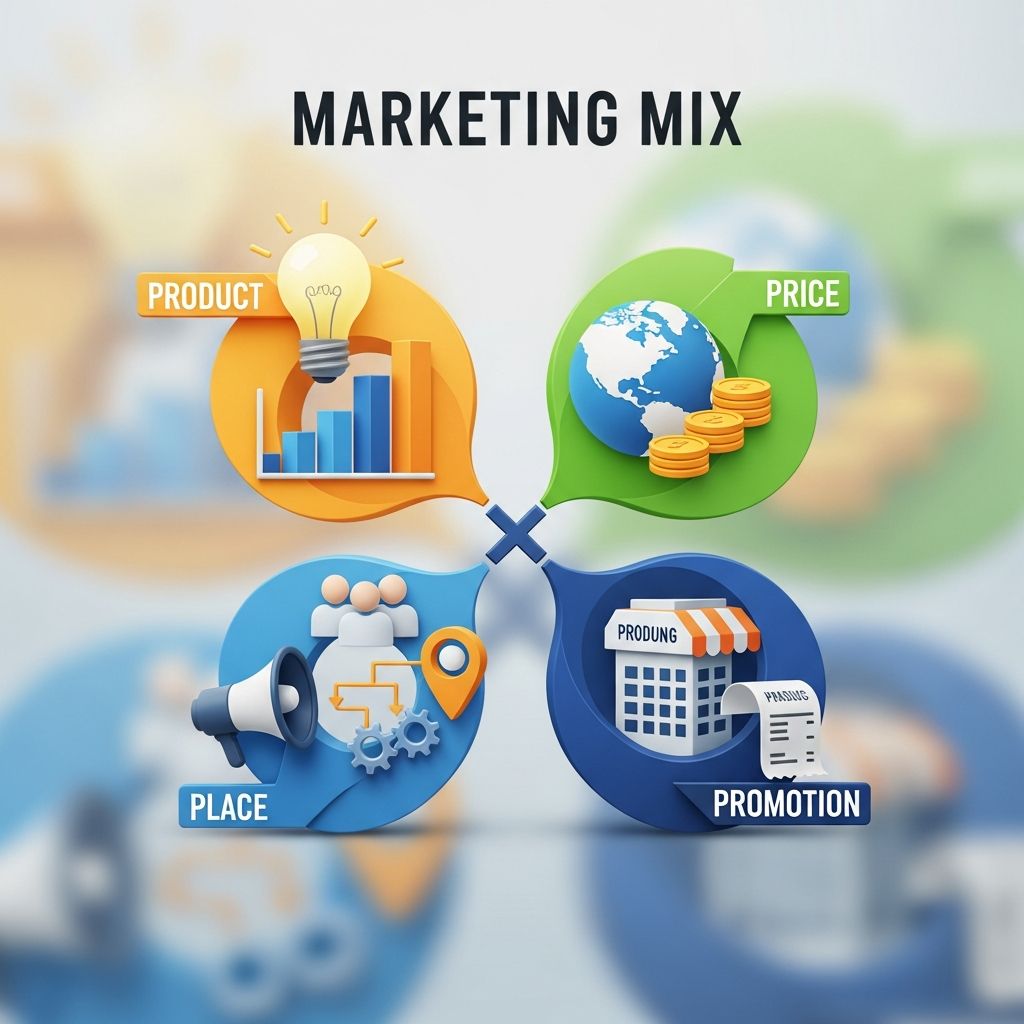
What Is the Marketing Mix?
The marketing mix is a foundational framework that helps businesses develop effective marketing strategies by balancing key controllable variables. It represents the combination of tools and tactics that a company uses to influence customer purchasing decisions and achieve its marketing objectives. Rather than taking a one-dimensional approach to marketing, the marketing mix encourages businesses to think holistically about how different elements work together to create value for customers.
Originally coined by E. Jerome McCarthy in his book “Basic Marketing” during the 1960s, the marketing mix concept has become a cornerstone of marketing education and practice. The framework provides a structured methodology for analyzing markets, articulating marketing decisions, and ultimately achieving sales objectives. Whether you’re launching a new product, entering a new market, or refining your current strategy, the marketing mix serves as a compass to guide your efforts.
The beauty of the marketing mix lies in its simplicity combined with depth. It acknowledges that successful marketing requires more than just having a great product or running compelling advertisements. Instead, it emphasizes that all marketing elements must work in harmony, each reinforcing the others to create a cohesive brand experience that resonates with your target audience.
The 4 Ps of Marketing
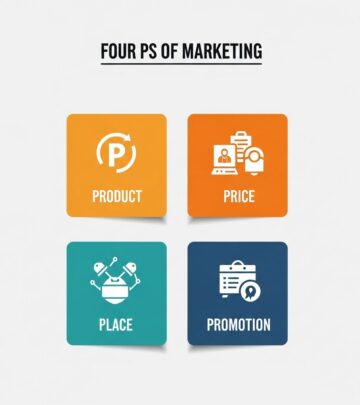
The traditional marketing mix consists of four core elements, commonly referred to as the 4 Ps. These elements represent the primary factors that a business can control when marketing its products or services. Understanding each component is essential for building a balanced and effective marketing strategy.
Product
The product is the centerpiece of your marketing mix. It encompasses what your business offers to solve customer problems or fulfill their desires. A great product begins with understanding what your audience truly needs. Beyond just the physical item or service, product strategy includes features, benefits, quality, design, and packaging. Your product should differentiate itself from competitors and add genuine value to the consumer’s life.
When developing your product strategy, consider what problem your offering solves and how it addresses customer pain points. Think about the product lifecycle stage—whether it’s in the launch, growth, maturity, or decline phase—and adjust your marketing accordingly. Strong branding and polished packaging also influence consumer perception and can significantly impact purchasing decisions.
Price
Price represents the amount customers pay for your product and communicates important messages about quality and value. Pricing strategy is far more nuanced than simply covering costs and adding a markup. Your price point sends signals to customers about where your product sits in the market hierarchy. A premium price suggests superior quality and exclusivity, while a lower price might emphasize value and accessibility.
When setting prices, consider your value proposition, competitive positioning, production costs, and target customer’s willingness to pay. Price also works in conjunction with other marketing mix elements—a premium product typically justifies higher pricing and should be promoted through quality channels and positioned in upscale locations.
Place
Place refers to the distribution channels and locations where customers can find and purchase your product. This includes both online and offline channels, logistics networks, and accessibility considerations. In today’s omnichannel retail environment, place encompasses e-commerce platforms, physical storefronts, marketplaces, and direct-to-consumer channels. The goal is to make your product conveniently available to your target customers through channels they prefer and trust.
Effective place strategy involves understanding where your customers shop, how they prefer to make purchases, and ensuring your product is readily available at those touchpoints. Whether you’re selling through retail partners, direct-to-consumer channels, or a combination of both, your distribution strategy must align with your target market’s expectations and behavior patterns.
Promotion
Promotion encompasses all the ways you communicate with customers and persuade them to purchase your product. This includes paid advertising, public relations, content marketing, social media engagement, influencer partnerships, and direct sales efforts. Effective promotion spreads awareness of your product, communicates its benefits, and ultimately drives purchasing decisions.
Your promotional strategy should reach your target audience through channels they frequent and in ways that resonate with their preferences. A cohesive promotional approach ensures consistent messaging across all touchpoints, reinforcing your brand positioning and value proposition.
The 4 Ps vs. 7 Ps: Understanding the Difference
As service industries and digital platforms grew throughout the late 20th and early 21st centuries, marketers realized that the original 4 Ps framework didn’t fully capture the customer experience in service-based or digital businesses. Traditional product marketing often overlooked the human and procedural elements critical to service delivery. This recognition led to the expansion of the marketing mix to include three additional elements, creating the 7 Ps framework.
| Element | 4 Ps Focus | 7 Ps Addition |
|---|---|---|
| People | Not included | Employees, customer service reps, and brand representatives who deliver the customer experience |
| Process | Not included | Systems and methods used to deliver products or services efficiently |
| Physical Evidence | Not included | Visible proof that builds confidence in the brand, including packaging, store design, and reviews |
The 4 Ps framework was designed with product-based companies in mind, particularly those selling physical goods. It works well for tangible products where the focus is on what the business offers and how it reaches customers. However, service industries—such as hospitality, healthcare, consulting, and financial services—require additional considerations because the service experience is often inseparable from the people delivering it and the processes involved.
The 7 Ps of Marketing Explained
The expanded 7 Ps framework provides a more comprehensive view of the marketing landscape, particularly for service-based and digital businesses. The three additional elements complete the picture of the customer experience.
People
This element refers to everyone involved in delivering the customer experience, including employees, sales teams, customer service representatives, and even brand ambassadors. Friendly and well-trained people can transform a good product into a great experience. In service industries especially, the quality of human interaction directly impacts customer satisfaction and loyalty.
To optimize the People element, invest in training your team on brand messaging, highlight customer success stories and testimonials, and leverage advocacy programs to turn satisfied customers into brand promoters. Your employees are brand ambassadors who shape customer perceptions through every interaction.
Process
Process encompasses the systems and methods used to deliver products or services efficiently. This includes everything from order processing and payment systems to customer service protocols and delivery logistics. Smooth checkouts, clear communication, and fast delivery create trust and satisfaction, while complicated processes frustrate customers and damage brand reputation.
Optimizing your processes means streamlining customer journeys, removing friction points, and ensuring consistency in how you deliver value. Whether it’s simplifying your checkout process, reducing wait times, or improving response rates, process improvements directly impact customer satisfaction and repeat business.
Physical Evidence
Physical evidence includes any visible proof that builds confidence in your brand. For online businesses, this might include website design, user interface, and online reviews. For physical locations, it encompasses store layout, signage, and ambiance. Product packaging, certifications, and testimonials also serve as physical evidence of your brand’s professionalism and credibility.
Strong physical evidence demonstrates that your business is legitimate, professional, and worth customers’ trust and investment. In the digital age, online reviews and ratings have become particularly important forms of physical evidence that influence purchasing decisions.
How to Use the Marketing Mix: A Step-by-Step Guide
Implementing the marketing mix effectively requires a structured approach. Follow these steps to develop a marketing strategy that balances all elements effectively.
Step 1: Understand Your Target Market
Before making any decisions about your marketing mix, invest time in understanding your target customers. Conduct market research to identify their needs, preferences, pain points, and buying behaviors. Analyze your competitors and the broader market landscape. Understanding whether you’re in a crowded market or a niche segment will influence how you approach each element of the marketing mix.
Step 2: Define Clear Objectives
Set specific, measurable goals before planning your marketing mix. Whether you aim to increase sales by 25%, grow brand awareness in a new demographic, or enter a new geographic market, having clear objectives gives direction to your efforts. Measurable goals help you focus resources wisely, allocate budgets effectively, and track whether your strategies are producing desired results.
Step 3: Develop Each Element
Build your strategy around each marketing mix element—Product, Price, Place, and Promotion (and People, Process, and Physical Evidence if applicable). Make sure all elements complement one another and work in harmony. For example, a premium product should align with higher pricing, targeted promotion through quality channels, and distribution through upscale locations. The key is ensuring that every decision reinforces your brand’s positioning and customer promise.
Each element should be developed with consideration for your target market, competitive positioning, and business objectives. Inconsistency between elements creates confusion; a luxury product sold at discount prices through mass-market retailers sends conflicting signals to customers.
Step 4: Test and Measure Results
Marketing is not a “set it and forget it” endeavor. Continuously test different approaches, measure results against your defined objectives, and refine your strategy based on data. Track key performance indicators such as customer acquisition cost, conversion rates, customer satisfaction scores, and return on marketing investment. Use these insights to optimize each element of your marketing mix over time.
Benefits of Using the Marketing Mix
The marketing mix framework offers several significant advantages for businesses of all sizes and industries.
Create Consistency
By aligning all marketing activities—from pricing strategies to promotion campaigns and customer service—businesses can deliver a clear and consistent message to their audience. This consistency builds brand recognition and trust over time.
Improve Customer Focus
The marketing mix framework encourages companies to study customer needs closely and design products, pricing, and experiences that truly meet those needs. Rather than being product-centric, this approach is inherently customer-centric.
Build Competitive Advantage
A well-balanced marketing mix helps businesses stand out by offering something different or more valuable than competitors. By thoughtfully considering each element and how they work together, you create a unique value proposition that resonates with your target market.
Guide Strategic Decision-Making
The marketing mix provides a framework for making decisions about product features, pricing levels, distribution channels, and promotional tactics. Rather than making ad-hoc decisions, you’re approaching marketing strategically and systematically.
Real-World Examples of the Marketing Mix
Consider how major brands implement the marketing mix effectively. A premium coffee brand like Starbucks uses a sophisticated marketing mix approach: its product strategy emphasizes quality beans, unique blends, and seasonal offerings that evolve with customer tastes. Its pricing reflects premium positioning. Distribution happens through company-owned stores and select partner locations. Promotion focuses on creating a lifestyle brand experience. The People element is crucial—barista training and customer service excellence are paramount. The Process involves efficient ordering and customized drink preparation, while Physical Evidence includes store ambiance and the recognizable Starbucks brand identity.
By contrast, a direct-to-consumer (DTC) e-commerce brand might focus heavily on digital channels, affordable pricing to gain market share, viral social media promotion, and streamlined online processes. Both approaches work, but they reflect different market positioning and customer preferences.
Frequently Asked Questions (FAQs)
Q: Why is the marketing mix important?
A: The marketing mix is important because it provides a structured framework for developing cohesive marketing strategies. It ensures that all elements of your marketing—product, pricing, distribution, and promotion—work together to achieve your business objectives and meet customer needs.
Q: When should I use the 7 Ps instead of the 4 Ps?
A: Use the 7 Ps framework if you operate in a service-based industry, offer digital products, or if customer experience and human interaction are critical to your value proposition. The additional People, Process, and Physical Evidence elements are particularly relevant for service businesses where these factors significantly impact customer satisfaction.
Q: How often should I revisit my marketing mix?
A: You should review your marketing mix regularly—at minimum quarterly or whenever significant market changes occur. As customer preferences evolve, competitors emerge, and business goals shift, your marketing mix should adapt accordingly to maintain relevance and effectiveness.
Q: Can I change one element of the marketing mix without affecting others?
A: While theoretically possible, changing one element usually requires adjustments to others to maintain consistency and coherence. For example, if you increase your price, you may need to enhance your product quality, improve your promotional messaging, or adjust your distribution channels to align with the new positioning.
Q: How does the marketing mix apply to digital businesses?
A: The marketing mix applies fully to digital businesses. Product becomes your digital offering, Price is your subscription or transaction cost, Place is your online platform and distribution channels, and Promotion is your digital marketing efforts. The 7 Ps are particularly relevant for digital businesses, with Process (user experience and systems) and Physical Evidence (website design, reviews) being critical success factors.
References
- Marketing Mix: Definition, 4Ps, 7Ps, and Key Examples — Audience Science. Accessed November 29, 2025. https://www.audiencescience.com/marketing-mix/
- Marketing Mix: Definition, Examples, and Applications — LaunchNotes. Accessed November 29, 2025. https://www.launchnotes.com/glossary/marketing-mix-in-product-management-and-operations
- Marketing Mix Variables Explained: How to Align the 4 Ps — Keends. Accessed November 29, 2025. https://keends.com/blog/marketing-mix-variables/
- Marketing Mix: The 7 Ps of Marketing — Mailchimp. Accessed November 29, 2025. https://mailchimp.com/marketing-glossary/marketing-mix-7ps/
- What Is Marketing Mix & 7 P’s of Marketing? With Examples — Chisel Labs. Accessed November 29, 2025. https://chisellabs.com/glossary/what-is-marketing-mix/
- What Is the Marketing Mix (4 P’s of Marketing)? — TechTarget. Accessed November 29, 2025. https://www.techtarget.com/whatis/definition/Four-Ps
Similar Articles








Read full bio of medha deb