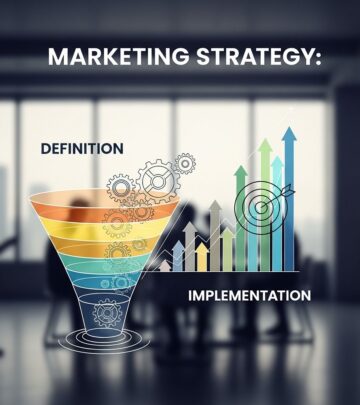
Market Orientation: Definition and Business Strategy
Understanding market orientation: A customer-centric approach to business planning and competitive advantage.

Understanding Market Orientation
Market orientation represents a fundamental business philosophy that prioritizes customer needs, preferences, and market demands when developing organizational strategies and planning initiatives. Rather than focusing exclusively on internal capabilities or production efficiency, market orientation requires companies to systematically gather and analyze customer insights, apply this knowledge across all business functions, and make strategic decisions that align with identified market opportunities and consumer desires.
At its core, market orientation answers a critical business question: what factors should guide our market planning and product development decisions? The answer involves understanding that successful businesses must balance internal capabilities with external market realities, ensuring that what they produce genuinely meets customer needs and expectations while remaining profitable and strategically sound.
The Evolution of Market Orientation Thinking
The concept of market orientation has evolved significantly over recent decades as business philosophies have shifted toward greater customer centricity. Early marketing definitions focused narrowly on the transactional aspects of business—moving products from producers to consumers. Modern interpretations recognize that market orientation encompasses a much broader organizational philosophy that influences strategic decision-making across all departments and functional areas.
Philip Kotler, a prolific marketing scholar and educator, has exemplified this evolution in his own work. In 1980, Kotler defined marketing as “satisfying needs and wants through an exchange process.” By 2018, his definition had evolved to reflect contemporary market realities: “the process by which companies engage customers, build strong customer relationships, and create customer value in order to capture value from customers in return.” This shift from transactional thinking to relationship-based strategy illustrates how market orientation has become increasingly sophisticated and customer-focused.
Similarly, professional marketing organizations have updated their definitions to reflect this evolution. In 1935, the American Marketing Association defined marketing simply as “the performance of business activities that direct the flow of goods and services from producers to consumers.” By 2008, this definition expanded to emphasize broader stakeholder interests and societal considerations, reflecting growing recognition that market orientation must account for diverse constituencies beyond immediate customers.
Core Principles of Market Orientation
Market orientation rests on several interconnected principles that guide how organizations approach business strategy and customer relationships:
Customer Orientation
The foundation of market orientation is customer orientation—the recognition that a firm’s survival and growth depend on producing goods and services that customers are willing and able to purchase. Organizations practicing customer orientation prioritize understanding consumer demand through rigorous market research, recognizing that ascertaining what customers actually want is vital for a company’s long-term viability. This principle shifts decision-making from “what can we produce efficiently” to “what do customers actually need and value.”
Organizational Orientation
Market orientation extends beyond the marketing department to influence the entire organization’s functioning. In a truly market-oriented firm, the marketing department assumes prime importance at the functional level, using market research insights to guide decisions made by R&D, production, finance, and other departments. When market research reveals that consumers desire a new product type or novel usage for existing products, the marketing department communicates these insights to R&D, which creates prototypes aligned with customer desires. Production then manufactures the product, while finance evaluates capital requirements. This cross-functional integration ensures that customer insights inform strategy throughout the organization.
Integrated Marketing Mix
Market orientation requires developing and coordinating an integrated marketing mix—the combination of product, price, promotion, and place (distribution channels) strategies that collectively communicate a product’s value proposition to target customers. The marketing mix is shaped by multiple factors: the competitive environment surrounding the product, findings from comprehensive marketing and market research, and the specific characteristics and preferences of the target market audience. By carefully orchestrating these elements, market-oriented firms create coherent, compelling customer experiences that reinforce their competitive positioning.
Market Research and Strategic Planning
Effective market orientation requires substantial investment in market research and competitive analysis. Organizations employing this philosophy conduct extensive research to understand customer preferences, identify emerging market trends, recognize unmet needs, and anticipate shifts in consumer behavior. This research informs product development, pricing strategies, promotional tactics, and distribution decisions.
Market-oriented companies recognize that market research serves multiple purposes. It helps identify customer segments with distinct needs and preferences, reveals gaps between current offerings and customer desires, assesses competitive positioning, and provides early warning signals about market shifts that could threaten existing business models. By systematically gathering and analyzing this information, market-oriented firms position themselves to make informed strategic choices rather than relying on assumptions or historical precedent.
Market Segmentation and Customer Targeting
A crucial component of market orientation involves market segmentation—the process of dividing a heterogeneous total market into smaller, more homogeneous sub-markets or segments. Each segment typically shares common characteristics, needs, preferences, or behaviors that distinguish it from other segments.
Organizations pursue market segmentation for two primary reasons. First, segmentation enables more efficient resource allocation. Companies possess finite resources and cannot serve all customer groups equally; segmentation helps identify which segments warrant focused investment and attention. Second, segmentation enables better responsiveness to diverse customer needs. Modern consumers exhibit increasingly varied tastes and preferences, and firms recognize competitive advantages in tailoring offerings to specific market segments rather than pursuing one-size-fits-all approaches.
Needs-based segmentation, also called benefit segmentation, represents a particularly effective segmentation approach. This method places customers’ desires at the forefront of how companies design and market products or services, explicitly acknowledging that different customer groups value different product attributes and benefits. While needs-based segmentation can be challenging to execute in practice, research demonstrates that it represents one of the most effective ways to segment markets and develop targeted value propositions.
Market Orientation and Competitive Strategy
Market orientation complements various competitive strategies that organizations employ to achieve superior performance. Companies pursuing cost leadership strategies—aiming to become the lowest-cost producer in their industry—use market orientation to understand price sensitivity across customer segments and identify which customers prioritize affordability over other product attributes. This understanding helps cost leaders target the right market segments and communicate their value proposition effectively.
Organizations pursuing differentiation strategies—seeking to be unique along dimensions that buyers value—equally rely on market orientation. Differentiation requires deep understanding of what attributes customers perceive as important and what needs remain inadequately addressed by competitors. Market-oriented differentiation leaders identify one or more valued attributes, uniquely position themselves to deliver superior performance on those dimensions, and command premium prices as a result of their distinctive positioning.
Similarly, companies employing focus strategies—targeting specific customer segments and tailoring offerings to serve them specifically—depend entirely on market orientation. Focus strategies succeed when companies deeply understand the particular needs of targeted segments, recognize how those needs differ from other market segments, and develop specialized capabilities to serve those targeted segments more effectively than broad-market competitors.
Implementation Across Business Models
Market orientation principles apply across diverse business models and organizational structures. Traditional business-to-consumer (B2C) companies use market orientation when they research customer preferences, develop products matching consumer desires, and communicate value through targeted promotion. Business-to-business (B2B) companies apply market orientation when they analyze customer organizational needs, develop solutions addressing those needs, and build long-term customer relationships based on demonstrated value delivery.
Even emerging business models incorporate market orientation principles. Consumer-to-business (C2B) models, where consumers create value that businesses consume or commercialize, require deep understanding of what consumers can uniquely provide and what businesses will pay for such contributions. All these models succeed better when practitioners understand market dynamics, customer motivations, and competitive positioning.
Promotion and Customer Communication
Market-oriented firms deliberately design advertising and promotional campaigns to communicate how their products’ specific benefits address customers’ distinctive needs, wants, or expectations. Rather than promoting generic product features, market-oriented promotion highlights how offerings uniquely solve customer problems or deliver desired outcomes. This targeted communication approach helps customers understand product relevance and justifies purchase decisions, particularly when premium pricing reflects differentiation or specialized value delivery.
Long-Term Business Performance
Research and practical business experience demonstrate that market orientation correlates strongly with sustained business performance and profitability. Organizations that prioritize customer needs in strategic planning, invest in market understanding, and integrate market insights throughout their operations typically outperform competitors that neglect market orientation. This performance advantage stems from several factors: market-oriented firms develop products customers genuinely want, communicate effectively about product value, price appropriately for their positioning, and distribute through channels customers prefer. Collectively, these factors create superior customer satisfaction, loyalty, and lifetime value.
Challenges in Implementing Market Orientation
Despite its benefits, implementing comprehensive market orientation presents organizational challenges. Market research requires significant time and financial investment, yet uncertainties remain about how to interpret findings or ensure research accuracy. Cross-functional integration, while theoretically ideal, can create organizational friction when different departments prioritize conflicting objectives. Finance departments, for example, may resist capital expenditures recommended by marketing when such investments might temporarily compromise cash flow, even though long-term market positioning may depend on those investments.
Organizations must also balance market responsiveness with operational efficiency and strategic focus. Pursuing every market opportunity identified through research can lead to scattered resources and muddled organizational identity. Successful market-oriented companies develop disciplined processes for evaluating which market opportunities align with their capabilities, competitive positioning, and strategic objectives.
Frequently Asked Questions
Q: How does market orientation differ from product orientation?
A: Product orientation focuses on developing products based on internal capabilities and production efficiency, while market orientation starts with customer needs and works backward to develop products that satisfy those identified needs. Market orientation is more customer-centric and market-driven.
Q: Why is market research essential for market orientation?
A: Market research provides the customer and competitive insights necessary for informed decision-making. It helps organizations understand what customers want, identify unmet needs, assess competitive positioning, and anticipate market changes—all critical for effective market-oriented strategy.
Q: Can small businesses practice market orientation?
A: Yes, market orientation is scalable and applicable to businesses of all sizes. While small businesses may conduct market research using less formal or expensive methods, they can still gather customer insights, understand competitive positioning, and develop strategies aligned with customer needs and market opportunities.
Q: How does market orientation influence pricing strategy?
A: Market orientation informs pricing by identifying what value customers perceive in products and what prices different segments will accept. Organizations can then price based on perceived value delivery and market segment characteristics rather than simply marking up costs or matching competitors.
Q: What organizational changes support market orientation implementation?
A: Effective implementation typically requires elevating the marketing function’s organizational importance, establishing cross-functional teams that integrate market insights into decisions, investing in market research capabilities, and creating incentive structures rewarding customer-focused outcomes rather than only internal efficiency metrics.
References
- Marketing — Wikipedia. Accessed November 2025. https://en.wikipedia.org/wiki/Marketing
- Porter’s Generic Competitive Strategies — Institute for Manufacturing, University of Cambridge. Accessed November 2025. https://www.ifm.eng.cam.ac.uk/research/dstools/porters-generic-competitive-strategies/
Similar Articles








Read full bio of medha deb