Market Order vs. Limit Order: Key Differences
Understand market and limit orders to make smarter investment decisions and optimize your trading strategy.
What Is the Difference Between a Market Order and a Limit Order?
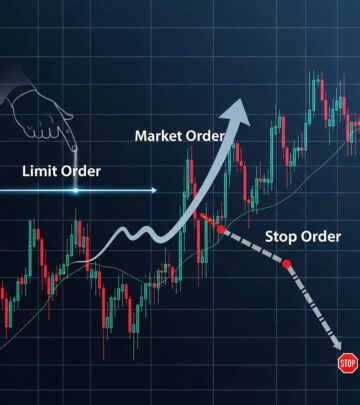
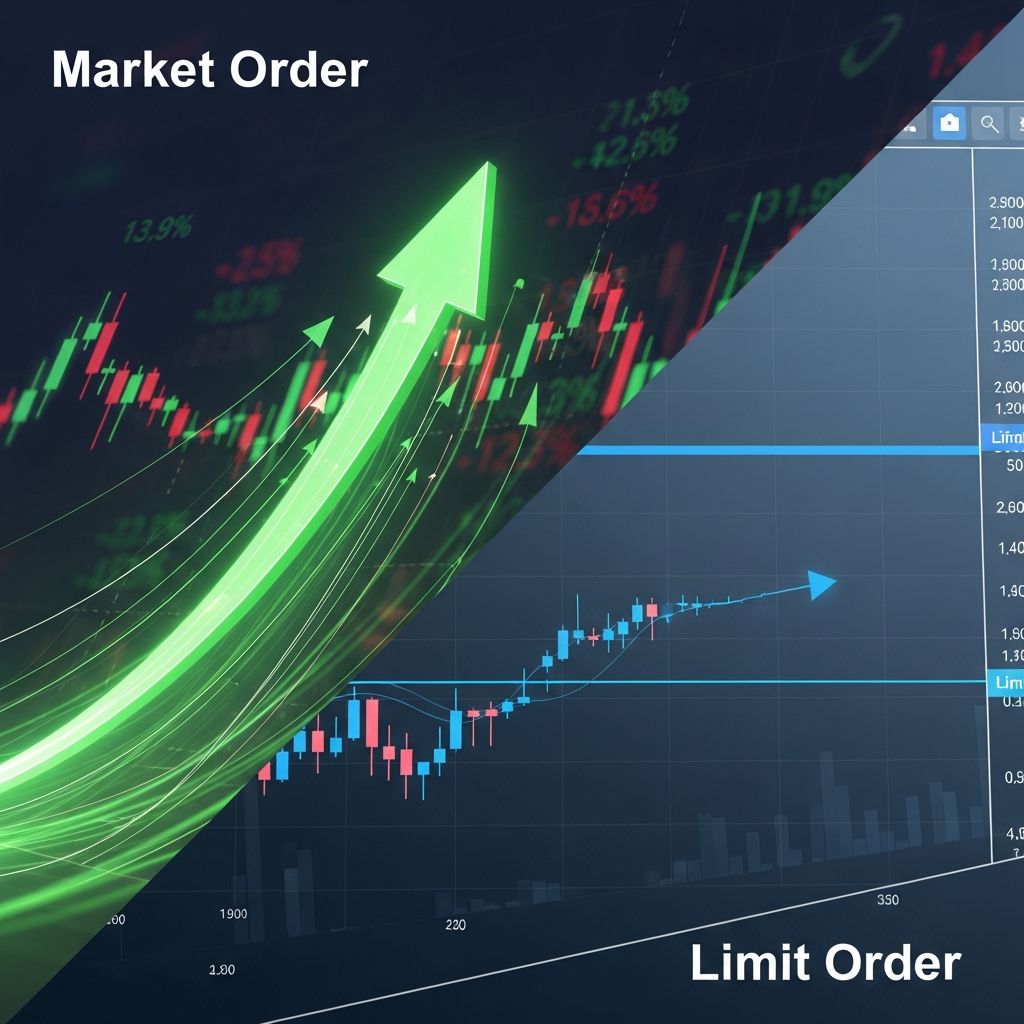
When trading stocks, understanding the different types of orders available is crucial for executing your investment strategy effectively. Two of the most commonly used order types are market orders and limit orders. While both serve the purpose of buying or selling securities, they operate in fundamentally different ways. A market order is an instruction to your broker to buy or sell a security immediately at the best available price in the current market. Conversely, a limit order allows you to specify the exact price at which you are willing to buy or sell a security, with the trade executing only if the market reaches that price or better.
The choice between these two order types can significantly impact your trading outcomes, including the execution price, the speed of execution, and the certainty of whether your order will be filled at all. Understanding these differences is essential for both beginner and experienced investors who want to optimize their trading strategies.
Understanding Market Orders
A market order is the simplest and most straightforward type of stock order. When you place a market order, you are instructing your broker to execute the trade as quickly as possible at whatever price is currently available in the market. This order type prioritizes speed over price, meaning your transaction will almost certainly be completed, but you have no control over the exact price at which it executes.
For a buy market order, your broker will attempt to purchase the stock at the lowest available asking price being offered by sellers. For a sell market order, your broker will attempt to sell your stock at the highest available bid price being offered by buyers. The execution typically happens within seconds, which makes market orders ideal for investors who want immediate action without waiting for specific price conditions to be met.
One important consideration is that the price you see quoted on your screen may not be the price at which your market order actually executes. Market prices fluctuate constantly, and by the time your order reaches the market, the available prices may have changed. This is particularly true during periods of high market volatility or when trading illiquid securities with wider bid-ask spreads.
When Market Orders Are Most Appropriate
Market orders work best in several specific situations:
- When you need to execute a trade immediately, such as during fast-moving market conditions
- When trading highly liquid stocks where bid-ask spreads are very tight
- When the speed of execution is more important than achieving a specific price
- When you are trading popular, widely-held securities with high trading volumes
- When market prices are moving in your desired direction and you want to capture gains quickly
Understanding Limit Orders
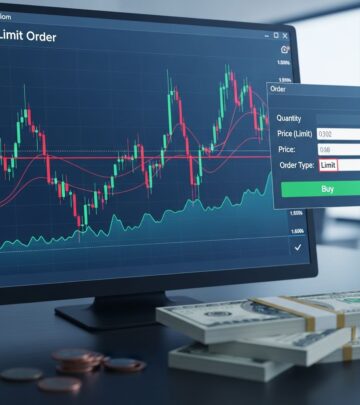
A limit order operates quite differently from a market order. With a limit order, you specify the price at which you are willing to buy or sell a security. The order will only execute at your specified limit price or better. This means you have complete control over the maximum price you will pay (for a buy order) or the minimum price you will accept (for a sell order).
For a buy limit order, you set a maximum price you are willing to pay. If the stock’s market price falls to your limit price or below, your order may be executed at that price or even lower. For a sell limit order, you set a minimum price you are willing to accept. If the stock’s market price rises to your limit price or above, your order may be executed at that price or even higher.
The key advantage of limit orders is price protection and control. However, this control comes with a trade-off: there is no guarantee that your order will be executed at all. If the stock never reaches your specified limit price, or if there are not enough buyers or sellers at that price when it is reached, your order may remain unfilled indefinitely.
How Limit Orders Execute
Limit orders typically execute on a first-come, first-served basis. This means that if multiple limit orders exist at the same price level, the orders that were placed first will be filled first. It is also possible for your limit order to fill at a better price than you specified. For example, a buy limit order set at $100 could execute at $99.50 if that price becomes available. Similarly, a sell limit order set at $50 could execute at $50.50 if buyers are willing to pay that price.
Most brokerages allow you to set how long a limit order remains active. You can typically choose to have it valid for one business day only, or you can set it as a Good-Till-Canceled (GTC) order that remains active for up to 60 calendar days or until you manually cancel it. This flexibility allows investors to maintain their desired price targets over extended periods without constantly re-entering orders.
| Feature | Market Order | Limit Order |
|---|---|---|
| Execution Speed | Immediate, usually within seconds | May take time or may never execute |
| Price Control | No control; executes at current market price | Complete control; executes at specified price or better |
| Execution Guarantee | Almost guaranteed to execute | Not guaranteed; depends on market reaching limit price |
| Best For | Quick trades in liquid securities | Patient investors seeking specific prices |
| Cost Implications | May result in less favorable pricing | Can save money on wide bid-ask spreads |
| Market Volatility Impact | Higher risk during volatile markets | Can protect against excessive price movements |
Advantages of Market Orders
The primary advantage of market orders is their certainty of execution. When you place a market order, you can be virtually certain that your trade will be completed. This makes market orders ideal for situations where execution is more important than achieving a specific price point.
Market orders also eliminate the frustration of watching a stock move in your desired direction while your limit order remains unfilled. You get the trade done immediately, which is particularly valuable when trading trending stocks or during significant market moves.
Additionally, market orders are straightforward and require no price research or decision-making. You simply place the order and the trade executes at the best available price. This simplicity makes market orders popular among investors who prioritize ease and speed over precision.
Disadvantages of Market Orders
The main disadvantage of market orders is the lack of price control. In fast-moving markets or when trading illiquid securities, the execution price can differ significantly from the price you expected. This phenomenon, known as slippage, can result in paying more than you anticipated when buying or receiving less than you expected when selling.
Market orders are particularly risky in volatile markets where prices can swing dramatically. A stock might be trading at $50 when you place your order, but by the time your order executes, it could be at $51 or $49 depending on market conditions. This uncertainty can lead to poor execution prices and increased trading costs.
Advantages of Limit Orders
The primary advantage of limit orders is price control. You specify exactly what price you are willing to accept, ensuring that you will never overpay when buying or accept less when selling than your predetermined limit. This is particularly valuable for investors who have a specific price target in mind.
Limit orders can also save money, especially when trading illiquid stocks with wide bid-ask spreads. If the spread is large, placing a limit order at a better price than the current bid or ask can result in significant savings. For example, if a stock has a 10-cent bid-ask spread and you are buying 100 shares, a limit order at the lower bid price could save you $10, which may cover your trading commission entirely.
Additionally, limit orders provide protection during unexpected price movements. If bad news emerges about a company you plan to buy, your buy limit order protects you by not executing at prices above your maximum. Similarly, if you have a sell limit order and positive news drives the stock higher, you are protected from selling at artificially low prices.
Disadvantages of Limit Orders
The primary disadvantage of limit orders is that execution is not guaranteed. If the stock never reaches your limit price, your order will not execute. You could miss out on profitable trading opportunities if the stock moves in your desired direction but never quite touches your limit price.
Even if a stock reaches your limit price, your order may not fill if there are not enough shares available at that price or if other orders ahead of yours have already consumed the available inventory. This is especially common with small, illiquid stocks where trading volume is limited.
Limit orders can also result in missing significant price movements. Imagine you have a sell limit order at $192 for a stock that suddenly jumps to $210 due to positive news. Unless you are actively monitoring the market, you might end up selling at $192 when you could have received $210 or more. The reverse situation can occur when bad news causes a stock to plummet below your buy limit price.
When to Use Market Orders vs. Limit Orders
Use a Market Order When:
- You need immediate execution and certainty that your order will fill
- You are trading highly liquid stocks with tight bid-ask spreads
- You are responding to time-sensitive market opportunities
- You are willing to accept the current market price for speed and certainty
- Market volatility is low and price movement is limited
Use a Limit Order When:
- You want to specify your exact purchase or sale price
- You are trading stocks with wide bid-ask spreads or illiquid securities
- You are trading a large number of shares where even small price differences matter
- You are not in a hurry and can wait for the right price to come along
- You want to protect yourself from adverse price movements
- You are concerned about market volatility and want to avoid slippage
Advanced Order Types
Beyond basic market and limit orders, brokers offer several advanced order types that combine elements of both:
Stop Orders (Stop-Loss Orders)
A stop order, also called a stop-loss order, becomes a market order when the stock price reaches your specified stop price. This type of order is commonly used to protect against losses. If you own shares trading at $100 and set a stop order at $90, your shares will be sold as a market order if the price falls to $90, helping you limit losses.
Stop-Limit Orders
A stop-limit order combines the features of both stop and limit orders. When the stock reaches your stop price, instead of automatically becoming a market order, it becomes a limit order at your specified limit price. This provides more price control than a traditional stop order, but with reduced certainty of execution.
Buy Stop Orders
With a buy stop order, you set a target price above the current market price. When the stock price rises to that level, a market order to buy is automatically placed. This strategy is often used when traders believe a stock will continue rising after breaking through a certain price level.
Bid-Ask Spreads and Order Types
Understanding bid-ask spreads is crucial for choosing between order types. The bid is the price buyers are willing to pay, and the ask is the price sellers are willing to accept. The spread between these two prices represents the cost of trading.
For highly liquid stocks with narrow spreads, market orders may be preferable since the difference between execution and expected price is minimal. For illiquid stocks with wide spreads, limit orders often make more sense as they allow you to avoid the excessive cost of the spread. Setting your buy limit near the bid price or your sell limit near the ask price can result in significant savings, particularly for larger trades.
Frequently Asked Questions
Q: Can a limit order execute at a better price than my limit price?
A: Yes, it is possible for your limit order to execute at a better price. For buy orders, you might pay less than your limit price, and for sell orders, you might receive more than your limit price if market conditions allow.
Q: How long does a market order take to execute?
A: Market orders typically execute within seconds, often completing almost instantly during normal market hours. However, execution may be slower during periods of extreme volatility or market disruptions.
Q: What happens if my limit order doesn’t fill by the end of the trading day?
A: This depends on how you set the order. Day orders expire at the end of the trading day if not filled. Good-Till-Canceled (GTC) orders remain active for an extended period, typically up to 60 days, unless you manually cancel them.
Q: Is a market order safer than a limit order?
A: Neither is inherently safer—they serve different purposes. Market orders are safer for ensuring execution, while limit orders are safer for price control. The best choice depends on your trading goals and market conditions.
Q: Can I change or cancel my order after placing it?
A: You can typically cancel or modify both market and limit orders before they execute. However, market orders execute so quickly that cancellation may not be possible. Once an order has executed, it cannot be changed or canceled.
Q: Why might my market order execute at a different price than expected?
A: Market orders execute at the current best available price when they reach the market. If prices are moving rapidly or if there is significant trading volume, the execution price can differ from the quoted price when you placed the order—a phenomenon called slippage.
References
- Order Types — Financial Industry Regulatory Authority (FINRA). 2024. https://www.finra.org/investors/investing/investment-products/stocks/order-types
- 3 Order Types: Market, Limit, and Stop Orders — Charles Schwab. 2024. https://www.schwab.com/learn/story/3-order-types-market-limit-and-stop-orders
- Types of Orders — U.S. Securities and Exchange Commission Investor.gov. 2024. https://www.investor.gov/introduction-investing/investing-basics/how-stock-markets-work/types-orders
- Stock & ETF Orders: Limit, Market, Stop, & Stop-Limit — Vanguard. 2024. https://investor.vanguard.com/investor-resources-education/online-trading/stock-order-types
- Market Order vs. Limit Order: When to Use Which — NerdWallet. 2024. https://www.nerdwallet.com/investing/learn/market-order-vs-limit-order
Similar Articles








Read full bio of medha deb