Market Equilibrium: Definition, Examples, and Applications
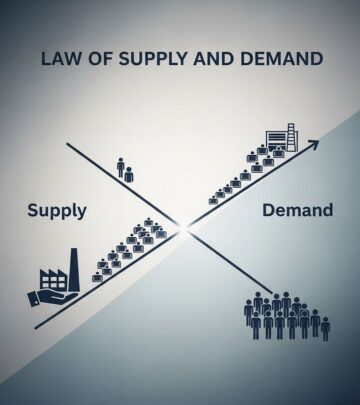
Understanding market equilibrium: where supply meets demand in economic systems.
Understanding Market Equilibrium
Market equilibrium is a fundamental concept in economics that describes a state where the quantity of goods or services supplied equals the quantity demanded at a specific price point. At this equilibrium point, there is no inherent tendency for prices to change because the market has reached a balance. Neither surplus inventory nor shortage exists, allowing the market to function efficiently without external intervention.
The concept of market equilibrium is central to understanding how free markets operate. It represents the natural state where buyers and sellers have reached an agreement on both price and quantity. This equilibrium is not static; rather, it continuously adjusts as market conditions change. Understanding this dynamic process is essential for investors, policymakers, and business leaders seeking to predict market behavior and make informed decisions.
The Definition of Market Equilibrium
Market equilibrium occurs when the supply of a good or service exactly matches its demand at a particular price level. Mathematically, this is represented when Quantity Supplied (Qs) equals Quantity Demanded (Qd). At equilibrium, the market clears completely, meaning all goods produced find willing buyers at the prevailing price, and all consumers willing to buy at that price can find suppliers.
The equilibrium price, also known as the market-clearing price, is the price at which this balance occurs. Above this price, suppliers would want to sell more than consumers are willing to buy, creating a surplus. Below this price, consumers would want to purchase more than suppliers are willing to sell, creating a shortage. Only at the equilibrium price does this tension resolve.
Key Components of Market Equilibrium
Supply and Demand Curves
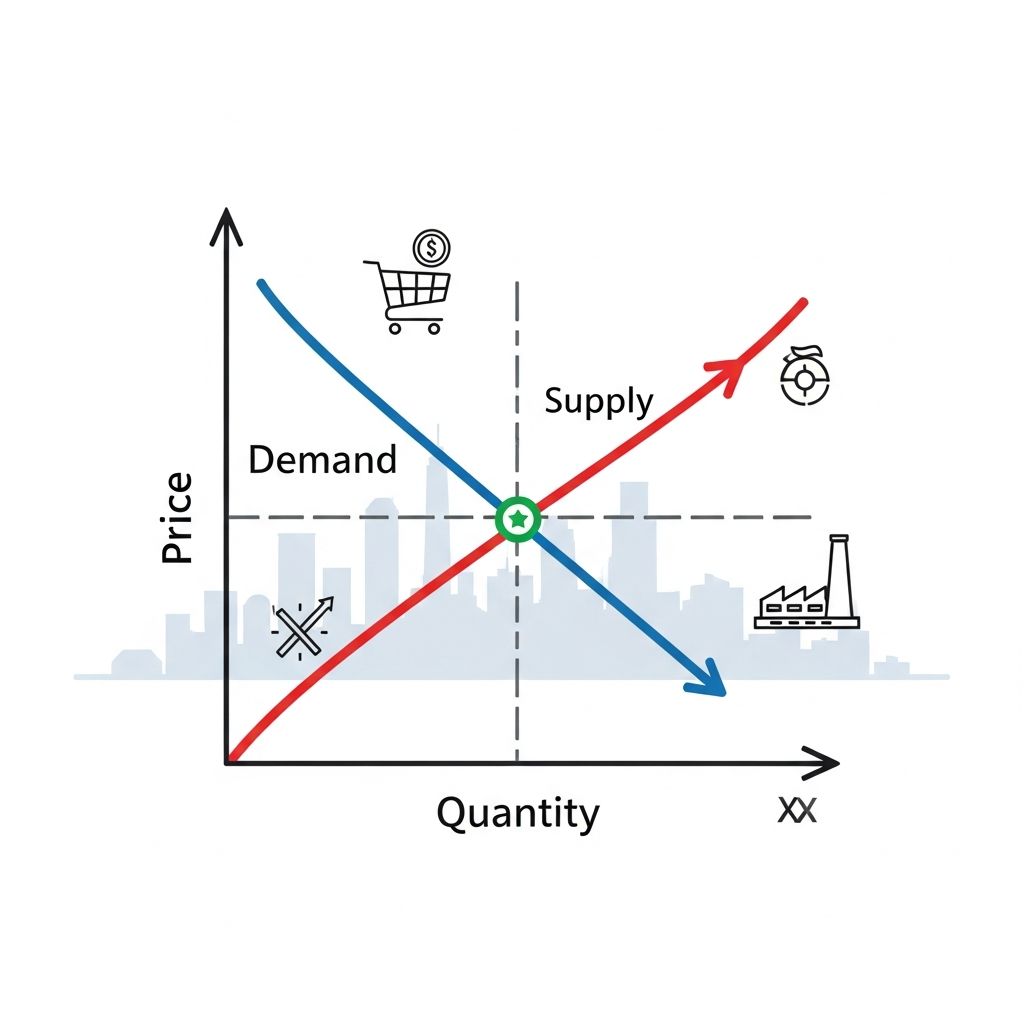
The foundation of market equilibrium lies in two economic curves: the supply curve and the demand curve. The demand curve typically slopes downward from left to right, illustrating that consumers are willing to purchase more goods at lower prices and fewer goods at higher prices. Conversely, the supply curve typically slopes upward, showing that producers are willing to supply more goods at higher prices and fewer goods at lower prices.
These curves intersect at a single point in most standard markets, and this intersection represents the market equilibrium. The coordinates of this intersection point reveal both the equilibrium price and the equilibrium quantity.
Price Mechanism
The price mechanism acts as the invisible hand that guides markets toward equilibrium. When there is excess demand (shortage), prices tend to rise, encouraging producers to increase supply and consumers to reduce demand. When there is excess supply (surplus), prices tend to fall, discouraging producers from supplying as much and encouraging consumers to purchase more. This natural price adjustment process continues until equilibrium is restored.
How Market Equilibrium Works
- Price Above Equilibrium: When the market price is set above the equilibrium level, suppliers are incentivized to produce more goods because they can earn higher profits. Simultaneously, consumers reduce their purchases due to higher prices. This creates a surplus of goods in the market.
- Price Below Equilibrium: When the market price falls below equilibrium, consumers desire to purchase more goods at the attractive lower price, while producers are less motivated to supply goods at reduced profit margins. This situation creates a shortage.
- Adjustment Process: Market forces naturally push prices toward equilibrium. During a surplus, competition among sellers drives prices down. During a shortage, competition among buyers drives prices up. Eventually, the market reaches the point where quantity supplied equals quantity demanded.
Real-World Examples of Market Equilibrium
Housing Market
The housing market provides a practical illustration of market equilibrium concepts. When the supply of available homes in an area decreases while demand remains strong, home prices tend to rise. Conversely, when there is an abundance of homes available but few buyers, prices typically decline. Market equilibrium occurs when the number of homes sellers are willing to sell matches the number of homes buyers are willing to purchase at the current market price. Real estate agents and market analysts constantly monitor these conditions to predict future price movements.
Labor Market
In the labor market, equilibrium exists when the number of qualified workers willing to work at a given wage rate equals the number of positions employers are willing to fill at that wage. When there is unemployment and an excess supply of workers, wages tend to decline. When there is a labor shortage and insufficient workers for available jobs, wages typically increase. The equilibrium wage is where labor supply meets labor demand.
Stock Market
Stock prices adjust continuously throughout the trading day as buyers and sellers make transactions. At any given moment, the stock price reflects an equilibrium point where the number of shares investors wish to buy equals the number of shares investors wish to sell. When positive news about a company emerges, more investors want to buy, pushing the price up until a new equilibrium is established where the higher price convinces some buyers to wait and prompts some sellers to participate.
Static vs. Dynamic Equilibrium
Static Equilibrium
Static equilibrium refers to a situation where the market remains in equilibrium for an extended period, with supply and demand curves remaining relatively stable. This scenario is more theoretical than practical, as real markets are constantly experiencing changes due to shifting consumer preferences, technological innovations, or economic conditions.
Dynamic Equilibrium
Dynamic equilibrium is more representative of real-world markets. In this state, the market continuously adjusts to new information and changing conditions. The equilibrium point constantly shifts as supply and demand curves move. Prices and quantities fluctuate as the market perpetually seeks a new balance in response to external shocks and internal changes.
Factors That Shift Market Equilibrium
- Changes in Consumer Preferences: When consumer tastes shift toward a product, demand increases, shifting the demand curve rightward and establishing a new, higher equilibrium price and quantity.
- Technological Innovations: Technological advances can lower production costs, increasing supply and shifting the supply curve rightward, potentially lowering the equilibrium price.
- Income Changes: Increases in consumer income can increase demand for normal goods, shifting the demand curve and changing equilibrium conditions.
- Price Changes of Related Goods: Changes in prices of substitute or complementary goods affect demand for the product in question, shifting the equilibrium point.
- Supply Shocks: Natural disasters, political events, or supply chain disruptions can shift the supply curve, altering market equilibrium.
- Regulatory Changes: New regulations or removal of existing regulations can affect both supply and demand, changing the equilibrium position.
The Importance of Market Equilibrium
Market equilibrium represents an efficient allocation of resources in a free market economy. At equilibrium, resources are distributed where they provide the most value to both producers and consumers. This efficiency minimizes waste and maximizes overall economic welfare. When markets deviate from equilibrium, either surpluses or shortages arise, creating inefficiencies that prompt corrective action.
For businesses, understanding market equilibrium helps in strategic planning. Companies can anticipate price movements and adjust production accordingly. For consumers, recognizing equilibrium conditions helps in making optimal purchasing decisions. For policymakers, understanding market dynamics informs decisions about market interventions and regulations.
Market Disequilibrium and Intervention
While free markets naturally tend toward equilibrium, government interventions can prevent this adjustment. Price controls, such as price ceilings (maximum prices) or price floors (minimum prices), can create persistent shortages or surpluses by preventing prices from reaching equilibrium levels. For example, rent control policies that set maximum rental prices may create housing shortages by keeping prices artificially low, discouraging new construction and maintenance.
Similarly, minimum wage laws set a price floor on labor, which can create unemployment if set above the equilibrium wage rate. Understanding these unintended consequences of price controls is crucial for evaluating the effectiveness of economic policies.
Equilibrium in Different Market Structures
Perfect Competition
In perfectly competitive markets with many buyers and sellers, prices are determined by market forces of supply and demand. Individual firms are price takers and cannot influence the market price. Equilibrium in perfect competition results in allocative efficiency, where price equals marginal cost.
Monopolistic Competition
Markets with monopolistic competition feature differentiated products and relatively free entry and exit. Equilibrium occurs where each firm produces where marginal revenue equals marginal cost, but firms may earn economic profits in short-run equilibrium due to product differentiation.
Oligopoly and Monopoly
In oligopolies and monopolies, equilibrium conditions differ from perfect competition. These market structures feature fewer sellers with greater price-setting power. Equilibrium may result in prices above marginal cost and potential economic inefficiencies.
Frequently Asked Questions
Q: What happens when market price is above equilibrium?
A: When the price is above equilibrium, a surplus develops because the quantity supplied exceeds quantity demanded. This excess inventory pressure causes prices to decline until equilibrium is restored.
Q: Can markets reach true equilibrium?
A: Real markets continuously adjust to changing conditions, making true static equilibrium rare. However, markets constantly move toward temporary equilibrium points as supply and demand forces interact.
Q: How do external shocks affect market equilibrium?
A: External shocks shift either the supply or demand curve, creating disequilibrium. Market forces then push prices and quantities toward a new equilibrium position reflecting the changed conditions.
Q: Is market equilibrium always beneficial?
A: While market equilibrium typically represents efficient resource allocation, it may not address equity concerns or account for externalities. Government intervention may sometimes be justified for social objectives.
Q: How do businesses use equilibrium concepts?
A: Businesses analyze supply and demand to forecast prices, set production levels, and plan inventory. Understanding equilibrium helps optimize pricing strategies and production decisions.
References
- Principles of Microeconomics — OpenStax CNX. 2023. https://openstax.org/details/books/principles-microeconomics-3e
- Supply and Demand in Competitive Markets — U.S. Library of Economics and Liberty. 2024. https://www.econlib.org/library/Enc/SupplyandDemand.html
- Market Equilibrium and Price Mechanism — Federal Reserve Education. 2024. https://www.federalreserveeducation.org/
- Understanding Economic Equilibrium in Different Market Structures — American Economic Association. 2023. https://www.aeaweb.org/
- Price Controls and Market Efficiency — International Monetary Fund. 2024. https://www.imf.org/
Similar Articles








Read full bio of medha deb