Marginal Revenue (MR): Definition, Formula & Examples
Understand marginal revenue, its formula, and how it impacts pricing and profit maximization decisions.

What Is Marginal Revenue?
Marginal revenue (MR) represents the additional income generated from selling one more unit of a product or service. In microeconomic theory, it is a fundamental concept that describes the change in total revenue when a firm increases its output by one unit. Understanding marginal revenue is essential for businesses making pricing and production decisions, as it directly impacts profitability and market strategy.
The concept of marginal revenue extends beyond simple arithmetic; it reflects the economic reality that selling additional units often requires price adjustments. When a company operates in a competitive market with many suppliers, the marginal revenue from each additional unit sold typically remains constant and equals the market price. However, in markets dominated by fewer sellers—such as monopolies or oligopolies—marginal revenue often declines as output increases because firms must reduce prices to sell more units.
Understanding the Marginal Revenue Formula
The marginal revenue formula is expressed as:
MR = ΔTR / ΔQ
Where:
- MR = Marginal Revenue
- ΔTR = Change in Total Revenue
- ΔQ = Change in Quantity Sold
This formula calculates the revenue generated from selling one additional unit by dividing the change in total revenue by the change in quantity. For example, if total revenue increases from $1,000 to $1,029 when quantity sold rises from 20 to 21 units, the marginal revenue is ($1,029 – $1,000) / (21 – 20) = $29 per unit.
Marginal Revenue in Perfect Competition
In perfectly competitive markets, where numerous firms sell identical products and no single seller can influence market price, marginal revenue equals the market price. This is because each additional unit sold generates revenue equal to the prevailing market price. Since firms are price takers rather than price makers, they accept the market price and adjust their output accordingly.
In perfect competition, the marginal revenue curve is horizontal at the level of the market price. This means that whether a firm sells 10 units or 1,000 units, each additional unit contributes the same amount to total revenue. This characteristic makes pricing and production decisions relatively straightforward for competitive firms, as they focus on cost minimization to maximize profits.
Marginal Revenue Under Monopoly
Monopoly markets present a starkly different scenario from perfect competition. A monopoly exists when one firm is the sole seller of a unique product with no close substitutes. In this market structure, the monopolist functions as a price maker, possessing the power to determine both the output level and the price consumers pay.
Under monopoly conditions, marginal revenue declines as the firm increases output. This occurs because the monopolist must lower the price on all units sold—not just the additional unit—to increase quantity demanded. Consequently, the marginal revenue curve slopes downward and lies below the demand curve. The relationship shows that MR < P (Price) in monopolistic markets.
For instance, if a monopoly can sell 10 units at $20 each (total revenue of $200) or 11 units at $19 each (total revenue of $209), the marginal revenue from the eleventh unit is only $9. This $9 figure reflects not only the $19 revenue from the additional unit but also the $10 loss in revenue from selling the previous 10 units at a reduced price ($1 less per unit).
Marginal Revenue and Demand Elasticity
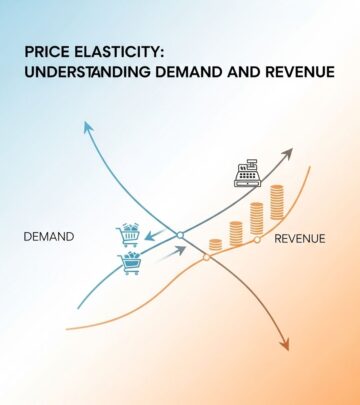
The relationship between marginal revenue and price elasticity of demand is critical for understanding firm behavior across different market structures. Price elasticity measures how responsive consumers are to price changes, and this responsiveness directly affects marginal revenue.
Elastic Demand (e > 1)
When demand is elastic, a small percentage decrease in price leads to a larger percentage increase in quantity demanded. In this scenario, marginal revenue remains positive and can be quite substantial. Firms facing elastic demand benefit from price reductions because the quantity increase more than compensates for the lower price per unit. Consequently, rational firms in markets with elastic demand will avoid raising prices, as the resulting loss in quantity demanded would be amplified by the elastic nature of demand.
Inelastic Demand (e < 1)
Conversely, when demand is inelastic, consumers are relatively unresponsive to price changes. A percentage decrease in price triggers a smaller percentage increase in quantity demanded. In such cases, marginal revenue becomes negative as the firm reduces prices to boost sales. Since consumers are not particularly price-sensitive, the expected sales increase fails to materialize sufficiently, and the firm loses more revenue from the price reduction than it gains from additional units sold. Rational firms facing inelastic demand will maintain current prices or even increase them to expand profits.
Unit Elastic Demand (e = 1)
Unit elastic demand represents the midpoint where the percentage change in price equals the percentage change in quantity. At this point, marginal revenue equals zero, as the revenue gains from increased quantity exactly offset the revenue losses from reduced prices.
Calculating Marginal Revenue: Step-by-Step
To calculate marginal revenue accurately, follow these steps:
- Step 1: Determine the total revenue at the current output level (Price × Quantity)
- Step 2: Calculate the total revenue after increasing output by one unit
- Step 3: Find the difference between the new and original total revenue
- Step 4: Divide this difference by the change in quantity (typically 1 unit)
Example: A bakery sells 50 loaves of bread daily at $3 each, generating $150 in revenue. If it increases production to 51 loaves but must lower the price to $2.95 each, the new total revenue is $150.45. The marginal revenue is $150.45 – $150 = $0.45 per loaf.
Marginal Revenue vs. Average Revenue
While marginal revenue focuses on the additional revenue from one more unit, average revenue represents the revenue per unit sold, calculated as Total Revenue divided by Quantity. Average revenue always equals price in any market structure, as it represents the average amount received per unit.
The distinction between marginal and average revenue is crucial: average revenue shows the typical revenue contribution per unit, while marginal revenue shows the incremental contribution of the last unit. In competitive markets, these two measures are equal, but in monopolistic markets, marginal revenue falls below average revenue as output increases.
Marginal Revenue and Profit Maximization
A fundamental principle in economics is that firms maximize profit where marginal revenue equals marginal cost (MR = MC). Marginal cost represents the additional cost of producing one more unit. When MR exceeds MC, producing additional units increases profit. When MC exceeds MR, additional production reduces profit. The optimal production level occurs at the intersection of these two curves.
This principle applies across all market structures. Monopolists use it to determine their profit-maximizing output level, while competitive firms use it to decide how much to produce at the market price. Understanding this relationship enables managers to make informed decisions about production levels and pricing strategies.
Practical Applications of Marginal Revenue
Businesses apply marginal revenue analysis in numerous real-world scenarios:
- Pricing Decisions: Companies analyze how price changes affect total revenue and adjust accordingly
- Production Planning: Firms determine optimal output levels by comparing MR with MC
- Market Strategy: Understanding whether demand is elastic or inelastic guides competitive strategies
- Discount Analysis: Retailers evaluate whether discounts will generate sufficient additional revenue
- Product Line Management: Companies decide which products to emphasize based on their marginal revenue contributions
Marginal Revenue in Different Industries
The behavior of marginal revenue varies significantly across industries based on market structure and competitive dynamics.
| Industry Type | Market Structure | MR Behavior |
|---|---|---|
| Technology Software | Near-monopoly (few dominant firms) | Declining MR with volume increases |
| Agriculture | Perfect competition | Constant MR at market price |
| Telecommunications | Oligopoly | MR declines but less sharply than monopoly |
| Retail | Monopolistic competition | Declining MR with differentiated products |
Common Misconceptions About Marginal Revenue
Misconception 1: Marginal Revenue Always Equals Price
This is only true in perfectly competitive markets. In monopolies and other imperfectly competitive structures, marginal revenue falls below price because firms must reduce prices to sell additional units.
Misconception 2: Marginal Revenue Calculations Are Static
Marginal revenue changes as output levels change, particularly in monopolistic markets where the marginal revenue curve shifts with demand changes.
Misconception 3: Higher Marginal Revenue Always Means Higher Profits
Profits depend on the relationship between marginal revenue and marginal cost. High MR combined with high MC may not be profitable, while lower MR with appropriately lower MC could be more profitable.
Frequently Asked Questions About Marginal Revenue
Q: Why does marginal revenue decrease in monopolies?
A: Marginal revenue decreases in monopolies because the firm must reduce the price on all units sold—not just the additional unit—to increase quantity demanded. This price reduction on previously sold units creates a revenue loss that offsets gains from selling the extra unit.
Q: How does marginal revenue relate to elasticity?
A: The relationship between marginal revenue and elasticity determines profitability of price changes. With elastic demand, lower prices increase total revenue (positive MR), while with inelastic demand, lower prices decrease total revenue (negative MR).
Q: What is the profit-maximizing rule using marginal revenue?
A: The profit-maximizing rule states that firms maximize profit where marginal revenue equals marginal cost (MR = MC). At this point, producing additional units would cost more than they generate in revenue.
Q: Can marginal revenue be negative?
A: Yes, marginal revenue can be negative, particularly in monopolistic markets with inelastic demand. This occurs when price reductions required to sell additional units result in total revenue decreasing rather than increasing.
Q: How do I calculate marginal revenue from a demand curve?
A: To calculate MR from a demand curve, determine total revenue at two different quantity levels (Price × Quantity for each level), then divide the change in revenue by the change in quantity. Alternatively, use calculus to find the derivative of the revenue function.
Q: Is marginal revenue important for small businesses?
A: Absolutely. Small businesses benefit significantly from understanding MR, as it helps them make informed pricing decisions, determine optimal production levels, and evaluate whether discounts or promotions will increase profitability.
References
- Marginal Revenue — Wikipedia. Retrieved 2025-11-29. https://en.wikipedia.org/wiki/Marginal_revenue
- Principles of Microeconomics — OpenStax. 2024. https://openstax.org/details/books/principles-microeconomics
- Microeconomics: The Free Market Approach — American Enterprise Institute. 2023. https://www.aei.org
Similar Articles








Read full bio of Sneha Tete