Marginal Benefit: Definition, Examples & Analysis
Understanding marginal benefit: How incremental gains drive economic decisions.
What Is Marginal Benefit?
Marginal benefit represents the maximum amount a consumer or business is willing to pay for one additional unit of a good or service. It is the additional satisfaction, utility, or value gained from consuming or purchasing one more item beyond what has already been acquired. In economic terms, marginal benefit is the incremental gain derived from a marginal (additional) change in activity or consumption.
The concept of marginal benefit is fundamental to understanding consumer behavior and business decision-making. When you purchase a product, the marginal benefit is the advantage you receive from that additional purchase compared to your current state. For instance, if you already own one pair of shoes and consider buying a second pair, the marginal benefit is the extra satisfaction or utility you would gain from having two pairs instead of one.
Understanding Marginal Benefit in Economics
Marginal benefit forms a critical component of marginal analysis, which is a financial technique used in accounting and economics to evaluate the implications of incremental changes in decision-making. This analytical approach allows decision-makers to assess whether the positive outcomes of a choice, such as increased satisfaction or profits, outweigh the negative consequences, such as additional costs.
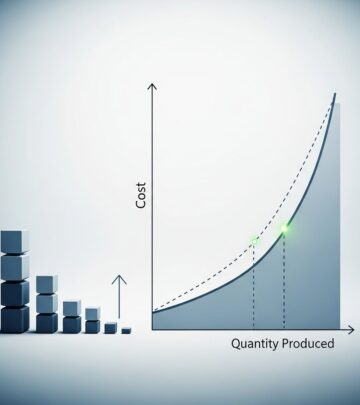
The relationship between marginal benefit and marginal cost is essential in economic theory. Rational decision-makers typically continue an activity until the marginal benefit equals the marginal cost—the point where the advantage of one more unit exactly matches its expense. Beyond this equilibrium point, the marginal cost exceeds the marginal benefit, making further expansion economically inefficient.
Economists pioneered by Alfred Marshall integrated marginal analysis into key economic concepts including supply and demand, production costs, and consumer behavior. This framework helps explain how markets function and why consumers and businesses make the choices they do.
The Law of Diminishing Marginal Benefit
A crucial principle related to marginal benefit is the law of diminishing marginal returns, which states that the marginal benefit of consuming additional units declines as consumption increases. This phenomenon explains why the satisfaction you derive from a second slice of pizza is typically less than the satisfaction from the first slice, and the third slice provides even less additional enjoyment.
This diminishing pattern occurs because:
- Initial purchases fulfill primary needs and desires most urgently
- Each successive unit addresses progressively less pressing wants
- Eventually, additional consumption may provide minimal or negative utility
- Consumer satisfaction reaches a saturation point where more consumption adds little value
Understanding diminishing marginal benefit is crucial for both consumers and businesses. It explains why price sensitivity increases for additional purchases and why promotional discounts often target incremental consumption. Retailers frequently use this principle by offering discounts on bulk purchases or multi-item deals, recognizing that consumers will perceive greater value in additional units when prices decrease.
Marginal Benefit vs. Marginal Cost
The relationship between marginal benefit and marginal cost determines optimal decision-making in economics. Marginal benefit measures the gain from one additional unit, while marginal cost represents the expense of producing or acquiring that additional unit.
| Aspect | Marginal Benefit | Marginal Cost |
|---|---|---|
| Definition | Additional satisfaction or value from one more unit | Additional expense of producing or buying one more unit |
| Trend | Typically decreases with each additional unit | May increase or decrease depending on production factors |
| Optimal Point | Compared against marginal cost for decision-making | Compared against marginal benefit for decision-making |
| Application | Consumer purchasing decisions and utility maximization | Business production decisions and profit optimization |
Rational economic actors make decisions at the point where marginal benefit equals marginal cost. For businesses, this means continuing production until the revenue from selling one additional unit equals the cost of producing that unit. For consumers, it means purchasing additional items until the satisfaction gained from another unit equals the price they must pay.
Real-World Examples of Marginal Benefit
Consumer Example: Purchasing Bread
Consider a consumer shopping at a grocery store who needs bread. The first loaf of bread, priced at $3, provides substantial marginal benefit because it fulfills the consumer’s primary need for bread throughout the week. The consumer gains significant satisfaction and utility from this purchase.
However, if that same consumer is offered a second loaf at the regular price of $3, the marginal benefit is lower—the second loaf adds less value because one loaf already satisfies their weekly needs. At full price, they likely decline the second purchase because the marginal benefit doesn’t justify the marginal cost.
Now suppose the store marks the second loaf to half price at $1.50. Suddenly, the marginal benefit appears greater relative to the new marginal cost. The consumer recognizes that acquiring a backup loaf or having additional bread for other purposes justifies the reduced expense. This scenario demonstrates how marginal analysis drives consumer purchasing decisions and how pricing strategies can influence consumption patterns.
Business Example: Hiring Additional Workers
A manufacturing company evaluates whether to hire an additional worker. The first few workers dramatically increase production output and generate substantial revenue gains—high marginal benefit. Each successive worker adds less incremental production because the existing workforce already handles most tasks efficiently.
At some point, hiring additional workers becomes counterproductive. The marginal cost of salaries, benefits, and training exceeds the marginal benefit of additional production. Experienced managers use marginal analysis to identify this optimal workforce level, avoiding both understaffing and the inefficiency of excessive employment.
Applications in Business Decision-Making
Businesses employ marginal analysis extensively to optimize operations and maximize profitability. Financial analysts examine whether specific decisions generate sufficient marginal benefit to justify their marginal cost.
Key business applications include:
- Production optimization: Determining the quantity of products to manufacture based on whether additional units generate sufficient revenue to cover production costs
- Workforce planning: Deciding whether to hire, retain, or release employees based on the productivity gains versus salary expenses
- Pricing strategies: Setting prices by analyzing the marginal revenue from price changes against potential volume losses
- Investment decisions: Evaluating whether expansion projects generate sufficient returns to justify capital expenditure
- Resource allocation: Directing limited resources toward activities with the highest marginal benefit relative to cost
Even highly profitable companies sometimes operate inefficiently. Management may fail to optimize the balance between employment and production, missing opportunities to increase efficiency and profitability through better marginal analysis. Regular application of this analytical framework helps identify improvement opportunities that competitive companies pursue.
Marginal Analysis and Opportunity Cost
While marginal analysis provides valuable insights, decision-makers must also consider opportunity cost—the benefit foregone when choosing one option over another. Marginal analysis might indicate that allocating $50,000 annually to hire an additional worker would generate net profits. However, comprehensive analysis might reveal that investing the same $50,000 in developing two new products daily would yield substantially higher profits.
Opportunity cost ensures that decisions maximize overall benefit, not merely that they show positive marginal benefit. This broader perspective prevents companies from pursuing individually profitable projects while missing superior alternatives that would generate greater overall value.
Limitations of Marginal Analysis
While powerful, marginal analysis is not the sole method for evaluating decision effectiveness. Several limitations merit consideration:
- It focuses on incremental changes rather than comprehensive strategic shifts
- It may not account for fixed costs that don’t change with marginal decisions
- It assumes rational decision-making without considering behavioral factors
- It requires accurate data about costs and benefits, which may be difficult to obtain
- It doesn’t address long-term consequences or strategic positioning
Effective decision-making combines marginal analysis with other tools including cost-benefit analysis, scenario planning, and strategic evaluation to ensure comprehensive consideration of all relevant factors.
Marginal Benefit Beyond Business
While marginal analysis originated in business and economics, the principle applies broadly across decision-making domains. Individuals use marginal benefit reasoning in personal financial decisions, health choices, time management, and resource allocation without necessarily formalizing the analysis.
Environmental policy incorporates marginal analysis when evaluating pollution control measures—comparing the marginal benefit of cleaner air to the marginal cost of stricter regulations. Public health officials use marginal benefit reasoning when allocating limited resources to different disease prevention programs.
Educational institutions apply marginal analysis when determining course offerings, faculty hiring, and facility investments, weighing the benefit of expanded programs against their incremental costs.
Frequently Asked Questions
Q: How is marginal benefit different from total benefit?
A: Total benefit represents the cumulative satisfaction from consuming all units of a good, while marginal benefit specifically measures the additional satisfaction from one more unit. Understanding this distinction helps explain why people stop purchasing items even when total benefit remains positive—they stop when marginal benefit falls below the price.
Q: Why does marginal benefit typically decline?
A: Marginal benefit declines due to the law of diminishing returns. As consumption increases, each additional unit addresses less urgent needs and wants. The first unit fulfills primary requirements most effectively, while subsequent units provide progressively less additional satisfaction as core needs are already met.
Q: Can marginal benefit ever be negative?
A: Yes, marginal benefit can become negative when consuming additional units creates disutility or harm. For example, eating an eighth slice of pizza when already full might cause discomfort, creating negative marginal benefit. Rational consumers stop purchasing before reaching this point.
Q: How do businesses measure marginal benefit?
A: Businesses measure marginal benefit by calculating the additional revenue or value generated from one more unit of production or activity. This involves comparing revenue from current operations to revenue after producing the marginal unit, adjusting for any relevant factors.
Q: When should a company stop expanding production?
A: Companies should expand production until marginal cost equals marginal revenue. Beyond this point, producing additional units generates costs exceeding revenues, reducing overall profitability. This optimization principle ensures efficient resource allocation.
Q: How does marginal benefit apply to pricing decisions?
A: Understanding marginal benefit helps businesses set prices by recognizing how customers value additional purchases. Promotional pricing leverages diminishing marginal benefit by offering discounts that make marginal units more attractive, encouraging additional purchases consumers would otherwise decline.
References
- Marginal analysis — EBSCO Research Starters. 2024. https://www.ebsco.com/research-starters/economics/marginal-analysis
Similar Articles








Read full bio of Sneha Tete