Marginal Analysis in Business and Microeconomics
Master marginal analysis to optimize business decisions and maximize profitability efficiently.

Marginal Analysis in Business and Microeconomics, with Examples
Marginal analysis stands as one of the most powerful tools in modern business decision-making and economic analysis. This fundamental technique enables companies, managers, and consumers to evaluate the financial implications of making small, incremental changes to their operations or purchasing decisions. Whether a business is contemplating hiring an additional employee, producing one more unit of a product, or a consumer deciding whether to purchase an extra item, marginal analysis provides the framework necessary to make informed, profit-maximizing choices.
The essence of marginal analysis lies in its focus on examining what happens at the margin—the point of change from the current state. Rather than looking at average costs or benefits across all units produced or consumed, marginal analysis hones in specifically on the next unit. This targeted approach allows decision-makers to identify whether that next unit will generate more value than it costs, ultimately determining whether pursuing that incremental change is worthwhile.
What Is Marginal Analysis?
Marginal analysis is a financial and economic technique used to evaluate the implications of incremental changes in business operations and consumer behavior. At its core, this method assesses the costs and benefits associated with producing, selling, hiring, or purchasing one additional unit of something. The term “marginal” in economics refers specifically to the effect of the next unit in a series, which can be either a positive effect (marginal benefit) or a negative effect (marginal cost).
Pioneered by economist Alfred Marshall, marginal analysis integrates key economic concepts including supply and demand dynamics, production costs, and consumer utility. The technique has become indispensable for financial analysts, business managers, and economists worldwide who seek to understand how incremental decisions impact overall profitability and efficiency.
The fundamental principle underlying marginal analysis is straightforward: continue engaging in an activity as long as the marginal benefit exceeds the marginal cost. Once marginal costs begin to outweigh marginal benefits, it becomes economically rational to halt or reduce that activity. This simple yet powerful framework has revolutionized how businesses approach operational decisions.
Key Concepts in Marginal Analysis
Marginal Cost
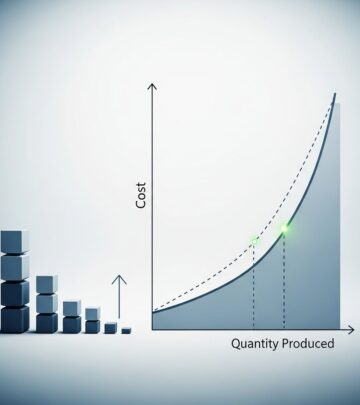
Marginal cost represents the additional expense incurred when producing or acquiring one more unit of a good or service. Rather than averaging the total cost across all units produced, marginal cost focuses exclusively on the incremental change. For a manufacturer, this might include the cost of raw materials, direct labor, and variable overhead associated with producing one additional item. Understanding marginal cost is crucial because it directly influences profitability at the operational level.
Marginal Benefit
Marginal benefit refers to the additional revenue or satisfaction gained from producing, selling, or consuming one more unit. In business contexts, this typically translates to additional revenue from selling that extra unit. For consumers, marginal benefit relates to the satisfaction or utility derived from purchasing an additional item. The interplay between marginal benefit and marginal cost determines whether pursuing an incremental change makes economic sense.
Marginal Utility
Marginal utility, closely related to marginal analysis, describes the additional satisfaction or benefit a consumer gains from purchasing and using one more unit of a good or service. This concept is particularly relevant to understanding consumer behavior and purchasing patterns. As consumers acquire more units, the marginal utility typically diminishes because their needs become progressively more satisfied.
Law of Diminishing Marginal Utility
The law of diminishing marginal utility explains that as consumption increases, the satisfaction gained from each additional unit usually declines over time. This fundamental economic principle reveals why consumers are often willing to pay premium prices for their first purchases but require discounts to encourage additional purchases. The decreasing satisfaction from each successive unit shapes consumer demand curves and pricing strategies.
How Businesses Use Marginal Analysis
Companies across virtually every industry employ marginal analysis to optimize their operations and enhance profitability. The primary objective is to identify the most efficient balance between production levels, employment, and other operational variables that generates the highest possible profit.
Production Decisions
Manufacturers regularly use marginal analysis to determine optimal production levels. A company might ask: should we produce 1,000 units or 1,001 units today? By comparing the marginal cost of producing that additional unit against the marginal revenue it would generate, managers can make data-driven decisions. If the marginal revenue exceeds the marginal cost, production should increase. Conversely, if marginal cost exceeds marginal revenue, production should remain at current levels or decrease.
Employment Decisions
Human resources and operational managers apply marginal analysis when deciding whether to hire additional employees. Before bringing on a new worker, decision-makers evaluate whether the additional output and revenue that employee would generate justifies their salary, benefits, and other employment costs. This analysis ensures that hiring decisions contribute positively to the company’s bottom line.
Pricing Strategy
Marginal analysis informs pricing decisions by helping companies understand at what price point the marginal benefit of increased sales volume equals the marginal cost of production. Companies may lower prices to increase volume if the additional revenue from those sales exceeds the additional production costs.
Marginal Analysis vs. Total Analysis
While marginal analysis focuses on incremental changes, total analysis examines the overall picture. A critical distinction exists between these approaches: a company might be generating substantial total profits while actually being highly inefficient at the operational level. Marginal analysis helps identify these inefficiencies by examining whether each additional unit produced or each additional action taken is truly contributing to profitability. Even highly profitable companies may benefit from implementing marginal analysis insights to eliminate waste and improve efficiency.
Practical Examples of Marginal Analysis
Consumer Purchasing Example
Consider a consumer purchasing bread at a grocery store. If a loaf costs $3 and provides enough bread for an entire week, the consumer might not purchase a second loaf at the same price. However, if that second loaf is discounted to $1.50, the consumer might decide the marginal benefit of having additional bread justifies the marginal cost of the discounted purchase. In this scenario, the lower price changes the marginal analysis calculation, influencing the purchasing decision.
Manufacturing Example
A furniture manufacturer might produce 500 chairs daily at a total cost of $10,000, yielding a profit of $5,000 per day. Before deciding to increase production to 501 chairs, the company must analyze whether the marginal revenue from selling that additional chair exceeds its marginal cost. If materials, labor, and overhead for one additional chair cost $8 but the chair sells for $15, the marginal analysis clearly supports increased production. However, if production costs rise due to overtime labor for that additional unit, the calculation might change.
Limitations of Marginal Analysis
Despite its utility, marginal analysis should not be the sole determinant of business decisions. Managers must consider additional factors that pure marginal analysis might overlook.
Opportunity Cost
One critical limitation involves opportunity cost—the profit foregone by choosing one option over another. Marginal analysis might indicate that deploying $50,000 toward hiring an additional worker generates positive returns. However, that same $50,000 might generate even greater returns if invested in developing new products or entering new markets. Decision-makers must compare the marginal benefit of their chosen option against alternative uses of those resources.
Long-term Considerations
Marginal analysis primarily addresses short-term incremental decisions and may not adequately account for long-term strategic implications. A decision that appears optimal through marginal analysis might undermine long-term competitiveness or market positioning.
Qualitative Factors
Marginal analysis excels at quantifying financial impacts but may miss important qualitative considerations such as employee morale, customer satisfaction, brand reputation, or environmental concerns.
Application to Consumer Behavior
Marginal analysis extends beyond corporate applications to illuminate consumer decision-making patterns. Understanding how utility gained from purchasing additional goods changes as consumption increases helps explain why consumers exhibit particular purchasing behaviors. Retailers strategically apply marginal analysis principles through pricing strategies like bulk discounts, recognizing that consumers require lower per-unit prices to justify additional purchases when marginal utility has diminished.
Marginal Analysis in Economic Theory
Beyond practical business applications, marginal analysis forms the theoretical foundation for much of modern microeconomic thought. Economists use marginal analysis to develop theories about market equilibrium, supply and demand interactions, and optimal resource allocation. The principle that economic agents continue activities until marginal benefits equal marginal costs represents a cornerstone of rational economic decision-making theory.
Frequently Asked Questions About Marginal Analysis
Q: What is the primary purpose of marginal analysis?
A: The primary purpose of marginal analysis is to help businesses and individuals make optimal decisions by comparing the additional benefits of an action against its additional costs. This technique identifies whether incremental changes will improve profitability or efficiency.
Q: How does the law of diminishing marginal utility affect consumer behavior?
A: The law of diminishing marginal utility explains why consumers become less willing to pay high prices for additional units as they acquire more of a product. As satisfaction from each additional unit declines, consumers require lower prices or other incentives to make additional purchases.
Q: Can marginal analysis be used for non-financial decisions?
A: While marginal analysis is fundamentally quantitative, its principles can apply to various decision contexts. However, complex decisions involving significant qualitative factors typically benefit from supplementary analytical frameworks beyond marginal analysis alone.
Q: What is the difference between marginal cost and average cost?
A: Marginal cost represents the expense of producing one additional unit, while average cost distributes total production costs across all units produced. These metrics can differ significantly, particularly as production scales change.
Q: Why is opportunity cost important when using marginal analysis?
A: Opportunity cost ensures decision-makers consider alternative uses of their resources. A decision that appears positive through marginal analysis might not be optimal if alternative investments could generate superior returns.
Q: How do companies determine the optimal production level using marginal analysis?
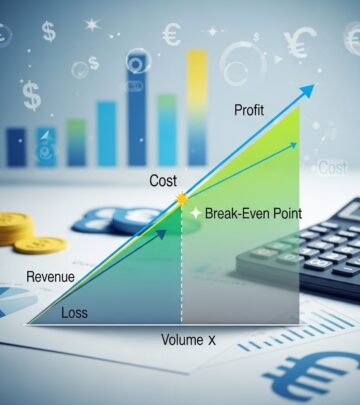
A: Companies identify the optimal production level by analyzing the point where marginal revenue equals marginal cost. Beyond this point, producing additional units would cost more than they generate in revenue, reducing overall profitability.
Conclusion
Marginal analysis remains an indispensable tool for modern business decision-making and economic analysis. By focusing on incremental changes rather than aggregate totals, this technique provides clarity on whether specific actions will enhance profitability and efficiency. From determining production levels to making hiring decisions, marginal analysis guides strategic choices across virtually every business function. However, effective decision-makers recognize that while marginal analysis provides valuable quantitative insights, it should complement rather than replace comprehensive strategic analysis that accounts for opportunity costs, long-term implications, and qualitative factors. When applied judiciously alongside broader business intelligence, marginal analysis significantly enhances organizational performance and economic decision-making.
References
- Marginal Analysis — EBSCO Research Starters. 2025. https://www.ebsco.com/research-starters/economics/marginal-analysis
Similar Articles








Read full bio of Sneha Tete