Margin Account: Definition, How It Works, and Risks
Complete guide to margin accounts: leverage, borrowing, risks, and regulations explained.

What Is a Margin Account?
A margin account is a type of brokerage account that allows investors to borrow money from their broker to purchase securities. This borrowing capability enables investors to leverage their purchasing power, potentially acquiring more securities than they could with cash alone. Margin accounts are distinct from standard cash accounts, which require full payment in cash for all transactions. By using borrowed funds, investors can amplify both potential gains and losses, making margin accounts a powerful but risky investment tool.
The margin account concept has been integral to modern investing for decades. When an investor opens a margin account, they establish a credit line with their brokerage firm. The broker uses this account as collateral and charges interest on borrowed funds. The minimum initial deposit required to open a margin account is typically $2,000, though some brokers may have different requirements. This initial deposit is known as the initial margin requirement.
How Margin Accounts Work
Margin accounts function by allowing investors to borrow a portion of the purchase price of securities from their broker. The investor deposits cash or securities into the account, which serves as collateral for the loan. The broker then lends money equal to a certain percentage of the securities’ value, determined by regulatory requirements and broker policies.
Here’s how the process typically unfolds:
- Account Setup: An investor opens a margin account and deposits the required minimum amount, usually $2,000.
- Borrowing Authorization: The investor receives authorization to borrow funds for investment purposes, up to a certain percentage of their account value.
- Security Purchase: The investor uses both their own cash and borrowed funds to purchase securities.
- Collateral Maintenance: The securities purchased serve as collateral for the borrowed amount, and the investor must maintain minimum equity levels in the account.
- Interest Charges: The broker charges interest on the borrowed funds, typically at a rate that varies based on the amount borrowed and current market conditions.
Initial Margin and Maintenance Margin
Two critical components govern margin accounts: initial margin and maintenance margin. Understanding these concepts is essential for anyone considering margin trading.
Initial Margin: This represents the percentage of the purchase price that an investor must pay with their own funds when buying securities on margin. Regulatory agencies, such as the Federal Reserve, establish minimum initial margin requirements. Currently, the standard initial margin requirement is 50%, meaning an investor must deposit at least 50% of the purchase price and can borrow the remaining 50%. However, brokers may impose stricter requirements than the regulatory minimum.
Maintenance Margin: This is the minimum equity percentage an investor must maintain in their margin account at all times. The standard maintenance margin requirement is typically 25%, though brokers often require 30% or higher. If the account equity falls below the maintenance margin level, the broker issues a margin call, requiring the investor to deposit additional funds or liquidate securities.
Margin Calls Explained
A margin call is one of the most important concepts for margin account users to understand. It occurs when the equity in a margin account falls below the maintenance margin requirement, typically due to a decline in the value of securities held in the account.
How Margin Calls Work:
- An investor purchases $10,000 worth of stock using $5,000 of their own money and $5,000 borrowed from the broker.
- If the stock value drops to $6,000, the account equity is now $1,000 (stock value minus borrowed amount).
- This represents 16.7% equity, which falls below the typical 25-30% maintenance requirement.
- The broker issues a margin call, requiring the investor to deposit additional funds to restore the account equity to the maintenance level or sell securities to reduce the borrowed amount.
Investors typically have a few days to respond to a margin call. Failure to meet a margin call can result in the broker liquidating securities in the account without the investor’s consent to cover the shortfall. This forced liquidation can lock in losses and create significant financial consequences.
Advantages of Margin Accounts
Margin accounts offer several potential benefits for experienced investors:
- Increased Purchasing Power: Investors can control larger positions with a smaller initial capital outlay, potentially amplifying returns on successful investments.
- Flexibility: Margin accounts allow investors to take advantage of short-term market opportunities without waiting for cash deposits to clear.
- Short Selling: Margin accounts enable investors to short sell securities, profiting from declining prices.
- Liquidity: Investors have easier access to funds for additional investments or other purposes.
- Portfolio Diversification: With increased purchasing power, investors can diversify across more securities.
Risks and Disadvantages of Margin Accounts
While margin accounts can amplify gains, they equally amplify losses and carry significant risks:
- Magnified Losses: A decline in security prices results in proportionally larger losses due to leverage. An investor could lose more than their initial investment.
- Margin Calls: Rapid market downturns can trigger margin calls, forcing investors to deposit additional funds quickly or face liquidation of positions at unfavorable prices.
- Interest Costs: The interest charged on borrowed funds reduces net returns and can be substantial during periods of large margin balances.
- Forced Liquidation: Brokers can liquidate positions without investor consent if margin requirements aren’t met, potentially locking in losses.
- Market Risk: Margin accounts expose investors to heightened market volatility risk, particularly during periods of declining stock prices.
- Complexity: Margin accounts involve complex calculations and regulations that can be difficult for inexperienced investors to understand and manage.
Regulatory Requirements and Restrictions
Margin accounts are heavily regulated to protect investors and maintain market stability. The primary regulatory bodies overseeing margin accounts include:
- Federal Reserve: Sets minimum margin requirements through Regulations T and U.
- Financial Industry Regulatory Authority (FINRA): Establishes maintenance margin requirements and oversees broker compliance.
- Securities and Exchange Commission (SEC): Enforces regulations and investigates violations of margin trading rules.
Key regulatory restrictions include:
- Minimum 50% initial margin requirement on most securities
- Minimum 25% maintenance margin requirement (though brokers often require more)
- Restrictions on borrowing for certain types of securities
- Mandatory disclosure of risks associated with margin trading
- Regular account monitoring and reporting requirements
Interest Rates on Margin Accounts
Brokers charge interest on borrowed funds in margin accounts, and the rate varies based on several factors. The interest rate is typically expressed as an annual percentage rate and is deducted from investor returns.
Factors Affecting Margin Interest Rates:
- Amount borrowed (larger balances may receive better rates)
- Current prevailing interest rates in the market
- Broker’s cost of funds
- Account size and investor relationship status
- Loan balance tiers established by the broker
Margin interest rates are generally higher than traditional loan rates because brokers assume additional risk. Investors should carefully review their broker’s margin interest rate structure before opening a margin account.
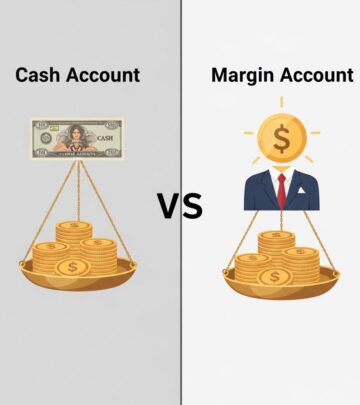
Margin Account vs. Cash Account
Understanding the differences between margin and cash accounts helps investors choose the appropriate account type:
| Feature | Margin Account | Cash Account |
|---|---|---|
| Borrowing Capability | Yes, up to 50% of purchase price | No borrowing allowed |
| Initial Deposit | Minimum $2,000 typically | Varies by broker |
| Leverage | 2:1 leverage possible | No leverage |
| Margin Calls | Yes, possible | No margin calls |
| Interest Charges | Yes, on borrowed funds | None |
| Short Selling | Allowed | Not allowed |
| Complexity | High | Low |
| Risk Level | High | Low |
Who Should Use Margin Accounts?
Margin accounts are not suitable for all investors. They work best for:
- Experienced traders: Those with extensive market knowledge and understanding of leverage risks
- Active investors: Those who frequently trade and can monitor positions closely
- Sophisticated portfolios: Investors employing advanced strategies such as short selling or hedging
- Adequate capital: Those with sufficient funds to meet margin calls without financial hardship
- Risk tolerance: Investors comfortable with potentially significant losses
Conversely, margin accounts are inappropriate for beginners, conservative investors, or those with limited capital and low risk tolerance.
Best Practices for Margin Account Users
For those using margin accounts, several best practices can help manage risks:
- Understand the math: Calculate potential losses at different price levels before borrowing
- Monitor regularly: Check account equity and margin levels daily during volatile markets
- Maintain cushion: Keep account equity well above maintenance requirements to avoid margin calls
- Limit leverage: Don’t borrow the maximum available; use leverage conservatively
- Diversify: Spread investments across multiple securities to reduce concentration risk
- Have exit strategy: Know when to cut losses and protect remaining capital
- Review costs: Regularly evaluate margin interest rates and consider switching brokers if rates are unfavorable
- Use stop losses: Set predetermined exit points to limit potential losses
Frequently Asked Questions About Margin Accounts
Q: What is the minimum amount needed to open a margin account?
A: Most brokers require a minimum initial deposit of $2,000 to open a margin account, though some may require more. Additionally, FINRA requires a minimum of $2,000 in equity to maintain a margin account. The specific requirements may vary by broker, so it’s important to check with your specific brokerage firm.
Q: Can I lose more money than I invested in a margin account?
A: Yes, it is possible to lose more than your initial investment in a margin account. Because you’re trading with borrowed money, losses are magnified by the leverage ratio. For example, if you invest $5,000 and borrow $5,000 to purchase $10,000 in stock, a 50% decline in the stock value results in a 100% loss of your original $5,000 investment, plus you still owe the broker the borrowed amount.
Q: What happens if I can’t meet a margin call?
A: If you cannot meet a margin call within the specified time period (typically 2-5 business days), your broker has the right to liquidate securities in your account without your permission to cover the shortfall. This forced liquidation may occur at unfavorable prices, potentially locking in losses and creating additional financial complications.
Q: How is interest calculated on margin loans?
A: Interest on margin loans is typically calculated daily based on your outstanding margin balance and the broker’s margin interest rate. The daily interest is often deducted from your account automatically. Interest rates vary among brokers and may be tiered based on the size of your margin balance. Some brokers offer debit balance interest rates that apply when your account has a negative cash balance.
Q: Are there restrictions on which securities I can buy on margin?
A: Yes, not all securities can be purchased on margin. Generally, publicly traded stocks and some bonds meet margin requirements, but penny stocks, mutual funds, and certain other securities may have restricted or no margin eligibility. The Federal Reserve’s Regulation T lists approved securities, and individual brokers may impose additional restrictions.
Q: What is the difference between initial margin and maintenance margin?
A: Initial margin is the percentage of a security’s purchase price that you must pay with your own funds when first buying the security (currently 50% for most stocks). Maintenance margin is the minimum percentage of account equity you must maintain at all times to hold the position (typically 25-30%). If your account equity falls below the maintenance margin level, you receive a margin call.
Q: Can I use margin to short sell stocks?
A: Yes, margin accounts allow short selling. When you short sell, you borrow shares from your broker and sell them, hoping to buy them back at a lower price. The borrowed shares serve as a short position in your account, and you owe the broker the shares plus any dividends paid. Short selling carries similar risks to buying on margin, with the potential for unlimited losses.
Q: Is margin trading suitable for beginners?
A: Margin trading is generally not recommended for beginners. It requires a thorough understanding of market mechanics, leverage, and risk management. Beginners should focus on building investment knowledge and experience with a cash account before considering margin trading. The complexity and risk associated with margin accounts make them better suited for experienced, sophisticated investors.
References
- Regulation T: Credit by Brokers and Dealers — Board of Governors of the Federal Reserve System. 2024. https://www.federalreserve.gov/
- FINRA Rules on Margin Requirements — Financial Industry Regulatory Authority. 2024. https://www.finra.org/
- Investor Bulletin: Margin Account Requirements — U.S. Securities and Exchange Commission. 2024. https://www.sec.gov/
- Understanding Leveraged Investing and Margin Accounts — Public Company Accounting Oversight Board. 2024. https://www.pcaob.org/
- Risks Associated with Margin Trading — National Futures Association. 2024. https://www.nfa.futures.org/
Similar Articles








Read full bio of medha deb