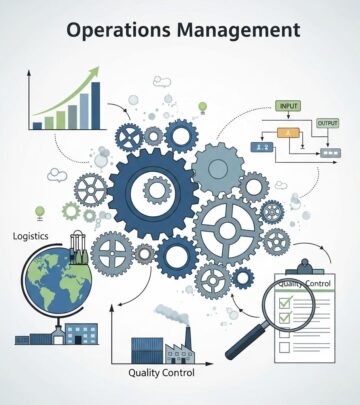
Manufacturing: Definition, Types, and Economic Impact
Understanding manufacturing: From raw materials to finished goods and economic growth.
What Is Manufacturing?
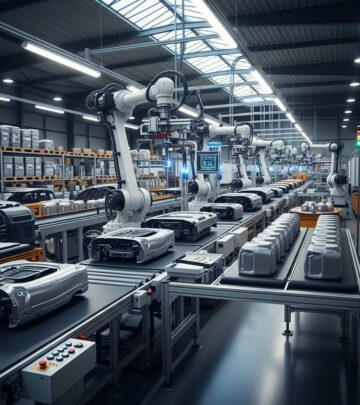
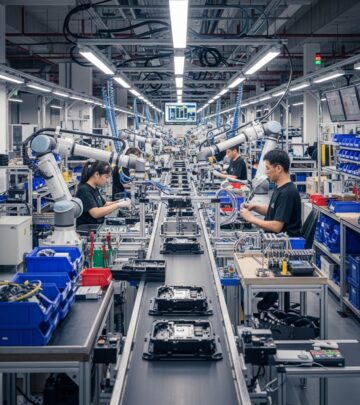
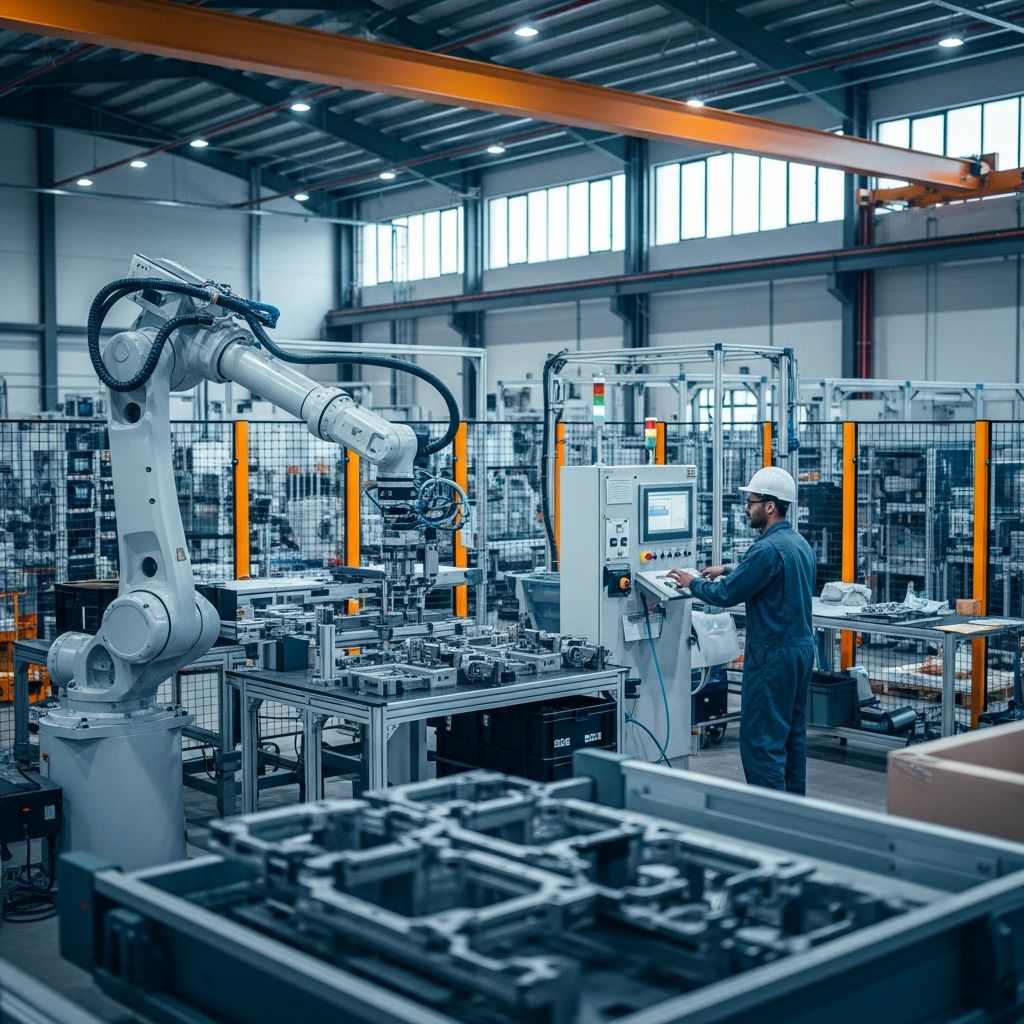
Manufacturing is the creation or production of goods through the application of equipment, labor, machines, tools, and chemical or biological processing or formulation. It represents the essence of the secondary sector of the economy and encompasses everything from small-scale handicraft operations to sophisticated high-tech industrial processes. At its core, manufacturing transforms raw materials sourced from the primary sector into finished goods on a large scale, making it fundamental to modern economic activity.
The manufacturing process begins with product design and materials specification, progressing through various intermediary stages where raw materials are modified and integrated into the desired final product. These finished goods serve multiple purposes: they may be sold to other manufacturers for incorporation into more complex products such as aircraft, household appliances, furniture, or automobiles, or they may be distributed through the tertiary industry (wholesale and retail) to end consumers.
The Manufacturing Process
Manufacturing engineering is the specialized field that designs and optimizes the manufacturing process 84the series of steps through which raw materials transform into final products. This discipline combines industrial design principles with practical engineering expertise to create efficient, cost-effective production systems.
Key Stages of Manufacturing
The manufacturing journey involves several critical phases:
- Product design and engineering specifications
- Raw material sourcing and quality assessment
- Processing and transformation of materials
- Component fabrication and assembly
- Quality control and testing
- Packaging and distribution preparation
Contemporary manufacturing encompasses all intermediary stages involved in producing and integrating components. In specialized industries such as semiconductor and steel manufacturing, the term “fabrication” is often used instead of manufacturing to describe this transformation process.
Types and Classification of Manufacturing
Manufacturing operations vary widely in scale, complexity, and methodology. Understanding these variations helps clarify how different industries approach production:
By Production Volume
- Job Manufacturing: Custom production of single or small batches of unique items
- Batch Manufacturing: Production of moderate quantities in groups or batches
- Mass Manufacturing: Large-scale production of standardized goods using assembly lines
- Continuous Manufacturing: Non-stop production processes for commodities like chemicals or textiles
By Industry Sector
Manufacturing spans diverse industries including automotive, electronics, pharmaceuticals, textiles, food and beverage, machinery, construction materials, and consumer goods. Each sector has unique requirements, challenges, and regulatory considerations.
Modern Manufacturing Methods
Lean Manufacturing and Just-In-Time
Lean manufacturing, also known as just-in-time manufacturing, was developed in Japan during the 1930s as a revolutionary production methodology. This approach fundamentally aims at reducing lead times within the production system while simultaneously decreasing response times from suppliers and to customers. The methodology was introduced to Australia in the 1950s by the British Motor Corporation at its Victoria Park plant in Sydney, eventually migrating to Toyota, where it became a cornerstone of their production philosophy.
Lean manufacturing emphasizes waste elimination, process efficiency, and continuous improvement. By minimizing inventory holdings and optimizing workflow, manufacturers reduce costs while improving responsiveness to market demands.
World-Class Manufacturing
The concept of world-class manufacturing is associated with excellence in the manufacturing field. This term, promoted by author Richard J. Schonberger, represents the highest standards of operational efficiency, quality, and innovation. World-class manufacturers distinguish themselves through superior processes, motivated workforces, advanced technology integration, and unwavering commitment to customer satisfaction.
Manufacturing Strategy and Performance
Five Dimensions of Manufacturing Performance
Traditional manufacturing strategy identifies five key dimensions along which manufacturing performance can be assessed:
| Dimension | Description |
|---|---|
| Cost | Production efficiency and unit cost reduction |
| Quality | Product excellence and defect minimization |
| Dependability | Consistent delivery and reliability |
| Flexibility | Adaptability to market changes and customization |
| Innovation | Development of new products and processes |
The Trade-Off Theory
Wickham Skinner, recognized as “the father of manufacturing strategy,” introduced the concept of “focus” in manufacturing operations. This seminal idea posits that a business cannot perform at the highest level simultaneously across all five dimensions and must therefore strategically select one or two competitive priorities. This perspective led to the influential “trade-offs” theory in manufacturing strategy, where managers must make deliberate choices about which performance areas to emphasize.
Manufacturing writer Terry Hill observed that manufacturing has historically been perceived as less “strategic” than functions such as marketing and finance, with manufacturing managers often arriving late to business strategy discussions and contributing primarily reactive input. This perspective has evolved significantly as organizations recognize manufacturing’s critical strategic importance to overall competitiveness.
Financial Perspectives in Manufacturing
Cost Management and Profitability
From a financial perspective, the primary goal of the manufacturing industry is achieving cost benefits per unit produced, which directly translates to cost reductions in product prices for market customers. This relative cost reduction toward the market represents the mechanism through which manufacturing firms secure and maintain their profit margins. Effective cost management through process optimization, waste reduction, and economies of scale determines competitive positioning and financial success.
Manufacturing Audits and Strategy Development
Ken Platts and Mike Gregory devised a comprehensive manufacturing audit scheme designed to support the formulation of manufacturing strategy. This framework was popularized through “Competitive Manufacturing: A Practical Approach to the Development of a Manufacturing Strategy,” published in 1998 with support from the UK’s Department of Trade and Industry. Such systematic audits help organizations assess current capabilities and identify strategic improvements.
Safety and Health Considerations
Manufacturing presents unique health and safety challenges and has been officially recognized by the National Institute for Occupational Safety and Health (NIOSH) as a priority industry sector. This recognition led to inclusion in the National Occupational Research Agenda (NIOSH NORA), establishing initiatives to identify and provide intervention strategies addressing occupational health and safety issues within manufacturing environments. Manufacturing facilities must maintain rigorous safety protocols, implement proper equipment maintenance, provide worker training, and establish comprehensive incident prevention programs.
Manufacturing and Global Investment
Investment Trends and Analysis
Global surveys and analyses of manufacturing trends focus on multiple critical factors including the nature and sources of considerable variations in cross-national manufacturing and industrial-economic growth levels, competitiveness factors, and attractiveness to foreign direct investors. Researchers examine features and factors affecting manufacturing development across Western and non-Western countries, presenting comparative analyses and case studies of growth and performance in important industries and market-economic sectors.
Strategic Importance for Economic Development
Manufacturing investment represents a cornerstone of economic development strategies worldwide. Nations compete to attract manufacturing facilities and operations, recognizing their role in job creation, technology transfer, infrastructure development, and long-term economic growth. Manufacturing’s interconnected relationships with engineering and industrial design industries amplify its economic multiplier effects throughout the broader economy.
Manufacturing and Economic Policy
The importance of manufacturing to national economies cannot be overstated. In 2009, Jeff Immelt, CEO of General Electric, called for the United States to increase its manufacturing base employment to 20% of the workforce, commenting that the U.S. had outsourced too much in certain areas and could no longer rely exclusively on the financial sector and consumer spending to drive economic demand. Similarly, in the United Kingdom, EEF, the manufacturers organization, has led calls for rebalancing the UK economy to rely less on financial services while actively promoting manufacturing development initiatives.
Frequently Asked Questions
Q: What is the primary purpose of manufacturing?
A: The primary purpose of manufacturing is to transform raw materials into finished goods through organized processes involving equipment, labor, and technology. These goods serve end consumers either directly or as components in more complex products.
Q: How does lean manufacturing improve efficiency?
A: Lean manufacturing reduces production times, minimizes waste, and decreases response times from suppliers and to customers. By optimizing workflows and maintaining lower inventory levels, it improves overall efficiency while reducing costs.
Q: What are the five dimensions of manufacturing performance?
A: The five dimensions are cost, quality, dependability, flexibility, and innovation. Manufacturers typically focus on one or two as primary competitive priorities rather than attempting to excel equally in all areas.
Q: Why is manufacturing important to national economies?
A: Manufacturing creates jobs, drives technological innovation, generates tax revenue, facilitates exports, and supports related industries. It provides the foundation for economic growth and stability in developed and developing nations.
Q: What safety considerations apply to manufacturing operations?
A: Manufacturing facilities must address occupational hazards through proper equipment maintenance, worker training, safety protocols, incident prevention programs, and compliance with regulatory standards established by agencies like NIOSH.
References
- Manufacturing — Wikipedia Foundation. 2025. https://en.wikipedia.org/wiki/Manufacturing
- National Institute for Occupational Safety and Health (NIOSH) — U.S. Centers for Disease Control and Prevention. 2025. https://www.cdc.gov/niosh
- Manufacturing Strategy and Competitive Advantage — Skinner, W. Harvard Business School. 2024. https://hbr.org
Similar Articles








Read full bio of Sneha Tete