Manufacturer’s Suggested Retail Price (MSRP)
Understanding MSRP: How manufacturers recommend retail prices and influence consumer purchasing decisions.
Manufacturer’s Suggested Retail Price (MSRP): Definition and Overview
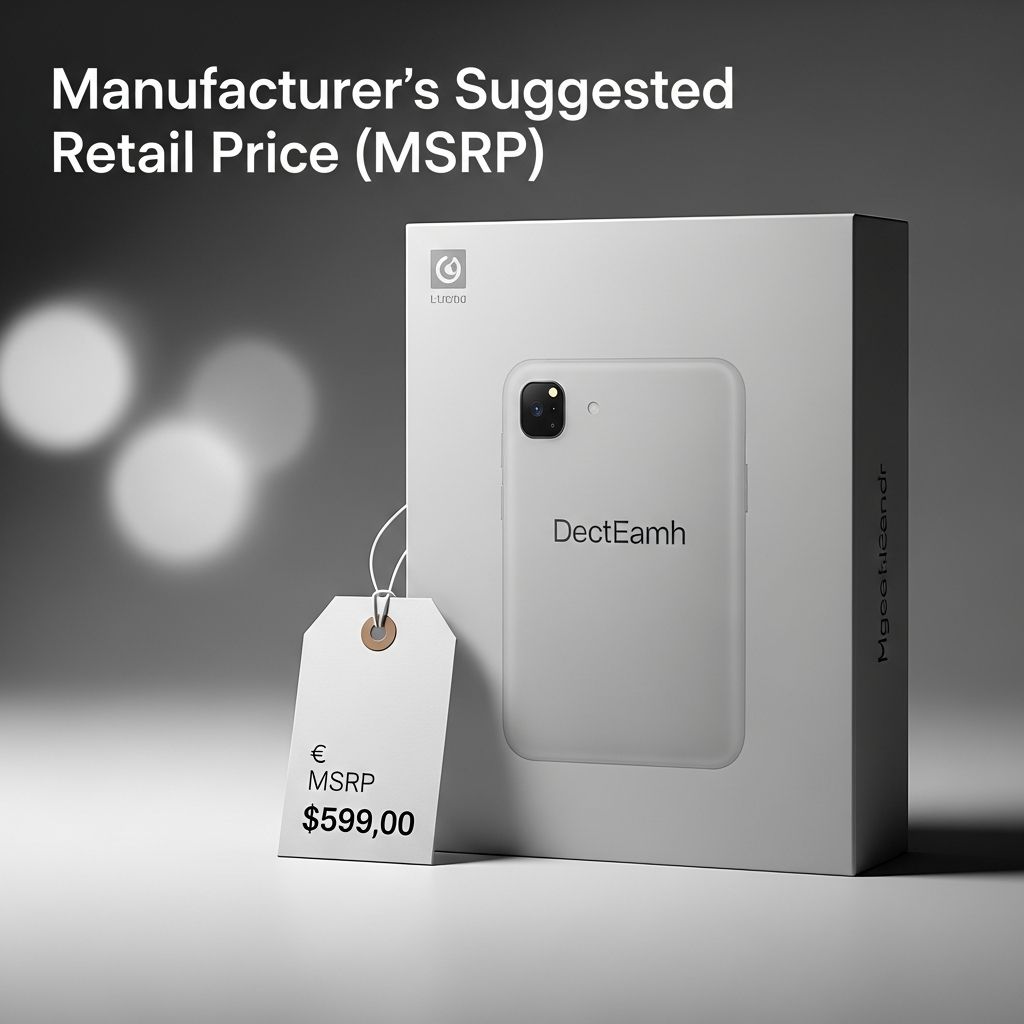
The manufacturer’s suggested retail price, commonly abbreviated as MSRP, represents the price at which a manufacturer recommends that retailers sell its product to consumers. This pricing strategy serves as a benchmark across the retail landscape, from automotive showrooms to electronics stores and appliance retailers. The MSRP is also known by several alternative names, including list price, recommended retail price (RRP), and suggested retail price (SRP). Understanding MSRP is essential for both consumers making purchasing decisions and retailers developing their pricing strategies.
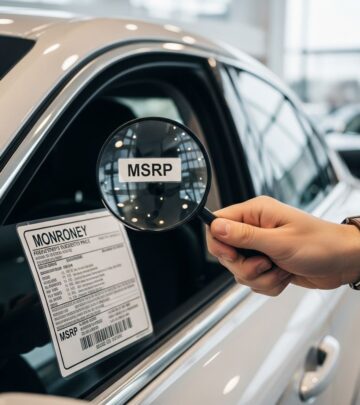
The MSRP is neither a price ceiling nor a minimum price requirement; rather, it corresponds to what manufacturers believe represents the expected and fair price consumers should pay for a product. While the term “suggested” implies flexibility, the MSRP serves as a critical reference point in modern retail markets. Although MSRP is most frequently associated with the automobile industry—where it appears prominently on window stickers known as Monroney labels—manufacturers across numerous industries utilize this pricing framework to maintain consistency and protect brand value.
The Purpose and Function of MSRP
Manufacturers establish MSRP for several compelling reasons that benefit all parties involved in the retail supply chain. The primary purpose of setting a manufacturer’s suggested retail price is to standardize selling prices among different retail locations. This standardization serves as a mechanism to curb deceptive pricing practices and ensure that prices remain consistent across various geographical markets and retail channels.
The standardization achieved through MSRP creates multiple benefits throughout the supply chain. It ensures that basic and prime commodities remain constantly available at reasonable prices without denying manufacturers a fair return on their investment. Additionally, it guarantees that all parties involved in a transaction—the manufacturer, wholesaler, and retailer—can earn appropriate profits at the conclusion of the final sale. This balanced approach protects the interests of manufacturers while also safeguarding consumer interests by preventing price gouging or predatory pricing practices.
Beyond price standardization, MSRP functions as a powerful tool for brand management and value perception. By establishing a consistent suggested price across all retail channels, manufacturers can maintain their brand’s perceived value and prevent brand erosion caused by aggressive discounting. This is particularly important for luxury goods, electronics, and automobiles, where pricing signals quality and desirability to consumers.
How MSRP is Calculated
The calculation of MSRP involves several key cost components that manufacturers must consider when establishing their suggested retail price. The formula typically follows this structure:
MSRP = Wholesale Price × (1 + Markup Percentage)
Alternatively, the calculation can be expressed as:
MSRP = Cost Price + Manufacturer Margin + Distributor Margin + Retailer Margin
To illustrate this calculation with a practical example: if the wholesale price of a product is $50 and the desired markup percentage is 100 percent, the MSRP would equal $50 × (1 + 1.0) = $100. This example demonstrates how manufacturers build in multiple layers of profit margin while ensuring retailers have adequate margin for their operations.
When setting MSRP, manufacturers carefully consider various factors beyond simple production costs. The suggested retail price must account for production and manufacturing costs, marketing and advertising expenses, research and development investments, and appropriate profit margins for all channel members. Additionally, manufacturers evaluate market demand, competitive positioning, and regional economic conditions when determining their suggested prices. The MSRP is intentionally set higher than the actual cost of production to accommodate these various expenses and ensure profitability throughout the distribution chain.
MSRP in the Automobile Industry
The automobile industry represents the most prominent and regulated application of manufacturer’s suggested retail pricing. In the United States, automakers are legally obligated to display a vehicle’s MSRP on its windshield or specification sheet. This legal requirement ensures transparency in automotive pricing and provides consumers with clear information about the manufacturer’s recommended price.
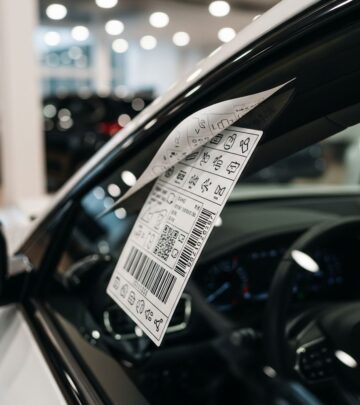
In the automotive industry, the MSRP is commonly referred to as the “sticker price” because it is displayed on the Monroney sticker affixed to the vehicle’s window. This window sticker includes comprehensive information about the vehicle, including the model year, trim level, EPA ratings, factory-installed options, destination fees, and additional charges such as gas-guzzler taxes. The total price shown on this window sticker represents the complete sticker price, which encompasses the base MSRP plus all additional components.
The automotive MSRP differs significantly from the invoice price, which represents what a dealer actually pays to the manufacturer. Historically, car dealers could impose arbitrary markups on vehicles, often with costs artificially inflated to over-compensate total production expenses. This practice frequently disadvantaged consumers who lacked pricing information. Today, the MSRP serves a different function—it provides customers with a transparent starting point for price negotiations and helps them understand a fair market value before settling on a final purchase price.
Retailer Pricing Flexibility and MSRP
Although the price is called “suggested,” it is important to understand that retailers possess considerable flexibility in how they price products relative to the MSRP. Retailers can legally sell products at the MSRP, above it, or below it, depending on their specific business strategies, market conditions, and customer demand dynamics. The practice of selling products below the MSRP is especially common in situations where the manufacturer sets a high suggested price while retailers purchase products at an extremely low wholesale price.
Retailers may choose to discount below MSRP for several strategic reasons. Many retailers sell at prices below the suggested retail price to attract price-conscious consumers or to remove excess inventory from their stores. In competitive markets, aggressive discounting below MSRP can serve as a differentiator and drive customer traffic. However, in some cases, manufacturers may implement minimum advertised price (MAP) policies or require retailers to maintain pricing at or above the MSRP to preserve brand value and ensure consistent pricing across all retail channels. These policies represent a more binding constraint than the flexible nature of MSRP alone.
MSRP versus Other Pricing Concepts
It is important to distinguish MSRP from related but distinct pricing concepts that operate in different markets and regulatory environments. The distinction between MSRP and Minimum Advertised Price (MAP) represents a critical differentiation for brands and retailers.
MSRP vs. MAP: The manufacturer’s suggested retail price represents a recommendation for the selling price (“We suggest you sell this for $100”), while MAP represents a policy that sets the lowest price a retailer is allowed to advertise the product for (“You cannot advertise this product for less than $80”). MAP policies are more restrictive and legally enforceable, whereas MSRP remains flexible and advisory.
MSRP vs. MRP: Another important distinction exists between MSRP and Maximum Retail Price (MRP). MSRP, common in the United States and other Western markets, is a suggested price that is not legally binding but serves as a pricing guideline. In contrast, MRP is the legally enforceable maximum price printed on goods sold in countries like India. Under MRP regulations, retailers cannot charge above the printed price, and doing so can result in legal penalties. The MRP includes the product cost, taxes, packaging, logistics, and profit margin.
Benefits and Applications of MSRP
MSRP applications extend across numerous industries beyond automobiles. The manufacturer’s suggested retail price is typically used with branded products or higher-priced goods, such as electronics, appliances, and consumer durables. In these industries, MSRP mainly serves as a reference point that manipulates consumers’ willingness to pay for goods as they compare prices from store to store.
For consumers, MSRP provides several important benefits. It offers a transparent benchmark for evaluating whether a deal represents fair value. Consumers can quickly assess whether a retailer’s price is above, at, or below the manufacturer’s recommendation. This information helps consumers make informed purchasing decisions and understand market pricing norms. Additionally, MSRP protects consumers from exploitative pricing practices by providing a ceiling reference point that discourages extreme price gouging.
For manufacturers, MSRP offers brand protection and value maintenance. By establishing consistent suggested prices, manufacturers ensure their products are not devalued through aggressive discounting at certain retailers while maintaining premium pricing at others. This consistency protects brand perception and prevents channel conflict between retailers. For retailers, MSRP provides a starting framework for pricing decisions while offering flexibility to respond to local market conditions and competitive dynamics.
Criticisms and Theoretical Concerns About MSRP
Despite its widespread use, MSRP has faced criticism from economists and market theorists who question its alignment with free market principles. The commonly used argument against MSRP is that the concept contradicts classical competition theory. Economic theory states that in a perfectly competitive market, all companies in the market are price takers and cannot influence the market price of their products. However, MSRP provides a loophole that allows manufacturers to influence prices higher than what pure market forces would determine—an outcome that poses potential adverse effects on consumers and their disposable incomes.
One significant concern regarding MSRP practices is that manufacturers may set the suggested price at a level higher than the price derived solely from market forces. In such cases, artificially high price levels can adversely affect consumers by increasing their purchasing costs and reducing purchasing power. This concern becomes particularly acute in markets where retailers lack significant bargaining power or where manufacturers have substantial market dominance. Critics argue that MSRP can function as a price floor that prevents competitive pricing, ultimately harming consumer welfare.
Additionally, some economists argue that MSRP reduces price transparency by creating confusion between suggested prices and actual market prices. When suggested prices diverge significantly from actual transaction prices, consumers may feel misled or uncertain about fair value, potentially eroding consumer confidence in market pricing mechanisms.
Factors Influencing MSRP Decisions
Manufacturers consider numerous factors when establishing their suggested retail prices. Market demand represents a crucial consideration—manufacturers analyze consumer demand patterns, market saturation, and seasonal variations to set prices that reflect market realities. Competitive positioning also influences MSRP decisions, as manufacturers must ensure their suggested prices remain competitive relative to alternative products and brands in their market segment.
Production cost structures directly impact MSRP calculations. Manufacturers must ensure sufficient margin to cover manufacturing overhead, quality control, warranty obligations, and ongoing product support. Research and development investments must also be recovered through pricing, particularly for products incorporating significant innovation or technology. Distribution and logistics costs, including warehousing, transportation, and inventory management, contribute to the final suggested price.
Brand positioning and perceived value significantly influence MSRP strategy. Premium brands typically establish higher MSRPs that align with their quality positioning and brand prestige. Value-oriented brands may establish lower MSRPs to emphasize affordability and accessibility. Regional economic conditions also affect MSRP decisions, as manufacturers may adjust suggested prices for different geographic markets based on local purchasing power and competitive dynamics.
MSRP in the Digital Age
The digital marketplace has created new challenges for traditional MSRP practices. Online retailers, unauthorized resellers, and dynamic pricing platforms have complicated manufacturers’ ability to maintain consistent suggested pricing across channels. E-commerce platforms often feature price comparisons that highlight discrepancies between MSRP and actual transaction prices, making price variations visible to consumers in unprecedented ways.
These digital developments have made it increasingly essential for brands to actively monitor and enforce their pricing strategies across authorized and unauthorized channels. Manufacturers now employ sophisticated pricing monitoring tools and market intelligence systems to track MSRP compliance and prevent pricing erosion from undermining brand equity. The challenge of maintaining consistent pricing across diverse retail channels—both physical and digital—represents an ongoing concern for manufacturers seeking to preserve brand value in contemporary markets.
Frequently Asked Questions
Q: Can retailers legally sell products below the MSRP?
A: Yes, retailers can legally sell products below the MSRP in most circumstances. The MSRP is a suggestion, not a legal requirement. However, some manufacturers implement Minimum Advertised Price (MAP) policies that restrict how low retailers can advertise prices, though these policies are separate from MSRP.
Q: Is MSRP the same as the invoice price?
A: No, MSRP and invoice price are different. The invoice price is what a retailer or dealer pays to the manufacturer, while MSRP is the manufacturer’s recommended selling price to consumers. The MSRP is typically higher than the invoice price to allow for retailer profit margins.
Q: Why do car dealers show MSRP on window stickers?
A: Federal regulations require automakers to display MSRP on vehicle window stickers (Monroney labels) to provide consumers with transparent pricing information and the manufacturer’s recommended price, enabling informed purchasing decisions.
Q: How is MSRP different from Maximum Retail Price (MRP)?
A: MSRP is a suggested, flexible price used primarily in the United States, while MRP is a legally enforceable maximum price common in countries like India. Retailers cannot exceed MRP without legal consequences, but they can freely price below MSRP.
Q: Can manufacturers force retailers to sell at MSRP?
A: Manufacturers cannot directly force retailers to sell at MSRP, as it remains a suggestion. However, they can implement policies like Minimum Advertised Price (MAP) policies or refuse to supply non-compliant retailers, creating indirect pressure to maintain suggested pricing.
References
- Manufacturer’s Suggested Retail Price (MSRP) – Definition and Purpose — Corporate Finance Institute. 2024. https://corporatefinanceinstitute.com/resources/valuation/manufacturers-suggested-retail-price-msrp/
- What Is MSRP? Manufacturer’s Suggested Retail Price for New Cars — Edmunds. 2024. https://www.edmunds.com/car-buying/what-does-msrp-mean.html
- What Is MSRP? — Kelley Blue Book. 2024. https://www.kbb.com/what-is/msrp/
- MSRP: Manufacturer’s Suggested Retail Price — Apparound. 2024. https://www.apparound.com/msrp
- What Is Manufacturer Suggested Retail Price? — 42Signals. 2025. https://www.42signals.com/blog/what-is-manufacturer-suggested-retail-price/
- List Price — Wikipedia. 2024. https://en.wikipedia.org/wiki/List_price
Similar Articles








Read full bio of medha deb