Managing Student Loan Payments During Forbearance
Learn how to handle payments strategically while your loans are in forbearance status.

When financial hardship strikes, many borrowers consider student loan forbearance as a temporary escape from monthly payment obligations. However, placing loans in forbearance doesn’t necessarily mean you should stop thinking about your finances or your debt entirely. Understanding how to strategically manage payments during this period can help you minimize long-term costs and maintain better control over your financial situation.
Understanding Your Payment Obligations During Forbearance
One of the most critical misconceptions about forbearance is that it provides complete payment relief. While forbearance does temporarily pause or reduce your monthly payment requirements, your financial responsibility doesn’t disappear entirely. The key distinction lies in understanding what happens to your debt during this period and what choices remain available to you.
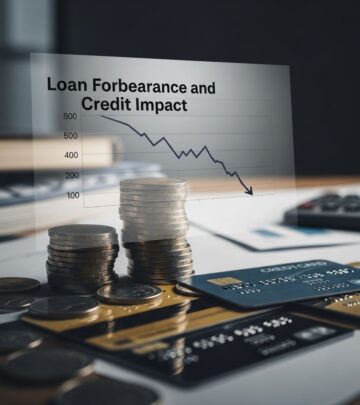
When your federal student loans enter forbearance status, you are technically no longer required to make your regular monthly payments toward principal and interest. However, this doesn’t mean your loans stop accumulating costs. Interest continues to accrue throughout the forbearance period, regardless of whether you’re making payments or not. This distinction is crucial because it directly affects the total amount you’ll ultimately repay.
The Interest Accrual Challenge
The most significant financial consequence of forbearance is that interest continues to accumulate on your loan balance during the entire forbearance period. This applies universally to federal student loans, with one important exception: Direct Loans owned by the Department of Education will not have unpaid interest capitalized (added to your principal balance) when forbearance ends.
For other federal loans that are not Department of Education-owned, and for most private student loans, unpaid interest accrues and is typically added to your principal balance when forbearance concludes. This process, called capitalization, means you’re essentially paying interest on interest, which substantially increases your total repayment obligation over the life of the loan.
Consider a practical example: if you have $30,000 in federal student loans at a 5% interest rate and enter a 12-month forbearance period without making any payments, approximately $1,500 in interest will accrue during that year. If this interest capitalizes, your new principal balance becomes $31,500, and future interest calculations apply to this higher amount.
Strategic Payment Options During Forbearance
Even though you’re not required to make payments during forbearance, you retain the option to continue paying if your financial situation permits. This choice presents several strategic advantages worth considering:
Voluntary Interest Payments
The most effective strategy for managing forbearance is to pay accruing interest as it accumulates, even if you cannot afford full loan payments. By making voluntary interest payments during your forbearance period, you accomplish several objectives simultaneously:
- You prevent interest capitalization, which means your principal balance remains unchanged
- You reduce the total amount of interest you’ll pay over the lifetime of the loan
- You maintain financial engagement with your debt, making eventual repayment easier when forbearance ends
- You demonstrate financial responsibility to your loan servicer
For example, if you’re unable to make full $300 monthly payments but can contribute $100 toward interest, this partial payment strategy still provides meaningful savings. Over a 12-month forbearance period, $1,200 in voluntary payments could save you thousands in capitalized interest and future interest charges.
Full Payment Continuation
Some borrowers in forbearance maintain their full monthly payments despite not being required to do so. While this approach requires financial sacrifice, it offers substantial long-term benefits:
- Faster loan payoff and reduced total interest expense
- Building equity in your loan repayment ahead of schedule
- Reduced forbearance-related damage to your repayment trajectory
- Greater psychological sense of control during financial hardship
Payment Processing and Administrative Considerations
If you decide to make voluntary payments during forbearance, understanding how your servicer processes these payments is essential. Before submitting any payment, contact your loan servicer directly to ensure:
- Your payments are properly allocated to interest rather than unnecessarily prepaying principal
- You understand the specific payment processing timeline for your account
- Your servicer has documented your preference for interest-only payments if applicable
- You receive confirmation that payments are being credited appropriately
Different servicers may handle voluntary payments differently. Some automatically apply payments to interest first, while others may require specific instructions. Written confirmation of your payment preferences protects you from misallocations and ensures your strategy achieves its intended purpose.
Comparing Forbearance with Alternative Relief Options
Before committing to forbearance, it’s worth evaluating whether alternative relief programs better suit your circumstances. Income-Driven Repayment plans, for instance, may offer advantages over forbearance for borrowers experiencing prolonged financial difficulty.
Income-Driven Repayment Plans
These federal programs tie your monthly payment directly to your discretionary income rather than your loan balance. Unlike forbearance, income-driven plans calculate payments based on what you can reasonably afford, which may result in lower monthly obligations without the interest capitalization consequences of forbearance.
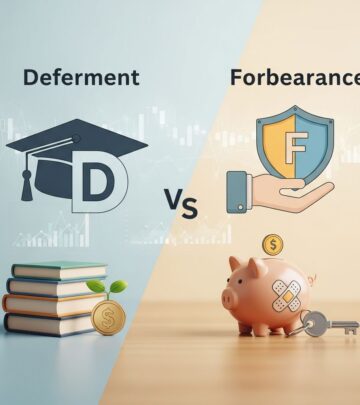
Loan Deferment
Deferment represents another temporary relief option, though eligibility is more restrictive than forbearance. Importantly, some deferment programs provide interest subsidies on subsidized federal loans, meaning the government pays accruing interest rather than having it added to your balance.
Cumulative Forbearance Limits and Long-Term Planning
Understanding the restrictions on forbearance duration is critical for long-term financial planning. Federal student loans have a cumulative three-year (36-month) limit on general forbearance over the life of the loan. This means that while individual forbearance periods can last up to 12 months, you cannot remain in forbearance indefinitely.
Mandatory forbearance for specific circumstances like medical residencies may operate under different rules and can potentially renew annually. Private lenders typically impose their own limits, often ranging from 12 to 24 months total.
This limitation underscores the importance of viewing forbearance as a bridge to improved financial circumstances rather than a permanent solution. Once you exhaust your forbearance eligibility, you must be prepared to resume regular payments or transition to alternative relief programs.
Practical Payment Strategy Framework
Developing a coherent payment strategy requires honest assessment of your financial capacity and priorities:
| Financial Capacity | Recommended Strategy | Potential Outcomes |
|---|---|---|
| Can maintain full payments | Continue regular payments during forbearance | Minimal forbearance impact; faster payoff |
| Can pay partial interest | Direct payments toward accumulated interest only | Prevents capitalization; reduces long-term costs |
| Cannot make any payments | Reassess alternative programs; plan post-forbearance strategy | Interest accumulates; requires sustained repayment plan after forbearance |
| Temporary hardship with recovery timeline | Combine forbearance with income-driven repayment plan | Immediate relief; transition to sustainable payments |
Documentation and Record-Keeping
Maintaining detailed records of all forbearance-related activities protects your interests and prevents future disputes:
- Retain copies of forbearance approval documentation and approval dates
- Document all voluntary payments made during forbearance with dates and amounts
- Keep written confirmation from your servicer about payment allocation instructions
- Record the original loan balance, interest rate, and capitalized interest at forbearance conclusion
- Save correspondence confirming the end of forbearance and resumption terms
These records become invaluable if disputes arise regarding your account or if you need to verify your payment history for future financial decisions.
Transitioning Out of Forbearance
As your forbearance period approaches its end, proactive planning ensures a smooth transition back to regular payments. Contact your servicer at least 30 days before your forbearance expires to understand:
- Your new payment amount under resumed repayment terms
- Whether capitalized interest was added to your principal balance
- Available options for income-driven repayment plans if your financial situation remains challenging
- The date your first post-forbearance payment is due
This advance communication prevents accidental delinquency and allows you to make informed decisions about your repayment path moving forward.
Frequently Asked Questions
Do I have to make payments during forbearance?
No, forbearance specifically relieves you of mandatory payment obligations. However, voluntary payments remain an option and typically provide financial benefits.
What happens to interest during forbearance?
Interest continues accruing on all federal and private student loans during forbearance. Whether this interest capitalizes depends on your loan type. Department of Education-owned Direct Loans will not capitalize unpaid interest, but other federal loans and private loans typically will.
Can making payments during forbearance reduce my total debt?
Yes, any payments made during forbearance reduce either your principal balance or prevent interest from capitalizing, both of which lower your ultimate repayment obligation.
How many times can I use forbearance?
Federal student loans have a cumulative three-year limit on general forbearance. You can request multiple forbearance periods, but the total cannot exceed 36 months.
Should I always choose forbearance over other relief options?
No, income-driven repayment plans or deferment may better serve your long-term interests depending on your circumstances. Compare all available options before deciding.
Conclusion: Taking Control of Your Financial Narrative
Forbearance provides essential temporary relief during financial hardship, but it requires strategic management to minimize long-term costs. By understanding your payment options, making informed choices about voluntary payments, and planning for the forbearance period’s conclusion, you can navigate this challenging period while protecting your financial future. The key lies in viewing forbearance not as a complete escape from student debt obligations, but as a temporary adjustment period that demands continued financial mindfulness and strategic decision-making.
References
- Understanding Student Loan Forbearance — Western Southern. 2024. https://www.westernsouthern.com/personal-finance/student-loan-forbearance
- What Student Loan Forbearance Means — Ascent Funding. 2024. https://www.ascentfunding.com/blog/what-is-student-loan-forbearance/
- What is student loan forbearance? — Consumer Finance Protection Bureau. 2024. https://www.consumerfinance.gov/ask-cfpb/what-is-student-loan-forbearance-en-631/
- Loan Forbearance — Federal Student Aid, U.S. Department of Education. 2024. https://studentaid.gov/manage-loans/lower-payments/get-temporary-relief/forbearance
- Forbearance on Student Loans: What You Need to Know — HESC Loans. 2024. https://www.hescloans.com/blog/forbearance-on-student-loans
Similar Articles








Read full bio of Sneha Tete