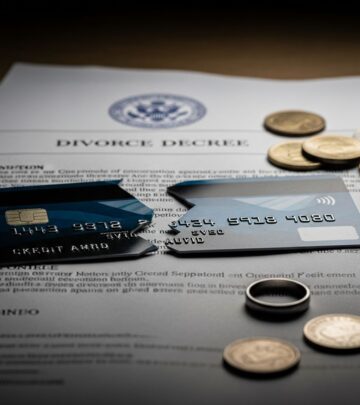
Managing Shared Credit After Divorce
Navigate joint accounts and rebuild financial independence post-divorce.

Divorce involves far more than legal paperwork and emotional adjustment—it requires a complete overhaul of your financial life. One critical area many people overlook is the intersection of shared credit accounts and personal credit reporting. Understanding how divorce affects your credit profile and taking proactive steps to separate your financial obligations can protect your creditworthiness and prevent future complications.
Understanding the Credit Reporting Reality After Divorce
A common misconception among newly divorced individuals is that a divorce decree automatically severs all financial ties with an ex-spouse. Unfortunately, this is not how credit relationships work. A divorce decree is an agreement between you and the court—it does not alter the contracts you have established with lending institutions, credit card companies, or mortgage lenders.
This distinction is crucial because creditors recognize only the contractual agreements they hold with borrowers. Unless you take specific action to modify these contracts, your ex-spouse’s name will continue to appear on joint accounts, and you both remain legally responsible for the debt.
According to credit reporting standards, joint account holders remain listed on credit reports for up to ten years after an account is closed, provided the payment history continues to be reported during that period. This means that even after divorce, your ex’s financial behavior on shared accounts can influence your creditworthiness if payments are missed or the debt is mismanaged.
Distinguishing Between Different Account Types
Not all shared credit arrangements are identical. Understanding the nuances between different types of account relationships is essential for determining your options for removal and separation.
Joint Account Holders
Joint account holders are equally responsible for the entire debt on an account. Both parties have full access to the account, and both are liable for all charges and payments. When a divorce occurs, being listed as a joint account holder means you remain legally bound to the debt unless the account structure is changed.
Authorized Users
Authorized users have access to an account but are not legally responsible for the debt. They are essentially granted permission to use the account by the primary account holder. A significant advantage of this distinction is that if you are an authorized user on your ex-spouse’s account, the primary account holder can request your removal at any time—even if the account carries a balance.
When an authorized user is removed from an account, the card issuer can stop the account’s activity from appearing on that person’s credit report. This removal does not affect the primary account holder’s credit profile.
Co-Signers
A co-signer takes on full responsibility for a debt if the primary borrower defaults. Co-signing differs from being a joint account holder in that the co-signer typically does not have access to use the account. However, the debt obligation is equally binding.
Strategic Approaches to Removing Your Ex-Spouse from Credit Accounts
Several pathways exist for addressing shared credit after divorce. The appropriate strategy depends on your specific account types, outstanding balances, and your ex-spouse’s cooperation.
Closing Joint Accounts
The most straightforward method for preventing future complications is to close joint credit accounts entirely. However, closing an account typically requires resolving the outstanding balance first. There are multiple ways to accomplish this:
- Paying off the entire balance together and closing the account by mutual agreement
- Refinancing shared loans (such as mortgages or auto loans) in one person’s name if they meet individual qualification requirements
- Paying off the account unilaterally if one party assumes full responsibility
When a joint account is closed, it stops accruing new debt. However, the closed account will continue appearing on credit reports for approximately ten years after closure, depending on the account’s payment history.
Balance Transfer Strategy for Credit Cards
For joint credit card accounts with outstanding balances, one practical approach involves both ex-spouses opening individual credit card accounts that offer balance transfer capabilities. Each party can transfer approximately half of the shared balance to their new personal account, after which the original joint account is closed.
This method requires cooperation and mutual agreement but accomplishes several goals: it closes the joint account, distributes the debt responsibility clearly, and gives each person a defined financial obligation moving forward.
Refinancing Secured Debts
For major secured debts—particularly mortgages and auto loans—refinancing in a single name is often necessary. If your ex-spouse plans to retain the home or vehicle, they should refinance the loan entirely in their name alone. This removes you from the obligation and prevents future missed payments from damaging your credit.
The challenge with this approach is that not everyone can qualify to refinance independently. If your ex-spouse cannot meet the lender’s requirements for a standalone loan, collaborative efforts to pay down the debt quickly become essential. As long as both names remain on a secured debt, both credit profiles remain vulnerable to negative impacts from missed payments or default.
Removing Authorized Users
If you are an authorized user on an account your ex-spouse maintains, removal is straightforward. Simply contact the account issuer and request deauthorization. The primary account holder can typically approve this removal immediately, even if the account carries a balance.
Conversely, if your ex-spouse is an authorized user on your accounts, you can request their removal independently without their permission or cooperation.
Communicating with Lenders and Credit Bureaus
Taking action requires clear communication with relevant financial institutions. Here’s what you need to know about working with lenders and credit reporting agencies:
Direct Lender Communication
Contact each lender holding a joint account with your ex-spouse. Provide documentation of your divorce (typically a copy of the divorce decree) and clearly explain which party should assume responsibility for each account. Lenders have policies for handling such requests, though their willingness to modify account terms varies.
Some creditors may agree to remove your name if your ex-spouse has demonstrated sufficient creditworthiness to maintain the account independently. Others may require account closure and payoff before removing names. Understanding your lender’s specific policies is essential before submitting formal requests.
Working with Credit Reporting Agencies
The major credit reporting agencies—Equifax, Experian, and TransUnion—maintain your credit reports independently. Some individuals pursue a “notice of disassociation” through credit bureaus, formally documenting that their financial relationship has ended.
Begin by obtaining free copies of your credit reports from all three bureaus through annualcreditreport.com. This allows you to identify every account where your ex-spouse appears and verify whether the information is accurate.
Disputing Inaccuracies
If you identify accounts on your credit report that should not be there—such as accounts your ex-spouse opened independently without your involvement—you have the right to dispute them under the Fair Credit Reporting Act (FCRA). File disputes directly with the relevant credit bureaus, providing documentation supporting your claim that the account is inaccurate or unauthorized.
The Critical Importance of Account Verification
Before pursuing removal strategies, carefully review every account listed on your credit report. Distinguish between:
- Accounts where you are genuinely a joint account holder
- Accounts where you are an authorized user
- Accounts where you co-signed
- Accounts that belong solely to your ex-spouse (which should not appear on your report)
This inventory becomes your action plan. Each account type requires different removal strategies, and misidentifying the relationship can delay progress.
Timeline Expectations for Account Removal
Understanding realistic timelines helps manage expectations during the separation process. Closed accounts typically remain visible on credit reports for approximately ten years from the closure date, as payment history continues to be reported during this period.
Active joint accounts remain indefinitely until closed or modified. There is no automatic removal simply due to passage of time; you must take affirmative action to change the account structure or close the account entirely.
Frequently Asked Questions
Does divorce automatically remove my ex-spouse from my credit report?
No. A divorce decree does not change your contractual obligations with lenders. You must contact creditors directly to request account modifications or closures.
Will my credit score improve immediately after removing my ex-spouse’s name from accounts?
Improvements typically develop gradually as closed accounts age and new positive payment history accumulates. There is no immediate score boost simply from removal, though preventing future negative activity helps preserve your score.
Can I be held responsible for debt my ex-spouse incurs after our divorce?
Only if you remain a joint account holder or co-signer on the account. If your ex-spouse opens new accounts in their name alone after divorce, you have no financial responsibility for that debt, and it should not appear on your credit report.
What happens if my ex-spouse refuses to cooperate in closing joint accounts?
You can often take unilateral action by paying off the account yourself or contacting the lender to request account closure. However, complex debts like mortgages require cooperation or legal intervention if one party cannot be reached.
Should I file a dispute for my ex-spouse’s name on my accounts?
Filing a dispute is appropriate only if the account information is inaccurate (for example, if your ex-spouse opened an account in your name without authorization). For legitimate joint accounts, disputes will be unsuccessful; instead, pursue direct communication with the lender.
Protective Financial Measures Post-Divorce
Beyond removing names and closing accounts, several protective steps strengthen your financial independence:
- Monitor your credit reports regularly (obtain free reports annually or use ongoing monitoring services)
- Set up payment reminders for any remaining joint accounts to ensure payments are made on time
- Establish individual credit history by opening accounts in your name alone
- Build an emergency fund to avoid new debt during financial transition
- Review insurance policies and update beneficiaries to reflect post-divorce circumstances
When Professional Assistance Becomes Necessary
While many account separations can be handled independently, certain situations benefit from professional guidance. Consider consulting with a family law attorney if:
- Your ex-spouse refuses to cooperate in closing or modifying accounts
- Significant assets or debts are involved
- Your ex-spouse’s name appears on accounts you did not jointly open
- Questions arise about interpreting your divorce decree regarding financial obligations
Financial advisors can also help prioritize which accounts to address first and create a timeline for achieving complete financial separation.
Conclusion: Taking Control of Your Financial Future
Removing your ex-spouse’s name from your credit report is not instantaneous, but it is achievable through systematic action. By understanding the distinction between account types, communicating clearly with lenders, and pursuing appropriate removal strategies, you can establish complete financial independence. The investment of time and effort during this process protects your creditworthiness, prevents future complications, and positions you for long-term financial security.
References
- How to Remove Your Ex-Spouse’s Name from Your Credit Report — Experian. December 9, 2025. https://wealthprotectionmanagement.com/how-to-remove-your-ex-spouses-name-from-your-credit-report/
- Removing Former Spouse Name from Credit Report — Ask Experian. https://www.sessumsblack.com/wp-content/uploads/2014/02/Removing-Former-Spouse-Name-from-Credit-Report.pdf
- What to Do if Ex-Spouse’s Address Is on Your Credit Report — Experian. https://www.experian.com/blogs/ask-experian/what-to-do-if-ex-spouses-address-is-on-your-credit-report/
- How do I separate my credit after divorce? — Stephens Scown. https://www.stephens-scown.co.uk/family/finances-following-divorce-or-separation/how-do-i-separate-my-credit-after-divorce/
- My Ex’s Credit Card Is on My Credit Report — What Can I Do? — Consumer Protection. https://consumerprotection.net/my-exs-credit-card-is-on-my-credit-report-what-can-i-do/
- Divorce, Debt and Credit — Equifax. https://www.equifax.com/personal/education/life-stages/articles/-/learn/divorce-and-credit/
Similar Articles








Read full bio of medha deb