Managing Settled Collection Accounts on Your Credit
Understand how settled collections impact your credit report and what you can do about them
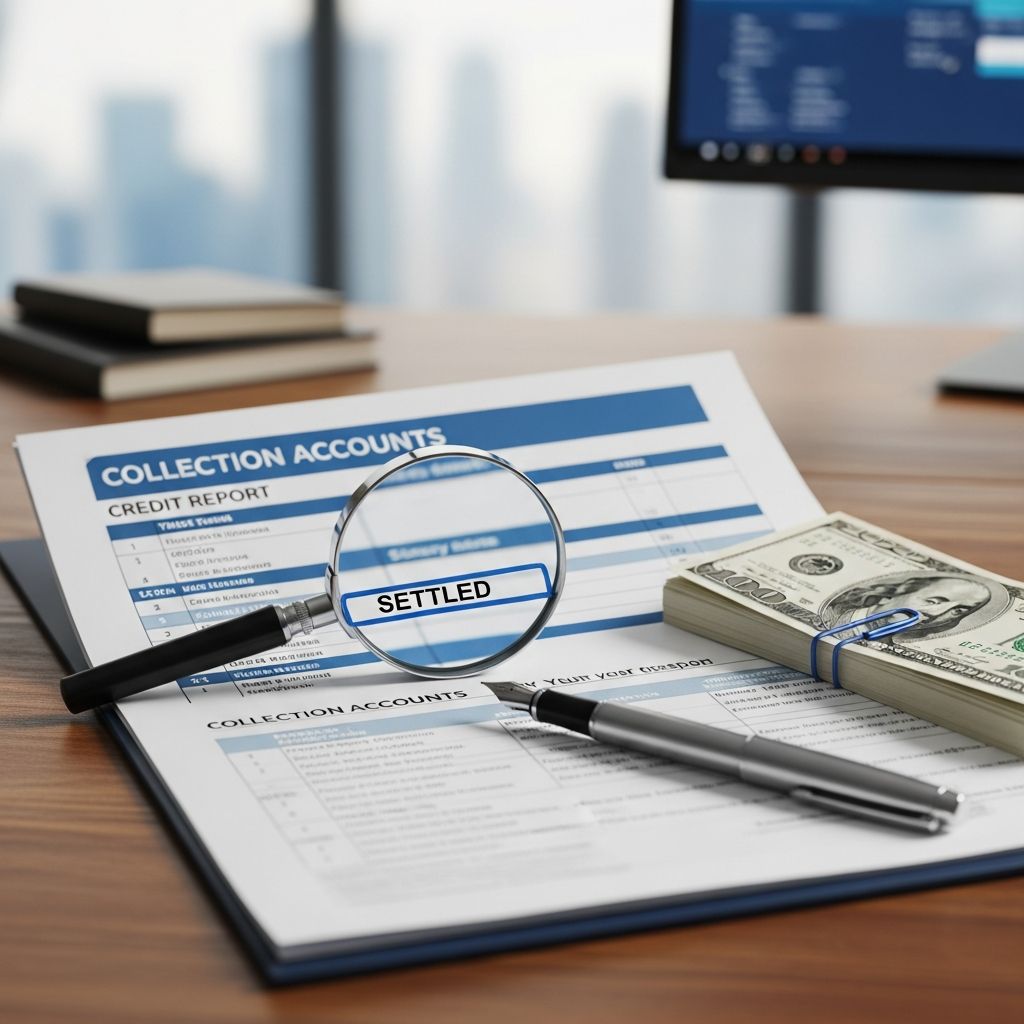
Managing Settled Collection Accounts on Your Credit Report: A Comprehensive Guide
When financial difficulties lead to unpaid debts, settling with collection agencies can feel like a relief. However, the impact on your credit report doesn’t end once you’ve reached an agreement. Understanding what happens to your credit history after a settlement is crucial for making informed financial decisions and planning your path to credit recovery.
Understanding the Settlement Process and Credit Reporting
A settlement occurs when a creditor or collection agency agrees to accept a payment that is less than the total amount owed on a delinquent account. This arrangement provides borrowers with an opportunity to resolve outstanding debts without paying the full balance, though it comes with credit reporting consequences.
When you reach a settlement agreement, the collection agency contacts the three major credit bureaus—Equifax, Experian, and TransUnion—to update your account status. The account will be marked as settled or paid in full for less than the original balance. This notation is critical because it communicates to future lenders that you resolved the debt but did not pay the complete amount originally promised.
What You Should See on Your Credit Report After Settlement
Once a settlement is properly reported, your credit file should display specific indicators that help you verify the accuracy of the transaction:
- Account Status: The account should show as “Closed” rather than remaining open
- Balance Owed: The balance field should display $0.00
- Payment Notation: You will see descriptive language such as “Settled for less than full balance,” “Paid settlement,” or “Account legally paid in full for less than the full balance”
- No Further Obligation: The account should indicate no remaining balance or collection activity
These notations serve an important purpose beyond your personal records. When mortgage lenders, credit card companies, or other financial institutions review your credit application, these notes help them understand your resolution history. While a settled account is viewed more favorably than an unpaid collection account, it typically carries more weight than an account paid in full.
The Journey from Original Account to Collection
Understanding the path your debt takes through the financial system helps explain why settled accounts appear on your credit report in a specific way. When an account becomes seriously delinquent—typically after 120 to 180 days of non-payment—the original lender may decide to write off the debt as a loss. At this point, your obligation shifts from the original creditor to a collection agency that purchases the debt.
Two separate entries may now exist in your credit history: the original account with the lender and a new collection account opened by the debt buyer. Both accounts relate to the same underlying debt but appear as distinct line items on your credit report. When you settle, both entries require updating to reflect the resolution, though the timing and accuracy of these updates can vary.
Timeline for Credit Report Updates After Settlement
After you submit payment to satisfy a settlement agreement, the collection agency typically initiates the reporting process to credit bureaus. In most cases, you should expect to see the updated status within 30 to 60 days of the agency receiving your payment. However, several factors can influence this timeline:
- The agency’s internal processing procedures and reporting schedules
- The credit bureaus’ processing systems and update cycles
- Whether you settled with the original creditor or a third-party collection agency
- The accuracy and completeness of the settlement documentation provided to reporting agencies
It’s wise to check your credit report one to two months after making a settlement payment to confirm the update has been reflected accurately. If you do not see the settlement status appear within this timeframe, contact the collection agency to verify they have reported the settlement to the credit bureaus.
How Long Settlement Accounts Remain on Your Credit Report
One of the most important facts about settled collection accounts involves their permanence on your credit history. A settled collection account will remain on your credit report for seven years from the original delinquency date—not from the settlement date or the date you made the payment. The original delinquency date refers to the moment the account first became late and was never brought current with the original lender.
This seven-year timeline applies whether the account remains unpaid, is settled for less than the full balance, or is paid in full. Both the original account entry and the collection account entry will generally be deleted seven years from that original delinquency date. Understanding this distinction is important because it prevents confusion about when negative information will disappear from your credit record.
Credit Score Impact of Settled Accounts
Settled accounts are classified as negative entries on your credit report because they indicate the original creditor agreed to accept less than promised. This status affects your credit scores in several ways:
Payment History Weight: Payment history comprises approximately 35% of most credit scoring models. A settled account and the late payments leading to it are recorded in this category. Late payments and settlements can significantly reduce credit scores initially, though their impact diminishes over time as newer positive payment information accumulates.
Credit Scores Compared to Unpaid Accounts: While a settled account does damage your credit score, the damage is considerably less severe than an unpaid collection account or charge-off. Lenders view settlement as evidence of your willingness to resolve obligations, even if you couldn’t pay the full amount.
Time-Based Recovery: Credit scoring models are designed to give less weight to older negative information. A settled account that occurred five years ago will have significantly less impact on your score than one from six months ago. As you continue to make on-time payments on other accounts, the settled account’s influence on your credit profile gradually lessens.
Scoring Model Variations: Some credit scoring models, particularly newer ones like VantageScore 3.0 and 4.0, may treat paid collection accounts differently than traditional FICO scores. Certain models completely ignore paid collection accounts when calculating scores, meaning settling your account could improve your score more substantially under these newer models.
Distinguishing Between Settlement and Full Payment
A critical distinction exists between accounts marked “settled for less than full balance” and those marked “paid in full.” Most financial institutions view these notations differently when evaluating creditworthiness:
| Account Status | What It Means | Credit Impact |
|---|---|---|
| Paid in Full | You paid 100% of the amount owed | More favorable for credit scores and future lending decisions |
| Settled for Less Than Full Balance | You paid a reduced amount less than originally owed | Viewed as partial resolution; lenders note you didn’t meet original obligation |
| Paid Collection Account | A collection debt was fully satisfied but appears as paid collection | Better than unpaid collections but still shows debt went to collections |
When applying for mortgages, auto loans, or other significant credit products, lenders review these notations carefully. An account paid in full demonstrates your commitment to meeting financial obligations completely, while a settled account shows you negotiated your way out of the original agreement.
When to Pursue a Pay-to-Delete Agreement
Some borrowers have the opportunity to negotiate a “pay-to-delete” arrangement with collection agencies. Under this agreement, the collection agency agrees to remove the account from your credit report entirely in exchange for payment. This arrangement can be highly beneficial to your credit score if successfully executed.
However, pay-to-delete agreements are not standard practice, and many collection agencies decline these requests. Additionally, it’s important to understand that under the Fair Credit Reporting Act, collection agencies have the right to report accurate information about settled debts. Getting an agreement in writing is essential if you negotiate this arrangement.
If you do successfully negotiate a pay-to-delete agreement, request written confirmation and monitor your credit report carefully after payment to ensure the account is actually removed. If the agency fails to remove the account after you’ve fulfilled your obligation, you have grounds to file a dispute with the credit bureaus.
Checking Your Credit Report for Accuracy
After settling a collection account, regularly reviewing your credit reports is crucial. You are entitled to one free credit report annually from each of the three major credit bureaus through AnnualCreditReport.com. Use these resources to verify:
- The account status correctly shows as settled and closed
- The balance displays as $0.00
- The notation accurately describes the settlement
- No duplicate accounts from the same debt appear on your report
- The original delinquency date is recorded correctly
If you find errors or inaccuracies, you have the right to file a dispute with the credit bureaus. Errors can include accounts incorrectly showing as still active, wrong balances, or misidentified dates. The credit bureaus must investigate disputes within 30 days and correct verified errors.
Rebuilding Credit After Settlement
While a settled collection account remains on your credit report, you can take proactive steps to rebuild your credit and minimize its ongoing impact:
- Establish New Positive Payment History: Make on-time payments on all current accounts. Positive payment history will gradually outweigh the impact of the settled account
- Reduce Credit Utilization: Keep credit card balances low relative to available credit limits, ideally below 30% utilization
- Avoid Additional Collections: Ensure no new accounts go to collections, which would further damage your credit profile
- Diversify Credit Mix: Maintain a healthy mix of credit types, such as credit cards, installment loans, and other accounts in good standing
- Monitor Credit Activity: Watch your credit reports regularly for unauthorized accounts or fraud
Frequently Asked Questions About Settled Collection Accounts
Can I remove a settled account from my credit report before seven years?
Generally, settled accounts remain for seven years from the original delinquency date. However, if you negotiate a pay-to-delete agreement and the agency fulfills it, the account can be removed sooner. You can also file disputes if you identify inaccuracies in how the account is reported.
Does settling hurt my credit score more than paying in full?
Yes, settling typically has a greater negative impact than paying in full. However, both options are better than leaving the account unpaid or allowing it to result in a charge-off.
Will settling stop collection calls?
Once you settle an account and the creditor updates it as settled, collection calls should stop. If calls continue after settlement, document them and report the agency to the Consumer Financial Protection Bureau for potential violations of the Fair Debt Collection Practices Act.
Should I settle or try to negotiate full payment?
If paying the full amount is possible, doing so may be preferable for your credit score. However, if settlement is your only realistic option to resolve the debt, it’s generally better than allowing the account to remain in collections indefinitely.
Moving Forward With Your Credit Recovery
Settled collection accounts represent a compromise between financial hardship and credit recovery. While the settlement notation will remain on your credit report for seven years, its impact diminishes over time. The most important actions you can take after settling are maintaining consistent, on-time payments on all remaining accounts and monitoring your credit reports for accuracy. Your credit score is not permanently damaged by a settlement; it reflects your most recent financial behavior. By demonstrating responsible credit management going forward, you can gradually rebuild your creditworthiness and improve your financial prospects.
References
- How Do I Handle Settled Collection Accounts on My Credit Report? — Experian. https://www.experian.com/blogs/ask-experian/how-do-i-handle-settled-collection-accounts-on-my-credit-report/
- Settled Accounts on Your Credit Report — Experian. https://www.experian.com/blogs/ask-experian/settled-account-will-still-appear-on-the-credit-report/
- Collection Accounts and Your Credit Scores — Equifax. https://www.equifax.com/personal/education/credit/report/articles/-/learn/collection-accounts/
- What Is Paid in Full vs. Settlement On A Credit Report: What’s the Difference? — Money Management International. https://www.moneymanagement.org/blog/paid-in-full-versus-paid-off-less-than-full-balance
- How Does Debt Settlement Affect Your Credit Score? — Patton Dean. https://www.pattondean.com/blog/2025/february/how-does-debt-settlement-affect-your-credit-scor/
Similar Articles








Read full bio of Sneha Tete