Madison Square Garden Guide: History, Seating, And Insider Tips
Discover the iconic history, events, and insider tips for New York's legendary arena.
Madison Square Garden stands as one of New York’s most enduring symbols of entertainment and sports, evolving through multiple reincarnations while hosting generations of unforgettable moments. This guide uncovers its layered history, highlights key events, and offers practical insights for attendees.
The Evolution of an Iconic Venue
The story of Madison Square Garden spans over 150 years, marked by four distinct buildings, each contributing to its legendary status. Far from a single location, the name has migrated across Manhattan, adapting to the city’s growth and demands for spectacle.
The inaugural version emerged in the late 19th century from an unlikely origin. In 1874, showman P.T. Barnum transformed a former railroad station in Madison Square into an open-air arena for circuses, bicycle races, and clandestine boxing matches disguised as lectures. Renamed Madison Square Garden in 1879 under William Kissam Vanderbilt’s ownership, it buzzed with activity but suffered from leaks and structural woes, leading to its demolition in 1889.
Undeterred, a grander second iteration rose on the same site in 1890, constructed at breakneck speed by over a thousand workers operating around the clock. This elegant structure, designed with towers and a roof, hosted diverse events from dog shows to cattle exhibitions, though financial strains forced its closure in 1925.
- First Garden (1879-1890): Open-air, circus-focused, structurally flawed.
- Second Garden (1890-1925): Enclosed luxury, cultural hub, economically challenged.
The third Garden shifted north to Eighth Avenue between 49th and 50th Streets, opening in 1925 after just 249 days of construction funded by boxing promoter Tex Rickard at a cost of $4.75 million. Seating over 18,000, it prioritized function over flair, hosting political rallies, fights, and revivals amid smoky, crowded conditions. Marilyn Monroe’s sultry “Happy Birthday” serenade to President John F. Kennedy in 1962 became one of its defining moments. By 1968, it yielded to modernization.
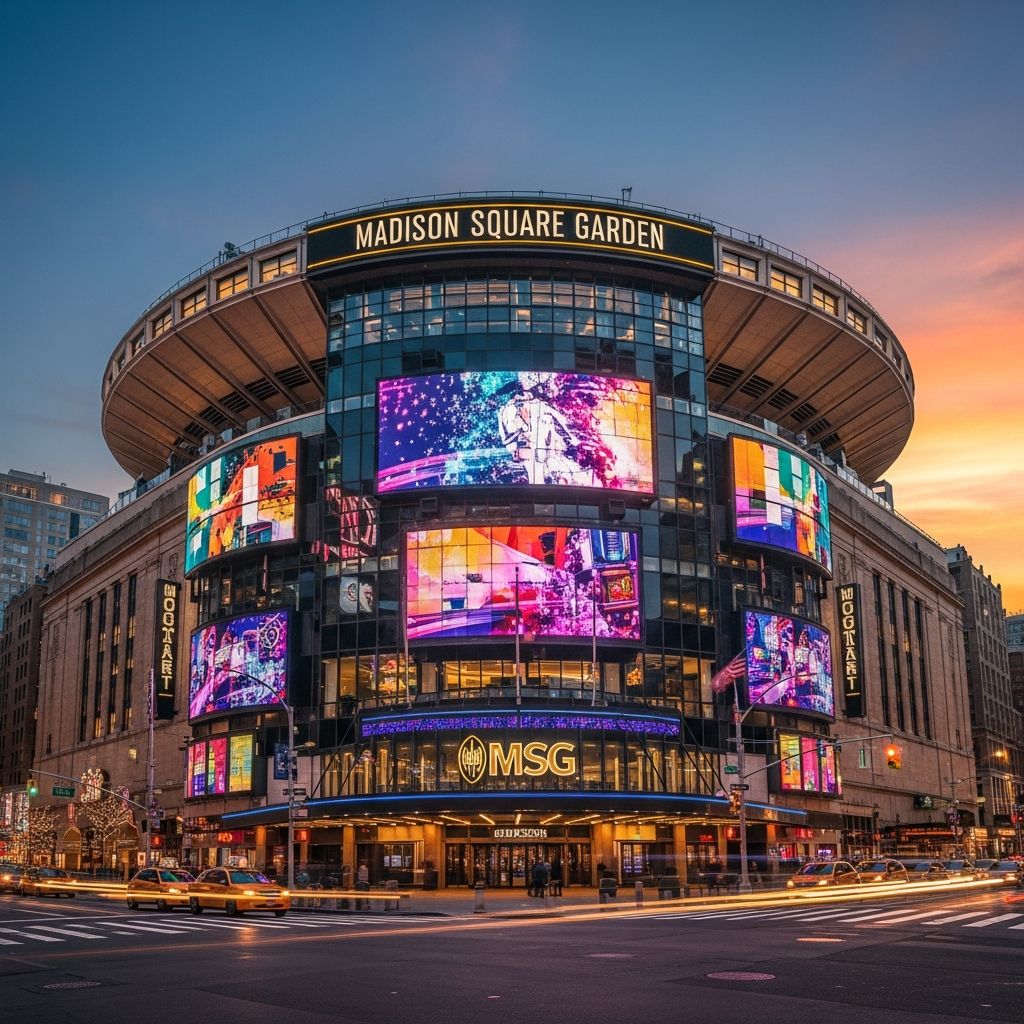
Today’s fourth and current Madison Square Garden, opened February 11, 1968, atop the razed Penn Station site, marked a controversial era. The demolition of the Beaux-Arts masterpiece spurred the creation of the Landmarks Preservation Commission. Now boasting a 20,000-seat arena and a 5,000-seat theater, it remains the NBA’s oldest arena and NHL’s second-oldest.
Landmark Moments That Defined MSG
Beyond architecture, Madison Square Garden’s legacy thrives in its roster of historic events, blending sports triumphs, musical milestones, and cultural milestones.
| Era | Key Event | Impact |
|---|---|---|
| 1920s-1960s (Third Garden) | Pro-Nazi rally (1939); Monroe-Kennedy performance (1962) | Highlighted political polarization and pop culture icons |
| 1968-Present (Fourth Garden) | Bing Crosby’s USO Salute (opening night); NBA/NHL championships | Set stage for modern sports dominance |
Politically charged gatherings, like the 1939 pro-Nazi event drawing 20,000 attendees, underscored MSG’s role in public discourse. Musically, it welcomed legends from Elvis Presley to Billy Joel, whose record 12 sold-out shows in 1998 cemented his “Piano Man” status there. Sports-wise, the New York Knicks and Rangers call it home, with countless playoffs etching team lore.
Home to Knicks and Rangers: Sports at the Core
Professional basketball and hockey anchor MSG’s schedule. The Knicks, founded in 1946, have clinched two NBA titles (1970, 1973) amid raucous crowds. The Rangers, established in 1926, boast four Stanley Cups, including the dramatic 1994 victory.
Attendance records shatter regularly: the arena’s intimacy amplifies energy, with lower bowl seats offering prime views of slam dunks and puck battles. Renovations in 2013 enhanced sightlines and luxury suites, boosting capacity without losing character.
- Knicks Highlights: Patrick Ewing era playoffs; recent Jalen Brunson surges.
- Rangers Highlights: Henrik Lundqvist shutouts; Adam Graves’ overtime goals.
- Shared Thrills: NBA All-Star Games, NHL Winter Classics.
Concert Capital: Music Legends Take the Stage
MSG’s acoustics and prestige lure top artists. Michael Jackson’s 1988 Grammy-winning shows, U2’s Sphere-inspired residencies, and Adele’s emotional runs exemplify its draw. Billy Joel held the record for most performances until 2024.
Diverse genres shine: rock (Led Zeppelin), pop (Madonna), hip-hop (Jay-Z), and country (George Strait). The WaMu Theater hosts intimate sets, like John Mayer’s acoustic nights.
Beyond Big Names: Variety Shows and Unique Attractions
MSG’s versatility extends to circuses, rodeos, WWE wrestling, and awards like the Tony Awards. The Westminster Dog Show’s agility competitions thrill animal lovers annually.
Family-friendly options include Disney on Ice and monster truck rallies, ensuring broad appeal year-round.
Getting There: Transportation and Access
Located at 4 Pennsylvania Plaza (between 31st-33rd Streets, 7th-8th Avenues), MSG integrates with Penn Station for subways (A/C/E, 1/2/3, N/Q/R/W), Amtrak, and NJ Transit. Penn Plaza entrances streamline entry; avoid peak rush hours.
Walking from Times Square takes 10 minutes; rideshares drop at 33rd Street. Bike racks and Citi Bike stations cater to eco-commuters.
Navigating the Arena: Seating and Layout
The bowl-shaped design ensures no bad seats, but preferences vary:
| Section | Best For | Price Range |
|---|---|---|
| 100 Level (Courtside/Floor) | Immersive action | High |
| 200-400 Levels | Panoramic views | Medium |
| Chase Bridges (300 Level) | Club access, lounges | Premium |
Post-2013 upgrades added The Garden Club with gourmet dining. Accessibility includes wheelchair spots and ASL interpreters.
Event Schedules and Ticket Strategies
Check msg.com for Knicks (Oct-Apr), Rangers (Oct-Apr), concerts (year-round). Tickets via Ticketmaster; presales favor fan clubs. Scalpers hover outside, but official apps offer verified resales.
Dynamic pricing spikes for stars; budget fans target midweek games. Multi-event passes suit avid supporters.
Premium Experiences: VIP and Hospitality
The Madison Club and Lexus Lounge deliver upscale perks: all-inclusive buffets, private bars, player tunnel views. Suites accommodate 12-18, ideal for groups. Bridge Suites overlook the Hudson.
Dining Inside and Nearby: Fuel for the Fun
Concourse options range from hot dogs ($6) to lobster rolls ($25). Vegan choices and local beers abound. Pre-game, explore Penn Station’s market or nearby Koreatown for bibimbap.
Upper levels feature outposts of Shake Shack and Nathan’s Famous.
Practical Visitor Tips
- Arrive 90 minutes early for security (bags under 22x14x9 inches).
- Clear bag policy enforced; no weapons or outside food.
- Download MSG app for real-time updates, parking reservations.
- Restrooms plentiful post-renovation; family facilities available.
Shopping and Memorabilia
Team stores stock jerseys, pucks, and exclusives. The MSG Collection offers historic tees. Post-event, grab deals from pop-up vendors.
Common Questions
FAQs
How old is the current Madison Square Garden?
The fourth iteration opened in 1968, making it over 55 years old as the region’s oldest major sports venue.
Where exactly is MSG located?
Above Penn Station at 4 Pennsylvania Plaza, Midtown Manhattan.
Can I tour the arena?
Guided tours operate daily, covering history, locker rooms, and trophies (book via msg.com).
What’s the bag policy?
Clear bags only, max 12x6x12 inches; small clutches permitted.
Are there events for kids?
Yes, from circuses to Disney shows year-round.
Future of MSG: Expansion Plans
Debates swirl over relocation to allow Penn Station’s full redevelopment. A proposed move to Queens or Hudson Yards aims to preserve the brand while modernizing. For now, the current site thrives, blending nostalgia with cutting-edge production.
MSG’s adaptability—from Barnum’s circus tent to tomorrow’s tech-infused spectacles—ensures its place in New York’s heartbeat.
References
- The Unusual History of Madison Square Garden — ExperienceFirst. N/A. https://www.exp1.com/blog/untold-nyc-history-madison-square-garden/
- History of Madison Square Garden — Madison Square Park Conservancy. 2021-04. https://madisonsquarepark.org/community/news/2021/04/history-of-madison-square-garden/
- Madison Square Garden — Wikipedia (sourced from official records). N/A. https://en.wikipedia.org/wiki/Madison_Square_Garden
- Madison Square Garden – History of New York City — Seton Hall University Blogs. N/A. https://blogs.shu.edu/nyc-history/msg-2/
- 10 Fascinating Facts about Madison Square Garden — History Travelista. N/A. https://historytravelista.com/10-interesting-facts-about-madison-square-garden/
- Madison Square Garden (1925-1968) — U.S. National Park Service. 2024-12-16. https://www.nps.gov/places/madison-square-garden-1925-1968.htm
Similar Articles








Read full bio of medha deb