Macroeconomic Factors: Definition and Key Indicators
Understanding macroeconomic factors that shape economic growth, employment, and inflation.
What Are Macroeconomic Factors?
Macroeconomic factors are broad economic variables and conditions that affect an entire economy at the national or regional level. These factors represent the aggregate performance of an economy and determine the overall health and direction of economic activity. Unlike microeconomic factors that focus on individual businesses, consumers, or industries, macroeconomic factors examine the economy as a whole, influencing everything from employment rates to price levels and economic growth patterns.
Macroeconomic factors serve as the foundation for understanding how economies function and how policy makers craft strategies to promote stability and sustainable growth. They encompass a wide range of measurements and indicators that economists and investors monitor closely to make informed decisions about investments, business strategies, and policy implementation.
The Three Central Macroeconomic Variables
While numerous macroeconomic factors exist, three central variables form the foundation of macroeconomic analysis and policy:
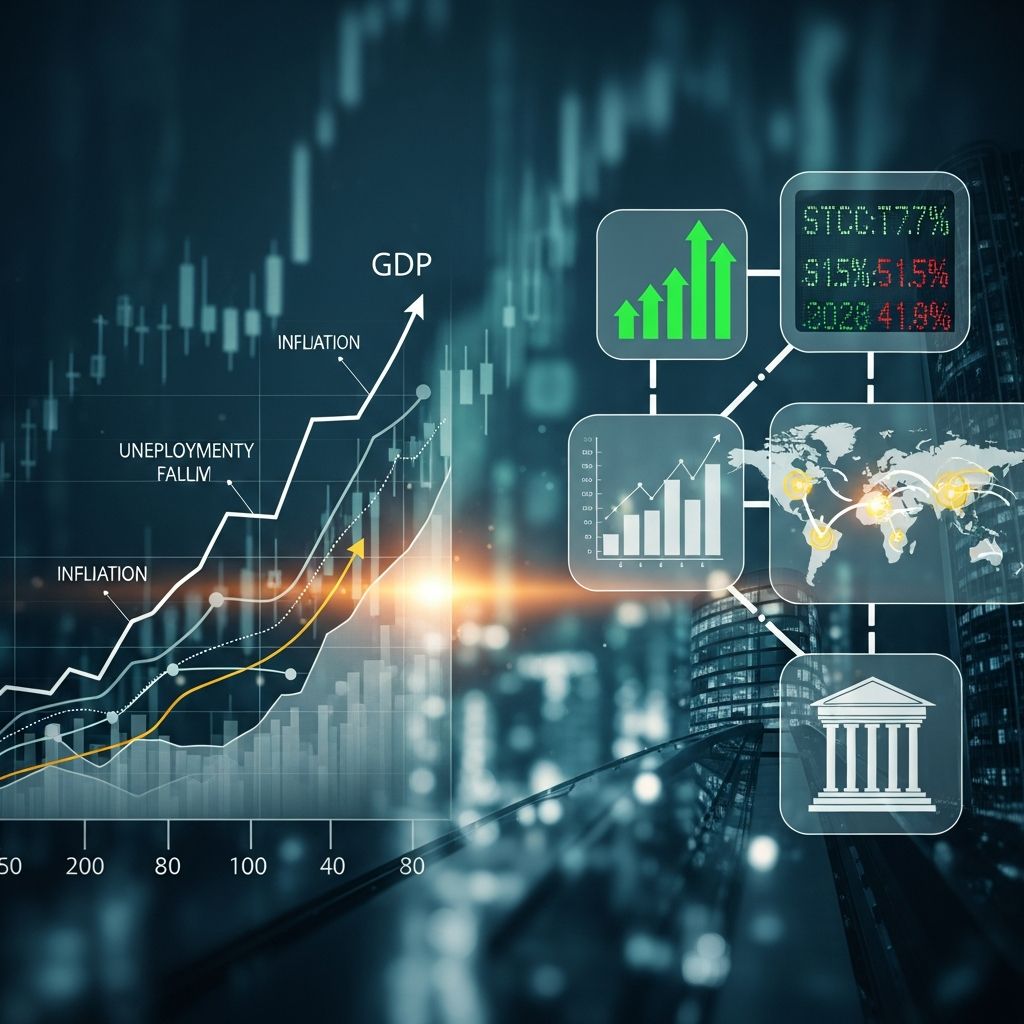
Output (Gross Domestic Product)
Output, measured as Gross Domestic Product (GDP), represents the total value of goods and services produced by an economy during a specific period. GDP is the most comprehensive measure of economic activity and serves as the primary indicator of economic growth and national prosperity. Output levels determine employment opportunities, income distribution, and the overall standard of living within a country. When output increases, the economy expands, creating more jobs and generating higher incomes. Conversely, declining output signals economic contraction and recession.
Unemployment
Unemployment measures the percentage of the labor force that is actively seeking work but unable to find employment. This macroeconomic factor reflects the efficiency of labor markets and the availability of job opportunities. High unemployment indicates economic weakness, reduced consumer spending, and potential social challenges. Low unemployment suggests a tight labor market where workers have greater bargaining power and employers face pressure to increase wages.
Inflation
Inflation represents the rate at which the general level of prices for goods and services rises over time, reducing the purchasing power of money. Moderate inflation is considered normal and healthy for economies, but high inflation erodes savings and creates uncertainty. Deflation, or negative inflation, can also be problematic as it discourages spending and investment. Central banks typically target a specific inflation rate, often around 2 percent annually, to maintain price stability.
Time Horizons in Macroeconomic Analysis
Macroeconomic analysis operates across different time frames, each requiring distinct analytical approaches and policy tools:
Short-Run (Business Cycle)
The short run, typically spanning months to a few years, focuses on business cycle fluctuations. During this period, economies experience expansions and contractions driven by aggregate demand changes, consumer confidence, and business investment decisions. Short-term macroeconomic policies, known as stabilization policies, aim to mitigate the harmful effects of recessions and prevent overheating. These policies use fiscal measures such as taxation and government spending, as well as monetary tools including interest rate adjustments.
Medium-Run (Structural Equilibrium)
Over the medium term, typically spanning a decade, economies tend toward output levels determined by structural factors including capital stock, technology levels, and the labor force. During this horizon, unemployment gravitates toward its natural or structural level, and inflation becomes anchored to long-term expectations. Labor market policies and competition policy become important instruments for influencing medium-run equilibrium and economic structure.
Long-Run (Economic Growth)
Long-term macroeconomic analysis examines sustained economic growth and improvements in living standards. Economists studying long-run growth focus on factors such as technological advancement, capital accumulation, education, and human capital development. These fundamental drivers determine an economy’s productive capacity and its ability to generate rising prosperity over decades.
Key Macroeconomic Indicators and Factors
Beyond the three central variables, numerous other macroeconomic factors provide insight into economic conditions:
Interest Rates
Interest rates, set by central banks through monetary policy, profoundly influence economic activity. The neutral rate of interest, also called the natural rate or r-star, represents the short-term interest rate that neither stimulates nor restricts economic activity in the long run. This rate is determined by the supply of and demand for savings, with investment requiring sufficient capital from households and other savers. Higher productivity growth increases demand for capital and drives up interest rates, while factors like secular stagnation and global savings gluts can depress neutral rates. Expansionary monetary policy lowers rates to stimulate borrowing and investment, while contractionary policy raises rates to cool inflationary pressures.
Exchange Rates
Exchange rates represent the price of one currency relative to another and significantly affect international trade competitiveness. Strong domestic currencies make exports more expensive and imports cheaper, affecting trade balances and economic growth. Exchange rates respond to interest rate differentials, capital flows, and relative economic performance between countries.
Government Spending and Fiscal Policy
Government spending levels, taxation rates, and budget deficits comprise fiscal policy, a primary macroeconomic tool for influencing aggregate demand and economic growth. Expansionary fiscal policy increases spending or reduces taxes to stimulate economic activity during recessions, while contractionary policy does the opposite during periods of overheating inflation.
Productivity and Technology
Productivity improvements and technological advancement represent fundamental drivers of long-term economic growth. When firms become more productive, they produce more output from existing resources. Technological innovations create new investment opportunities and increase the demand for capital, supporting sustainable economic expansion and higher living standards.
Asset Prices and Wealth Effects
Stock market indices, real estate values, and other asset prices influence consumer and business confidence. Rising asset prices increase household wealth, encouraging consumption spending. Conversely, falling asset prices reduce wealth and discourage spending, potentially triggering economic downturns.
Macroeconomic Policy Tools and Approaches
Policymakers employ various macroeconomic tools to achieve economic objectives across different time horizons:
Monetary Policy
Central banks conduct monetary policy primarily through interest rate adjustments and open market operations. The monetary transmission mechanism works through multiple channels: interest rate changes affect investment and consumption decisions, asset prices respond to rate changes, and exchange rates adjust based on rate differentials. These channels ultimately influence aggregate demand, employment levels, and inflation.
Fiscal Policy
Governments use fiscal policy through taxation and spending decisions to influence aggregate demand and economic structure. During recessions, expansionary fiscal policy injects demand into the economy, while contractionary fiscal policy during booms helps prevent excessive inflation.
Modern Policy Frameworks
Contemporary monetary authorities increasingly adopt flexible approaches rather than rigidly targeting specific interest rate levels. Federal Reserve Chair Powell emphasized in 2023 that central banks should adopt risk management approaches, balancing the risks of tightening policy too much against tightening too little, particularly given the uncertainty surrounding natural rate estimates.
Macroeconomic Models and Analysis
The IS-LM Framework
The IS-LM model provides a fundamental framework for understanding how interest rates and output interact across goods and money markets. The IS curve represents combinations of income and interest rates where investment equals saving, sloping downward because higher output increases saving, requiring lower rates to stimulate sufficient investment. The LM curve represents money market equilibrium, sloping upward because higher income increases money demand, requiring higher interest rates to maintain equilibrium.
The Aggregate Supply and Demand Model
The AS-AD model illustrates how aggregate supply and demand determine price levels and output. The aggregate demand curve slopes downward due to three effects: the real balance effect (lower prices increase real wealth), the interest rate effect (lower prices reduce money demand and lower rates), and the net export effect (lower prices make exports more competitive). The aggregate supply curve slopes upward following Phillips curve logic, where higher economic activity reduces unemployment and increases wage growth and inflation.
The Solow Growth Model
The Solow model explains long-term economic growth through capital accumulation, labor force growth, and technological advancement. This model demonstrates that increases in output occur through increases in capital stock, larger populations, or productivity improvements from technological advances.
Open Versus Closed Economies
An important dimension of macroeconomic analysis involves distinguishing between closed and open economies. Closed economies operate in isolation with no international trade or capital flows, while open economies engage in international commerce and financial transactions. Open economies face additional macroeconomic complexities including exchange rate dynamics, capital flows, trade balances, and foreign direct investment. International economic interdependence means that macroeconomic policies in one country increasingly affect other nations through trade and financial channels.
Business Cycles and Economic Fluctuations
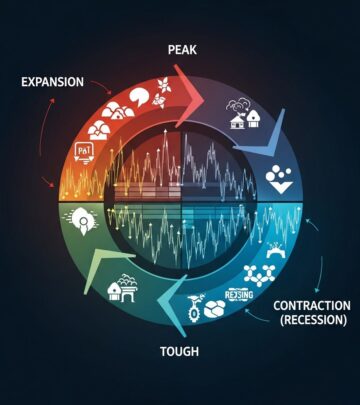
Macroeconomic factors drive business cycle fluctuations characterized by alternating periods of expansion and contraction. During expansions, output grows, unemployment falls, and confidence rises. During contractions or recessions, output declines, unemployment rises, and investment falls. Business cycles reflect the complex interactions of aggregate demand shocks, supply disruptions, and policy responses. Understanding these cycles helps economists and policymakers craft stabilization policies to smooth economic volatility and maintain sustainable growth.
Frequently Asked Questions
What is the difference between macroeconomic and microeconomic factors?
Macroeconomic factors affect entire economies and national aggregates like GDP and employment, while microeconomic factors influence individual firms, consumers, and industries.
How do central banks influence macroeconomic factors?
Central banks primarily use monetary policy, adjusting interest rates and money supply to influence aggregate demand, employment, and inflation across the economy.
Why is the neutral rate of interest important?
The neutral rate represents the equilibrium interest rate that neither stimulates nor restricts economic activity, serving as a benchmark for appropriate monetary policy stance.
What causes macroeconomic volatility?
Macroeconomic volatility results from shocks to aggregate demand or supply, changes in consumer and business confidence, policy decisions, and international economic developments.
How do governments respond to recessions?
Governments typically employ expansionary fiscal policy through increased spending or tax cuts and coordinate with central banks on accommodative monetary policy to stimulate aggregate demand and reduce unemployment.
What role does productivity play in macroeconomic growth?
Productivity improvements allow economies to produce more output from existing resources, representing a fundamental driver of sustainable long-term economic growth and rising living standards.
References
- Macroeconomics — Wikipedia. Accessed 2025-11-29. https://en.wikipedia.org/wiki/Macroeconomics
- What is the neutral rate of interest? — Brookings Institution. 2023. https://www.brookings.edu/articles/the-hutchins-center-explains-the-neutral-rate-of-interest/
Similar Articles








Read full bio of Sneha Tete