LTV Loan-to-Value Ratio Calculator & Guide
Calculate your LTV ratio to understand your mortgage equity and borrowing power.
Understanding the Loan-to-Value Ratio Calculator
Whether you’re wondering if you have enough equity to qualify for the best mortgage rates, or you’re concerned about refinancing options under various mortgage programs, the loan-to-value (LTV) ratio is a critical metric that lenders use to assess your mortgage application. Understanding how this ratio works and how to calculate it can help you make more informed decisions about your home financing.
What is a Loan-to-Value Ratio?
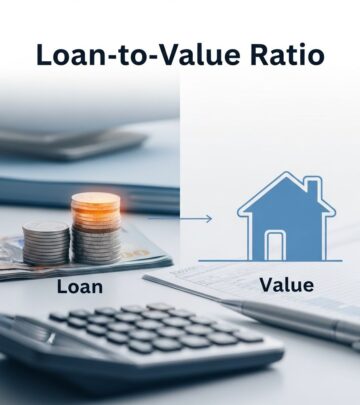
Your loan-to-value ratio is the amount of money you’re borrowing, also called the loan principal, divided by the value of the property you want to buy or currently own. An LTV ratio is usually expressed as a percentage. In a real estate context, this metric compares the size of your loan to the lower of the purchase price or appraised value of the property. For example, a loan of $150,000 toward a house appraised at $200,000 represents 75% of the home’s value, giving an LTV ratio of 75%.
When you apply for a mortgage, your lender will factor in your LTV ratio when deciding whether to approve you for the loan and when determining your loan size and interest rate. Lenders use this metric to evaluate risk—the higher your LTV ratio, the more risk they assume, and the higher your interest rate is likely to be.
How to Calculate Your LTV Ratio
Calculating a loan-to-value ratio is relatively straightforward. There are two primary methods depending on whether you’re calculating LTV for a new purchase or an existing mortgage.
For a New Home Purchase
To calculate your LTV ratio for a new purchase, simply divide the loan amount by either the purchase price or appraised value of the property (whichever is lower), and then multiply by 100 for the percentage.
Formula: (Loan Amount ÷ Property Value) × 100 = LTV Ratio
Let’s say that you plan to borrow $450,000 to buy a $500,000 house. Your LTV ratio would be calculated as: $450,000 ÷ $500,000 = 0.90, which equals 90 percent.
For an Existing Mortgage
If you’re calculating your current LTV ratio on a home you already own, use your outstanding loan balance divided by your current appraised value.
Formula: Current Loan Balance ÷ Current Appraised Value = LTV
For example, if you currently have a loan balance of $140,000 and your home currently appraises for $200,000, your calculation would be: $140,000 ÷ $200,000 = 0.70, which converts to a loan-to-value ratio of 70%.
Understanding How Appraisals Affect Your LTV
When the bank calculates LTV, they typically consider the contracted purchase price of a property, not the asking price listed by the seller. The appraisal is ordered by the mortgage lender but paid for by the prospective borrower.
As a homeowner, a higher appraised value tends to work in your favor, increasing your home equity and lowering your LTV. For example, if your home is now appraised at $250,000 compared with its original valuation of $200,000, that further lowers your LTV. By contrast, if your home’s appraised value has fallen since the time of your original purchase, this will likely push up your LTV.
What is a Good Loan-to-Value Ratio?
The ideal LTV ratio depends on the lender’s requirements and the loan type. For you as the borrower, however, a “good” LTV ratio means you’re putting more money down and borrowing less. In general, the lower your LTV ratio, the better. A lower LTV ratio can help you get a lower interest rate on your mortgage and demonstrates to lenders that you have significant equity in the property, reducing their risk.
The higher the LTV ratio, the more risk for the lender, and the higher an interest rate they’re likely to charge you. Most lenders won’t let you go above 80 to 85 percent of your home’s value when borrowing.
LTV Requirements by Loan Type
Different mortgage products have different maximum LTV requirements. Understanding these requirements is essential when shopping for the right mortgage loan type for your situation.
| Loan Type | Maximum LTV |
|---|---|
| Conventional Loan (Without PMI) | 80% |
| FHA Loan | 96.5% |
| VA Loan | 100% |
| USDA Loan | 100% |
| Refinance (Without PMI) | 80% |
Conventional loans typically cap out at an 80% LTV without requiring private mortgage insurance (PMI). If you want to borrow more than 80% of the home’s value with a conventional loan, you’ll need to pay PMI, which protects the lender in case you default on the loan.
Federal Housing Administration (FHA) loans allow borrowers to have higher LTV ratios, up to 96.5%, making them attractive for first-time homebuyers with smaller down payments. Veterans Affairs (VA) loans and United States Department of Agriculture (USDA) loans both allow 100% LTV, meaning you can finance the entire purchase price without making a down payment if you qualify.
Combined Loan-to-Value Ratio (CLTV)
If you’re considering taking out a second mortgage, such as a home equity line of credit (HELOC) or home equity loan, lenders will look at your combined loan-to-value ratio (CLTV) instead of just your primary LTV.
Understanding CLTV vs. LTV
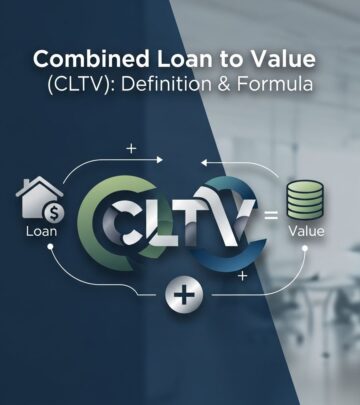
LTV and CLTV both describe how much equity you have in your home versus how much you owe on it. The difference is that the LTV only accounts for your primary mortgage, while the CLTV factors in your first mortgage and any subsequent home-related debt, such as a HELOC or home equity loan.
How to Calculate Combined LTV
To calculate your CLTV, add your primary mortgage balance and any second mortgage balance, then divide by your home’s current appraised value.
Formula: Current Combined Loan Balance ÷ Current Appraised Value = CLTV
Let’s work through an example. Suppose you have an outstanding balance of $250,000 on a home that is appraised at $500,000, and you want to borrow $30,000 in a home equity line of credit (HELOC) to pay for a kitchen renovation. Here’s a breakdown of the combined LTV ratio: ($250,000 + $30,000) / $500,000 = 56 percent CLTV
Another example: You currently have a loan balance of $140,000 and you want to take out a $25,000 home equity line of credit. Your home currently appraises for $200,000. Your combined loan-to-value would be: $165,000 ÷ $200,000 = 0.825, which converts to 82.5%.
Most lenders require your CLTV to be 85% or less for a home equity line of credit. If your CLTV is too high, you can either pay down your current loan amount or wait to see if your home’s value increases.
Home Equity Combined LTV (HCLTV)
If you have a HELOC and want to apply for another loan, your lender might look at a similar formula called the home equity combined LTV (HCLTV) ratio. This figure represents the total amount of the HELOC against the value of your home, not just what you’ve drawn from the line of credit.
How to Use an LTV Calculator
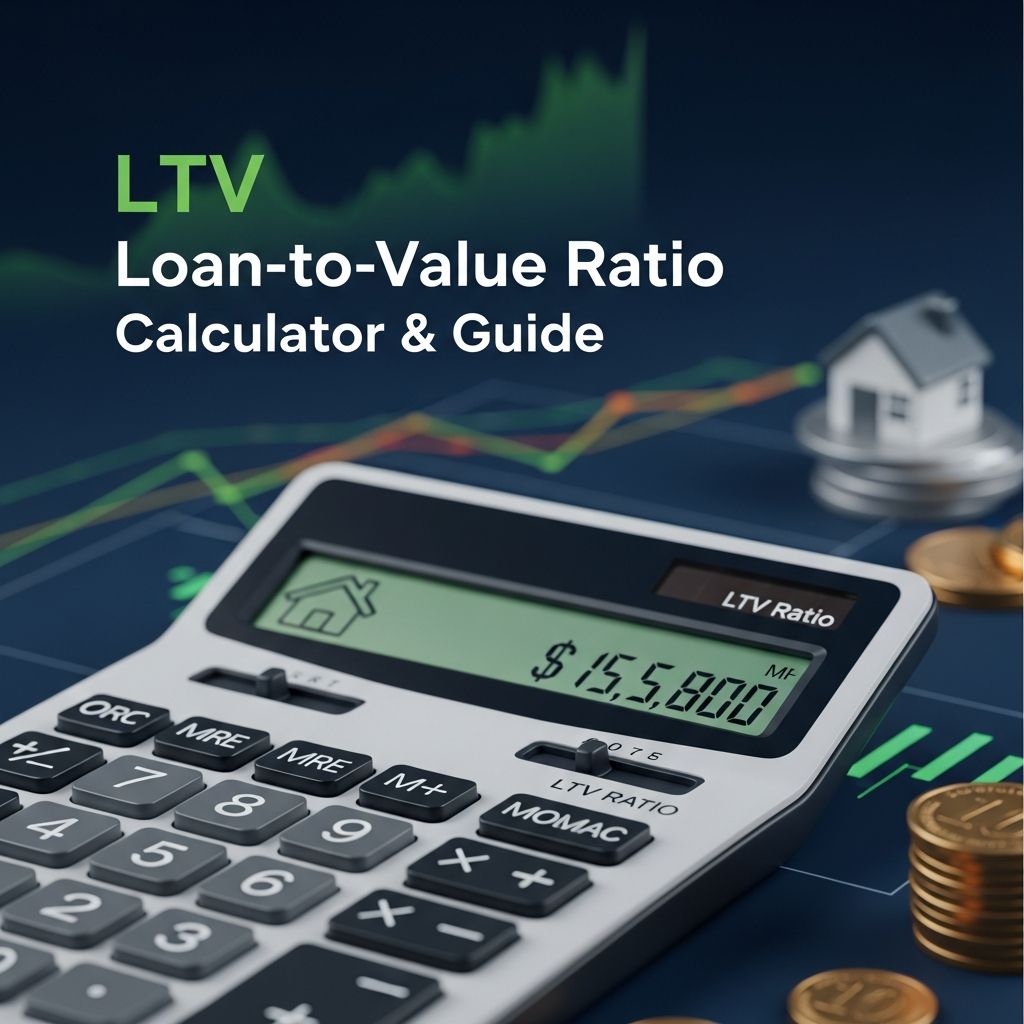
The easiest way to calculate your LTV ratio is to use an LTV calculator. To do this, you’ll enter your home’s market value, your outstanding mortgage balance, and any second mortgage balance you may have. The calculator will then automatically compute your LTV and CLTV ratios, allowing you to compare them and understand your borrowing capacity.
Using a calculator eliminates the risk of manual calculation errors and provides instant results. Most calculators will also show you how different scenarios—such as paying down your mortgage or an increase in home value—would affect your LTV and CLTV ratios.
Why Your LTV Ratio Matters
Your LTV ratio is important for several reasons. First, it directly impacts the interest rate you receive on your mortgage. Lenders view lower LTV ratios as less risky, so they’re willing to offer better rates to borrowers with more equity in their homes.
Second, your LTV ratio determines whether you’ll need to pay private mortgage insurance (PMI). With conventional loans, if your LTV is above 80%, you’ll typically need to pay PMI until your ratio drops below 80%.
Third, your LTV ratio affects your refinancing options. In general, the required LTV to refinance is 80 percent or lower. If your LTV is too high, you may not qualify for refinancing programs or may face less favorable terms.
Finally, your LTV ratio influences how much you can borrow against your home’s equity. Lenders use LTV and CLTV ratios to determine your maximum borrowing capacity for HELOCs, home equity loans, and other secondary financing products.
Frequently Asked Questions
Q: How can I lower my LTV ratio?
A: You can lower your LTV ratio in two ways: by paying down your mortgage balance or by increasing your home’s value through renovations or market appreciation. Both approaches reduce the ratio of what you owe to what your home is worth.
Q: What’s the difference between LTV and loan-to-cost (LTC)?
A: For ground-up developments or rehabilitation projects, lenders generally prefer the loan-to-cost, or LTC, ratio instead. This calculation swaps out the collateral’s value for the total development cost. For such projects, lenders typically use the value of the finished or stabilized property.
Q: Can I get a mortgage with an LTV above 80%?
A: Yes, you can get a conventional mortgage with an LTV above 80%, but you’ll need to pay private mortgage insurance (PMI). Alternatively, you can choose an FHA loan (up to 96.5%), VA loan (up to 100%), or USDA loan (up to 100%).
Q: How often does my LTV ratio change?
A: Your LTV ratio changes whenever your loan balance changes (through payments or additional borrowing) or when your home’s appraised value changes. Market conditions and home improvements can affect your appraised value, while regular mortgage payments automatically reduce your loan balance.
Q: Do I need a new appraisal to calculate my current LTV?
A: While an official appraisal provides the most accurate assessment, you can use your home’s estimated value from online tools or recent comparable sales in your area for a rough calculation. For official lending purposes, lenders will order their own appraisal.
Q: Is my LTV the same as my home equity percentage?
A: Not exactly. Your home equity percentage is the inverse of your LTV. If your LTV is 70%, your home equity is 30%. Home equity is what you own outright, while LTV represents what you owe relative to the property’s value.
References
- Understanding Loan-to-Value Ratio (LTV) — Chase Bank. https://www.chase.com/personal/mortgage/education/financing-a-home/loan-to-value-ratio
- Loan-to-Value Ratio Calculator — Commercial Real Estate Loans. https://www.commercialrealestate.loans/loan-to-value-ratio-calculator/
- What Is A Loan-To-Value Ratio? — Bankrate. https://www.bankrate.com/mortgages/what-is-loan-to-value-ratio-ltv/
- How to Calculate Home Equity & LTV (Loan to Value Ratio) — Bank of America. https://www.bankofamerica.com/mortgage/learn/how-to-calculate-home-equity/
- How to calculate your home equity — Bankrate. https://www.bankrate.com/home-equity/how-to-calculate-equity-in-your-home/
- How Much Equity Do You Need To Refinance? — Bankrate. https://www.bankrate.com/mortgages/refinance-home-equity-is-important/
- What Is Home Equity And How Can You Use It? — Bankrate. https://www.bankrate.com/home-equity/what-is-home-equity/
- 9 myths about home equity: What homeowners often get wrong — Bankrate. https://www.bankrate.com/home-equity/myths-about-home-equity-what-homeowners-often-get-wrong/
Similar Articles








Read full bio of Sneha Tete