Lowering Your Debt-to-Income Ratio
Discover proven strategies to reduce your DTI, boost creditworthiness, and unlock better loan opportunities with practical financial steps.

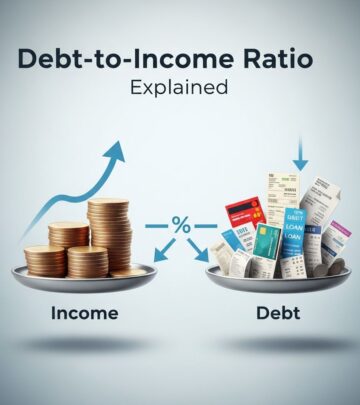
Your debt-to-income (DTI) ratio is a critical financial metric that lenders use to evaluate your ability to manage repayments. It represents the percentage of your gross monthly income dedicated to debt obligations. A lower DTI enhances your eligibility for loans, mortgages, and credit products by signaling financial stability.
Understanding the Fundamentals of DTI
The DTI ratio compares total monthly debt payments against gross monthly income, providing a snapshot of financial burden. Lenders typically prefer a DTI below 36%, though some accept up to 43% or higher depending on the loan type. This measure helps assess risk without delving into credit scores alone.
Two primary types exist: front-end DTI, focusing solely on housing expenses like mortgage, taxes, and insurance; and back-end DTI, encompassing all debts including credit cards, auto loans, and student debt. Mortgage providers scrutinize both to ensure affordability.
Step-by-Step Guide to Calculating Your DTI
Computing your DTI is straightforward and empowers proactive financial management. Follow these steps:
- Gather monthly debt payments: Sum minimum payments for mortgages or rent, auto loans, student loans, credit cards, child support, and other recurring debts. Exclude non-debt expenses like groceries or utilities.
- Determine gross monthly income: Use pre-tax earnings from salary, side gigs, or self-employment averages. Include all verifiable sources.
- Perform the division: Divide total debt by gross income to get a decimal (e.g., $2,000 debt / $6,000 income = 0.333).
- Convert to percentage: Multiply by 100 for your DTI (0.333 x 100 = 33.3%).
Example Calculation Table:
| Debt Type | Monthly Payment |
|---|---|
| Mortgage | $1,500 |
| Auto Loan | $300 |
| Credit Cards | $200 |
| Student Loan | $400 |
| Total Debt | $2,400 |
Gross income: $7,000. DTI = ($2,400 / $7,000) x 100 = 34.3%.
Why DTI Matters for Your Financial Future
A high DTI can block access to favorable loan terms, higher interest rates, or outright denials. For mortgages, exceeding 43% often triggers stricter underwriting. Beyond lending, monitoring DTI fosters better budgeting, reduces stress, and builds long-term wealth. The Consumer Financial Protection Bureau emphasizes its role in measuring repayment capacity.
Proven Strategies to Reduce Your DTI
Lowering DTI involves increasing income, decreasing debt, or both. Implement these actionable tactics systematically.
Boost Your Income Streams
- Negotiate raises or seek promotions: A 5-10% salary increase directly lowers DTI percentage.
- Add side hustles: Freelancing, ridesharing, or gig work adds verifiable income without long-term commitments.
- Monetize assets: Rent out space or sell unused items for supplemental earnings.
Accelerate Debt Paydown
- Prioritize high-interest debts: Use the avalanche method—pay minimums on all, extra on highest APR balances first.
- Adopt debt snowball: Eliminate smallest debts for motivational wins, then roll payments to larger ones.
- Refinance loans: Secure lower rates on auto or student loans to cut monthly outflows.
Optimize Monthly Budgets
Review expenses ruthlessly. Cut subscriptions, dine out less, and redirect savings to debt. Tools like zero-based budgeting ensure every dollar works toward DTI reduction.
Consolidate and Restructure Debts
Debt consolidation loans or balance transfers merge payments into one lower-rate obligation, simplifying cash flow. Balance transfer cards with 0% intro APRs provide breathing room, but pay off before promo ends to avoid penalties.
Increase Down Payments and Shop Lenders
For new loans, larger down payments reduce principal and monthly payments. Compare lenders, as some tolerate higher DTIs with strong credit profiles.
Tools and Resources for DTI Tracking
Free online calculators from reputable sites simplify math. Spreadsheets allow custom tracking. Apps like Mint or YNAB integrate debt and income for real-time DTI views.
Common Pitfalls to Avoid
- Ignoring minimum payments: Always use minimums for revolving debt in calculations.
- Forgetting irregular debts: Include alimony or back taxes if monthly.
- Over-relying on net income: Stick to gross for lender consistency.
Long-Term Habits for Sustained Low DTI
Build emergency funds covering 3-6 months’ expenses to avoid new debt. Live below means, automate payments, and review DTI quarterly. These habits compound into financial freedom.
Frequently Asked Questions (FAQs)
What is a good debt-to-income ratio?
Ideal is under 36%; 37-43% is acceptable for some mortgages; above 50% signals high risk.
Does rent count in DTI?
Yes, if applying for mortgages; otherwise, focus on actual debts.
Can I lower DTI without paying off debt?
Yes, by increasing income or refinancing for lower payments.
Is DTI part of my credit score?
No, but high DTI often correlates with poor credit utilization.
How soon can DTI changes affect loan approval?
Income changes verify quickly; debt paydown shows in 1-2 months.
Case Studies: Real-World DTI Transformations
Consider Jane: $5,000 income, $2,000 debts (40% DTI). She added $500 freelance, paid $300 extra on cards—DTI dropped to 28% in six months, securing a home loan.
Mike’s scenario: $8,000 income, $3,500 debts (43.75%). Consolidation cut payments to $2,800; DTI now 35%, enabling car refinance.
These examples illustrate targeted actions yield results.
References
- Debt-to-Income Ratio (DTI): Why It’s Important and How to Calculate It — Navy Federal Credit Union. 2023. https://www.navyfederal.org/makingcents/credit-debt/debt-to-income-ratio.html
- How to Calculate Your Debt-to-Income ratio (DTI) — New York Life. 2024. https://www.newyorklife.com/articles/calculating-debt-to-income-ratio
- Debt-to-Income Ratio — Cornell Law School Legal Information Institute. 2025. https://www.law.cornell.edu/wex/debt-to-income_ratio
- What Is Debt-to-Income Ratio? — Experian. 2024. https://www.experian.com/blogs/ask-experian/credit-education/debt-to-income-ratio/
- What is a debt-to-income ratio? — Consumer Financial Protection Bureau. 2024-01-15. https://www.consumerfinance.gov/ask-cfpb/what-is-a-debt-to-income-ratio-en-1791/
Similar Articles








Read full bio of medha deb