Low-Income Moving Support: 5-Step Application Guide
Discover essential programs, grants, and strategies to ease relocation costs for low-income families and individuals seeking stable housing.
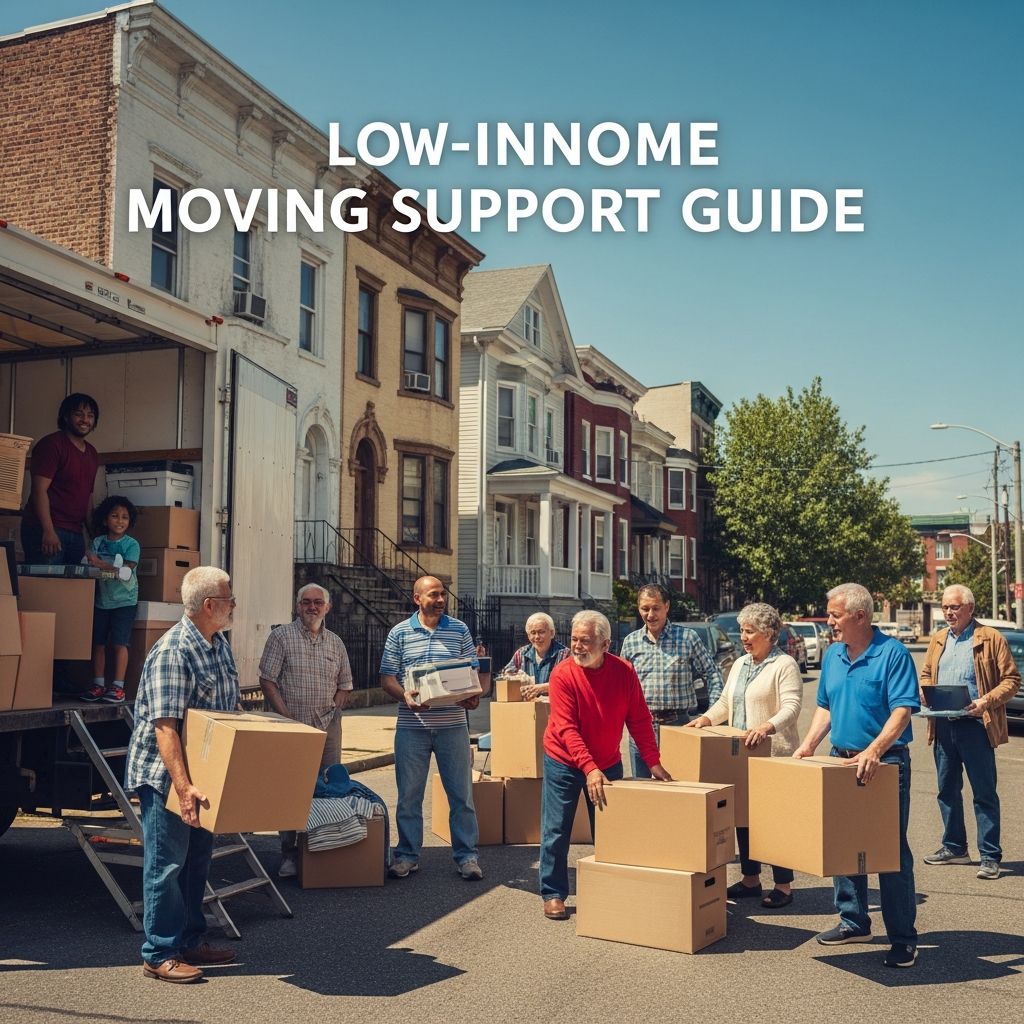
Relocating to a new home presents significant financial hurdles for many, particularly those with limited resources. Costs like truck rentals, packing materials, security deposits, and utility connections can quickly add up. Fortunately, various federal, state, and nonprofit initiatives exist to alleviate these burdens, providing grants, loans, and direct assistance tailored for low-income households. This guide details eligibility criteria, key programs, application processes, and practical strategies to secure support.
Understanding Relocation Challenges for Low-Income Households
Low-income families often face compounded difficulties during moves, including job changes, evictions, or escaping unsafe conditions. These transitions demand upfront payments that strain budgets already stretched thin. Assistance programs address these by covering essentials such as transportation, deposits, and temporary housing. Eligibility typically hinges on income thresholds—often 80% or less of the area median income (AMI)—family size, and specific circumstances like disaster displacement or veteran status.
Programs vary by location and need. Urban areas might emphasize eviction prevention, while rural initiatives focus on accessibility. Starting with a needs assessment through local agencies helps identify the best fits.
Federal Programs Offering Moving Aid
Government-backed efforts form the backbone of relocation support, ensuring broad access to stable housing.
- Rural Housing Service (USDA): Targets rural residents with grants and low-interest loans for moving expenses, deposits, and utilities. Partnerships with nonprofits distribute funds efficiently.
- Veterans Affairs (VA) Programs: Supports transitioning veterans via relocation courses and financial aid for very low-income families, including move-related costs.
- Uniform Relocation Assistance and Real Property Acquisition Policies Act: Aids those displaced by federal projects, covering transport, packing, utilities, and replacement housing payments.
- HUD Initiatives: Maintains a database of down payment help, rental support, and relocation resources. Public Housing Agencies assess income, family size, and citizenship for eligibility.
- FEMA Disaster Relief: Provides moving assistance post-federally declared disasters, extending to repairs and temporary shelter.
- Emergency Solutions Grants (ESG): Funds emergency shelter, housing searches, and placements for at-risk individuals.
- Community Development Block Grants (CDBG): Local agencies use these for first-month rent or moving costs, requiring income proof.
These programs prioritize prevention of homelessness, with funds often disbursed directly to providers.
State and Local Housing Support Options
Beyond federal aid, states administer targeted programs. For instance, Wisconsin’s Critical Assistance (CA) program serves unserved areas, helping households at or below 80% county median income with homeless prevention, including moves from temporary spaces. WHEDA’s Housing Choice Voucher (HCV) subsidizes rents for low-income families, seniors, and disabled individuals, covering 60-70% of costs based on adjusted income.
Local Public Housing Agencies (PHAs) manage applications, evaluating yearly income and household details. Emergency Rental Assistance (ERA) programs, funded by Treasury, have disbursed over $46 billion since the pandemic, aiding evictions prevention and housing stability.
| Program | Target Group | Key Benefits | Income Limit |
|---|---|---|---|
| Critical Assistance (WI) | Low-moderate income | Homeless prevention, relocation | ≤80% CMI |
| HCV (WHEDA) | Families, seniors, disabled | Rent subsidy (30-40% tenant pay) | Very low/extremely low |
| ERA Programs | Renters facing eviction | Rent, utilities, stability services | Low-income focus |
Nonprofit Organizations Providing Relocation Help
Nonprofits fill gaps in government aid, offering flexible, community-based support.
- Catholic Charities USA: Delivers counseling, rent grants, and moving cost aid, plus deposit assistance and stability management.
- Salvation Army: Covers rent arrears, deposits, fees, and regional moving expenses for documented low-income cases.
- YWCA: Assists with deposits, utilities, transport, and transitional relocation via local chapters.
- Modest Needs: One-time Self-Sufficiency Grants for non-qualifiers, paying providers directly for approved moves.
- Housing Industry Foundation: Up to $2,500 grants in select CA counties for rent, deposits, utilities during setbacks.
- United Way 211: Connects to local moving aid, rent, and utility help; dial 211 or visit 211.org.
These groups often require proof like pay stubs or eviction notices, with applications via local branches.
Step-by-Step Application Process
Securing aid involves preparation and persistence.
- Assess Eligibility: Calculate income against AMI; gather family size, citizenship docs.
- Research Local Options: Use HUD database, 211.org, or state sites.
- Contact Agencies: Schedule PHA or nonprofit assessments; prepare pay stubs, bills.
- Submit Applications: Provide detailed needs (e.g., deposit amount); follow up promptly.
- Explore Combinations: Pair grants with vouchers for comprehensive coverage.
Processing times vary; apply early to avoid delays.
Cost-Saving Strategies Alongside Assistance
Maximize aid with practical tips: seek free packing from community drives, negotiate deposits, use public transit for small moves, or DIY with borrowed tools. Tax deductions may apply for qualified relocations. Budgeting tools from HUD enhance long-term stability.
Frequently Asked Questions (FAQs)
What income qualifies as low for moving aid?
Typically 80% or less of AMI, adjusted for family size and location.
Can veterans access special moving funds?
Yes, VA programs offer targeted relocation support for low-income vets.
How does ESG differ from FEMA aid?
ESG focuses on shelter and placement; FEMA on disaster recovery.
Are grants repayable?
Most are not; loans from USDA may require repayment.
Where to start if unsure?
Call 211 or visit local PHA/HUD resources.
Overcoming Common Barriers to Aid
Documentation hurdles, waitlists, and awareness gaps deter many. Build a file early with IDs, income proofs, and lease details. Advocate by following up and appealing denials. Community workshops via nonprofits demystify processes.
For disaster-impacted, FEMA’s rapid response contrasts ESG’s broader prevention. Rural USDA loans bridge urban-rural divides effectively.
References
- Low-income moving assistance programs — Rocket Mortgage. 2023. https://www.rocketmortgage.com/learn/low-income-moving-assistance
- A Complete List of Organizations That Help With Moving Expenses — The Honorable Cochran Johnson. 2023. https://thehonorablecochranjohnson.com/portfolio/a-complete-list-of-organizations-that-help-with-moving-expenses/
- Emergency Rental Assistance Program — U.S. Department of the Treasury. 2023-10-01. https://home.treasury.gov/policy-issues/coronavirus/assistance-for-state-local-and-tribal-governments/emergency-rental-assistance-program
- WHEDA Housing Choice Voucher Program — Wisconsin Housing and Economic Development Authority. 2024. https://www.wheda.com/Renters/Rental-Assistance/
- Helping Americans | Public Housing — U.S. Department of Housing and Urban Development. 2024. http://www.hud.gov/helping-americans
- Critical Assistance Program — Wisconsin Department of Energy and Housing. 2024. https://energyandhousing.wi.gov/Pages/AgencyResources/critical-assistance.aspx
Similar Articles








Read full bio of Sneha Tete