Longevity Insurance: 5 Key Benefits For Retirement Security
Discover how longevity insurance safeguards your retirement against outliving your savings with guaranteed lifetime income starting at advanced ages.

Longevity insurance serves as a financial safeguard for retirees facing the possibility of living far beyond their expected lifespan. This type of deferred income annuity ensures a steady stream of payments begins at a predetermined advanced age, such as 80 or 85, helping individuals avoid exhausting their retirement funds.
Understanding the Core Concept of Longevity Insurance
At its essence, longevity insurance is a contract with an insurance provider where you make a lump-sum payment or series of premiums upfront. In return, the insurer commits to delivering fixed monthly income for the rest of your life, but only after a specified deferral period. This product addresses longevity risk, the chance that you’ll outlive your accumulated assets, leaving you without resources in later years.
Unlike traditional life insurance that pays out upon death, longevity insurance operates in reverse: it rewards longevity. Premiums from policyholders who pass away early fund higher payouts for those who survive longer, a mechanism known as mortality credits. This pooling effect allows for more generous income streams compared to immediate annuities.
Typically purchased around retirement age, say 60 to 70, these annuities defer payments for 10 to 25 years. For instance, a 65-year-old investing $100,000 might secure annual payouts exceeding $30,000 starting at age 85, depending on factors like gender, health, and market conditions.
The Mechanics Behind Deferred Payouts
Purchasing longevity insurance involves selecting a start date for payments, often aligned with life expectancy benchmarks. Payments can be single-life (based on one person) or joint-life (continuing for a spouse). The deferral period is key: the longer you wait, the higher the payout percentage relative to your premium, thanks to compounded interest and mortality credits.
Here’s how it unfolds step-by-step:
- Premium Payment: Pay a lump sum or installments to the insurer.
- Deferral Phase: Funds grow tax-deferred; no access until payout age.
- Income Phase: Receive guaranteed monthly checks for life.
- End of Contract: Payments cease upon death (unless joint or with riders).
If death occurs before payouts begin, the premium is generally forfeited, maximizing efficiency for survivors. Optional riders can mitigate this by returning premiums to heirs or allowing early withdrawals, though at reduced income rates.
Key Benefits for Retirement Security
Longevity insurance offers compelling advantages for prudent planners. It provides guaranteed lifetime income, insulating against market volatility and sequence-of-returns risk—where poor market performance early in retirement erodes principal.
| Benefit | Description |
|---|---|
| Peace of Mind | Allows spending savings confidently in early retirement, knowing backup income awaits. |
| Inflation Protection | Some contracts include cost-of-living adjustments. |
| Tax Efficiency | Qualified versions (QLACs) defer RMDs up to $200,000, per IRS rules. |
| Spousal Coverage | Joint options ensure income for surviving partners. |
| Healthcare Funding | Supports long-term care needs in advanced age. |
These features make it ideal for those with pensions or Social Security covering early retirement but needing a bridge to extreme old age.
Potential Drawbacks and Risks to Consider
Despite its strengths, longevity insurance isn’t suitable for everyone. The primary downside is illiquidity: your premium is locked away, inaccessible for emergencies or opportunities. If you die early, beneficiaries receive nothing without costly riders.
- Opportunity Cost: Funds could yield higher returns in diversified investments.
- Inflation Erosion: Fixed payouts may lose purchasing power without adjustments.
- Insurer Risk: Dependent on the company’s financial stability; state guaranty associations offer limited protection.
- Health Impact: Payouts don’t reflect personal health—everyone pays the same rate.
Experts recommend allocating only 10-25% of retirement savings to such products to balance security and flexibility.
Comparing Longevity Insurance to Other Annuities
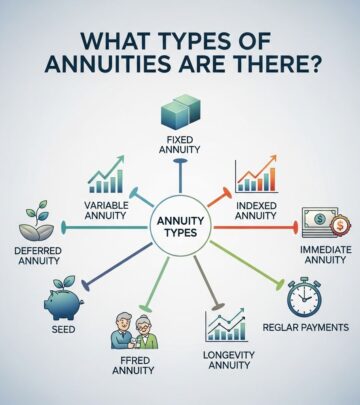
Longevity annuities differ from immediate annuities, which start payments right away at lower rates. They also contrast with variable annuities tied to market performance.
| Annuity Type | Payout Start | Payout Level | Liquidity | Best For |
|---|---|---|---|---|
| Immediate | Now | Lower | Low | Instant income needs |
| Longevity/Deferred | Future (e.g., 85) | Higher | None until start | Long-life protection |
| Variable | Flexible | Market-dependent | Varies | Growth seekers |
Qualifying Longevity Annuity Contracts (QLACs) add tax perks by excluding portions from Required Minimum Distributions, enhancing appeal for IRA holders.
Who Should Consider Longevity Insurance?
This product suits risk-averse retirees with adequate early-retirement income but anxiety over centenarian scenarios. Healthy individuals in their 60s, couples planning joint security, or those with illiquid assets like real estate benefit most. Avoid if you need liquidity, have short life expectancy, or prefer aggressive investing.
Financial advisors often model scenarios: for a 65-year-old woman, $100,000 might yield $1,000+ monthly from age 85, far surpassing bonds.
Strategies for Integrating into Your Plan
Incorporate longevity insurance thoughtfully:
- Assess Longevity: Use calculators from SSA.gov to estimate lifespan.
- Shop Providers: Compare quotes from A-rated insurers via platforms like ImmediateAnnuities.com.
- Add Riders: Weigh death benefits or cash-back options.
- Combine Assets: Pair with stocks, bonds, and Social Security for diversification.
- Review Annually: Adjust as health or markets change.
Consult a fiduciary advisor to simulate outcomes using Monte Carlo analysis.
Frequently Asked Questions (FAQs)
What is the minimum age to start payouts?
Typically 80-85, but contracts allow flexibility up to 99 in some cases.
Are payouts taxable?
A portion is return of principal (non-taxable); the rest is ordinary income. QLACs offer RMD deferral.
Can I lose my money?
Premiums are at risk if you die early without riders, but insurer solvency is backed by regulations.
How much should I invest?
10-20% of savings; e.g., $50,000-$200,000 for meaningful income.
Is it better than bonds?
Often yes for longevity protection, as bonds may deplete, while annuities guarantee lifetime flow.
Future Outlook and Evolving Options
With U.S. life expectancy rising—now over 79 years—demand for longevity products grows. Innovations include inflation-linked payouts and hybrid policies blending annuities with long-term care benefits. Regulatory changes, like expanded QLAC limits, may boost accessibility.
As baby boomers age, insurers refine offerings, emphasizing digital quoting and personalized pricing via big data. Yet, education remains crucial to avoid mis-selling.
References
- What Is A Longevity Annuity? — ImmediateAnnuities.com. 2023. https://www.immediateannuities.com/longevity-annuities/
- Longevity insurance — Wikipedia. 2024-02-01. https://en.wikipedia.org/wiki/Longevity_insurance
- Longevity Annuity — Investor.gov (SEC). 2024. https://www.investor.gov/introduction-investing/investing-basics/glossary/longevity-annuity
- What Is Longevity Insurance? — Experian. 2024. https://www.experian.com/blogs/ask-experian/what-is-longevity-insurance/
- Deferred Income / Longevity Annuities — AnnuityAdvantage. 2023. https://www.annuityadvantage.com/annuity-type/deferred-income-longevity-annuities/
- LONGEVITY INSURANCE – DEFERRED INCOME ANNUITY — TrustLaw. 2023. https://www.trustlaw.com/resources/blog/longevity-insurance-deferred-income-annuity/
Similar Articles








Read full bio of medha deb